


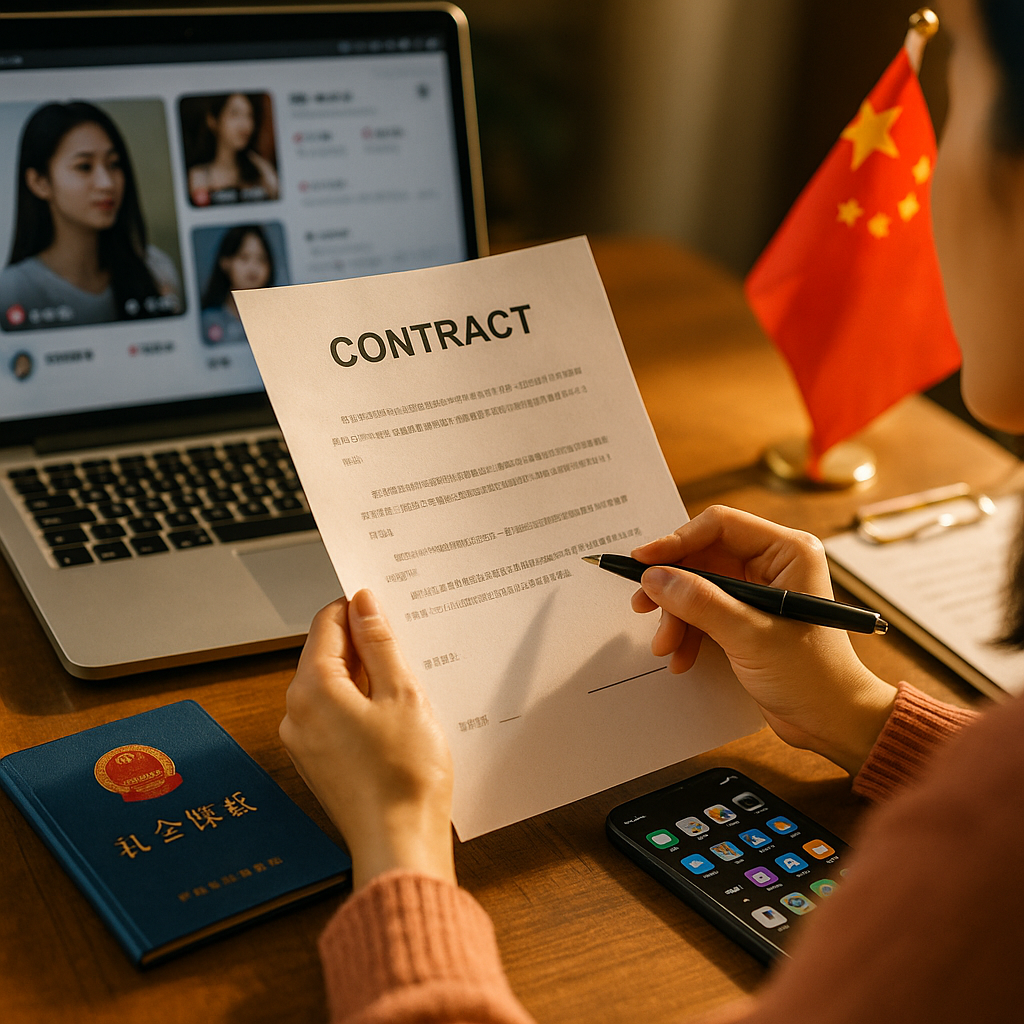
A single Douyin micro-influencer campaign can touch the personal data of more people than live in a mid-sized American city, yet until recently, Chinese law treated that brand exactly the same as a company moving millions of records across borders. That changed. China’s simplified data rules for small scale creator data processors now carve out a lighter compliance path, and for global brands running influencer programs on Xiaohongshu, Douyin, or WeChat, understanding this shift is no longer optional homework. It is the difference between a clean campaign launch and a frozen vendor contract.
What Actually Changed in China’s Data Rules
The Cyberspace Administration of China (CAC) has spent the past several years tightening, then selectively loosening, its cross-border data transfer regime under the Personal Information Protection Law (PIPL). The 2024 Provisions on Facilitating and Regulating Cross-Border Data Flows introduced volume-based thresholds that exempt smaller data handlers from the heaviest compliance burdens: security assessments, standard contract filings, and certification requirements that previously applied almost universally.
For brands, this matters because most influencer marketing vendors in China, the agencies and MCNs (multi-channel networks) that manage creator rosters and audience data, fall well under the volume thresholds that used to trigger full regulatory review. A boutique Shanghai-based MCN managing fifty nano-creators and their follower analytics is a fundamentally different risk profile than a platform processing hundreds of millions of user records. The new rules finally reflect that distinction.
Brands that keep applying enterprise-grade data governance checklists to micro-creator vendors are burning budget and goodwill on compliance theater that Chinese regulators no longer require.
The Threshold Numbers Brands Need to Know
Under the current framework, data processors handling personal information of fewer than 100,000 individuals (excluding sensitive personal information) since January 1 of the current year, and transferring it outside China, generally do not need to file a standard contract or undergo a security assessment. A separate, stricter threshold applies to sensitive personal information, generally capped far lower, often cited around 10,000 individuals, given its higher risk classification.
- Non-sensitive personal information under the annual threshold: simplified or exempt pathway.
- Sensitive personal information (health, biometric, financial, location of minors): lower threshold, stricter scrutiny regardless of volume.
- Critical information infrastructure operators: excluded from simplified treatment entirely, regardless of scale.
Here is the catch most brand marketers miss: these thresholds apply per data processor, not per campaign. If your agency of record runs creator programs for five different brand clients simultaneously, their cumulative data volume across all those accounts is what counts, not your slice of it. A vendor that looks “small scale” from your vantage point might be aggregating well past the exemption line once you factor in their full book of business.
Why This Matters for Your Influencer Vendor Contracts
Most brands running China-facing influencer campaigns work through intermediaries: MCNs, regional agencies, or platform-native creator marketplaces on Douyin and Xiaohongshu. Those intermediaries are the actual data processors under PIPL. Your brand is typically the data controller or joint controller, which means you inherit risk even when you never directly touch a Chinese consumer’s phone number or purchase history.
The simplified rules reduce the paperwork burden on small vendors, which sounds like good news, and mostly is. But it also means fewer formal checkpoints where a regulator independently verifies that a vendor’s data handling practices are sound. Brands now carry more of the due diligence weight themselves, precisely because the government has stepped back from auto-reviewing every small transfer.
This is the same dynamic playing out globally as regulators try to calibrate compliance burden to actual risk. Our coverage of vendor vetting under GDPR flagged an identical pattern in the EU: lighter formal requirements for smaller processors, paired with an implicit expectation that brands do more of the screening themselves rather than relying on bureaucratic gatekeeping.
Mapping Risk: Where Brands Still Get Exposed
Simplified does not mean deregulated. A few exposure points persist even under the lighter-touch regime.
- Sensitive data creep. Beauty and wellness campaigns routinely collect skin type, health claims engagement, or biometric data from AR try-on features. That data often crosses into the sensitive category, dragging the whole program under stricter thresholds even if your creator roster is tiny.
- Minor data on livestream commerce. China’s livestream shopping ecosystem skews young, and age verification gaps can trigger compliance issues that have nothing to do with volume thresholds. The exposure here mirrors concerns raised in our piece on livestream shopping age gates, where underage audience data turns a routine campaign into a regulatory liability overnight.
- Aggregation across campaigns. As mentioned, your vendor’s total client volume counts, not just your campaign’s slice.
- Cross-border transfer mechanics. Even exempt transfers still require a lawful basis, consent documentation, and often a localized copy of the data retained in-country. Brands assuming “exempt” means “no documentation needed” are setting themselves up for an unpleasant audit conversation.
According to Statista’s reporting on China’s digital advertising market, influencer-driven commerce continues to represent one of the fastest-growing segments of China’s retail media spend, which means the volume of personal data flowing through creator campaigns is only going to climb. Thresholds that feel generous now could tighten again as enforcement priorities shift.
Building a Practical Compliance Playbook
Brands do not need a China-specific legal team to operate safely here, but they do need a repeatable process. Here is what that looks like in practice.
Start with vendor classification. Before signing an MCN or agency contract, ask directly: what is your cumulative annual data volume across all clients, and does any portion of our campaign data qualify as sensitive personal information? Get the answer in writing. This single question resolves most of the threshold ambiguity before a campaign even launches.
Separate sensitive data flows from general engagement data. If your campaign involves AR filters, skin diagnostics, financial product recommendations, or any health-adjacent content, isolate that data stream and treat it under the stricter threshold regardless of your overall campaign size. Do not let a small nano-influencer program accidentally inherit enterprise-level scrutiny because one data field got mixed in with the rest.
Document consent at the creator contract level, not just the platform level. Douyin and Xiaohongshu both have their own data handling terms, but those platform-level consents do not automatically satisfy your brand’s PIPL obligations as a data controller. This is the same contractual gap we flagged in coverage of three-party data sharing in phygital campaigns, where platform, brand, and creator each assumed someone else was handling consent documentation.
Build a retention and deletion clause into every creator contract. Chinese regulators, like their counterparts in Seoul and Brussels, are increasingly focused on data lifecycle management, not just collection. A vendor that can delete campaign data on request within a defined window is a lower-risk partner than one that cannot.
The brands winning in China’s creator economy right now are not the ones with the thickest legal binders. They are the ones who classify data risk at the campaign-planning stage, before a single creator contract gets signed.
It is also worth benchmarking how other markets are handling similar small-processor carve-outs. Agencies managing global creator rosters should compare notes with teams tracking record-keeping requirements in Kuwait and cross-border NIL compliance, since the operational muscle of maintaining audit-ready documentation transfers directly across jurisdictions, even when the specific legal triggers differ.
What Platforms and Agencies Are Doing About It
Douyin’s advertiser tools now include built-in data classification prompts for brand accounts running creator collaborations, nudging advertisers toward flagging sensitive categories at the campaign setup stage rather than after the fact. Xiaohongshu has pushed similar guidance to its MCN partners, largely because the platform itself faces reputational risk if its ecosystem becomes known as a compliance blind spot for international brands.
Global measurement and analytics providers tracked in eMarketer’s platform advertising research note that China remains one of the few major markets where influencer data compliance frameworks are evolving faster than platform-side tooling can keep pace. That gap is exactly where brand-side diligence needs to fill in.
Agencies running cross-border campaigns increasingly rely on social listening and reporting tools, the kind tracked by Sprout Social’s platform analytics, to monitor engagement without pulling raw personal data into brand-owned systems at all. That is arguably the cleanest workaround: if the brand never ingests the underlying personal information, threshold calculations become someone else’s problem, specifically the vendor’s, which is precisely where PIPL intends the compliance burden to sit for small-scale processing.
The Bottom Line for Brand Teams
China’s simplified data rules for small scale creator data processors genuinely reduce friction for brands running lean, nano- and micro-influencer programs. But “simplified” is a regulatory convenience, not a liability shield. Brands that treat the exemption as permission to skip documentation entirely are the ones who will get caught flat-footed when a vendor’s aggregate volume quietly crosses a threshold nobody was tracking.
Audit your current China-facing creator vendors this quarter: confirm their cumulative data volume, isolate any sensitive data streams, and get retention terms written into contracts before your next campaign cycle begins.
Frequently Asked Questions
What counts as a “small scale” data processor under China’s rules?
Generally, a processor handling personal information of fewer than 100,000 individuals annually for non-sensitive data, or a much lower threshold (commonly cited around 10,000) for sensitive personal information, qualifies for simplified or exempt cross-border transfer treatment, provided they are not classified as critical information infrastructure operators.
Does the exemption apply per campaign or per vendor?
It applies to the data processor’s cumulative annual volume across all clients and campaigns, not per individual brand engagement. A vendor managing multiple brand accounts could exceed the threshold even if your specific campaign is small.
Are brands still liable if their vendor qualifies for simplified treatment?
Yes. Brands typically act as data controllers or joint controllers under PIPL, meaning compliance responsibility does not disappear simply because the processor qualifies for lighter regulatory review. Due diligence, consent documentation, and retention terms remain the brand’s responsibility.
What type of creator campaign data is most likely to trigger stricter scrutiny?
Data involving health claims, biometric or skin diagnostics from AR try-on tools, financial product recommendations, and any data involving minors on livestream shopping platforms tends to fall under sensitive personal information categories, which face stricter thresholds regardless of overall campaign scale.
How often do these thresholds change?
China’s regulatory approach to cross-border data flows has shifted multiple times in recent years as enforcement priorities evolve. Brands should treat current thresholds as a snapshot rather than a permanent rule and review vendor compliance status at each contract renewal.
Top Influencer Marketing Agencies
The leading agencies shaping influencer marketing in 2026
Agencies ranked by campaign performance, client diversity, platform expertise, proven ROI, industry recognition, and client satisfaction. Assessed through verified case studies, reviews, and industry consultations.
Moburst

-
2

The Shelf
Boutique Beauty & Lifestyle Influencer AgencyA data-driven boutique agency specializing exclusively in beauty, wellness, and lifestyle influencer campaigns on Instagram and TikTok. Best for brands already focused on the beauty/personal care space that need curated, aesthetic-driven content.Clients: Pepsi, The Honest Company, Hims, Elf Cosmetics, Pure LeafVisit The Shelf → -
3

Audiencly
Niche Gaming & Esports Influencer AgencyA specialized agency focused exclusively on gaming and esports creators on YouTube, Twitch, and TikTok. Ideal if your campaign is 100% gaming-focused — from game launches to hardware and esports events.Clients: Epic Games, NordVPN, Ubisoft, Wargaming, Tencent GamesVisit Audiencly → -
4

Viral Nation
Global Influencer Marketing & Talent AgencyA dual talent management and marketing agency with proprietary brand safety tools and a global creator network spanning nano-influencers to celebrities across all major platforms.Clients: Meta, Activision Blizzard, Energizer, Aston Martin, WalmartVisit Viral Nation → -
5

The Influencer Marketing Factory
TikTok, Instagram & YouTube CampaignsA full-service agency with strong TikTok expertise, offering end-to-end campaign management from influencer discovery through performance reporting with a focus on platform-native content.Clients: Google, Snapchat, Universal Music, Bumble, YelpVisit TIMF → -
6

NeoReach
Enterprise Analytics & Influencer CampaignsAn enterprise-focused agency combining managed campaigns with a powerful self-service data platform for influencer search, audience analytics, and attribution modeling.Clients: Amazon, Airbnb, Netflix, Honda, The New York TimesVisit NeoReach → -
7

Ubiquitous
Creator-First Marketing PlatformA tech-driven platform combining self-service tools with managed campaign options, emphasizing speed and scalability for brands managing multiple influencer relationships.Clients: Lyft, Disney, Target, American Eagle, NetflixVisit Ubiquitous → -
8

Obviously
Scalable Enterprise Influencer CampaignsA tech-enabled agency built for high-volume campaigns, coordinating hundreds of creators simultaneously with end-to-end logistics, content rights management, and product seeding.Clients: Google, Ulta Beauty, Converse, AmazonVisit Obviously →