


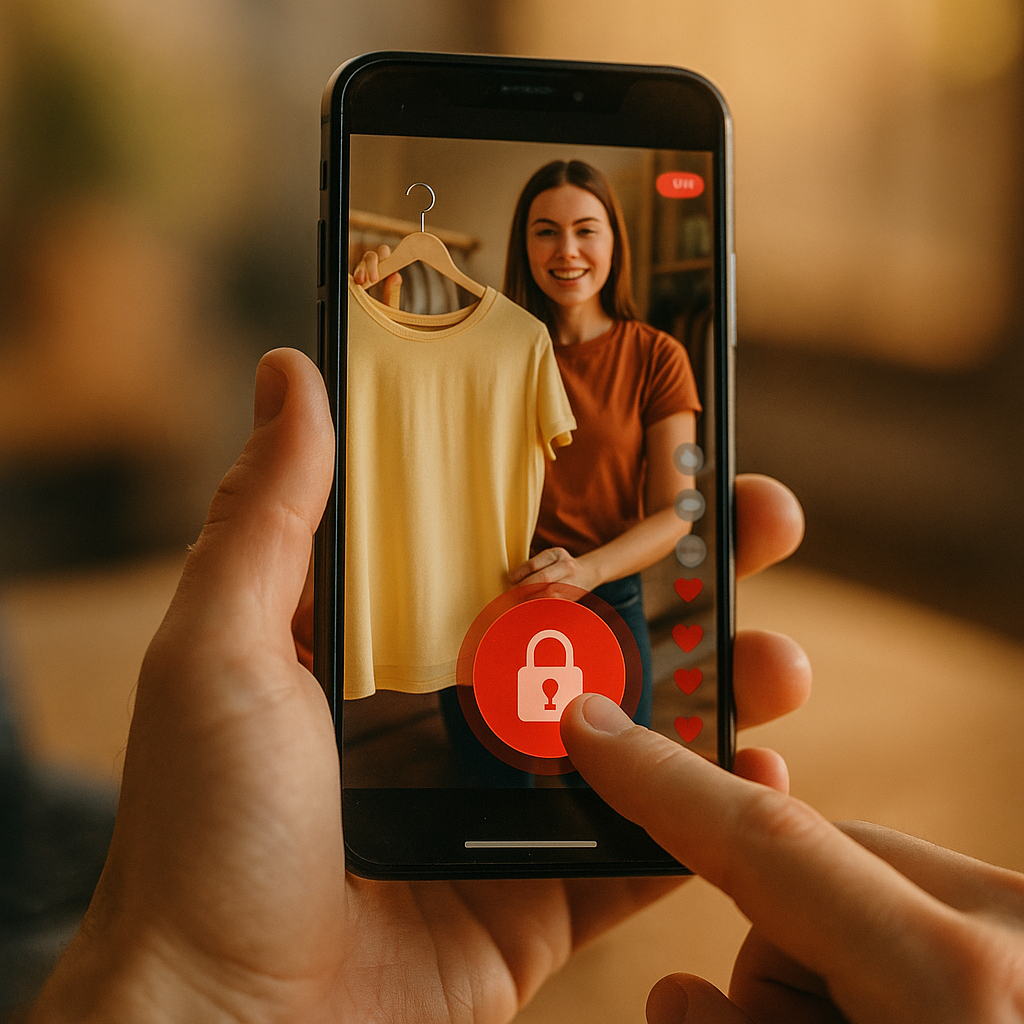
A live shopping stream can convert at rates five to ten times higher than static product posts, according to data from eMarketer. But nobody checks ID at the virtual door. Creator livestream shopping age verification is the compliance hole nobody budgeted for, and the Federal Trade Commission has noticed. If your brand runs shoppable livestreams on TikTok Shop, Instagram, or YouTube without a gate, you’re one complaint away from a COPPA inquiry.
The Gap Nobody Mapped
COPPA was written for websites and apps that knowingly collect data from kids under 13. It assumed a login screen, a form, a clear moment of data capture. Livestream shopping doesn’t work that way. A twelve-year-old can watch a creator unbox skincare, tap “buy now,” enter a parent’s saved card, and complete checkout in under thirty seconds. No age gate. No parental consent flow. No pause.
That’s the architecture problem. Platforms built livestream commerce for speed and impulse, the opposite of what child-protection compliance requires. Brands sponsoring these streams inherited a liability model that predates the format itself.
Livestream shopping was engineered to remove friction. COPPA exists to add friction when the buyer might be a child. Those two design goals are fundamentally at war, and right now friction is losing.
Why This Isn’t Just a Platform Problem
It’s tempting to assume Shein, TikTok Shop, or Meta’s commerce tools should own this risk. They do, partially. But the FTC has consistently held that brands and agencies share liability when a sponsored campaign knowingly or recklessly targets a youth audience without appropriate safeguards. If your creator brief says “appeal to Gen Z” and the content skews toward tweens, and no age verification exists at purchase, you have exposure that insurance won’t cleanly cover.
This mirrors what we’ve seen with other youth-targeted enforcement actions. The Meta teen safety settlement made clear that platforms and their advertising partners both carry responsibility when minors are foreseeably in the audience. Livestream shopping just makes the foreseeability argument easier to prove, because the content and the checkout are the same screen.
Where the Data Trail Actually Breaks
Here’s the mechanical reality. Most livestream shopping integrations pull payment data from the platform’s existing commerce layer, think TikTok Shop’s checkout or Instagram Checkout. These systems verify payment method validity, not buyer age. There’s no required field asking “are you over 13” before a purchase completes, and even if there were, self-reported age gates are notoriously easy to bypass. A 2023 FTC enforcement sweep found that self-attestation age gates failed to deflect underage users in the overwhelming majority of tested cases.
So the verification gap isn’t a missing checkbox. It’s a missing architecture. Brands relying on platform-level compliance are trusting a system that was never built to answer the question regulators are asking.
What Regulators Are Actually Signaling
The FTC’s recent enforcement posture around children’s data and commerce has shifted from reactive to anticipatory. Settlements involving connected devices and youth data collection, like the one detailed in our coverage of the FTC smart device settlement, show a pattern: regulators are willing to extend COPPA’s intent to commerce contexts Congress never explicitly imagined in 1998.
Livestream shopping checks every box that makes the FTC nervous. It’s real-time, it’s engagement-optimized, it often features creators popular with younger audiences, and it collects payment and shipping data instantly. Add in the state-level momentum we’ve tracked in state teen screen time laws, and you have a regulatory environment stacking federal and state pressure on the same narrow format.
The Creator Audience Problem
Ask any brand running influencer campaigns on TikTok Shop: do you actually know the age breakdown of a given creator’s livestream audience? Most can’t answer that with confidence. Platform analytics report aggregate demographics, not real-time viewer composition during a specific stream. A creator whose typical audience skews 18-24 might attract a wave of younger viewers during a back-to-school haul or a toy unboxing collab, and the brand sponsoring that stream has no visibility into the shift until after the fact, if ever.
This is compounded by the time-of-day problem. Streams scheduled after school hours, a popular slot for engagement, correlate with higher youth viewership. We’ve covered how scheduling intersects with minor protections in TikTok teen time limits, and the same logic applies here: timing choices that boost conversion can simultaneously boost COPPA exposure.
What Closing the Gap Actually Looks Like
There’s no single fix, because the gap spans product design, legal review, and creator vetting. But brands that are getting ahead of this are doing a few specific things.
- Demanding age-verification layers from commerce platforms. Some enterprise brands are now requiring, contractually, that any livestream shopping integration include a hard age gate before checkout, not just at account creation.
- Auditing creator audience composition before sponsoring streams. This means going beyond follower demographics and reviewing comment section language, past stream replay data, and content themes that might skew younger than the stated audience.
- Building contractual indemnification language specific to COPPA exposure. Generic FTC disclosure clauses in influencer contracts don’t cover child-directed commerce risk. Legal teams need a separate clause addressing age verification failures and who bears the cost of resulting penalties.
- Logging consent and verification attempts. Even an imperfect age gate, documented and timestamped, is better than silence if the FTC comes asking.
None of this is glamorous. All of it is cheaper than a consent decree.
An imperfect, documented age-verification attempt is a defensible compliance posture. No attempt at all is a liability admission waiting to happen.
How This Connects to the Broader Compliance Stack
Livestream shopping age verification doesn’t exist in isolation. It sits alongside a growing list of creator-economy compliance obligations brands are already managing, from disclosure labeling to data consent. The same operational muscle that handles paid partnership labeling compliance can be extended to cover age-gate documentation, since both require real-time monitoring of live and near-live content.
Brands already running state privacy law audits on their creator contracts should fold age verification requirements into that same audit cycle. It’s far more efficient to review COPPA exposure alongside CCPA and state UDAP risk than to treat it as a standalone legal sprint every time a new livestream format launches.
For agencies managing multiple brand clients, this also raises the vicarious liability question we explored in agency vicarious liability coverage. If an agency books the livestream slot and selects the creator, who absorbs the COPPA risk when the age gate fails? Contracts need to answer that before the stream goes live, not after a complaint lands.
A Practical Checklist for the Next Campaign Brief
- Confirm whether the platform’s livestream commerce tool has any age-verification mechanism beyond self-attestation.
- Require creators to disclose known audience skew for similar past content, not just channel-wide demographics.
- Add a COPPA-specific indemnification clause to the influencer agreement.
- Avoid scheduling sponsored livestreams during peak after-school hours unless the audience is verified adult.
- Document every verification attempt, even flawed ones, for the compliance file.
Platforms like TikTok’s advertising hub and Meta’s business tools are both actively updating commerce policies, so this checklist should be revisited quarterly rather than treated as a one-time setup task.
What This Means for Budget and Risk Planning
CMOs weighing livestream shopping investment need to treat age-verification infrastructure as a line item, not an afterthought. The FTC’s enforcement history shows penalties scale with the size of the affected user base and the brand’s apparent awareness of the risk. A brand that ran a viral livestream with millions of views and no age gate is a much bigger target than one with modest reach and documented compliance attempts.
Insurance is catching up too. The same risk logic behind AI generated content E and O insurance is starting to apply to livestream commerce exposure, with underwriters asking pointed questions about age-verification practices before issuing coverage. Expect premiums to reflect compliance maturity going forward, the same way cybersecurity insurance now prices in MFA adoption.
FAQs
Does COPPA actually apply to livestream shopping?
COPPA applies to any online service that knowingly collects personal information from children under 13. Livestream shopping collects payment and shipping data in real time, and regulators have signaled that this counts even though the law predates the format.
Who is liable if a minor makes a purchase during a sponsored livestream?
Liability can extend to the platform, the brand, and the agency, depending on who controlled the audience targeting, creator selection, and checkout flow. Clear contractual indemnification language is essential.
Can self-reported age gates satisfy compliance requirements?
Self-attestation alone is weak evidence and has repeatedly failed FTC scrutiny in other contexts. Brands should pair it with documented monitoring and audience analysis rather than relying on it as a sole safeguard.
How can brands check a creator’s actual audience age skew?
Review comment language, past stream replay demographics, and content themes, not just platform-reported follower age brackets, which often lag real-time audience composition during specific events.
Is this risk covered under existing influencer marketing insurance?
Not automatically. Many policies require documented age-verification practices before covering COPPA-related claims, similar to how cyber insurance now requires baseline security controls.
Next step: Pull your current livestream shopping contracts this week and check for a specific COPPA indemnification clause. If it’s missing, that’s the first fix, not the last one.
FAQs
Does COPPA actually apply to livestream shopping?
COPPA applies to any online service that knowingly collects personal information from children under 13. Livestream shopping collects payment and shipping data in real time, and regulators have signaled that this counts even though the law predates the format.
Who is liable if a minor makes a purchase during a sponsored livestream?
Liability can extend to the platform, the brand, and the agency, depending on who controlled the audience targeting, creator selection, and checkout flow. Clear contractual indemnification language is essential.
Can self-reported age gates satisfy compliance requirements?
Self-attestation alone is weak evidence and has repeatedly failed FTC scrutiny in other contexts. Brands should pair it with documented monitoring and audience analysis rather than relying on it as a sole safeguard.
How can brands check a creator’s actual audience age skew?
Review comment language, past stream replay demographics, and content themes, not just platform-reported follower age brackets, which often lag real-time audience composition during specific events.
Is this risk covered under existing influencer marketing insurance?
Not automatically. Many policies require documented age-verification practices before covering COPPA-related claims, similar to how cyber insurance now requires baseline security controls.
Top Influencer Marketing Agencies
The leading agencies shaping influencer marketing in 2026
Agencies ranked by campaign performance, client diversity, platform expertise, proven ROI, industry recognition, and client satisfaction. Assessed through verified case studies, reviews, and industry consultations.
Moburst

-
2

The Shelf
Boutique Beauty & Lifestyle Influencer AgencyA data-driven boutique agency specializing exclusively in beauty, wellness, and lifestyle influencer campaigns on Instagram and TikTok. Best for brands already focused on the beauty/personal care space that need curated, aesthetic-driven content.Clients: Pepsi, The Honest Company, Hims, Elf Cosmetics, Pure LeafVisit The Shelf → -
3

Audiencly
Niche Gaming & Esports Influencer AgencyA specialized agency focused exclusively on gaming and esports creators on YouTube, Twitch, and TikTok. Ideal if your campaign is 100% gaming-focused — from game launches to hardware and esports events.Clients: Epic Games, NordVPN, Ubisoft, Wargaming, Tencent GamesVisit Audiencly → -
4

Viral Nation
Global Influencer Marketing & Talent AgencyA dual talent management and marketing agency with proprietary brand safety tools and a global creator network spanning nano-influencers to celebrities across all major platforms.Clients: Meta, Activision Blizzard, Energizer, Aston Martin, WalmartVisit Viral Nation → -
5

The Influencer Marketing Factory
TikTok, Instagram & YouTube CampaignsA full-service agency with strong TikTok expertise, offering end-to-end campaign management from influencer discovery through performance reporting with a focus on platform-native content.Clients: Google, Snapchat, Universal Music, Bumble, YelpVisit TIMF → -
6

NeoReach
Enterprise Analytics & Influencer CampaignsAn enterprise-focused agency combining managed campaigns with a powerful self-service data platform for influencer search, audience analytics, and attribution modeling.Clients: Amazon, Airbnb, Netflix, Honda, The New York TimesVisit NeoReach → -
7

Ubiquitous
Creator-First Marketing PlatformA tech-driven platform combining self-service tools with managed campaign options, emphasizing speed and scalability for brands managing multiple influencer relationships.Clients: Lyft, Disney, Target, American Eagle, NetflixVisit Ubiquitous → -
8

Obviously
Scalable Enterprise Influencer CampaignsA tech-enabled agency built for high-volume campaigns, coordinating hundreds of creators simultaneously with end-to-end logistics, content rights management, and product seeding.Clients: Google, Ulta Beauty, Converse, AmazonVisit Obviously →