


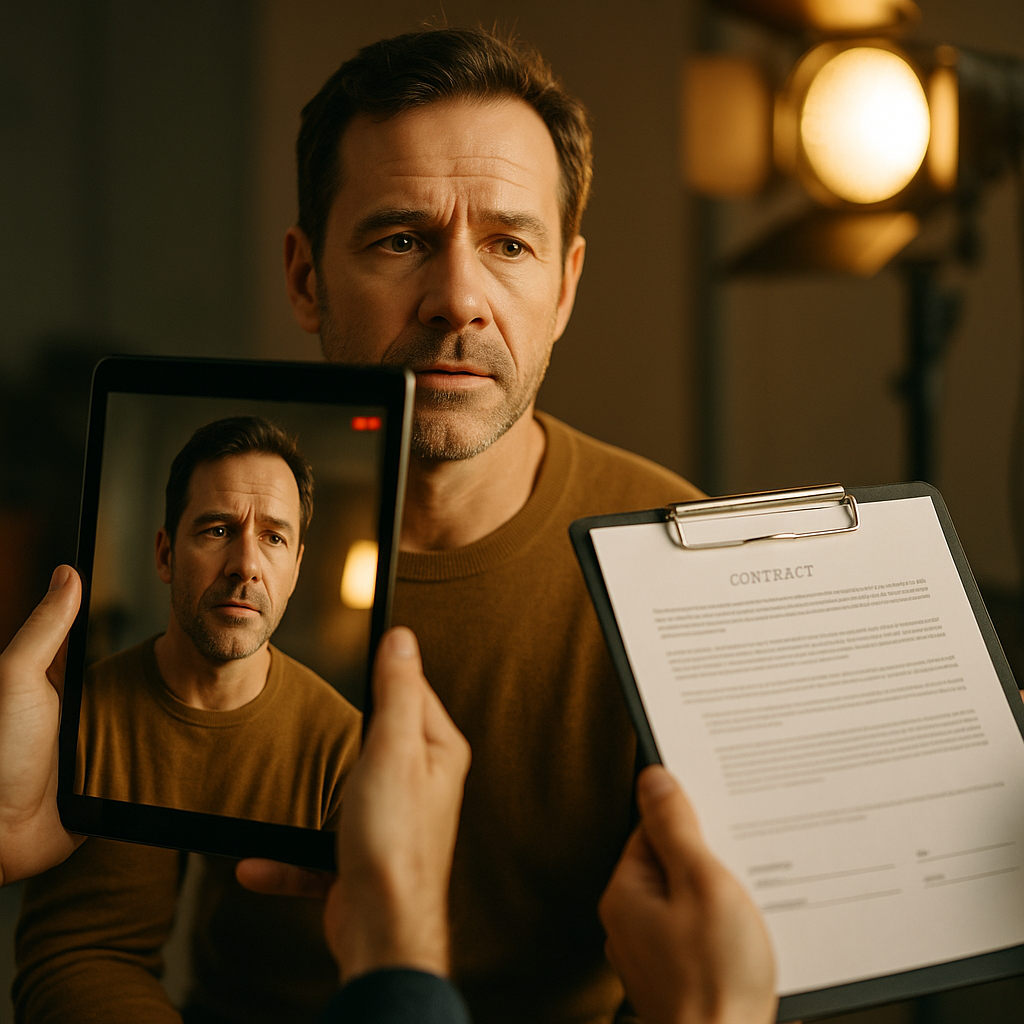
A “perpetual, worldwide license” sounds bulletproof until a lawyer reads the fine print and realizes it only covers organic social posting. Brands running UGC actor programs are discovering, often after the content is already in a paid media campaign, that their contracts never actually granted reuse rights for whitelisting, paid amplification, or AI model training. That’s the UGC actor likeness reuse rights problem, and it’s quietly becoming one of the most expensive gaps in creator content operations.
The UGC Actor Boom Outpaced the Paperwork
UGC actors are not the same as influencers. They’re paid performers, sourced through marketplaces like Billo, JoinBrands, or Minisocial, hired specifically to create “authentic-looking” testimonial or demo content that brands then run as paid ads. Unlike an organic creator posting to their own audience, a UGC actor’s entire value proposition is reusability: brands buy the footage to plug into Meta Ads Manager, TikTok Spark Ads, YouTube pre-roll, and increasingly, AI generated ad variants.
The problem is that most UGC marketplace contracts were written for a simpler use case: one video, one platform, one campaign window. As brands scaled these programs into always-on paid media engines, the licensing language didn’t keep pace. Marketers kept clicking “approve” on templated agreements that never anticipated six months of whitelisted spend, let alone a generative AI tool remixing the actor’s face into new creative.
A license that was never negotiated for paid media, usage duration, or derivative works isn’t perpetual. It’s a liability waiting for an expiration date nobody wrote down.
What “Perpetual” Actually Needs to Say
Here’s the uncomfortable truth: the word “perpetual” in a UGC contract means almost nothing on its own. Perpetual duration without defined scope of use is a half-finished sentence. A defensible license needs to specify, explicitly, each of the following:
- Media channels covered, organic, paid social, connected TV, out-of-home, email, and whether future unspecified channels are included
- Duration of paid usage rights, separate from duration of organic posting rights (these are often different windows in well-drafted agreements)
- Derivative works and editing rights, including whether the brand can cut, caption, dub, or reformat the footage
- AI training and synthetic reuse, whether the actor’s face, voice, or likeness can be used to train a model or generate new content without them performing again
- Geographic scope, since right of publicity protections vary sharply by state and country
Most template agreements from UGC marketplaces address the first two items and quietly skip the rest. That’s the gap brands are now paying lawyers to close retroactively, usually after a cease and desist letter arrives.
Why Right of Publicity Law Makes This Expensive
Right of publicity isn’t a federal statute. It’s a patchwork of state laws, and some of them are aggressive. California and New York have robust statutory protections with meaningful damages. Other states lean on common law claims that are harder to predict but still enforceable. If a UGC actor’s contract doesn’t clearly waive or license a specific use, the default legal assumption in most jurisdictions favors the individual, not the brand that paid for the shoot.
This matters enormously once content crosses from organic to paid. Running a UGC video as a whitelisted ad through the actor’s own handle is a different legal use than running it through the brand’s own ad account with the actor’s face still visible. Brands that treat these as interchangeable are the ones getting the angry emails. Our deep dive on right of publicity rules by state breaks down exactly where the exposure concentrates, and it’s not evenly distributed across the country.
There’s a second layer here too: scripted content. Many UGC actor videos are fully scripted testimonials, performed by someone who has never used the product. That creates overlapping risk with FTC disclosure requirements around implied experience claims, a topic covered in our piece on scripted creator content disclosure. A likeness dispute rarely shows up alone. It tends to arrive with an FTC compliance question attached.
AI Reuse Is Where Most Contracts Fall Apart Completely
Ask ten brand marketers whether their UGC contracts cover AI reuse and you’ll get ten uncertain answers. This is the fastest-growing blind spot in the entire category. Generative tools can now take a single UGC actor video and produce dozens of localized variants, voice-cloned versions, or entirely new scripts using the same face and vocal signature, all without the actor ever stepping in front of a camera again.
Here’s the catch: almost no UGC marketplace contract written before this capability existed anticipated it. “Perpetual license to use the content” was never meant to mean “perpetual license to train a model on this person’s likeness and generate unlimited new performances.” Courts haven’t fully settled this question yet, but the direction of travel, visible in state-level deepfake and AI disclosure statutes, strongly favors requiring explicit consent for synthetic reuse. We’ve mapped the state-by-state exposure in detail in state AI disclosure law coverage, and the trend lines point toward stricter consent requirements, not looser ones.
If your brand is using AI tools to extend UGC actor footage into new variants, and your contract doesn’t say the word “AI,” “synthetic,” “machine learning,” or “derivative generated content” anywhere in it, assume you don’t have that right. Related deepfake labeling obligations compound the risk further, as outlined in our deepfake disclosure guide.
If your UGC contract predates your AI creative workflow, it almost certainly doesn’t license what you’re actually doing with the footage today.
Building a Contract That Actually Closes the Gap
Fixing this isn’t complicated, but it does require intention. Marketing and legal teams should treat UGC actor agreements as living documents tied to current media plans, not one-time checkboxes. A few operational fixes make an outsized difference:
- Separate organic and paid usage clauses, with distinct durations and explicit renewal or extension mechanisms
- Name AI and synthetic media explicitly, rather than relying on vague “derivative works” language that predates generative tools
- Attach a usage tracking system that flags when content is nearing a license expiration date before it gets pulled into a new campaign
- Index compensation to usage scope, so actors are paid more for broader or longer licenses rather than negotiating case by case after the fact
- Audit existing content libraries against current contracts, since most brands have far more stale, under-licensed footage sitting in their asset management systems than they realize
This last point is where most teams get an unpleasant surprise. A contract audit process applied to creator agreements often turns up dozens of assets still in rotation years past their original license window. According to eMarketer, UGC-style ad spend has grown fast enough that most brand legal teams simply haven’t caught up with volume, let alone scope.
Insurance and Agency Accountability
Even with tighter contracts, brands running large UGC programs should treat likeness disputes as an insurable risk category, not just a legal one. Errors and omissions coverage for AI generated content increasingly includes riders specific to likeness and publicity claims, which matters given how unevenly state law treats these cases.
Agencies managing UGC sourcing on a brand’s behalf carry their own exposure too. When an agency selects talent, negotiates rights, and signs off on usage without the brand reviewing scope, liability doesn’t automatically stay with the agency. Our coverage of agency liability in creator disclosures applies almost directly to likeness reuse: contracts should spell out who’s responsible if a usage claim surfaces after launch, and indemnification language needs to be specific rather than boilerplate.
Vetting platforms are starting to catch up as well. Tools that score creator and actor risk before onboarding, similar to the frameworks discussed in our piece on AI creator vetting scores, are expanding to flag likeness and publicity risk alongside privacy and disclosure risk. That consolidation makes sense. These are overlapping compliance problems, not separate ones.
What Good Looks Like, in Practice
Brands that have gotten this right tend to share a few habits. They build usage scope into the creative brief before a single camera rolls, not after. They treat AI reuse as a line-item negotiation, with separate compensation, rather than assuming it’s bundled into a flat fee. And they run periodic license audits the same way they’d audit any other vendor contract, cross-referencing active campaigns against original grant-of-rights language.
None of this requires a legal overhaul. It requires treating UGC actor likeness the same way brands already treat music licensing or stock footage rights: as an asset with a defined scope, not an assumption. For more on how licensing gaps create downstream ad risk, see our analysis of music licensing audit practices, which follows a nearly identical playbook. Resources from the FTC and general contract guidance from HubSpot are also useful starting points for teams building internal training on this.
Frequently Asked Questions
What does “perpetual license” actually mean in a UGC actor contract?
It typically refers only to duration, not scope. A perpetual license without defined channels, derivative rights, and AI usage terms may not cover paid media, whitelisting, or synthetic reuse at all.
Can brands use UGC actor footage to train AI models?
Only if the contract explicitly grants that right. Most standard UGC marketplace agreements predate generative AI workflows and don’t address synthetic reuse, training data use, or AI-generated derivative performances.
How does right of publicity law affect UGC contracts?
Right of publicity is governed at the state level, and protections vary widely. Some states impose statutory damages for unauthorized commercial use of someone’s likeness, which makes vague contract language a real financial risk.
Is whitelisting the same as the usage rights in a standard UGC contract?
Not necessarily. Running content through the actor’s own account as a whitelisted ad is a different legal use than running it directly from the brand’s ad account, and contracts should address both separately.
What should brands do with existing UGC content libraries?
Audit them against current license terms before reusing anything in new campaigns. Many brands discover content still in active rotation well past its original usage window or scope.
Next step: pull your three most-used UGC actor contracts this week and check for explicit paid media duration and AI usage language. If either is missing, pause reuse on that content until legal confirms scope, not after the campaign launches.
Frequently Asked Questions
What does “perpetual license” actually mean in a UGC actor contract?
It typically refers only to duration, not scope. A perpetual license without defined channels, derivative rights, and AI usage terms may not cover paid media, whitelisting, or synthetic reuse at all.
Can brands use UGC actor footage to train AI models?
Only if the contract explicitly grants that right. Most standard UGC marketplace agreements predate generative AI workflows and don’t address synthetic reuse, training data use, or AI-generated derivative performances.
How does right of publicity law affect UGC contracts?
Right of publicity is governed at the state level, and protections vary widely. Some states impose statutory damages for unauthorized commercial use of someone’s likeness, which makes vague contract language a real financial risk.
Is whitelisting the same as the usage rights in a standard UGC contract?
Not necessarily. Running content through the actor’s own account as a whitelisted ad is a different legal use than running it directly from the brand’s ad account, and contracts should address both separately.
What should brands do with existing UGC content libraries?
Audit them against current license terms before reusing anything in new campaigns. Many brands discover content still in active rotation well past its original usage window or scope.
Top Influencer Marketing Agencies
The leading agencies shaping influencer marketing in 2026
Agencies ranked by campaign performance, client diversity, platform expertise, proven ROI, industry recognition, and client satisfaction. Assessed through verified case studies, reviews, and industry consultations.
Moburst

-
2

The Shelf
Boutique Beauty & Lifestyle Influencer AgencyA data-driven boutique agency specializing exclusively in beauty, wellness, and lifestyle influencer campaigns on Instagram and TikTok. Best for brands already focused on the beauty/personal care space that need curated, aesthetic-driven content.Clients: Pepsi, The Honest Company, Hims, Elf Cosmetics, Pure LeafVisit The Shelf → -
3

Audiencly
Niche Gaming & Esports Influencer AgencyA specialized agency focused exclusively on gaming and esports creators on YouTube, Twitch, and TikTok. Ideal if your campaign is 100% gaming-focused — from game launches to hardware and esports events.Clients: Epic Games, NordVPN, Ubisoft, Wargaming, Tencent GamesVisit Audiencly → -
4

Viral Nation
Global Influencer Marketing & Talent AgencyA dual talent management and marketing agency with proprietary brand safety tools and a global creator network spanning nano-influencers to celebrities across all major platforms.Clients: Meta, Activision Blizzard, Energizer, Aston Martin, WalmartVisit Viral Nation → -
5

The Influencer Marketing Factory
TikTok, Instagram & YouTube CampaignsA full-service agency with strong TikTok expertise, offering end-to-end campaign management from influencer discovery through performance reporting with a focus on platform-native content.Clients: Google, Snapchat, Universal Music, Bumble, YelpVisit TIMF → -
6

NeoReach
Enterprise Analytics & Influencer CampaignsAn enterprise-focused agency combining managed campaigns with a powerful self-service data platform for influencer search, audience analytics, and attribution modeling.Clients: Amazon, Airbnb, Netflix, Honda, The New York TimesVisit NeoReach → -
7

Ubiquitous
Creator-First Marketing PlatformA tech-driven platform combining self-service tools with managed campaign options, emphasizing speed and scalability for brands managing multiple influencer relationships.Clients: Lyft, Disney, Target, American Eagle, NetflixVisit Ubiquitous → -
8

Obviously
Scalable Enterprise Influencer CampaignsA tech-enabled agency built for high-volume campaigns, coordinating hundreds of creators simultaneously with end-to-end logistics, content rights management, and product seeding.Clients: Google, Ulta Beauty, Converse, AmazonVisit Obviously →