


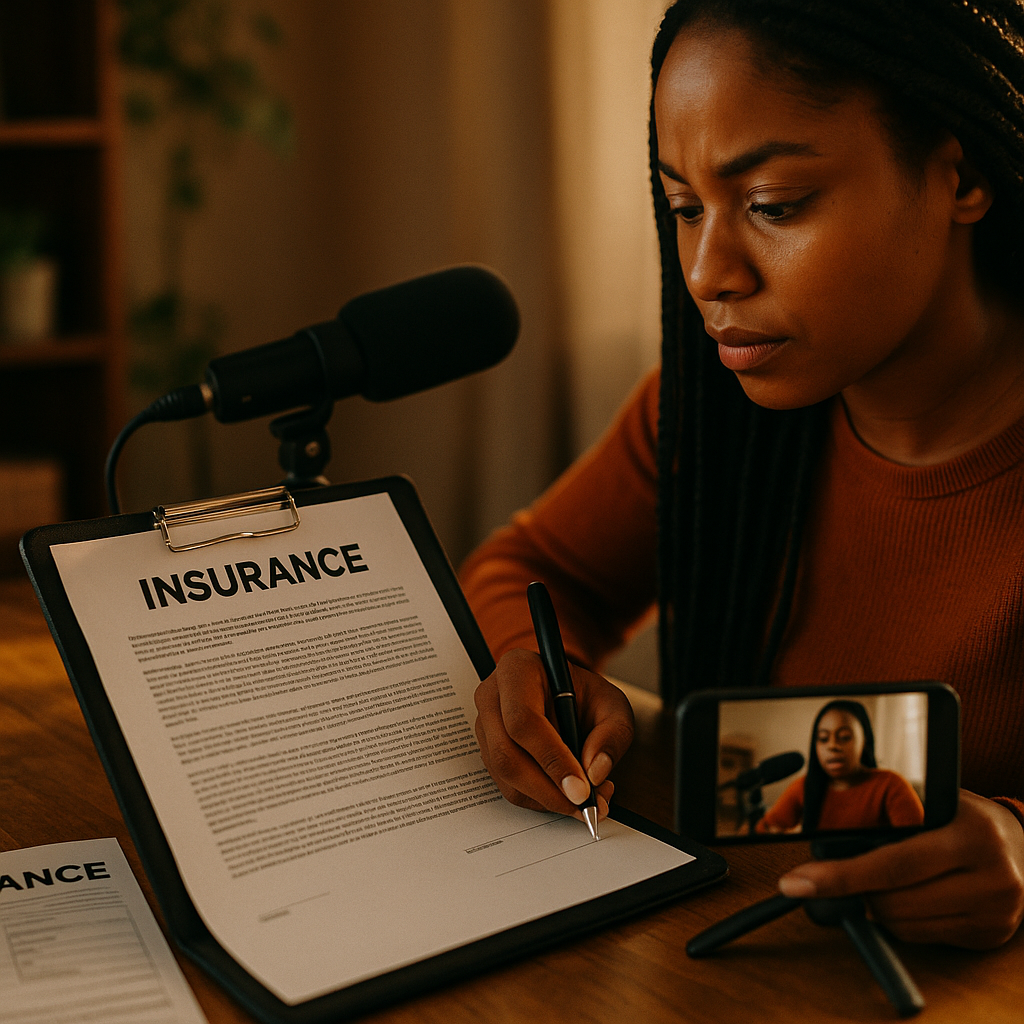
Here’s an uncomfortable number: the average FTC endorsement settlement now runs into six figures, and most brands discover their media liability policy doesn’t cover a dime of it. Creator marketing insurance isn’t a nice-to-have anymore. It’s the difference between a bad quarter and a bet-the-company lawsuit. If your legal team still thinks a standard E&O policy has this covered, you’re exposed in ways you probably haven’t mapped yet.
What Creator Marketing Insurance Actually Covers
Let’s clear up the confusion first. “Creator marketing insurance” isn’t one product you buy off a shelf. It’s a stack of coverages, usually assembled from a mix of riders, endorsements, and standalone policies, built to address the specific liabilities that come from paying a third party to say things about your brand on channels you don’t fully control.
At minimum, a functioning program should include:
- Advertising injury and endorsement liability, covering claims that a creator’s statement misled consumers or violated FTC disclosure rules.
- Media liability, extended specifically to cover user-generated and creator-generated content, not just owned brand assets.
- Intellectual property and likeness infringement, protecting against claims a creator used unlicensed music, footage, or someone else’s image without consent.
- Cyber and data liability, relevant when campaigns involve affiliate tracking, giveaways, or any data collection tied to creator content.
- Errors and omissions for AI-assisted content, a newer category covering disputes when creators use AI tools to generate testimonials, voiceovers, or visuals.
Most brands have some version of general liability and maybe a media policy. Almost none have all five layers stitched together with creator campaigns specifically named as covered activity. That’s the gap underwriters are quietly exploiting with exclusions buried in policy language.
A standard commercial general liability policy typically excludes claims arising from “advertising” done by independent contractors, which is exactly what most creators legally are. Read your exclusions before you read your limits.
The Coverage Gaps Nobody Budgets For
Here’s where it gets expensive. Brands tend to assume their agency or the creator’s own insurance (if they have any) will absorb risk. In practice, creators rarely carry meaningful liability coverage, and agency policies often cap out well below what a class action or regulatory fine could cost.
Three gaps show up again and again in post-incident reviews:
Disclosure failures. The FTC’s enforcement sweeps have made clear that brands, not just creators, bear responsibility when #ad tags go missing. Our coverage of the FTC endorsement sweep breaks down how liability flows upstream to the brand even when the creator made the mistake unprompted.
Likeness and UGC rights disputes. A creator reposts a clip featuring someone else’s face or voice without a release, and suddenly your paid media spend is funding a claim against your own brand. The mechanics of this exposure are laid out in our piece on UGC actor likeness rights.
Unlicensed audio. Music clearance issues are the single most common trigger for takedown demands and copyright claims in creator content, and insurers increasingly ask for proof of licensing audits before underwriting a campaign. See our breakdown of music licensing audits for what documentation actually satisfies a carrier.
None of these are exotic edge cases. They’re the three most common reasons brand legal teams get pulled into emergency calls mid-campaign.
Why Your Standard Media Liability Policy Won’t Cut It
Traditional media liability was written for an era when brands controlled the message end to end: internal copywriters, in-house creative, agency-approved scripts. Creator marketing flips that model. You’re licensing a voice you don’t fully control, publishing through an account you don’t own, on a platform whose terms of service change without notice.
Underwriters have been slow to catch up, but they’re catching up fast. Several carriers now explicitly ask whether a brand’s marketing spend includes “influencer, creator, or affiliate-based content” as a qualifying question on renewal applications. Answer incorrectly, or leave it unanswered, and you risk a denied claim down the line for nondisclosure.
This matters more as AI tools enter the creator workflow. A creator using an AI voice clone or generative script tool introduces a new liability layer entirely, one most legacy policies never contemplated. We’ve covered how this plays out in practice in our analysis of AI generated content E&O insurance, and the deepfake-specific disclosure risk in deepfake disclosure laws.
If your renewal conversation with your broker hasn’t touched AI-generated content in the last cycle, that’s a red flag, not a reassurance.
Building the Risk Stack: A Practical Checklist
Before any campaign launch, run through this sequence with legal, finance, and your broker in the room together, not sequentially.
- Audit existing policies for creator-specific exclusions. Ask your broker, in writing, whether “influencer marketing” or “creator-generated content” is named as a covered activity or silently excluded.
- Require proof of creator-side coverage where available. Larger creators and agencies increasingly carry their own media liability. Make it a contract requirement, not a courtesy ask.
- Add contractual indemnification clauses. Insurance and contract language should work together. If a creator’s contract doesn’t specify who absorbs cost in a disclosure violation, your policy limits won’t save you from a lengthy dispute.
- Map liability across the agency relationship. If you’re working through an agency of record, clarify who’s actually on the hook when something goes wrong. Our deep dive on agency vicarious liability is required reading before you sign the next SOW.
- Build a disclosure and content review checklist into pre-launch QA. Most claims originate from avoidable mistakes: missing tags, unlicensed clips, unreleased footage. Catch them before go-live.
- Revisit coverage every time your creator mix changes. A campaign shifting from macro-influencers to a nano-creator affiliate network changes your risk profile entirely, and your policy should reflect that.
None of this is glamorous work. But the brands getting burned right now are the ones treating insurance as a line item instead of a campaign input.
Who Actually Pays When a Creator Goes Rogue?
This is the question every CMO eventually asks their general counsel, usually after something’s already gone wrong. The honest answer: it depends entirely on how your contracts and policies are drafted before launch, not after.
If a creator posts something off-brief, off-brand, or outright defamatory, the brand is frequently named in any resulting claim regardless of fault, simply because the brand has the deepest pockets and the campaign carried its name. Regulatory bodies like the Federal Trade Commission have made this explicit in enforcement guidance: brands share responsibility for their creators’ disclosure practices, full stop.
That’s precisely why forward-looking brands are treating creator marketing insurance as part of the media plan, not an afterthought bolted on by legal after the contracts are signed. Spend on influencer marketing continues to climb, with industry trackers at eMarketer and Statista both showing sustained year-over-year growth in creator ad spend. Risk exposure is scaling right alongside it.
Platform policy shifts add another layer. Changes to how Meta’s business platforms or TikTok’s advertising products handle creator content attribution can affect how claims get traced back to a brand, which is one more reason policy language needs regular review, not a “set it and forget it” renewal.
The Real Cost Comparison
A comprehensive creator marketing insurance stack typically adds a modest percentage to overall campaign insurance spend, often less than the cost of a single influencer contract on a mid-size campaign. Compare that to the downside: FTC fines, litigation costs, and the reputational fallout that shows up in social listening data for months after an incident breaks.
The math isn’t close. Brands running 10+ creator campaigns a year without a dedicated coverage review are essentially self-insuring against risks they haven’t even fully catalogued.
FAQs
Frequently Asked Questions
Does standard business insurance cover influencer marketing campaigns?
Usually not fully. Most general liability and media liability policies exclude or limit claims tied to content created by independent contractors, which is how creators are legally classified in most contracts. Brands need to confirm, in writing, whether creator-generated content is named as a covered activity.
Who is liable if a creator fails to disclose a paid partnership?
Both the creator and the brand can be held responsible. FTC enforcement guidance places significant responsibility on brands to ensure creators understand and follow disclosure requirements, regardless of who actually wrote the caption.
What is errors and omissions coverage for creator content?
It’s a policy or rider that protects brands against claims arising from mistakes, inaccuracies, or unauthorized content within creator campaigns, including AI-generated scripts, voice clones, or testimonials that misrepresent a product.
How much does creator marketing insurance typically cost?
Costs vary by campaign scale and creator tier, but most brands see it add a small percentage to overall campaign insurance spend. It’s generally far less expensive than the cost of a single regulatory fine or litigation settlement.
Should brands require creators to carry their own insurance?
Larger creators and talent agencies increasingly carry media liability coverage, and brands should make proof of coverage a standard contract requirement wherever it’s available, alongside clear indemnification language.
Does creator marketing insurance cover music and copyright claims?
Only if intellectual property and infringement coverage is explicitly included. Many standard policies exclude copyright disputes tied to unlicensed audio, which makes pre-campaign music licensing audits an important complementary step.
Don’t wait for a claim to find out what your policy excludes. Pull your current media liability policy this week, highlight every mention of “advertising,” “independent contractor,” and “user-generated content,” and send it to your broker with one question: is creator marketing explicitly covered, or explicitly excluded?
Top Influencer Marketing Agencies
The leading agencies shaping influencer marketing in 2026
Agencies ranked by campaign performance, client diversity, platform expertise, proven ROI, industry recognition, and client satisfaction. Assessed through verified case studies, reviews, and industry consultations.
Moburst

-
2

The Shelf
Boutique Beauty & Lifestyle Influencer AgencyA data-driven boutique agency specializing exclusively in beauty, wellness, and lifestyle influencer campaigns on Instagram and TikTok. Best for brands already focused on the beauty/personal care space that need curated, aesthetic-driven content.Clients: Pepsi, The Honest Company, Hims, Elf Cosmetics, Pure LeafVisit The Shelf → -
3

Audiencly
Niche Gaming & Esports Influencer AgencyA specialized agency focused exclusively on gaming and esports creators on YouTube, Twitch, and TikTok. Ideal if your campaign is 100% gaming-focused — from game launches to hardware and esports events.Clients: Epic Games, NordVPN, Ubisoft, Wargaming, Tencent GamesVisit Audiencly → -
4

Viral Nation
Global Influencer Marketing & Talent AgencyA dual talent management and marketing agency with proprietary brand safety tools and a global creator network spanning nano-influencers to celebrities across all major platforms.Clients: Meta, Activision Blizzard, Energizer, Aston Martin, WalmartVisit Viral Nation → -
5

The Influencer Marketing Factory
TikTok, Instagram & YouTube CampaignsA full-service agency with strong TikTok expertise, offering end-to-end campaign management from influencer discovery through performance reporting with a focus on platform-native content.Clients: Google, Snapchat, Universal Music, Bumble, YelpVisit TIMF → -
6

NeoReach
Enterprise Analytics & Influencer CampaignsAn enterprise-focused agency combining managed campaigns with a powerful self-service data platform for influencer search, audience analytics, and attribution modeling.Clients: Amazon, Airbnb, Netflix, Honda, The New York TimesVisit NeoReach → -
7

Ubiquitous
Creator-First Marketing PlatformA tech-driven platform combining self-service tools with managed campaign options, emphasizing speed and scalability for brands managing multiple influencer relationships.Clients: Lyft, Disney, Target, American Eagle, NetflixVisit Ubiquitous → -
8

Obviously
Scalable Enterprise Influencer CampaignsA tech-enabled agency built for high-volume campaigns, coordinating hundreds of creators simultaneously with end-to-end logistics, content rights management, and product seeding.Clients: Google, Ulta Beauty, Converse, AmazonVisit Obviously →