


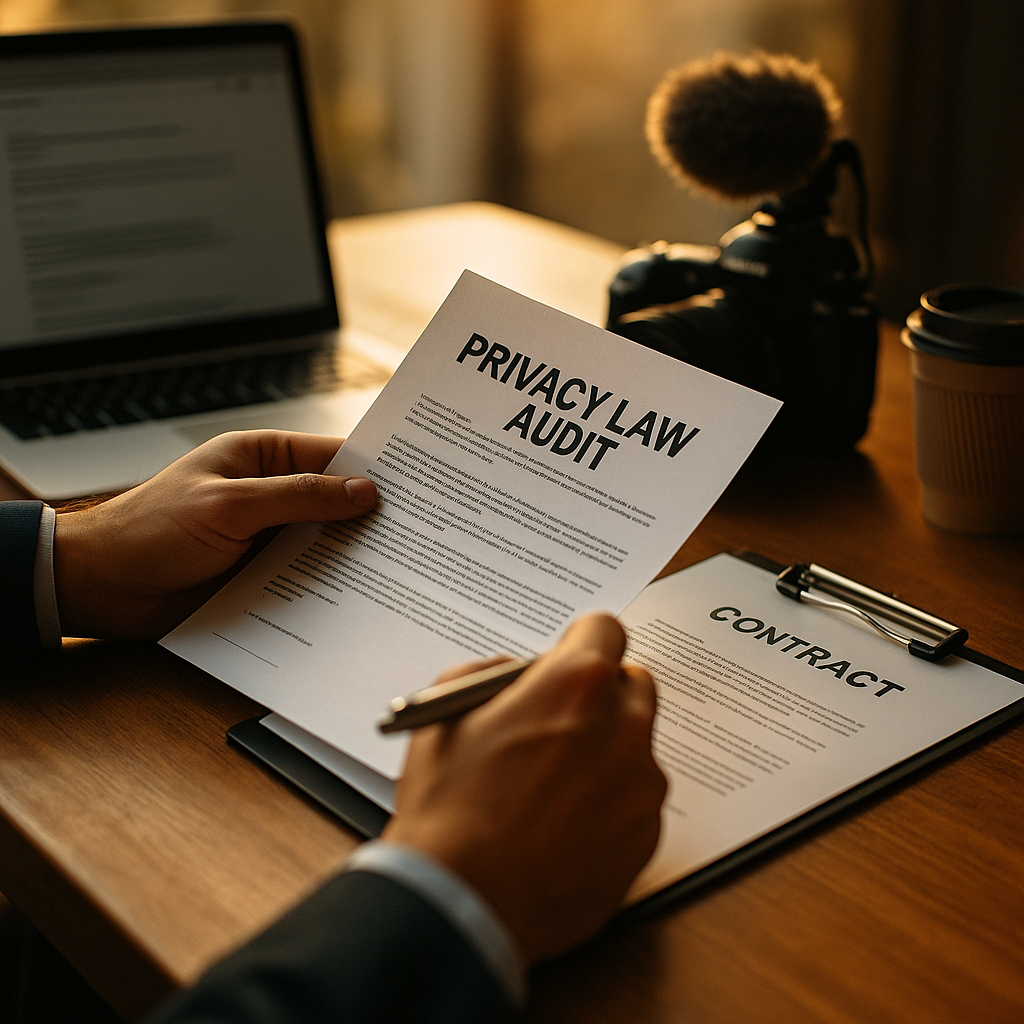
Twenty states now have comprehensive consumer privacy laws on the books, and most creator contracts still mention exactly one of them. If your influencer agreements reference “CCPA compliance” and call it a day, you’re one data broker complaint away from a regulatory headache that spans multiple attorneys general. Auditing creator contracts for compliance with state level privacy laws beyond CCPA isn’t a legal nicety anymore. It’s operational risk management.
The Patchwork Nobody Budgeted For
California started the trend, but it didn’t finish it. Virginia’s VCDPA, Colorado’s CPA, Connecticut’s CTDPA, Utah’s UCPA, and a growing list that now includes Texas, Oregon, Montana, Delaware, Iowa, Nebraska, New Jersey, Tennessee, Minnesota, and Maryland each impose their own definitions of “sale,” “sensitive data,” and “consumer rights.” Some require opt-in consent for targeted advertising. Others only require opt-out mechanisms. A few carve out small business exemptions that your creator falls under, while the brand behind the campaign does not.
Here’s the part that catches brand teams off guard: these laws don’t just regulate the brand. They regulate anyone acting as a “controller” or “processor” of personal data, and a creator running a giveaway that collects emails, phone numbers, or shipping addresses is doing exactly that. If your contract template was written in 2020 with CCPA as the only reference point, it almost certainly fails to address controller and processor obligations under newer statutes.
A creator contract that only names CCPA is effectively silent in nineteen other states with active privacy enforcement authority.
Where Creator Contracts Actually Fail
Pull ten influencer agreements from your current roster and read the data clauses closely. You’ll likely find one of three problems.
- Single-state tunnel vision. The contract names CCPA or CPRA specifically and nothing else, which means a Colorado or Connecticut resident’s data rights go unaddressed entirely.
- No data processing agreement. When a creator collects first-party data on your behalf (contest entries, affiliate sign-ups, email capture for a landing page) most comprehensive state laws require a formal DPA spelling out purpose limitation, retention, and deletion obligations. Few creator contracts include one.
- Undefined sensitive data handling. Beauty, wellness, fitness, and fintech creators routinely touch sensitive categories like health information or precise geolocation. Several state laws require opt-in consent before this data can even be collected, let alone shared with a brand’s CRM.
This isn’t theoretical. Brands have already faced scrutiny over how affiliate and ambassador programs handle consumer data, and the enforcement pattern mirrors what happened with children’s data in the FTC’s smart device settlement. Regulators are increasingly comfortable holding brands accountable for data practices executed through third parties, including creators.
Controller or Processor? The Distinction That Drives Liability
Most comprehensive state privacy laws split obligations between controllers (the entity deciding why and how data is processed) and processors (the entity processing data on the controller’s instructions). In a typical brand-creator relationship, the brand is almost always the controller. The creator, when collecting emails for a giveaway or using a brand’s tracking pixel, is functioning as a processor or sometimes a joint controller depending on how much independent discretion they exercise.
That distinction matters because controllers carry the heavier compliance burden: honoring consumer rights requests, conducting data protection assessments for high-risk processing, and ensuring downstream processors (your creators) are contractually bound to the same standards. Colorado and Connecticut both require controllers to execute binding contracts with processors that specify the nature of processing, confidentiality obligations, and deletion or return of data at engagement end. If your creator agreements don’t include this language, your legal team is exposed even if the creator never does anything wrong.
The Audit Checklist Marketing Teams Actually Need
You don’t need outside counsel to run a first-pass audit. Start here, then loop in legal for anything that triggers a flag.
- Map every data touchpoint. List every way creators in your program collect or access consumer data: giveaways, affiliate links, DM automation, email capture, UGC submission forms.
- Check for multi-state language. Does the contract reference “applicable state privacy laws” generically, or does it hardcode CCPA only? Generic, forward-compatible language is safer long term.
- Confirm processor obligations are spelled out. Look for retention limits, deletion timelines, and a prohibition on creators selling or sharing collected data without brand authorization.
- Flag sensitive data categories. Health, biometric, precise geolocation, and children’s data each carry heightened consent requirements in multiple states.
- Verify deletion and access request workflows. Can your team actually fulfill a consumer’s deletion request within statutory timelines (typically 45 days) if the data lives in a creator’s third-party tool?
- Audit vendor and platform integrations. If creators use their own CRM or email platform, confirm that platform’s data processing terms flow through to your contract.
This workflow pairs well with the vetting process many teams already run before onboarding talent. If you’re using AI-driven vetting tools to score creators pre-contract, make sure that scoring process itself complies with deletion obligations, a gap covered in detail in our piece on AI creator vetting and the CCPA deletion gap.
Sensitive Data Is Where the Real Exposure Lives
Generic email collection is manageable. The riskier scenarios involve categories most state laws classify as sensitive: health conditions, biometric identifiers, precise location, and data from known minors. A skincare brand running an ambassador program that asks followers to submit “before and after” photos with skin condition details is collecting health-adjacent data, full stop. Several state laws require explicit opt-in consent before that kind of collection, not the opt-out model CCPA historically favored.
Children’s data adds another layer. If your creator’s audience skews young, or if the creator themselves is a minor, you’re layering COPPA obligations on top of state law requirements, plus heightened scrutiny following cases like the issues raised in the Meta teen safety settlement. Contracts need explicit language addressing age verification and parental consent workflows where relevant, not a vague reference to “complying with applicable law.”
Biometric data deserves its own line item too. Virtual try-on filters, AR beauty tools, and fitness apps that creators promote often capture facial geometry or body measurements. Illinois has its own biometric statute separate from general privacy law, and other states are following suit. If your creator contracts don’t name biometric data as a distinct category requiring separate consent, you’re relying on luck rather than legal clarity.
Rights of publicity intersect here too, since a creator’s likeness combined with biometric capture can trigger both privacy and publicity claims simultaneously, an overlap explored in our state-by-state right of publicity breakdown.
Building a Contract Template That Scales Across States
The fix isn’t drafting fifty state-specific riders. It’s building one baseline template that assumes the strictest applicable standard and layers exceptions only where a state is genuinely more permissive. Practically, that means:
- Default to opt-in consent language for sensitive data collection regardless of which state the consumer resides in.
- Include a standing data processing addendum as an exhibit, not an afterthought, with clear retention and deletion timelines.
- Require creators to notify the brand within a fixed window (48 to 72 hours is common) of any data subject rights request they receive directly.
- Build in audit rights, allowing the brand to periodically review how a creator’s team handles collected data, especially for high-volume ambassador programs.
- Reference “all applicable state and federal privacy laws” rather than naming CCPA alone, future-proofing the contract as new statutes take effect.
This approach mirrors how smart teams have adapted contracts for other fast-moving compliance areas, including the frameworks discussed in our coverage of state AI disclosure laws. Privacy and disclosure compliance are converging, and a contract that treats them as separate silos will eventually miss something.
Marketing teams running affiliate or storefront programs carry extra exposure too. When a creator’s third-party seller tools mishandle consumer data, as outlined in our analysis of TikTok Shop seller data breaches, the liability question often comes back to whether the original contract clearly assigned processor responsibilities. According to eMarketer, influencer marketing spend continues to climb year over year, which means more contracts, more data touchpoints, and more exposure if the paperwork hasn’t kept pace with the regulatory landscape documented by groups tracking state privacy legislation.
What Happens If You Skip the Audit?
Enforcement under most comprehensive state privacy laws runs through state attorneys general rather than private right of action, with a few exceptions. That sounds less scary than it is. Attorneys general have shown growing appetite for consumer protection actions tied to influencer marketing broadly, and a privacy violation discovered during an unrelated FTC disclosure investigation, like those referenced in our breakdown of FTC and local regulator disclosure rules, can snowball quickly. One compliance gap rarely travels alone. Resources like the FTC’s official guidance make clear that regulators view the entire marketing supply chain, brand, agency, and creator, as fair game.
FAQs
Frequently Asked Questions
Do creator contracts need to name every state privacy law individually?
No. Naming every statute individually creates maintenance headaches as laws change. Better practice is referencing “applicable state and federal privacy laws” broadly while building the contract around the strictest current standard, typically opt-in consent for sensitive data.
Is a creator considered a data processor under state privacy laws?
In most brand-creator relationships, yes. If the creator collects consumer data (emails, addresses, health information) on behalf of a brand campaign, they typically function as a processor, which triggers contractual obligations under Colorado, Connecticut, Virginia, and similar statutes.
What counts as sensitive data in creator marketing?
Health conditions, biometric identifiers, precise geolocation, and data from known minors are the most common sensitive categories relevant to influencer campaigns, particularly in beauty, wellness, fitness, and fintech niches.
How quickly must a brand respond to a consumer deletion request involving creator-collected data?
Most comprehensive state laws require a response within 45 days, with a possible 45-day extension for complex requests. If the data lives in a creator’s third-party tool rather than the brand’s own systems, that timeline gets harder to meet without a pre-built workflow.
Does a data processing agreement need to be a separate document?
It can be a standalone exhibit attached to the main creator agreement rather than a fully separate contract, as long as it clearly specifies processing purpose, retention limits, deletion obligations, and confidentiality terms.
Next step: Pull your five highest-volume creator contracts this week, run them through the six-point audit checklist above, and flag any that reference CCPA alone. Fixing the template once is cheaper than fixing a violation in twenty states later.
Top Influencer Marketing Agencies
The leading agencies shaping influencer marketing in 2026
Agencies ranked by campaign performance, client diversity, platform expertise, proven ROI, industry recognition, and client satisfaction. Assessed through verified case studies, reviews, and industry consultations.
Moburst

-
2

The Shelf
Boutique Beauty & Lifestyle Influencer AgencyA data-driven boutique agency specializing exclusively in beauty, wellness, and lifestyle influencer campaigns on Instagram and TikTok. Best for brands already focused on the beauty/personal care space that need curated, aesthetic-driven content.Clients: Pepsi, The Honest Company, Hims, Elf Cosmetics, Pure LeafVisit The Shelf → -
3

Audiencly
Niche Gaming & Esports Influencer AgencyA specialized agency focused exclusively on gaming and esports creators on YouTube, Twitch, and TikTok. Ideal if your campaign is 100% gaming-focused — from game launches to hardware and esports events.Clients: Epic Games, NordVPN, Ubisoft, Wargaming, Tencent GamesVisit Audiencly → -
4

Viral Nation
Global Influencer Marketing & Talent AgencyA dual talent management and marketing agency with proprietary brand safety tools and a global creator network spanning nano-influencers to celebrities across all major platforms.Clients: Meta, Activision Blizzard, Energizer, Aston Martin, WalmartVisit Viral Nation → -
5

The Influencer Marketing Factory
TikTok, Instagram & YouTube CampaignsA full-service agency with strong TikTok expertise, offering end-to-end campaign management from influencer discovery through performance reporting with a focus on platform-native content.Clients: Google, Snapchat, Universal Music, Bumble, YelpVisit TIMF → -
6

NeoReach
Enterprise Analytics & Influencer CampaignsAn enterprise-focused agency combining managed campaigns with a powerful self-service data platform for influencer search, audience analytics, and attribution modeling.Clients: Amazon, Airbnb, Netflix, Honda, The New York TimesVisit NeoReach → -
7

Ubiquitous
Creator-First Marketing PlatformA tech-driven platform combining self-service tools with managed campaign options, emphasizing speed and scalability for brands managing multiple influencer relationships.Clients: Lyft, Disney, Target, American Eagle, NetflixVisit Ubiquitous → -
8

Obviously
Scalable Enterprise Influencer CampaignsA tech-enabled agency built for high-volume campaigns, coordinating hundreds of creators simultaneously with end-to-end logistics, content rights management, and product seeding.Clients: Google, Ulta Beauty, Converse, AmazonVisit Obviously →