


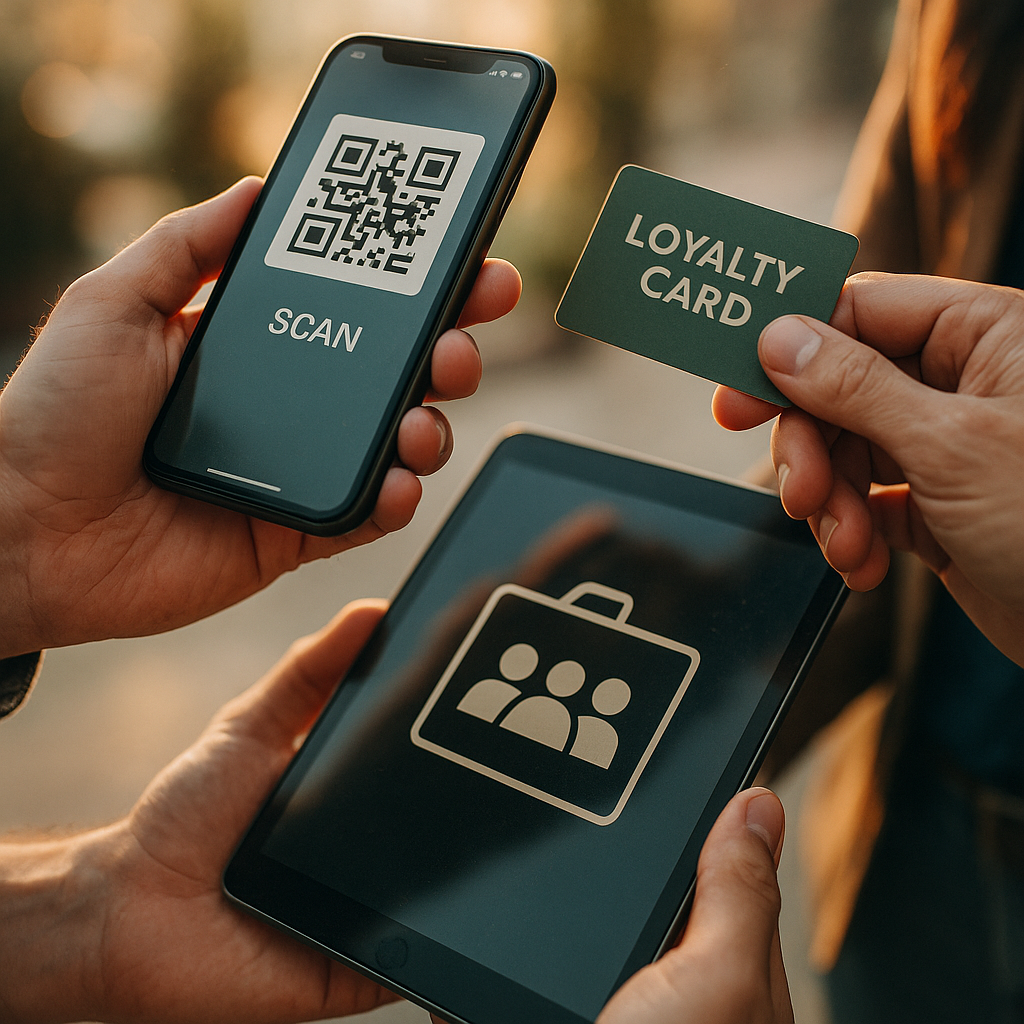
A shopper scans a QR code on an in-store display, taps an NFC tag on a product, and shows up in a creator’s livestream analytics dashboard, all within the same ten minutes. Who owns that data? Who disclosed what to whom? If your answer is “the retailer handles it,” you’re already exposed. Phygital campaign data sharing, the blending of physical retail touchpoints with digital creator activations, has quietly become one of the messiest privacy problems in influencer marketing, and most brand contracts weren’t written for it.
Phygital Activations Generate More Data Than Anyone Budgeted For
Phygital campaigns are not a niche tactic anymore. Retailers want creators doing in-store unboxings, livestream shopping tied to physical shelf displays, and AR try-on experiences triggered by scanning a tag. Each of these touchpoints quietly collects something: a device ID, a loyalty number, a face scan for a filter, a geolocation ping confirming store visit, a purchase record tied to an affiliate code.
None of that data lives in one place. The retailer’s point-of-sale system has purchase history. The creator’s platform has engagement and watch-time data. The brand’s CRM has email capture from a sweepstakes entry. The agency running the activation often has a fourth copy sitting in a campaign dashboard nobody audits. That’s four separate data controllers touching the same consumer interaction, and in most states, that triggers disclosure and consent obligations that nobody assigned to a specific party.
Every phygital touchpoint is a data collection event. If your activation brief doesn’t name who collects what and who it’s shared with, you don’t have a privacy program, you have a liability waiting to surface.
Why Retail Privacy Rules Don’t Map Cleanly to Creator Work
Retail privacy compliance was built around loyalty programs and in-store cameras, not creator-led activations. State comprehensive privacy laws (California’s CCPA/CPRA, Colorado, Virginia, and the growing list of others) require businesses to disclose what personal data they collect, who they share it with, and give consumers a way to opt out of “sale” or “sharing” for targeted advertising. The problem is that a creator activation often crosses all three categories in a single campaign: the retailer collects it, the brand uses it for targeting, and the creator’s platform processes it for attribution.
Under most state frameworks, sharing data for cross-context behavioral advertising counts as a “sale” even if no money changes hands. That means if a retailer hands purchase data to a brand so the brand can retarget shoppers who engaged with a creator’s in-store activation, that’s a disclosed, opt-out-eligible transaction. Few campaign briefs spell this out. Fewer still update the retailer’s privacy notice before the campaign launches.
This isn’t theoretical. Retailers have faced enforcement and class action exposure over undisclosed data sharing with ad tech and marketing partners, and regulators have made clear that “we didn’t know a third party was collecting data at our point of sale” is not a defense. If a creator’s AR filter captures biometric data during an in-store try-on moment, that’s a separate and often stricter compliance layer, similar to the issues covered in AR filter face scans and BIPA compliance.
The Three-Party Data Problem
Most phygital creator activations involve three parties with three different incentives around data:
- The retailer wants foot traffic data and purchase attribution, and is legally the data controller for anything collected in-store.
- The brand wants cross-channel attribution (did the creator’s content drive an in-store sale?) and often pushes for broader data sharing than the retailer’s privacy notice actually permits.
- The creator or their agency wants performance data to justify rates, and may be pulling platform analytics that include identifiable audience segments without a documented basis for sharing them back to the brand.
Nobody in that triangle wants to be the one who slows the campaign down to sort out a data processing agreement. That’s exactly how the gaps happen. A 2024 survey from eMarketer found that a majority of retail marketers admitted they didn’t have full visibility into which third parties their campaign vendors shared consumer data with, a number that should alarm anyone signing off on a phygital activation budget.
What “Reasonable Data Sharing” Actually Looks Like
You don’t need to abandon phygital tactics. You need a data sharing structure that survives an audit. Here’s what that looks like in practice.
Name the data flow before the campaign launches. Every phygital activation brief should include a simple map: what’s collected, at what touchpoint, by which system, and who else receives a copy. If you can’t draw this on one page, the campaign isn’t ready to go live.
Separate “performance data” from “personal data.” A creator needs to know their video drove 400 in-store scans. They don’t need the underlying list of 400 names and loyalty numbers. Most campaigns default to sharing raw data when aggregated reporting would satisfy the actual business need. This single change eliminates most of the downstream risk.
Update the retailer’s privacy notice before, not after, the activation. If data will flow to a brand’s ad platform or a creator’s analytics tool for retargeting purposes, that needs to be disclosed in the retailer’s existing privacy notice and reflected in opt-out mechanisms. Legal teams can turn this around fast if marketing flags it early. It’s a disaster when it surfaces during a regulator inquiry instead.
Put data processing terms in the creator contract, not just the retailer vendor agreement. If a creator or their agency is receiving any consumer data, even aggregated segment data, that relationship needs its own data processing terms: retention limits, no onward sale, deletion obligations on request. This is the same logic driving broader shifts in state privacy law audits and creator contract terms, and phygital campaigns raise the stakes because physical location data is involved.
If your creator contract only addresses content rights and payment terms, it’s missing the data clause that matters most in a phygital campaign: who can touch the consumer data generated by the activation, and for how long.
Consent at the Point of Activation
In-store QR codes and NFC taps feel frictionless, which is exactly why they’re risky. A shopper scanning a code to unlock a creator’s exclusive content doesn’t always realize they’re triggering a data collection event that feeds a brand’s CRM and a creator’s affiliate tracking simultaneously.
Clear, layered consent at the point of scan solves most of this. That means a short notice before the scan completes (not buried three screens deep) explaining what’s collected and who it’s shared with, plus a genuine opt-out that doesn’t kill the shopper’s ability to access the promotion. Regulators, including guidance referenced by the Federal Trade Commission, have consistently flagged dark-pattern consent flows as a deceptive practice, and QR-triggered data capture is squarely in that enforcement lane now.
For UK and EU-facing retail activations, the bar is even higher under guidance from the Information Commissioner’s Office, which treats location and biometric data from AR or in-store scanning as special category data requiring explicit consent, not implied consent from participation.
When Creators Become Accidental Data Processors
Here’s a scenario brand legal teams miss constantly: a creator runs their own tracking link or custom landing page for an in-store promotion, separate from the brand’s official tech stack. That creator is now an independent data controller, collecting consumer data under their own terms, often with none of the retailer’s required disclosures attached. If that data later gets breached or misused, the brand and retailer can still face reputational and regulatory fallout even though the creator built the leaky system. This is the same dynamic playing out in seller data breach liability disputes, where the party with the biggest audience and the smallest compliance budget ends up being the weak link.
The fix is contractual: creators running phygital activations should be required to use brand-approved tracking infrastructure, full stop. No independent landing pages, no personal CRM tools capturing consumer data from an in-store promotion. If a creator insists on their own system for operational reasons, that system needs a data processing addendum reviewed before launch, not after a breach.
Building the Checklist Before the Next Activation
Marketing and legal teams that get phygital campaigns right tend to run the same pre-launch checklist every time:
- Map every data touchpoint (scan, tap, livestream link, in-store sensor) and name the controller for each.
- Confirm the retailer’s privacy notice covers sharing with the brand and any creator-side analytics tools.
- Limit creator access to aggregated performance metrics unless a documented business reason requires raw data.
- Require brand-approved tracking links and landing pages, no exceptions for high-profile creators.
- Add data processing and deletion terms to the creator agreement, not just the retailer vendor contract.
- Build a visible, easy opt-out into every scan-to-engage moment, tested before launch.
- Document which state privacy frameworks apply based on where the retail locations and target audience sit.
None of this is glamorous. It’s also the difference between a phygital campaign that scales across hundreds of retail locations and one that gets pulled after a single complaint triggers a state attorney general inquiry. HubSpot’s research on consumer trust consistently shows that data transparency failures erode purchase intent faster than almost any other brand misstep, which makes this a performance issue as much as a legal one.
Vicarious liability questions also don’t disappear just because a retailer is in the mix. Agencies coordinating phygital activations should revisit how responsibility gets assigned across the chain, a topic covered in depth in agency liability for creator disclosures, since the same shared-responsibility logic applies to data handling, not just FTC disclosure compliance.
And if the activation involves any creator vetting or scoring tools that pull consumer or creator data for targeting decisions, make sure those vendors have their own deletion and consent mechanisms documented, a gap explored in AI creator vetting and CCPA deletion obligations.
FAQs
What counts as “phygital” data in a creator campaign?
Phygital data includes anything collected at a physical touchpoint (QR scans, NFC taps, in-store sensors, loyalty card swipes) and connected to a digital creator activation like a livestream, affiliate link, or AR filter. It typically includes device identifiers, purchase records, location data, and sometimes biometric data from facial scanning filters.
Who is legally responsible for disclosing data sharing in a phygital campaign: the retailer, the brand, or the creator?
All three can carry responsibility depending on their role. Retailers are usually the primary data controller for in-store collection and must update privacy notices accordingly. Brands become responsible once they receive shared data for retargeting or CRM purposes. Creators become independent data processors or controllers if they run their own tracking links, landing pages, or analytics tools separate from brand-approved systems.
Does sharing campaign performance data with a creator count as a “sale” under state privacy laws?
It can, particularly if the data includes identifiable consumer information used for cross-context advertising, even without money changing hands. Aggregated, non-identifiable performance metrics (total scans, click-through rates) generally fall outside this definition, which is why limiting creators to aggregated reporting reduces compliance exposure significantly.
How should brands structure consent for QR codes and NFC taps used in creator activations?
Consent should be clear and immediate, disclosed before the scan completes rather than buried in a linked privacy policy. It should explain what data is collected, who receives it, and include a genuine opt-out that doesn’t block the consumer from the promised experience, such as a discount or exclusive content.
What should a creator contract include to cover phygital data sharing risk?
It should require use of brand-approved tracking infrastructure, prohibit independent data collection tools, set data retention and deletion timelines, and restrict onward sharing or sale of any consumer data the creator’s activation generates. These terms sit alongside standard disclosure and payment clauses but address a separate risk category entirely.
Run a data flow map on your next phygital activation before the brief goes to creators, not after launch. The brands avoiding regulatory headaches aren’t the ones with the most sophisticated tech stack, they’re the ones who can name every party touching consumer data and prove consent was collected at the exact moment it mattered.
FAQs
What counts as “phygital” data in a creator campaign?
Phygital data includes anything collected at a physical touchpoint (QR scans, NFC taps, in-store sensors, loyalty card swipes) and connected to a digital creator activation like a livestream, affiliate link, or AR filter. It typically includes device identifiers, purchase records, location data, and sometimes biometric data from facial scanning filters.
Who is legally responsible for disclosing data sharing in a phygital campaign: the retailer, the brand, or the creator?
All three can carry responsibility depending on their role. Retailers are usually the primary data controller for in-store collection and must update privacy notices accordingly. Brands become responsible once they receive shared data for retargeting or CRM purposes. Creators become independent data processors or controllers if they run their own tracking links, landing pages, or analytics tools separate from brand-approved systems.
Does sharing campaign performance data with a creator count as a “sale” under state privacy laws?
It can, particularly if the data includes identifiable consumer information used for cross-context advertising, even without money changing hands. Aggregated, non-identifiable performance metrics (total scans, click-through rates) generally fall outside this definition, which is why limiting creators to aggregated reporting reduces compliance exposure significantly.
How should brands structure consent for QR codes and NFC taps used in creator activations?
Consent should be clear and immediate, disclosed before the scan completes rather than buried in a linked privacy policy. It should explain what data is collected, who receives it, and include a genuine opt-out that doesn’t block the consumer from the promised experience, such as a discount or exclusive content.
What should a creator contract include to cover phygital data sharing risk?
It should require use of brand-approved tracking infrastructure, prohibit independent data collection tools, set data retention and deletion timelines, and restrict onward sharing or sale of any consumer data the creator’s activation generates. These terms sit alongside standard disclosure and payment clauses but address a separate risk category entirely.
Top Influencer Marketing Agencies
The leading agencies shaping influencer marketing in 2026
Agencies ranked by campaign performance, client diversity, platform expertise, proven ROI, industry recognition, and client satisfaction. Assessed through verified case studies, reviews, and industry consultations.
Moburst

-
2

The Shelf
Boutique Beauty & Lifestyle Influencer AgencyA data-driven boutique agency specializing exclusively in beauty, wellness, and lifestyle influencer campaigns on Instagram and TikTok. Best for brands already focused on the beauty/personal care space that need curated, aesthetic-driven content.Clients: Pepsi, The Honest Company, Hims, Elf Cosmetics, Pure LeafVisit The Shelf → -
3

Audiencly
Niche Gaming & Esports Influencer AgencyA specialized agency focused exclusively on gaming and esports creators on YouTube, Twitch, and TikTok. Ideal if your campaign is 100% gaming-focused — from game launches to hardware and esports events.Clients: Epic Games, NordVPN, Ubisoft, Wargaming, Tencent GamesVisit Audiencly → -
4

Viral Nation
Global Influencer Marketing & Talent AgencyA dual talent management and marketing agency with proprietary brand safety tools and a global creator network spanning nano-influencers to celebrities across all major platforms.Clients: Meta, Activision Blizzard, Energizer, Aston Martin, WalmartVisit Viral Nation → -
5

The Influencer Marketing Factory
TikTok, Instagram & YouTube CampaignsA full-service agency with strong TikTok expertise, offering end-to-end campaign management from influencer discovery through performance reporting with a focus on platform-native content.Clients: Google, Snapchat, Universal Music, Bumble, YelpVisit TIMF → -
6

NeoReach
Enterprise Analytics & Influencer CampaignsAn enterprise-focused agency combining managed campaigns with a powerful self-service data platform for influencer search, audience analytics, and attribution modeling.Clients: Amazon, Airbnb, Netflix, Honda, The New York TimesVisit NeoReach → -
7

Ubiquitous
Creator-First Marketing PlatformA tech-driven platform combining self-service tools with managed campaign options, emphasizing speed and scalability for brands managing multiple influencer relationships.Clients: Lyft, Disney, Target, American Eagle, NetflixVisit Ubiquitous → -
8

Obviously
Scalable Enterprise Influencer CampaignsA tech-enabled agency built for high-volume campaigns, coordinating hundreds of creators simultaneously with end-to-end logistics, content rights management, and product seeding.Clients: Google, Ulta Beauty, Converse, AmazonVisit Obviously →