


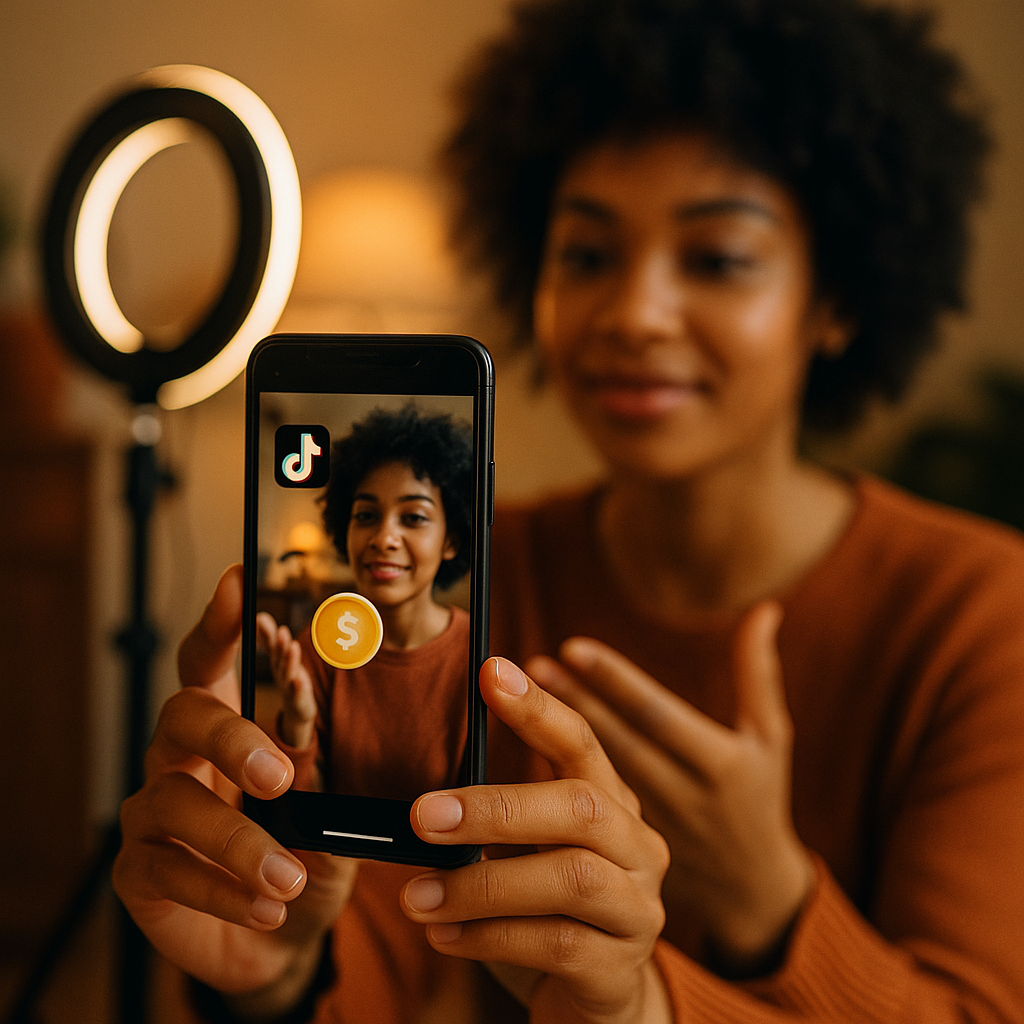
Ninety percent of TikTok’s top creators use the platform’s built in paid partnership label instead of writing out “#ad” in their captions, according to internal platform guidance shared with agencies. That checkbox feels like compliance. It isn’t. The FTC may accept it as a disclosure mechanism, but a growing number of state consumer protection statutes treat it as functionally invisible, and brands relying on it alone are building their influencer programs on a legal foundation that cracks the moment a state attorney general starts asking questions.
The FTC Bar Is Lower Than You Think
The Federal Trade Commission’s endorsement guidelines require that material connections between brands and creators be “clear and conspicuous.” TikTok’s native paid partnership label technically checks that box. It appears at the top of a video, it’s machine readable, and it satisfies the letter of federal guidance. Legal teams love it because it’s easy to audit at scale: pull a report, confirm the flag is toggled on, move on.
But “clear and conspicuous” under federal law has always been a floor, not a ceiling. The FTC has never claimed that a single disclosure format preempts stricter state rules. It’s a baseline standard designed for interstate commerce, not a shield against the 50 different consumer protection regimes creators and brands actually operate under.
A disclosure that satisfies federal minimums can still violate a state’s Unfair and Deceptive Acts and Practices statute if consumers in that state can plausibly claim they were misled.
State Laws Weren’t Built With TikTok’s Label in Mind
Most state UDAP statutes predate influencer marketing entirely. They were written to catch bait and switch pricing and fraudulent warranties, then interpreted broadly enough by state courts and attorneys general to cover digital advertising. That broad interpretation is the problem. Where the FTC asks “was this disclosure clear and conspicuous by federal standard,” many state laws ask a fuzzier, consumer facing question: “would a reasonable person in this state have understood this was an ad?”
That’s a subjective test, and TikTok’s small gray label, easy to miss on a muted autoplay video scrolling past in someone’s feed, doesn’t automatically pass it. California’s Unfair Competition Law, Texas’s Deceptive Trade Practices Act, and New York’s General Business Law Section 349 all give private plaintiffs and state regulators room to argue that a platform level tag isn’t sufficient when the actual content (voiceover, on screen text, pacing) buries or contradicts the disclosure.
California, Texas, and the Patchwork Nobody Budgets For
California in particular has aggressive consumer protection enforcement and a plaintiff’s bar that actively monitors influencer content for class action potential. Texas has been expanding its own deceptive trade practices enforcement against digital advertising. Neither state has issued a rule saying “TikTok’s label is insufficient.” They don’t need to. The ambiguity itself is the risk, because it means brands can’t point to a single federal safe harbor and call the compliance question closed.
Our team mapped how these overlapping requirements interact across federal, state, and international frameworks in disclosure rules across regulators, and the pattern holds: platform tools are built for the lowest common denominator, not the strictest jurisdiction a brand actually sells into.
Where Brands Get Exposed Even When Creators Don’t Get Sued
Here’s the part legal and compliance teams underestimate: liability doesn’t stop at the creator. Under most state consumer protection frameworks, the brand that paid for the content, and in some structures the agency that brokered the deal, can be named as a co-defendant. State AGs and private plaintiffs generally go after the entity with the deepest pockets, not the creator with the biggest following.
This matters more now that TikTok Shop GMV data sharing gives regulators and plaintiffs’ attorneys an actual paper trail connecting a brand’s revenue to a specific piece of content. It’s no longer a matter of proving intent to deceive. It’s a matter of matching a sales spike to a video that used a label a court might decide wasn’t conspicuous enough.
Cross platform campaigns compound the exposure. A creator posting the same content to TikTok, Instagram, and YouTube might use three different disclosure mechanics, each satisfying that platform’s own guidance but none of them uniform enough to defend as a consistent, good faith compliance program. We broke down how to reconcile those inconsistencies in cross platform disclosure practices, and the short version is: platform native tools were never designed to be your legal defense.
Is Anyone Actually Enforcing This?
Fair question. Most state consumer protection enforcement against influencer content has so far focused on egregious cases: undisclosed pump and dump crypto promotions, fake weight loss claims, deceptive health products. Routine “the label was too small” cases haven’t flooded state courts yet. But enforcement patterns in consumer protection law tend to lag behind the volume of violations, then arrive in waves once a state AG’s office builds a case around one high profile brand and uses it as a template.
Multiple state attorneys general have signaled increased interest in digital advertising practices generally, and influencer content sits squarely in that scope. eMarketer research shows influencer marketing spend has grown fast enough that it’s no longer a niche line item states can ignore; it’s a material category of consumer facing advertising with real transaction volume behind it, especially with shoppable video formats.
Health and wellness claims are an early flashpoint. If a creator layers a health claim over a product demo with a barely visible label, that’s a combination state regulators have already started scrutinizing outside the influencer context entirely. Similar dynamics show up in TikTok Drop Shop health claims enforcement, where multiple regulatory bodies can claim jurisdiction over the same piece of content at once.
Building a Disclosure Standard That Survives 50 State Tests
The fix isn’t complicated, but it requires brands to stop treating platform native labels as the entire compliance strategy. A few practical moves:
- Layer disclosures. Pair TikTok’s paid partnership label with an explicit verbal or on screen “ad” callout in the first three seconds of the video, before the algorithm decides whether to keep someone watching.
- Standardize across platforms. Require the same disclosure language and placement regardless of where the content posts, so you have one consistent compliance story instead of five.
- Document creator briefs. Keep records showing you instructed creators to disclose clearly, beyond just toggling a platform setting. This is your good faith evidence if a state regulator comes asking.
- Localize where required. If your campaign runs across audiences with different primary languages, disclosure has to be understandable in that language too, not just present in English. We covered the mechanics of that in multilingual disclosure requirements.
- Audit for privacy overlap. Disclosure and data practices increasingly intersect, particularly as attribution tools track consumer behavior post disclosure. See how that overlap plays out in state privacy law versus identity resolution.
None of this is about distrusting TikTok’s tools. It’s about recognizing that a single platform feature, built to satisfy one federal standard, was never going to be sturdy enough to hold up across 50 different state legal frameworks with their own definitions of what “clear” actually means to a consumer.
Brands that rely on social media compliance tools for reporting still need a legal review layer on top, because none of those platforms are built to interpret state UDAP statutes. That’s a job for outside counsel familiar with advertising law, not an automated dashboard.
Visible FAQ
Frequently Asked Questions
Does TikTok’s paid partnership label satisfy FTC disclosure requirements?
Generally yes. The FTC’s endorsement guidelines require disclosures to be clear and conspicuous, and TikTok’s built in label meets that federal baseline when used correctly and positioned where viewers will actually see it.
Which state laws impose stricter disclosure standards than the FTC?
States with broad Unfair and Deceptive Acts and Practices statutes, including California, Texas, and New York, apply a reasonable consumer standard that can require more visible or explicit disclosure than the FTC’s federal minimum, especially when content is ambiguous or the label is easy to miss.
Can a brand be liable if a creator uses TikTok’s label but violates state law?
Yes. Brands and agencies that commission the content can be named alongside or instead of the creator in state enforcement actions or private lawsuits, particularly when there’s a documented sales connection through tools like shoppable storefronts.
What should brands do to close the disclosure gap between FTC and state rules?
Layer platform native labels with explicit on screen or verbal disclosures, standardize disclosure language across every platform a campaign runs on, document creator briefing instructions, and localize disclosures for non English speaking audiences.
Are state attorneys general actively enforcing influencer disclosure violations?
Enforcement so far has concentrated on egregious cases like undisclosed financial or health product promotions, but multiple state attorneys general have signaled broader interest in digital advertising practices, and influencer content is expected to see more scrutiny as spend and transaction volume grow.
The next brand safety audit on your calendar should include a state by state disclosure review, not just a platform compliance check. Ask your legal team one question: if a plaintiff’s attorney in California pulled your last ten TikTok campaigns, would the label alone hold up?
Top Influencer Marketing Agencies
The leading agencies shaping influencer marketing in 2026
Agencies ranked by campaign performance, client diversity, platform expertise, proven ROI, industry recognition, and client satisfaction. Assessed through verified case studies, reviews, and industry consultations.
Moburst

-
2

The Shelf
Boutique Beauty & Lifestyle Influencer AgencyA data-driven boutique agency specializing exclusively in beauty, wellness, and lifestyle influencer campaigns on Instagram and TikTok. Best for brands already focused on the beauty/personal care space that need curated, aesthetic-driven content.Clients: Pepsi, The Honest Company, Hims, Elf Cosmetics, Pure LeafVisit The Shelf → -
3

Audiencly
Niche Gaming & Esports Influencer AgencyA specialized agency focused exclusively on gaming and esports creators on YouTube, Twitch, and TikTok. Ideal if your campaign is 100% gaming-focused — from game launches to hardware and esports events.Clients: Epic Games, NordVPN, Ubisoft, Wargaming, Tencent GamesVisit Audiencly → -
4

Viral Nation
Global Influencer Marketing & Talent AgencyA dual talent management and marketing agency with proprietary brand safety tools and a global creator network spanning nano-influencers to celebrities across all major platforms.Clients: Meta, Activision Blizzard, Energizer, Aston Martin, WalmartVisit Viral Nation → -
5

The Influencer Marketing Factory
TikTok, Instagram & YouTube CampaignsA full-service agency with strong TikTok expertise, offering end-to-end campaign management from influencer discovery through performance reporting with a focus on platform-native content.Clients: Google, Snapchat, Universal Music, Bumble, YelpVisit TIMF → -
6

NeoReach
Enterprise Analytics & Influencer CampaignsAn enterprise-focused agency combining managed campaigns with a powerful self-service data platform for influencer search, audience analytics, and attribution modeling.Clients: Amazon, Airbnb, Netflix, Honda, The New York TimesVisit NeoReach → -
7

Ubiquitous
Creator-First Marketing PlatformA tech-driven platform combining self-service tools with managed campaign options, emphasizing speed and scalability for brands managing multiple influencer relationships.Clients: Lyft, Disney, Target, American Eagle, NetflixVisit Ubiquitous → -
8

Obviously
Scalable Enterprise Influencer CampaignsA tech-enabled agency built for high-volume campaigns, coordinating hundreds of creators simultaneously with end-to-end logistics, content rights management, and product seeding.Clients: Google, Ulta Beauty, Converse, AmazonVisit Obviously →