


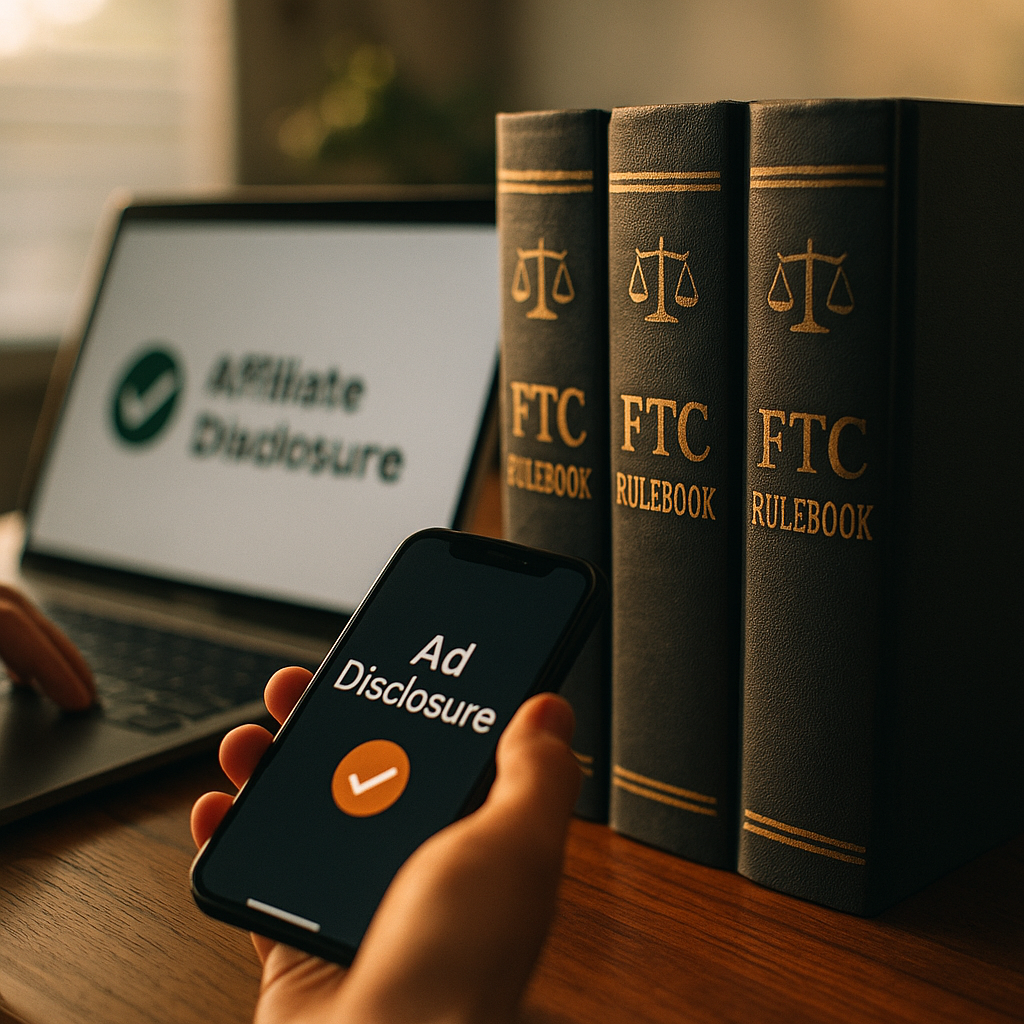
The FTC has brought more than 250 enforcement actions tied to deceptive endorsements in the past decade, and disclosure remains the single most-cited violation. Now stretch that liability across three platforms with three different UI constraints and one creator posting the same affiliate link everywhere. Cross-platform affiliate disclosure isn’t a copywriting nitpick anymore. It’s the gap where brand risk quietly compounds.
Here’s the uncomfortable truth: the FTC doesn’t care that Instagram buries branded content tags two taps deep, or that TikTok Shop’s commission structure looks nothing like a traditional affiliate link, or that Shopify checkout pages strip context entirely. The agency’s endorsement guidelines apply the same standard everywhere: clear, conspicuous, and unavoidable. Brands that treat disclosure as a platform-by-platform checkbox exercise are building a compliance program with holes in every seam.
Why One Creator, One Link, Three Rulebooks Is a Problem
Picture a mid-tier lifestyle creator running a single affiliate campaign for a skincare brand. She posts a TikTok Shop video with an in-app storefront tag, an Instagram Reel with a swipe-up link, and a Shopify landing page the brand built for the campaign. Same product, same commission, same FTC obligation. But the disclosure mechanics differ wildly.
TikTok Shop’s commission-based structure often obscures the fact that a purchase link is a paid placement at all, since the “Shop Now” button looks identical whether the creator is compensated or not. Instagram’s branded content tool auto-generates a “Paid partnership” label, but only if the creator remembers to toggle it and the brand has approved the tag on the back end. Shopify pages, meanwhile, sit entirely outside the social platform’s disclosure tooling. If the creator’s affiliate code redirects to a bare product page with no “#ad” language visible before the click, the brand has a disclosure gap the moment traffic lands.
A single affiliate campaign spanning TikTok Shop, Instagram, and Shopify can generate three separate disclosure failure points, and the FTC treats each platform surface as an independent instance of the same violation.
This is exactly the dynamic explored in TikTok Shop drop feeds coverage: commission-driven UX design isn’t built with disclosure in mind, it’s built for conversion speed. Brands that assume TikTok’s native tools handle compliance are outsourcing legal risk to a product team that has never read an FTC consent decree.
The Instagram Disclosure Trap Brands Keep Falling Into
Instagram remains the platform where brands feel most confident, largely because Meta’s branded content tools have existed longer and feel more mature. That confidence is misplaced. The FTC’s guidance is explicit that platform-native disclosure tools (like Instagram’s “Paid partnership” label) are not automatically sufficient on their own. If the label appears above the fold but the caption never mentions the relationship, or if the tag is applied inconsistently across a Reel versus a static post versus Stories, the brand is still exposed.
There’s also the multi-post problem. A creator might disclose properly on the first post in a series and drop the disclosure on the follow-up “resharing” content, assuming the audience already knows. The FTC doesn’t accept “the audience already knows” as a defense. Every post is evaluated on its own.
TikTok Shop’s Commission Model Muddies the Disclosure Line
TikTok Shop’s affiliate architecture is fundamentally different from a traditional influencer partnership. Creators join a marketplace, browse available products, and generate commission links on their own initiative, sometimes without any direct brand relationship or contract at all. That’s a structural problem for disclosure enforcement, because there’s no brand-side approval workflow forcing the “#ad” tag before content goes live.
This is the same liability structure covered in TikTok Shop commissions and FTC risk reporting: brands are still the party the FTC pursues, even when the creator initiated the relationship independently through the marketplace rather than through a brand-issued brief. “We didn’t manage that creator directly” is not a defense that has held up in prior enforcement patterns.
Add to this the reality that TikTok Shop’s live shopping and drop-feed formats compress the disclosure window even further. A creator doing a live unboxing with an embedded shop link has seconds, not paragraphs, to establish the paid relationship. Brands running live commerce campaigns need disclosure language baked into the creator’s opening script, not left to improvisation.
Shopify Is the Blind Spot Most Compliance Teams Miss
Everyone audits the social post. Almost nobody audits the landing page. That’s the gap.
When a creator’s affiliate link redirects off-platform to a Shopify storefront or custom landing page, the FTC’s disclosure requirement doesn’t end at the social post, it follows the customer journey. If the click lands on a page that reads like organic brand content with no indication a creator commission is involved, that’s a second, independent disclosure failure. This matters even more as AI shopping agents and browser assistants increasingly scrape and summarize these pages for consumers who never see the original post at all, a risk explored in AI shopping agents on Shopify coverage.
Practical fix: build disclosure directly into the landing page template, not just the referring post. A persistent banner or footer line (“This page contains affiliate links; [Creator Name] may earn a commission”) closes the gap without requiring every creator to remember to add it manually.
Building a Cross-Platform Disclosure Standard That Actually Holds
Brands need one internal disclosure policy that translates across every surface, not three separate platform playbooks. That means writing platform-agnostic language into creator contracts up front, rather than relying on each platform’s native tools to do the compliance work.
- Standardize the language, not just the tag. Require creators to use explicit words like “ad,” “sponsored,” or “paid partnership” in the caption or spoken audio, independent of whatever native label the platform applies.
- Audit the full funnel, not just the post. Check the social content, the click-through destination, and any retargeting creative for consistent disclosure.
- Build disclosure checkpoints into content approval workflows. Don’t let a post go live without a compliance check, especially for TikTok Shop where creators can list products without brand sign-off.
- Document everything. Screenshots, timestamps, and approval logs matter enormously if the FTC or a state AG comes asking. This is the same audit-trail logic covered in revenue share creator deal audits.
- Train creators on platform-specific mechanics, not generic rules. A creator who understands why TikTok Shop’s UI hides commission relationships will disclose more deliberately than one who’s just handed a boilerplate contract clause.
Tools like Sprout Social and platform-native reporting dashboards can help flag missing disclosure tags at scale, but no automated tool catches every off-platform redirect. Manual spot-checks on a rolling sample of live content remain the most reliable safety net, particularly for high-volume affiliate programs running hundreds of creator links simultaneously.
The FTC evaluates disclosure at every point a consumer could reasonably encounter the offer, not just the first post a brand happens to approve.
What About Creator Networks and Marketplace Models?
Programs like TikTok’s Lantern network add another layer of complexity, since brands often don’t have direct relationships with every creator generating commission through the marketplace. As covered in Lantern membership liability analysis, network membership does not transfer disclosure responsibility away from the brand whose product is being sold. If your product appears in a TikTok Shop marketplace listing, you own the disclosure outcome, regardless of how many intermediary layers exist between you and the creator.
This is why brand-side legal and marketing teams need visibility into every channel where their product can be sold via affiliate link, not just the campaigns they directly commissioned. That includes unauthorized reseller-style creator activity that technically falls within the marketplace’s terms of service but outside the brand’s own creator vetting process, a gap detailed in creator vetting gap reporting.
The Compliance Cost of Getting This Wrong
Enforcement risk isn’t theoretical. State attorneys general have increasingly picked up cases the FTC doesn’t pursue directly, and platform-level penalties (account suspension, product delisting) can hit faster than any federal action. According to eMarketer data, affiliate and creator commerce spend continues climbing year over year, which means the surface area for disclosure failure grows in parallel. A brand running affiliate programs across three or more platforms without a unified disclosure standard isn’t managing risk, it’s accumulating it.
The operational fix is cheaper than the enforcement outcome. Build one disclosure standard, apply it everywhere, audit consistently, and document the process. That’s a fraction of the cost of a consent decree or a multi-state investigation.
FAQs
Frequently Asked Questions
Does the FTC treat TikTok Shop affiliate links differently from Instagram affiliate links?
No. The FTC’s endorsement guidelines apply the same clear-and-conspicuous standard regardless of platform. TikTok Shop’s commission structure and Instagram’s branded content tools are simply different mechanics for meeting the same underlying legal requirement.
Who is liable if a creator forgets to disclose on a Shopify landing page?
The brand typically bears primary liability, especially if it built or approved the landing page. Creators can also face individual FTC scrutiny, but brands are the party with the resources and incentive structure the FTC usually pursues first.
Is a platform’s native “Paid partnership” label enough to satisfy disclosure rules?
Not automatically. The FTC has stated that platform tools alone may not meet disclosure standards if they’re not clear, prominent, and paired with plain-language acknowledgment like “ad” or “sponsored” in the content itself.
How often should brands audit cross-platform disclosure compliance?
Ongoing, rolling audits are recommended rather than one-time reviews, especially for high-volume affiliate programs. Monthly spot-checks across all active platforms and landing pages catch most gaps before they become enforcement issues.
Do TikTok Shop marketplace sales count as brand-initiated affiliate relationships?
Yes, in the FTC’s view. Even if a creator independently lists a product through TikTok Shop’s marketplace without direct brand contact, the brand whose product is sold generally still owns disclosure liability for that transaction.
Next step: Audit one live affiliate campaign this week across every platform surface it touches, social post, click-through, and landing page, and document exactly where the disclosure language breaks down. That single audit will tell you more about your real compliance exposure than any policy document sitting in a shared drive.
Top Influencer Marketing Agencies
The leading agencies shaping influencer marketing in 2026
Agencies ranked by campaign performance, client diversity, platform expertise, proven ROI, industry recognition, and client satisfaction. Assessed through verified case studies, reviews, and industry consultations.
Moburst

-
2

The Shelf
Boutique Beauty & Lifestyle Influencer AgencyA data-driven boutique agency specializing exclusively in beauty, wellness, and lifestyle influencer campaigns on Instagram and TikTok. Best for brands already focused on the beauty/personal care space that need curated, aesthetic-driven content.Clients: Pepsi, The Honest Company, Hims, Elf Cosmetics, Pure LeafVisit The Shelf → -
3

Audiencly
Niche Gaming & Esports Influencer AgencyA specialized agency focused exclusively on gaming and esports creators on YouTube, Twitch, and TikTok. Ideal if your campaign is 100% gaming-focused — from game launches to hardware and esports events.Clients: Epic Games, NordVPN, Ubisoft, Wargaming, Tencent GamesVisit Audiencly → -
4

Viral Nation
Global Influencer Marketing & Talent AgencyA dual talent management and marketing agency with proprietary brand safety tools and a global creator network spanning nano-influencers to celebrities across all major platforms.Clients: Meta, Activision Blizzard, Energizer, Aston Martin, WalmartVisit Viral Nation → -
5

The Influencer Marketing Factory
TikTok, Instagram & YouTube CampaignsA full-service agency with strong TikTok expertise, offering end-to-end campaign management from influencer discovery through performance reporting with a focus on platform-native content.Clients: Google, Snapchat, Universal Music, Bumble, YelpVisit TIMF → -
6

NeoReach
Enterprise Analytics & Influencer CampaignsAn enterprise-focused agency combining managed campaigns with a powerful self-service data platform for influencer search, audience analytics, and attribution modeling.Clients: Amazon, Airbnb, Netflix, Honda, The New York TimesVisit NeoReach → -
7

Ubiquitous
Creator-First Marketing PlatformA tech-driven platform combining self-service tools with managed campaign options, emphasizing speed and scalability for brands managing multiple influencer relationships.Clients: Lyft, Disney, Target, American Eagle, NetflixVisit Ubiquitous → -
8

Obviously
Scalable Enterprise Influencer CampaignsA tech-enabled agency built for high-volume campaigns, coordinating hundreds of creators simultaneously with end-to-end logistics, content rights management, and product seeding.Clients: Google, Ulta Beauty, Converse, AmazonVisit Obviously →