


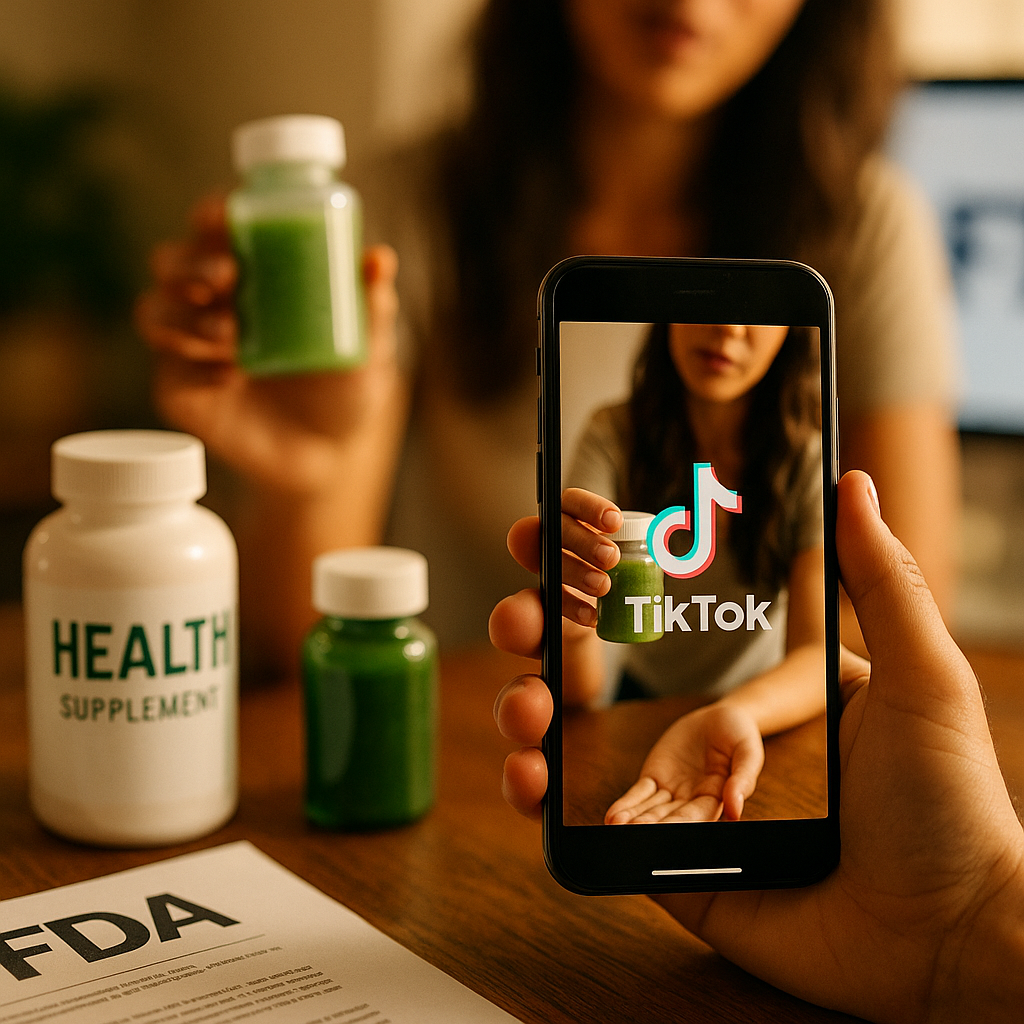
One unapproved supplement claim, repeated by fifty micro creators inside a TikTok drop shop, can trigger two federal investigations before your legal team even sees the video. That’s the reality of health and beauty claims on social commerce right now. The FDA cares about what the product claims to do. The FTC cares about whether the endorsement is honest and disclosed. Most brands are staffed for one of those risks, not both.
Two Agencies, One Video, Zero Room for Error
Here’s the thing marketing teams keep missing: FDA and FTC jurisdiction don’t run in parallel, they overlap. A creator says a serum “clears cystic acne in three days.” The FDA reads that as an unapproved drug claim, because you’re now claiming to treat a medical condition, not just moisturize skin. The FTC reads the same clip and asks whether the claim is substantiated and whether the #ad disclosure was visible before the “add to cart” button appeared. Same fifteen seconds of video, two separate legal theories, two separate enforcement bodies with subpoena power.
Brands that treat these as one compliance checkbox are the ones getting caught flat-footed. The FDA doesn’t care about disclosure hashtags. The FTC doesn’t care about drug approval pathways. You need a review process built for both, and most drop shop programs simply don’t have one.
Why TikTok Drop Shops Are Ground Zero
Drop shops compress the entire sales funnel into a single scroll. A creator films a haul, tags the product, and viewers check out without ever leaving the app. There’s no landing page, no product description written by legal, no cooling-off period where a claims reviewer might catch something. The creator is writing the copy live, on camera, often in a single take.
That speed is exactly why TikTok Shop has become a dominant commerce channel. It’s also why it’s a compliance minefield for anything touching skin, ingestion, or the body. According to eMarketer’s social commerce forecasts, live and shoppable video continues to pull spend away from static product pages precisely because it converts faster. Faster conversion means faster exposure to an unreviewed claim reaching thousands of buyers before anyone at the brand hits pause.
The FDA doesn’t need a formal complaint to act. A flagged TikTok clip, a competitor tip, or a routine sweep of trending beauty hashtags is enough to open a warning letter file.
We’ve already covered how commission structures and drop feeds create disclosure blind spots in our piece on drop feed compliance gaps. Health and beauty claims layer a second, harder to police risk on top of that same structural problem.
What Actually Counts as a Claim?
Marketers underestimate how broadly the FDA defines a “drug claim.” You don’t need to say “cures” or “treats.” Phrases like “reduces inflammation,” “balances hormones,” “detoxes your liver,” or “prevents breakouts” can all cross the line from cosmetic to drug territory, depending on context and repetition. The FDA’s structure/function rule allows claims about general wellness (supports healthy skin) but draws a hard line at disease claims (treats eczema).
Creators, understandably, don’t know where that line sits. They’re not chemists or regulatory affairs specialists. They’re trying to make a compelling fifteen second video, and “this cleared my acne” performs better than “this cosmetic product may support the appearance of clearer looking skin.” The performative language is exactly the language that gets brands a warning letter.
- Structure/function claims (generally allowed): “hydrates,” “supports skin barrier,” “may reduce the appearance of fine lines.”
- Disease claims (regulated as drugs): “treats acne,” “cures eczema,” “heals rosacea.”
- Unsubstantiated comparative claims (FTC territory): “clinically proven,” “dermatologist recommended,” “outperforms Retin-A” without data to back it up.
That third category is where FTC substantiation rules kick in independently of FDA drug status. Even a purely cosmetic claim needs evidence behind it if it’s presented as fact. We broke down a related version of this substantiation problem in our coverage of FTC substantiation requirements as they apply to AI generated marketing copy, and the same logic extends directly to creator scripts.
The Liability Chain Nobody Wants to Own
So who’s actually on the hook when a drop shop creator makes an unsubstantiated health claim? In practice, all three parties share exposure, but not equally.
The brand almost always carries the heaviest burden. The FTC has been explicit for years that advertisers are responsible for a creator’s claims if the brand supplied the product, provided talking points, or even just failed to monitor obviously false statements after being put on notice. TikTok, as the platform, generally sits outside direct liability unless it’s actively editorializing the content, which it typically isn’t. The creator carries some personal risk too, particularly if they’re a repeat offender or running a business entity, but creators rarely have deep pockets, so regulators go where the money is: the brand.
This mirrors what we’ve seen play out in other TikTok Shop enforcement patterns. Our analysis of commission based FTC risk found the same pattern: affiliate commission structures don’t insulate brands from liability, they often increase it, because commission incentivizes exaggeration.
If your affiliate agreement pays creators more for higher conversion, you’ve built a financial incentive for exactly the kind of overstated health claim that draws FDA attention.
Building a Claims Review Process That Actually Scales
Legal review for every single drop shop video isn’t realistic, and pretending otherwise just means the process gets ignored. What works better is a tiered system.
- Pre-approved claims library. Give creators a bank of vetted language they can pull from, phrased in ways that still sound conversational. “This has genuinely changed my skin texture” performs fine and avoids disease language.
- Banned word list, updated quarterly. Words like “cures,” “treats,” “eliminates,” “reverses aging” get flagged automatically. Several brands now run this through content moderation tools before a video goes live in the shop feed.
- Spot audits on trending content. Once a video starts gaining traction in the algorithm, escalate it for manual review. Volume is the risk multiplier, so review effort should scale with reach, not launch date.
- Contractual claim indemnification. Creator agreements should specify that unapproved health claims trigger content takedown rights and cost recovery. This doesn’t eliminate brand liability with regulators, but it does create internal recourse.
This is the same governance gap we’ve flagged in our piece on UGC rights audits, just applied to health claims instead of copyright. The underlying operational fix is identical: build review into the workflow before content publishes, not after a warning letter arrives.
Disclosure compliance still matters here too, and it’s often handled separately from claims review when it shouldn’t be. A perfectly disclosed video with an illegal drug claim is still a problem. A perfectly substantiated claim with no #ad disclosure is still an FTC violation. Our breakdown of cross platform disclosure rules is a useful companion checklist to run alongside any claims audit.
What Regulators Are Actually Watching For
Enforcement priorities shift, but the FDA has consistently targeted weight loss, skin conditions, and sexual wellness categories on social platforms, because these are where consumers are most likely to substitute a TikTok recommendation for medical advice. The FTC, meanwhox, keeps circling back to influencer disclosure and endorsement guides, publishing updated guidance roughly every few years through its official endorsement guides available at ftc.gov.
Social commerce data backs up why this category draws attention. Platforms report that beauty and wellness consistently rank among the top converting verticals in shoppable video, according to trend reporting from Sprout Social’s social commerce research. High conversion plus emotionally charged health language is a combination regulators actively monitor, not one they stumble onto by accident.
Brands running drop shop programs at scale should also track how creator vetting standards intersect with claims risk. A creator with a history of aggressive health claims on other campaigns is a repeat liability, not a one-off. Our coverage of creator vetting standards covers how brands are starting to formalize this kind of screening before signing new drop shop talent.
Frequently Asked Questions
What’s the difference between an FDA claim and an FTC claim in a TikTok video?
The FDA regulates whether a claim describes treating or curing a medical condition, which can classify a cosmetic as an unapproved drug. The FTC regulates whether the claim is truthful, substantiated, and properly disclosed as an advertisement, regardless of whether it’s a drug claim or not.
Can a brand be held liable for a creator’s health claim it didn’t write?
Yes. The FTC has repeatedly held brands responsible for creator statements when the brand supplied the product, set expectations for the content, or failed to correct a false claim after becoming aware of it.
Are structure/function claims always safe in social commerce content?
Not automatically. A structure/function claim like “supports healthy skin” is generally allowed, but it still needs substantiation under FTC rules and can’t imply treatment of a disease or medical condition without crossing into FDA drug territory.
Does commission based creator pay increase claims risk?
It often does. Commission incentives reward higher conversion, and higher conversion is frequently driven by more dramatic, less accurate health and beauty claims, which increases exposure for the brand funding the program.
How often should a brand update its banned claims word list?
Quarterly reviews are a reasonable baseline, though brands running high volume drop shop programs should monitor FDA warning letters and FTC settlements on a rolling basis and update guidance immediately when new enforcement patterns emerge.
The fix isn’t slowing down your drop shop program, it’s building a claims filter that runs at the same speed as the content does. Start with a banned word list and a pre-approved claims bank this week, then layer in escalation triggers for anything gaining unexpected traction.
Top Influencer Marketing Agencies
The leading agencies shaping influencer marketing in 2026
Agencies ranked by campaign performance, client diversity, platform expertise, proven ROI, industry recognition, and client satisfaction. Assessed through verified case studies, reviews, and industry consultations.
Moburst

-
2

The Shelf
Boutique Beauty & Lifestyle Influencer AgencyA data-driven boutique agency specializing exclusively in beauty, wellness, and lifestyle influencer campaigns on Instagram and TikTok. Best for brands already focused on the beauty/personal care space that need curated, aesthetic-driven content.Clients: Pepsi, The Honest Company, Hims, Elf Cosmetics, Pure LeafVisit The Shelf → -
3

Audiencly
Niche Gaming & Esports Influencer AgencyA specialized agency focused exclusively on gaming and esports creators on YouTube, Twitch, and TikTok. Ideal if your campaign is 100% gaming-focused — from game launches to hardware and esports events.Clients: Epic Games, NordVPN, Ubisoft, Wargaming, Tencent GamesVisit Audiencly → -
4

Viral Nation
Global Influencer Marketing & Talent AgencyA dual talent management and marketing agency with proprietary brand safety tools and a global creator network spanning nano-influencers to celebrities across all major platforms.Clients: Meta, Activision Blizzard, Energizer, Aston Martin, WalmartVisit Viral Nation → -
5

The Influencer Marketing Factory
TikTok, Instagram & YouTube CampaignsA full-service agency with strong TikTok expertise, offering end-to-end campaign management from influencer discovery through performance reporting with a focus on platform-native content.Clients: Google, Snapchat, Universal Music, Bumble, YelpVisit TIMF → -
6

NeoReach
Enterprise Analytics & Influencer CampaignsAn enterprise-focused agency combining managed campaigns with a powerful self-service data platform for influencer search, audience analytics, and attribution modeling.Clients: Amazon, Airbnb, Netflix, Honda, The New York TimesVisit NeoReach → -
7

Ubiquitous
Creator-First Marketing PlatformA tech-driven platform combining self-service tools with managed campaign options, emphasizing speed and scalability for brands managing multiple influencer relationships.Clients: Lyft, Disney, Target, American Eagle, NetflixVisit Ubiquitous → -
8

Obviously
Scalable Enterprise Influencer CampaignsA tech-enabled agency built for high-volume campaigns, coordinating hundreds of creators simultaneously with end-to-end logistics, content rights management, and product seeding.Clients: Google, Ulta Beauty, Converse, AmazonVisit Obviously →