


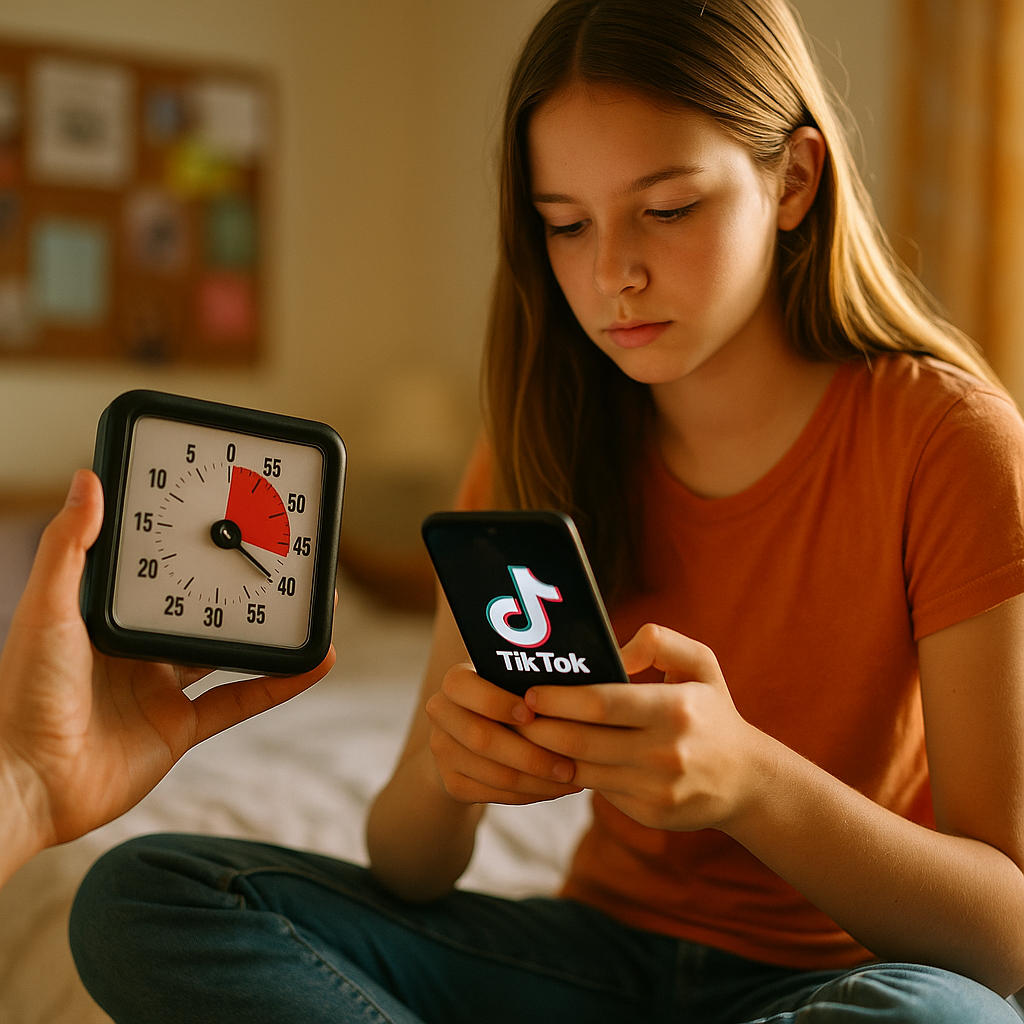
Teens under 18 can now spend only 60 minutes a day on TikTok by default, unless a parent unlocks more. That single setting, born out of Alabama’s legal settlement with TikTok, is quietly rewriting the playbook for every brand running youth-adjacent campaigns. If your media plan still assumes unlimited teen scroll time, it’s already out of date. The TikTok teen time limits aren’t a side story about child safety policy. They’re a direct hit to reach, frequency, and the entire logic of influencer scheduling.
What the Alabama Decree Actually Requires
Alabama’s attorney general pursued TikTok over allegations that the platform knowingly exposed minors to addictive design patterns and inadequate parental controls. The resulting settlement, which we covered in detail in our teen safety deal breakdown, pushed TikTok to harden its under-18 experience nationally rather than build a patchwork of state-specific apps.
The headline change: a default 60-minute daily screen time cap for accounts registered to users under 18. Parents can extend it through Family Pairing, but the opt-in friction matters. Most parents won’t bother. That means the default becomes the real ceiling for a huge swath of Gen Z users, not just a suggestion they’ll ignore.
TikTok also expanded restrictions on push notifications during school hours and late night, and tightened default privacy settings for new teen accounts. None of this is cosmetic. It changes the actual windows when teen audiences are reachable.
A default 60-minute cap doesn’t just shrink watch time, it compresses the entire attention window brands have been designing campaigns around for years.
Why Brands Should Care About a Screen Time Rule
Here’s the uncomfortable math. If a creator’s teen audience used to average 90 to 120 minutes of daily TikTok use (which was common pre-settlement based on industry estimates), and that number now caps at 60 minutes for a meaningful share of under-18 users, you’ve lost a third to half of the exposure window overnight. Multiply that across a campaign built on frequency and repetition, and your projected impressions start looking optimistic at best.
This isn’t theoretical for brands targeting back-to-school, beauty, gaming, or fast fashion categories where teen spend and influence matter. eMarketer’s audience research has long shown TikTok as the dominant short-form platform for teen attention share. A structural cut to that attention pool forces a rethink of reach assumptions baked into media plans.
And it’s not just Alabama. Other states have pursued similar settlements and legislative pushes targeting platform design and minor safety, a pattern we’ve tracked in our coverage of teen safety settlements across platforms. Brands planning multi-platform youth campaigns need to treat this as a trend line, not a one-off.
The Engagement Math Just Changed
Shorter sessions change behavior, not just duration. Teens hitting a time limit tend to prioritize content differently. Expect more skimming, faster scroll velocity, and less tolerance for slow-build storytelling formats. A 45-second brand integration that used to coast on passive viewing now competes for a shrinking slice of a finite daily budget.
Creators are already adapting. Several mid-tier lifestyle creators we’ve spoken with for prior coverage report front-loading hooks within the first two seconds and compressing calls-to-action earlier in videos. That’s a direct response to audiences who know their scroll time is metered and act accordingly.
For brands, this means creative briefs need updating. Longer-form branded content aimed at teen audiences is now a riskier bet than it was twelve months ago.
Timing Your Campaigns Around a Metered Audience
If teens have 60 minutes a day, when do they spend it? Early data patterns suggest usage clusters around after-school hours (roughly 3pm to 6pm local time) and again briefly before bed, compressed from what used to be an all-day grazing pattern. Brands running dayparted ad buys or scheduling creator posts for maximum teen reach should reassess posting windows rather than relying on legacy performance data from before the cap rolled out.
This also affects paid amplification strategy. TikTok’s own advertising platform allows dayparting controls, and brands targeting under-18 cohorts specifically (where legally and ethically appropriate) should lean into tighter windows rather than spreading spend evenly across 24 hours.
Compliance Isn’t Optional Anymore
The Alabama decree sits alongside a growing stack of state-level rules governing how platforms and, by extension, brands interact with minors online. Age verification, parental consent mechanics, and data minimization requirements are converging into a genuine compliance burden. Our breakdown of state privacy law audits covers how this patchwork affects creator contracts specifically, and it’s worth a close read if your influencer agreements haven’t been updated recently.
Brands running influencer campaigns that could reach minors, intentionally or not, need to document targeting logic, disclosure practices, and content review processes. Regulators have shown they’re willing to go after platforms directly. Brands assuming they’re insulated because TikTok handles the compliance layer are taking on more risk than they realize.
If your legal team hasn’t reviewed influencer contracts for minor-adjacent content since the Alabama settlement, you’re operating on outdated risk assumptions.
What Smart Brands Are Doing Differently
- Reweighting platform mix. Some brands are shifting incremental teen-reach budget toward Instagram Reels or YouTube Shorts, where teen filter policies create a different but comparably evolving compliance landscape.
- Shortening creative formats. Nine and twelve second cuts are replacing 30-second brand integrations in campaigns targeting younger cohorts.
- Auditing creator rosters. Agencies are checking which creators in their network skew heavily teen-audience and adjusting frequency expectations downward in forecasts.
- Tightening disclosure practices. With regulatory attention on minors rising, paid partnership labeling has become a higher-stakes detail, something we’ve unpacked in our look at paid partnership label requirements.
- Rebuilding measurement baselines. Campaign benchmarks set before the time limit rolled out are no longer reliable comparison points. Treat the current quarter as a reset, not an anomaly.
None of this means abandoning TikTok for youth-skewing campaigns. The platform remains enormously influential, and Sprout Social’s ongoing platform research continues to show strong engagement rates relative to other short-form apps even as usage patterns shift. The point is adjustment, not retreat.
Where This Likely Goes Next
Expect more states to pursue similar settlements, and expect TikTok (and likely Instagram and Snapchat) to preemptively adopt stricter default settings rather than wait for litigation. Platforms have learned that fighting these battles state by state is more expensive than building one hardened global standard. For brand strategists, that means the current 60-minute cap probably isn’t the floor. Plan for further compression, not stabilization.
Agencies that build flexible, format-agnostic creative now will adapt faster than those locked into long-form teen-targeted content strategies built for a pre-cap world.
Frequently Asked Questions
FAQs
What exactly are the new TikTok teen time limits under the Alabama decree?
TikTok now defaults accounts for users under 18 to a 60-minute daily usage cap, part of a settlement with Alabama’s attorney general over allegations of inadequate youth protections. Parents can extend the limit through Family Pairing controls, but the default applies automatically to new and existing teen accounts.
Does this affect brands that don’t specifically target teens?
Yes, indirectly. Many campaigns reach teen audiences unintentionally through broader demographic targeting or organic creator reach. Reduced teen screen time shrinks overall impression pools for any campaign where under-18 users make up a meaningful share of the audience, even if teens weren’t the primary target.
How should brands adjust influencer campaign timing because of the cap?
Shift posting schedules and paid amplification toward the windows when teen usage concentrates, generally after-school hours and brief pre-bedtime sessions. Reassess dayparting strategy using current data rather than historical benchmarks set before the limit took effect.
Are other states expected to introduce similar restrictions?
Likely, yes. Several states have pursued or signaled interest in similar legal action against major platforms over minor safety concerns. Brands should expect further tightening of default teen experience settings across TikTok and competing platforms rather than treating Alabama’s settlement as an isolated event.
What compliance steps should brands take now?
Review influencer contracts for language addressing minor-adjacent content, confirm disclosure practices meet current labeling standards, and document audience targeting logic. Legal and compliance teams should treat this as an evolving regulatory area requiring periodic review, not a one-time fix.
The bottom line: pull your teen-audience performance data from before the cap took effect, treat it as obsolete, and rebuild your frequency and timing assumptions around a genuinely shorter attention window.
Top Influencer Marketing Agencies
The leading agencies shaping influencer marketing in 2026
Agencies ranked by campaign performance, client diversity, platform expertise, proven ROI, industry recognition, and client satisfaction. Assessed through verified case studies, reviews, and industry consultations.
Moburst

-
2

The Shelf
Boutique Beauty & Lifestyle Influencer AgencyA data-driven boutique agency specializing exclusively in beauty, wellness, and lifestyle influencer campaigns on Instagram and TikTok. Best for brands already focused on the beauty/personal care space that need curated, aesthetic-driven content.Clients: Pepsi, The Honest Company, Hims, Elf Cosmetics, Pure LeafVisit The Shelf → -
3

Audiencly
Niche Gaming & Esports Influencer AgencyA specialized agency focused exclusively on gaming and esports creators on YouTube, Twitch, and TikTok. Ideal if your campaign is 100% gaming-focused — from game launches to hardware and esports events.Clients: Epic Games, NordVPN, Ubisoft, Wargaming, Tencent GamesVisit Audiencly → -
4

Viral Nation
Global Influencer Marketing & Talent AgencyA dual talent management and marketing agency with proprietary brand safety tools and a global creator network spanning nano-influencers to celebrities across all major platforms.Clients: Meta, Activision Blizzard, Energizer, Aston Martin, WalmartVisit Viral Nation → -
5

The Influencer Marketing Factory
TikTok, Instagram & YouTube CampaignsA full-service agency with strong TikTok expertise, offering end-to-end campaign management from influencer discovery through performance reporting with a focus on platform-native content.Clients: Google, Snapchat, Universal Music, Bumble, YelpVisit TIMF → -
6

NeoReach
Enterprise Analytics & Influencer CampaignsAn enterprise-focused agency combining managed campaigns with a powerful self-service data platform for influencer search, audience analytics, and attribution modeling.Clients: Amazon, Airbnb, Netflix, Honda, The New York TimesVisit NeoReach → -
7

Ubiquitous
Creator-First Marketing PlatformA tech-driven platform combining self-service tools with managed campaign options, emphasizing speed and scalability for brands managing multiple influencer relationships.Clients: Lyft, Disney, Target, American Eagle, NetflixVisit Ubiquitous → -
8

Obviously
Scalable Enterprise Influencer CampaignsA tech-enabled agency built for high-volume campaigns, coordinating hundreds of creators simultaneously with end-to-end logistics, content rights management, and product seeding.Clients: Google, Ulta Beauty, Converse, AmazonVisit Obviously →