


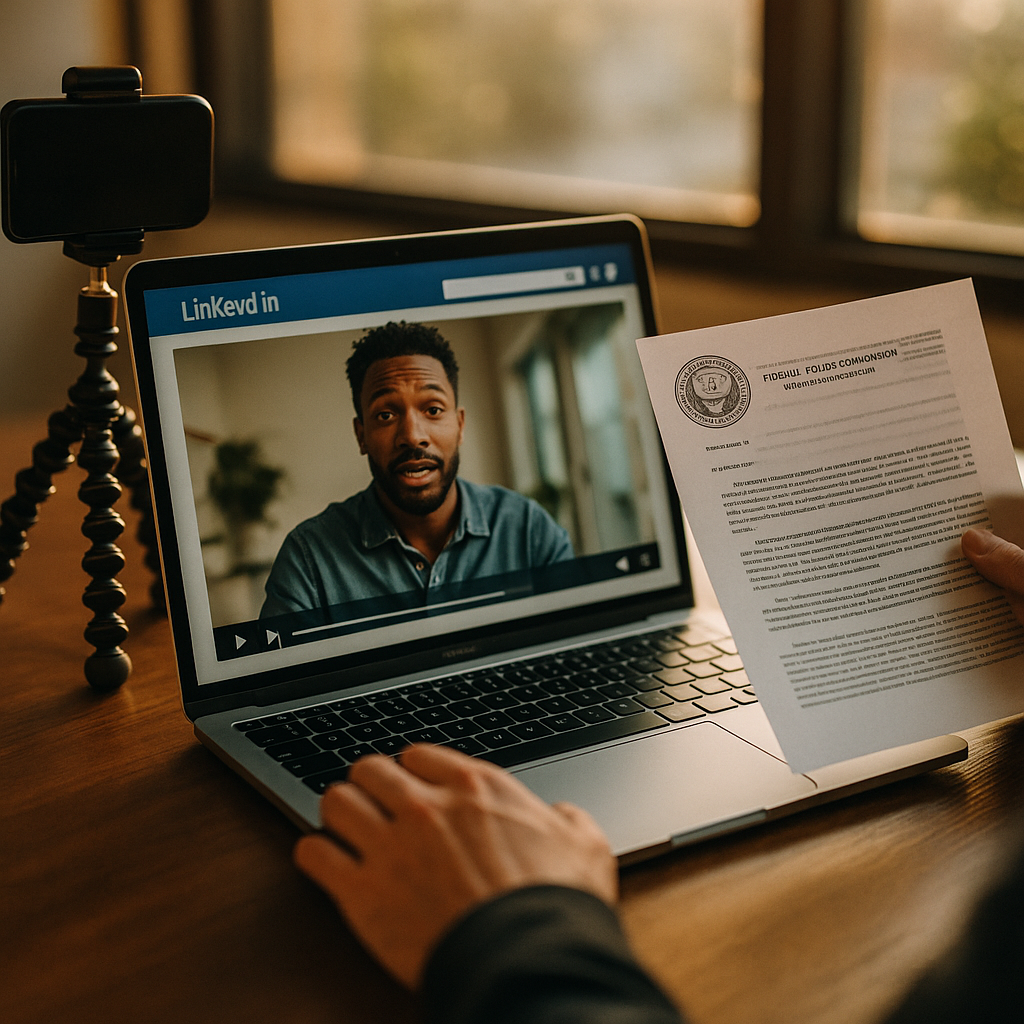
Three seconds. That’s roughly how long LinkedIn’s updated ranking model now gives a short-form video to prove it deserves a feed placement. Brands chasing that window are learning a hard lesson: the same opening seconds that hook viewers are also where disclosure most often gets sacrificed. Getting the LinkedIn compliance framework right for 2026’s short-form push isn’t optional anymore — it’s the difference between a reach bump and an FTC inquiry.
LinkedIn has quietly become a serious short-form video platform. Internal creator tools, native captioning, and a feed algorithm that now weights early watch-time signals have pushed B2B marketers to treat LinkedIn video the way TikTok teams treat Reels. But B2B compliance carries different stakes than consumer content: procurement audiences, regulated industries, and sponsored thought-leadership all raise the disclosure bar. If your legal and marketing teams haven’t aligned on how disclosure survives a three-second hook, you’re building reach on a foundation that regulators can knock over.
Why the First Seconds Became a Compliance Battleground
LinkedIn’s algorithm update rewards videos that retain viewers through the opening beats — think pattern interrupts, bold text overlays, direct-to-camera hooks. That’s smart product design for engagement. It’s a problem for disclosure, because the FTC’s Endorsement Guides require that sponsorship be clear and conspicuous before a consumer forms their impression of the message, not buried in a caption they’ll never scroll to.
Marketing teams optimizing purely for retention curves tend to push disclosure language to the five- or ten-second mark, or drop it into on-screen text too small to register on mobile. That’s a defensible-sounding tactic that fails the FTC’s actual test. The agency doesn’t grade on algorithm friendliness. It grades on whether an average viewer, scrolling fast, would understand the content is paid.
If your disclosure strategy depends on a viewer watching past the hook, you’ve already failed the FTC’s “clear and conspicuous” standard — the algorithm doesn’t care, but a regulator will.
This tension isn’t unique to LinkedIn. We’ve covered the same collision on TikTok, where AI labels can vanish mid-repost, and on YouTube Shorts, where playback speed manipulation compresses disclosure windows without warning. LinkedIn’s version is arguably higher-stakes because its audience skews toward procurement, investor relations, and compliance-sensitive B2B buyers who take sponsored claims seriously — and who are more likely to screenshot and report inconsistencies.
What LinkedIn’s Algorithm Actually Rewards
Based on LinkedIn’s own creator guidance and platform documentation via LinkedIn for Business, the ranking signals for short-form video now include:
- Watch-through rate in the first three seconds
- Comment velocity within the first hour
- Dwell time relative to video length
- Repeat engagement from the same connection cluster (a proxy for niche authority)
None of those signals penalize a disclosure tag appearing early. In fact, brands that test this find little to no retention penalty from a clean “Paid partnership with [Brand]” overlay in the first two seconds, especially when it’s styled consistently with the rest of the branding. The retention drop marketers fear is mostly a myth carried over from consumer platforms with more casual scroll behavior. LinkedIn’s professional audience is more forgiving of a disclosure tag than a TikTok teen audience — arguably it reads as more credible, not less.
Still, plenty of B2B teams are making the same mistake: treating disclosure as a creative tax instead of a trust signal. That’s backwards. On a platform where buyers do vendor research, a visible disclosure can actually improve perceived credibility of the message.
The Five-Layer Compliance Framework
Here’s the operational model we’re recommending to brand and agency teams building LinkedIn short-form programs for the coming year.
1. Hook-Zone Disclosure Placement
Disclosure text must appear within the first three seconds, in a font size no smaller than 5% of frame height, with contrast ratio sufficient for mobile legibility. Don’t rely on LinkedIn’s native “Promoted” or “Paid partnership” tag alone — as we’ve argued before, a paid partnership label alone won’t satisfy FTC rules if the creator’s own verbal or on-screen messaging contradicts or buries it.
2. Verbal Disclosure Redundancy
For creators speaking direct-to-camera in the hook (increasingly the highest-performing format), require a verbal disclosure alongside the text overlay. “This is sponsored by [Brand]” spoken in the first sentence protects against viewers who watch with captions off, sound off, or on accessibility settings that strip overlay text.
3. Contract Language Tied to Algorithm Behavior
Standard influencer contracts weren’t written with three-second hook windows in mind. Update creator agreements to specify exactly where and how disclosure must appear in short-form cuts, not just “in accordance with FTC guidelines.” Vague contract language is how brands end up with technically-compliant-on-paper creators who still bury disclosure in practice. This is the same gap we flagged in Meta’s attribution disclosure shift — platform mechanics move faster than boilerplate contracts, and brands carry the liability gap in between.
4. Pre-Publish Compliance Review Gate
Build a review checkpoint into your workflow before any short-form video goes live. This doesn’t need to be a full legal review for every asset — a trained compliance coordinator using a standardized checklist can catch 90% of issues. The checklist should verify: disclosure timing, label accuracy, claims substantiation for any product statements, and consistency between verbal and on-screen messaging.
5. Post-Publish Monitoring for Algorithm-Driven Edits
LinkedIn, like other platforms, has begun testing auto-generated captions and AI summarization features on video content. If LinkedIn’s system strips or alters your disclosure text in a repost, clip, or auto-caption, you need a monitoring cadence to catch it. This mirrors what we’ve documented with YouTube’s AI sponsorship flagging — automated systems are increasingly making disclosure decisions on your behalf, and brands need visibility into when that happens.
A disclosure that’s compliant at publish but disappears after an auto-caption edit is still a disclosure failure — the FTC doesn’t grandfather in platform glitches.
Where B2B Creators Differ from Consumer Influencers
B2B creator content on LinkedIn often blends personal opinion with sponsored insight — a SaaS founder talking about “the tool I use every day” is a different compliance animal than a beauty influencer holding up a product. The line between authentic thought leadership and paid endorsement blurs fast, and LinkedIn’s algorithm doesn’t distinguish between the two when ranking watch-time.
This is where AI-scripted content adds another layer of risk. If a brand or agency scripts a creator’s “authentic take,” who owns the FTC liability when disclosure is inconsistent? Contractually, that needs to be settled before the camera rolls, not after a complaint lands. Similarly, if creators use AI avatars or voice synthesis to produce faster hook variations for algorithm testing, the same labeling gaps we’ve seen in AI avatar disclosure on TikTok apply directly to LinkedIn’s B2B use cases, especially around claims involving software performance, financial outcomes, or health-adjacent B2B products (wellness benefits platforms, for instance).
Building the Audit Trail Before You Need It
Regulators and platform trust-and-safety teams both want the same thing after the fact: proof. Not intent, proof. Brands running LinkedIn short-form programs at scale should maintain a lightweight but real audit trail: dated screenshots of disclosure placement at publish, contract clauses referencing disclosure timing requirements, and a log of any post-publish edits or platform-driven caption changes.
This isn’t paranoia. It’s the same operational discipline we’ve recommended for health claims substantiation and merchant verification elsewhere in the creator economy. The pattern repeats across every platform: fast-moving product features outpace static compliance policy, and the brands that get caught are the ones with no documentation trail when a regulator or journalist asks.
According to eMarketer research on B2B social spend, LinkedIn now captures a growing share of B2B marketing budgets specifically because of its perceived credibility relative to consumer platforms. That credibility is the asset at risk here. One high-profile disclosure failure on a platform positioned as “the trustworthy one” does disproportionate reputational damage compared to the same failure on TikTok.
Operationalizing This Without Slowing Down Production
None of this needs to add days to your content pipeline. The brands executing well have built disclosure checks into their existing production templates — a locked lower-third graphic asset with disclosure text baked in, a script template with the verbal disclosure line pre-written for creators to read verbatim, and a one-page checklist reviewed in under five minutes before publish.
Use Sprout Social or similar social management platforms to schedule a monitoring cadence for published content, flagging any that get auto-captioned, clipped, or redistributed without the original disclosure intact. Treat this the same way you’d treat a brand safety monitoring workflow — because functionally, it is one.
The brands winning LinkedIn’s short-form shift right now aren’t the ones with the flashiest hooks. They’re the ones who figured out that disclosure, done well, doesn’t cost reach — it costs a design decision. Bake it into the creative template once, and the compliance problem mostly solves itself going forward.
FAQs
Frequently Asked Questions
Does disclosure text in the first seconds actually hurt LinkedIn video retention?
Testing across B2B accounts shows minimal to no measurable retention penalty when disclosure is styled consistently with brand creative. LinkedIn’s professional audience tends to view early, clear disclosure as a credibility signal rather than a distraction.
Is LinkedIn’s native “Paid partnership” label enough to satisfy FTC requirements?
No. The FTC evaluates whether the average viewer would clearly understand the content is sponsored, considering the full context, including verbal claims and on-screen messaging. A platform label alone doesn’t override contradictory or buried disclosure elsewhere in the video.
Who is liable if LinkedIn’s auto-captioning strips a disclosure tag after publish?
Liability generally still sits with the brand and creator, since the FTC holds both parties responsible for maintaining clear disclosure. Brands should monitor published content regularly and document any platform-driven changes as part of their compliance record.
How should contracts change for LinkedIn short-form creator deals?
Contracts should specify exact disclosure timing (within the first few seconds), required verbal disclosure language for direct-to-camera content, and responsibility for monitoring post-publish edits, rather than relying on generic “comply with FTC guidelines” language.
Does this framework apply to B2B thought-leadership content, not just product promotions?
Yes. Sponsored opinion content, including “tools I use” style videos from creators or executives, still requires clear disclosure if compensation, free products, or affiliate relationships exist, regardless of how personal or editorial the content feels.
Next Step
Audit one live LinkedIn short-form campaign this week against the five-layer framework above. If disclosure isn’t visible and legible within the first three seconds, fix the creative template before you scale spend, not after a complaint forces the issue.
Top Influencer Marketing Agencies
The leading agencies shaping influencer marketing in 2026
Agencies ranked by campaign performance, client diversity, platform expertise, proven ROI, industry recognition, and client satisfaction. Assessed through verified case studies, reviews, and industry consultations.
Moburst

-
2

The Shelf
Boutique Beauty & Lifestyle Influencer AgencyA data-driven boutique agency specializing exclusively in beauty, wellness, and lifestyle influencer campaigns on Instagram and TikTok. Best for brands already focused on the beauty/personal care space that need curated, aesthetic-driven content.Clients: Pepsi, The Honest Company, Hims, Elf Cosmetics, Pure LeafVisit The Shelf → -
3

Audiencly
Niche Gaming & Esports Influencer AgencyA specialized agency focused exclusively on gaming and esports creators on YouTube, Twitch, and TikTok. Ideal if your campaign is 100% gaming-focused — from game launches to hardware and esports events.Clients: Epic Games, NordVPN, Ubisoft, Wargaming, Tencent GamesVisit Audiencly → -
4

Viral Nation
Global Influencer Marketing & Talent AgencyA dual talent management and marketing agency with proprietary brand safety tools and a global creator network spanning nano-influencers to celebrities across all major platforms.Clients: Meta, Activision Blizzard, Energizer, Aston Martin, WalmartVisit Viral Nation → -
5

The Influencer Marketing Factory
TikTok, Instagram & YouTube CampaignsA full-service agency with strong TikTok expertise, offering end-to-end campaign management from influencer discovery through performance reporting with a focus on platform-native content.Clients: Google, Snapchat, Universal Music, Bumble, YelpVisit TIMF → -
6

NeoReach
Enterprise Analytics & Influencer CampaignsAn enterprise-focused agency combining managed campaigns with a powerful self-service data platform for influencer search, audience analytics, and attribution modeling.Clients: Amazon, Airbnb, Netflix, Honda, The New York TimesVisit NeoReach → -
7

Ubiquitous
Creator-First Marketing PlatformA tech-driven platform combining self-service tools with managed campaign options, emphasizing speed and scalability for brands managing multiple influencer relationships.Clients: Lyft, Disney, Target, American Eagle, NetflixVisit Ubiquitous → -
8

Obviously
Scalable Enterprise Influencer CampaignsA tech-enabled agency built for high-volume campaigns, coordinating hundreds of creators simultaneously with end-to-end logistics, content rights management, and product seeding.Clients: Google, Ulta Beauty, Converse, AmazonVisit Obviously →