


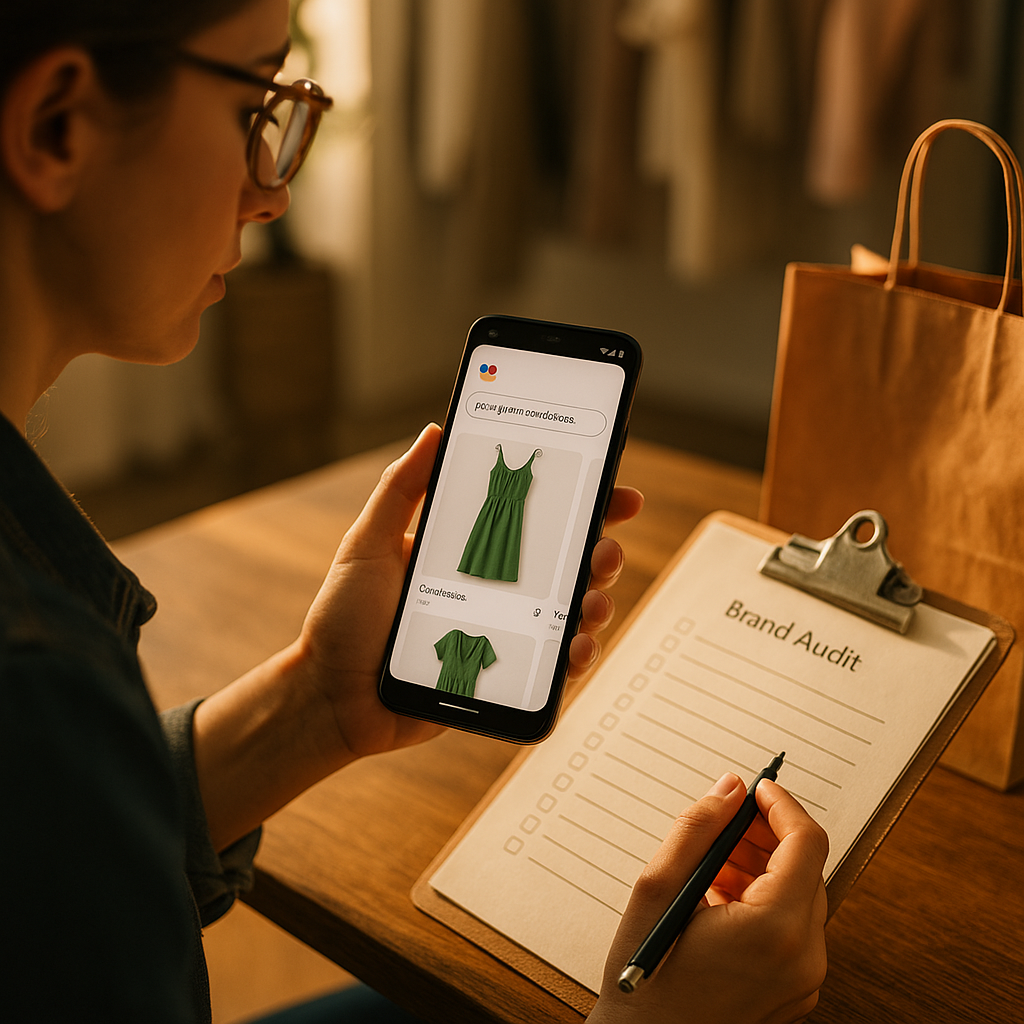
Search behavior just fractured again. Gemini’s retooled Creator Studio now lets shoppers ask conversational questions and get product answers stitched from creator content, brand feeds, and Google’s own product graph. Google Gemini conversational product search isn’t a lab experiment anymore — it’s live, and it’s already reshaping which brands get surfaced when someone asks “what’s the best running shoe for flat feet.” If your content team hasn’t audited how their assets perform inside this system, you’re flying blind on a channel that’s quietly becoming a discovery layer.
What Actually Changed in Creator Studio
Google rebuilt Creator Studio’s backend to prioritize conversational retrieval over keyword matching. Previously, the tool functioned mostly as a content-scheduling and analytics dashboard for creators publishing to Google surfaces. The retooled version does something different: it indexes creator content — video transcripts, captions, product mentions, linked shopping data — and feeds it into Gemini’s answer-generation pipeline when users ask product-related questions in Search, the Gemini app, or Chrome’s sidebar assistant.
In practice, this means a creator’s unboxing video or comparison post can now become the source material for a direct answer, not just a ranked search result. A user types “which blender crushes ice best under $100” and Gemini may synthesize an answer citing three creator videos, a retailer spec sheet, and a Reddit thread — then surface a shopping card underneath. No click to the creator’s channel required. No guarantee your brand’s name even makes the cut.
The shift from “rank and click” to “synthesize and answer” means brand visibility now depends on whether your product data and creator content are structured for machine retrieval, not just human browsing.
Why This Matters More Than Another Algorithm Update
This isn’t a ranking tweak. It’s an architecture change. Traditional SEO and influencer content strategy assumed a human would eventually land on a page, watch a video, or scroll a feed. Conversational product search compresses that journey. Gemini reads the content, extracts the claim, and presents a synthesized answer — often without a visible source link unless the user taps to expand citations.
For brand content teams, that means the old KPIs (views, click-through, watch time) don’t tell you whether your content is even being retrieved. You could have a top-performing creator video on YouTube that never gets pulled into a single Gemini answer because it lacks structured product mentions or clear comparative language. Conversely, a mediocre-performing post with clean, specific claims (“this vacuum has a 0.8L dustbin and runs 45 minutes on one charge”) might get cited repeatedly because it’s easy for the model to extract and trust.
Auditing Your Content for Retrieval, Not Just Reach
Most brand content teams still optimize for platform engagement metrics. That’s necessary but no longer sufficient. A technical audit for Gemini’s conversational layer requires a different lens — one closer to structured data hygiene than creative strategy.
- Transcript clarity: Does the creator’s spoken content include explicit product names, specs, and comparisons, or is it vague (“this thing is amazing”)? Gemini’s extraction models favor specificity.
- Structured product feeds: Is your product catalog connected via Google Merchant Center with complete attributes (size, material, price, availability)? Gemini leans on this data to validate claims made in creator content.
- Schema markup on owned pages: Product, Review, and FAQ schema still matter enormously, arguably more now, because they give Gemini a structured fallback when creator content is ambiguous.
- Citation behavior: Run test queries relevant to your category and track whether your brand or creators appear in the synthesized answer, the citation list, or neither.
Teams that have already built shopping-agent readiness into their feed strategy have a head start here. If you’ve done the work outlined in feed and schema readiness audits, much of that structured data groundwork transfers directly to Gemini’s conversational retrieval requirements. The systems are different, but the underlying discipline — clean, complete, machine-readable product data — is the same.
The Creator Content Gap Nobody’s Talking About
Here’s the uncomfortable part. Most influencer content is optimized for humans scrolling a feed, not machines parsing a transcript. Creators are coached to be entertaining, authentic, relatable. They are rarely coached to be structurally precise. That’s a problem when the entertainment layer gets stripped out and only the extractable claims survive into an AI answer.
Brands now need a second creative brief layer: one that asks creators to state product specifics clearly at least once in the content, even if the rest stays loose and conversational. It’s a small ask that dramatically improves retrieval odds. Some agencies are already building this into standard creator guidelines, treating it like a hidden SEO requirement inside an influencer contract.
This dovetails with broader work on engineering creator content for algorithmic amplification — the same principles that help TikTok’s or Instagram’s algorithm parse and boost a video also help Gemini extract a clean, citable claim.
Risk and Compliance: Who’s Liable for the Answer?
When Gemini synthesizes an answer from creator content, attribution gets murky fast. If a creator makes an inaccurate claim about a supplement’s effects and Gemini surfaces that as part of a direct answer, who’s on the hook — the creator, the brand, or Google? The FTC has been increasingly clear that brand disclosure and accuracy obligations don’t disappear just because an AI intermediary repackaged the content. Brands remain responsible for material claims made in sponsored creator content, even when a chatbot is the one repeating them to a shopper three steps removed from the original post.
This is the same governance headache marketing teams are already wrestling with around AI-driven content pipelines. If you’ve built out approval workflows for AI-touched creator content, extend that review to flag any product claims that could get pulled into a synthesized answer and misrepresented, exaggerated, or stripped of necessary context (like a disclaimer that only shipped with the original caption).
A claim that was compliant in its original creator caption can become non-compliant the moment Gemini paraphrases it without the accompanying disclosure — and the brand, not the AI, absorbs the regulatory risk.
Measurement: What Do You Even Track?
Standard influencer attribution models weren’t built for a world where the “click” might never happen. Instead, a user gets an answer, decides, and buys directly through a shopping card or a separate tab entirely. This is structurally similar to the attribution puzzle already facing brands dealing with agentic browsing behavior, covered in shopping agent feed audits.
Marketing teams should start tracking:
- Citation frequency — how often your brand or creator content appears in Gemini answers for category-relevant queries.
- Answer sentiment — is the synthesized summary accurate and favorable, or does it flatten nuance in a way that hurts positioning?
- Downstream conversion via Google Merchant Center-linked shopping cards, which increasingly serve as the “click” replacement.
None of this is native to most martech stacks yet. Expect vendors to bolt on Gemini-citation tracking to existing SEO and social listening tools over the next few quarters. Until then, manual query testing — running a representative sample of category questions weekly and logging results — is the most reliable stopgap. It’s tedious. It’s also the only way to know if you’re invisible.
Building the Internal Playbook
A technical audit isn’t a one-time project; it needs to become a recurring operational check, similar to how teams already treat technical SEO audits as a quarterly discipline. Here’s a reasonable starting cadence for brand content teams:
- Monthly: Run 15-20 representative conversational queries per product category through Gemini and log citation appearances.
- Quarterly: Audit top-performing creator content for transcript clarity and specific product claims; flag vague content for re-briefing on future collaborations.
- Ongoing: Keep Merchant Center feeds and schema markup current — stale price or availability data undermines Gemini’s confidence in citing you at all.
- Cross-functional: Loop legal and compliance into the creator brief process so claim-language guidelines account for AI repackaging risk, not just platform-native disclosure rules.
Teams already running rigorous attribution frameworks, like the ones detailed in this influencer attribution framework, should extend those models to include a Gemini-citation variable. It won’t have clean revenue tie-back yet. That’s fine. Directional visibility beats total blindness.
Industry data from eMarketer and Statista continues to show conversational and AI-assisted search usage climbing among younger shopping cohorts, which means this isn’t a niche channel to monitor casually. It’s becoming a primary discovery surface for exactly the demographic most brands are chasing with influencer budgets.
Frequently Asked Questions
What is Gemini’s Creator Studio and how does it relate to product search?
Creator Studio is Google’s toolset for creators publishing content to Google surfaces. Its retooled version indexes creator video transcripts and product mentions, feeding them into Gemini’s conversational answer engine so shoppers get synthesized product recommendations pulled partly from creator content.
Do brands need a direct relationship with Google to appear in Gemini’s answers?
No direct partnership is required, but brands with complete Google Merchant Center feeds, structured schema markup, and creators producing specific, extractable product claims are far more likely to be cited than those relying on organic discovery alone.
How is this different from traditional SEO for creator content?
Traditional SEO optimizes for ranking and click-through. Conversational product search optimizes for extraction and citation — the content needs to contain clear, specific, machine-parseable claims because Gemini may synthesize an answer without ever sending the user to the original source.
Who is legally responsible if Gemini misrepresents a creator’s product claim?
Brands generally retain responsibility for the accuracy and disclosure compliance of sponsored claims, regardless of how an AI system repackages them. Legal and compliance teams should review creator briefs with this downstream risk in mind.
What metrics should brand teams track for this channel?
Track citation frequency in Gemini answers for category-relevant queries, the accuracy and sentiment of synthesized summaries, and downstream conversions via shopping cards linked to Merchant Center data.
Run the fifteen-query test this week: pick your top product category, ask Gemini the questions real shoppers would ask, and see who gets cited. If it’s not you, that’s your audit starting point, not a footnote.
Top Influencer Marketing Agencies
The leading agencies shaping influencer marketing in 2026
Agencies ranked by campaign performance, client diversity, platform expertise, proven ROI, industry recognition, and client satisfaction. Assessed through verified case studies, reviews, and industry consultations.
Moburst

-
2

The Shelf
Boutique Beauty & Lifestyle Influencer AgencyA data-driven boutique agency specializing exclusively in beauty, wellness, and lifestyle influencer campaigns on Instagram and TikTok. Best for brands already focused on the beauty/personal care space that need curated, aesthetic-driven content.Clients: Pepsi, The Honest Company, Hims, Elf Cosmetics, Pure LeafVisit The Shelf → -
3

Audiencly
Niche Gaming & Esports Influencer AgencyA specialized agency focused exclusively on gaming and esports creators on YouTube, Twitch, and TikTok. Ideal if your campaign is 100% gaming-focused — from game launches to hardware and esports events.Clients: Epic Games, NordVPN, Ubisoft, Wargaming, Tencent GamesVisit Audiencly → -
4

Viral Nation
Global Influencer Marketing & Talent AgencyA dual talent management and marketing agency with proprietary brand safety tools and a global creator network spanning nano-influencers to celebrities across all major platforms.Clients: Meta, Activision Blizzard, Energizer, Aston Martin, WalmartVisit Viral Nation → -
5

The Influencer Marketing Factory
TikTok, Instagram & YouTube CampaignsA full-service agency with strong TikTok expertise, offering end-to-end campaign management from influencer discovery through performance reporting with a focus on platform-native content.Clients: Google, Snapchat, Universal Music, Bumble, YelpVisit TIMF → -
6

NeoReach
Enterprise Analytics & Influencer CampaignsAn enterprise-focused agency combining managed campaigns with a powerful self-service data platform for influencer search, audience analytics, and attribution modeling.Clients: Amazon, Airbnb, Netflix, Honda, The New York TimesVisit NeoReach → -
7

Ubiquitous
Creator-First Marketing PlatformA tech-driven platform combining self-service tools with managed campaign options, emphasizing speed and scalability for brands managing multiple influencer relationships.Clients: Lyft, Disney, Target, American Eagle, NetflixVisit Ubiquitous → -
8

Obviously
Scalable Enterprise Influencer CampaignsA tech-enabled agency built for high-volume campaigns, coordinating hundreds of creators simultaneously with end-to-end logistics, content rights management, and product seeding.Clients: Google, Ulta Beauty, Converse, AmazonVisit Obviously →