


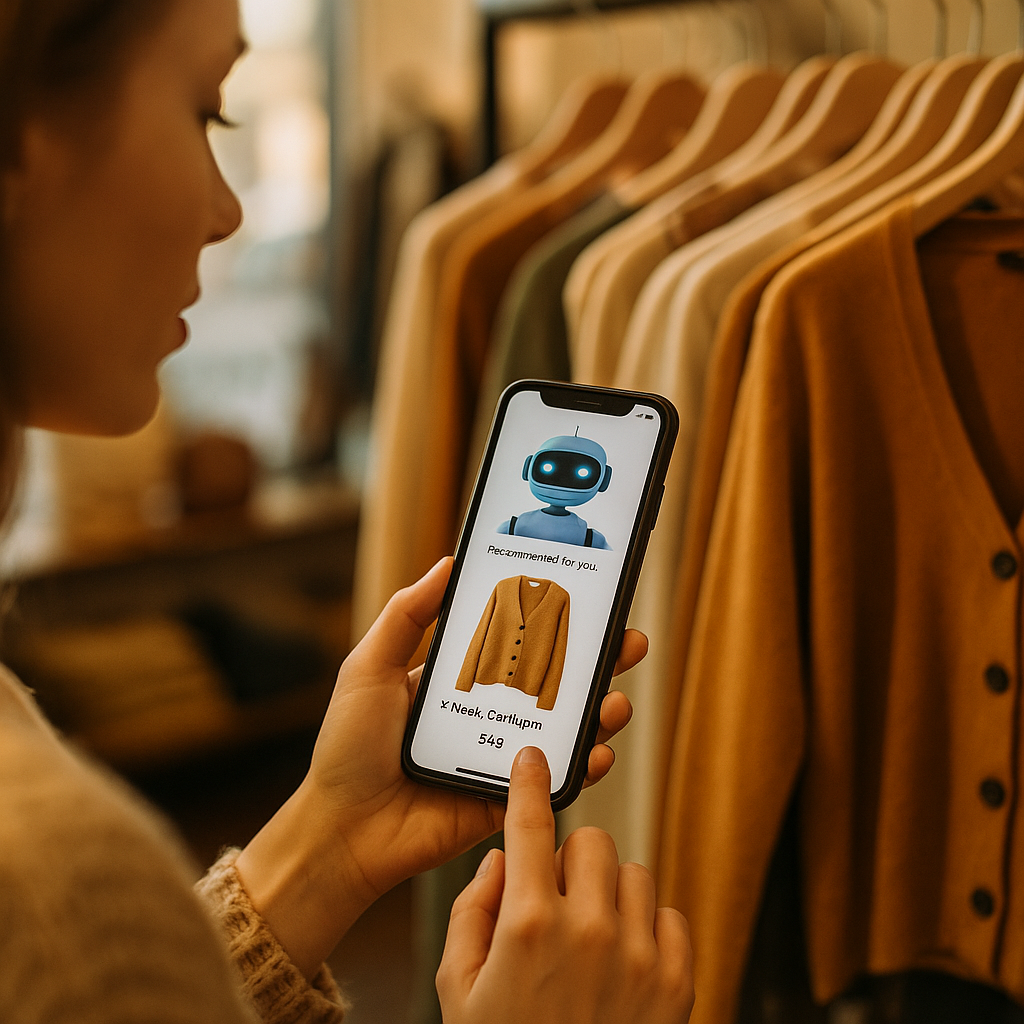
Roughly one in four online shoppers now starts a purchase journey inside a conversational AI tool instead of Google. That number will look quaint by year end. The AI shopping assistant has quietly become the new front door to commerce, and most brand teams still haven’t rearranged the furniture to greet it.
This isn’t a minor UX trend. It’s a plumbing change to how discovery works, and it breaks a lot of the SEO and paid-media assumptions marketers have relied on for two decades.
Why Conversational Interfaces Are Winning the First Click
Search engines were built for keywords. Shoppers, it turns out, think in sentences. “Find me a lightweight running jacket under $120 that works in Portland rain” is a query no traditional search box handles well — but it’s exactly what ChatGPT, Perplexity, and Amazon’s Rufus were designed to answer.
Consumers have noticed. Tools like Google’s Gemini-powered AI Overviews, Perplexity Shopping, and Microsoft Copilot are compressing ten blue links into one synthesized answer, often with product cards attached. The click that used to go to a retailer’s landing page now terminates at the assistant. That’s a direct threat to organic traffic, and it echoes what we’ve already documented in generative search erosion, where certain product categories are losing clicks fastest.
The shift isn’t “search is dying.” It’s that search is being absorbed into a conversation, and the brand that answers the question best — not ranks highest — wins the sale.
Add voice and multimodal input to the mix. Shoppers are now uploading photos of a couch they like and asking an assistant to find something similar at a lower price. Try ranking for that intent with a meta description.
The Discovery Layer Is Moving Up the Stack
Think of the funnel in layers: awareness, consideration, purchase. AI assistants are inserting themselves at the very top, before a brand’s paid media or organic content ever gets a chance to compete. That’s the “discovery layer” shift referenced in the headline, and it matters because whoever controls that layer controls the shortlist.
A few forces are accelerating this:
- Zero-click habits are spreading beyond search. Shoppers who got comfortable with AI Overviews are now applying the same “just tell me the answer” expectation to shopping-specific tools.
- Retailers are building their own assistants. Amazon’s Rufus, Walmart’s Sparky, and Instacart’s AI-powered search are training millions of shoppers daily to ask rather than browse.
- Agentic checkout is arriving. OpenAI’s shopping integrations and emerging agent-to-merchant protocols mean an assistant might soon complete the purchase, not just recommend it.
None of this happens in a vacuum. It connects directly to the broader move we covered in social search discovery rewriting the purchase funnel — TikTok and Instagram search already trained a generation to skip Google. AI assistants are simply the next hop.
What This Means for Paid Search Budgets
Here’s the uncomfortable math: if fewer people click through from search, cost-per-click on the clicks that remain tends to rise, because competition concentrates on a shrinking pool of high-intent queries. Marketers are already seeing this pattern in categories with heavy AI Overview penetration, a dynamic explored in AI answer engines killing clicks while paid media wins attention. Budget reallocation isn’t optional anymore. It’s a survival tactic.
Some CMOs are responding by pulling spend forward into brand-building channels that influence what the AI assistant says about them, rather than fighting for the last click. That’s a meaningful strategic pivot, and it’s one finance teams are still catching up to.
How Brands Get Recommended (Not Just Ranked)
Ranking algorithms rewarded backlinks and keyword density. Recommendation engines reward something different: trust signals an LLM can actually parse. That includes structured product data, consistent brand mentions across independent sources, review volume and sentiment, and clear factual content that doesn’t require inference.
Practically, this means:
- Feed your product catalog properly. Schema markup, accurate pricing, and inventory status aren’t nice-to-haves — they’re what assistants pull from directly.
- Win third-party mentions. LLMs weight independent validation heavily. A product mentioned favorably across review sites, Reddit threads, and creator content is more likely to surface than one only described on a brand’s own site.
- Publish content built for extraction, not just ranking. Clear comparison tables, direct answers to common buyer questions, and unambiguous specs perform better with generative engines than long-form SEO copy stuffed with keywords.
We laid out a similar framework in B2B content for AI discovery, and the same logic applies to consumer commerce: write for the machine’s comprehension, not just the human’s scroll.
Creators Are Becoming Training Data for Trust
Here’s something most brand teams haven’t connected yet: the influencer content you’re already funding is quietly shaping what AI shopping assistants recommend. These models are trained and continuously updated on web content, and creator reviews, unboxings, and comparison videos are exactly the kind of independent, detailed, opinion-rich text that LLMs weight heavily as “trust signal.”
That reframes influencer marketing’s job. It’s no longer just about driving an immediate swipe-up sale. It’s about seeding the open web with the kind of authentic product detail that shows up when someone asks an AI assistant “what’s the best option for X.” A brand with thin creator coverage is, in effect, invisible to the recommendation layer — regardless of how strong its paid media looks.
If an AI assistant can’t find independent proof you’re good at something, it won’t tell a shopper you are — no matter how much you spend on ads.
This is also why creator vetting and authenticity now carry SEO-adjacent stakes. Inflated followings and bot-driven engagement don’t just waste budget, they pollute the very signal AI models are trying to read. That risk is exactly why rebuilding vetting budgets belongs on the agenda for any brand serious about AI discoverability, not just campaign performance.
Category selection matters too. Some verticals — electronics, beauty, home goods — are naturally comparison-heavy and map well to conversational shopping queries. Others don’t translate as cleanly. Understanding how category maps to commerce model helps prioritize where AI-assistant visibility will actually move revenue.
Attribution Just Got Messier
If a shopper asks Perplexity for a recommendation, clicks a product card, and buys on a retailer’s site three days later, what touchpoint gets credit? Most attribution stacks weren’t built to answer that. Referral data from AI assistants is inconsistent, sometimes masked entirely, and rarely maps cleanly to existing UTM structures.
This is part of a bigger identity problem across the martech stack. As we noted in agentic AI and the identity graph problem, fragmented data pipelines break down further when an autonomous agent — not a human — is the one browsing, comparing, and sometimes purchasing on a consumer’s behalf. Brands that haven’t unified their identity and measurement layer will find it nearly impossible to prove which AI-assistant interactions are driving revenue.
Expect vendor consolidation pressure here too. Marketing teams already juggling a dozen point solutions can’t reasonably bolt on separate AI-attribution tools without rationalizing the stack, a tension covered in AI-martech vendor consolidation.
Risk and Compliance: The Part Nobody’s Budgeting For
There’s a regulatory dimension too. When an AI assistant recommends a product, is that a paid placement, an organic recommendation, or something in between? The FTC has already signaled scrutiny of undisclosed AI-influenced endorsements, and UK regulators at the ICO are watching how conversational AI handles consumer data during shopping sessions. Brands paying for placement or “training” within these assistants need disclosure practices ready before regulators force the issue, not after.
Platform-side documentation is still catching up. Marketers evaluating where to invest should keep an eye on how TikTok, Meta, and Google (via Google’s support resources) formalize AI-assisted shopping features, since policy shifts here will directly affect measurement and disclosure requirements.
What Brands Should Actually Do Next
Skip the panic. This isn’t about abandoning SEO or paid search — it’s about adding a third discipline: AI-discovery optimization. Practically, that means auditing product data feeds for machine readability, increasing investment in third-party trust content (reviews, creator coverage, comparison sites), and building a measurement approach that doesn’t assume every valuable touchpoint ends in a trackable click.
Marketing organizations that treat this as a bolt-on project will lag. The ones that treat it as core infrastructure — same tier as their CRM or their creator program — will own the shortlist when a shopper simply asks an assistant what to buy.
Next step: Audit whether your top ten products would even surface in a ChatGPT or Perplexity shopping query today. If they don’t, that’s your Q1 priority, not a nice-to-have for next year.
FAQs
What is an AI shopping assistant, exactly?
It’s a conversational tool — like Amazon’s Rufus, ChatGPT with shopping plugins, or Perplexity Shopping — that answers product questions in natural language and often surfaces specific product recommendations or purchase links instead of a list of search results.
How is this different from traditional SEO?
Traditional SEO optimizes for ranking algorithms that reward keywords and backlinks. AI-discovery optimization focuses on machine-readable product data, independent trust signals like reviews and creator content, and content structured for direct extraction rather than click-through.
Will paid search still matter?
Yes, but its role is shifting. As click volume concentrates on fewer high-intent queries, costs rise and brand-building channels that shape how AI assistants describe a product become more important relative to last-click paid search.
Does influencer content actually affect AI shopping recommendations?
Increasingly, yes. Creator reviews and comparisons are exactly the kind of independent, detailed content that large language models weight as trust signal, which means influencer coverage can directly influence whether a product surfaces in an AI assistant’s answer.
How should brands measure ROI from AI-assistant traffic?
Most existing attribution stacks weren’t built for this. Brands need a unified identity approach that accounts for non-human, agent-driven browsing and purchasing, rather than relying solely on UTM-based, click-dependent models.
FAQs
What is an AI shopping assistant, exactly?
It’s a conversational tool — like Amazon’s Rufus, ChatGPT with shopping plugins, or Perplexity Shopping — that answers product questions in natural language and often surfaces specific product recommendations or purchase links instead of a list of search results.
How is this different from traditional SEO?
Traditional SEO optimizes for ranking algorithms that reward keywords and backlinks. AI-discovery optimization focuses on machine-readable product data, independent trust signals like reviews and creator content, and content structured for direct extraction rather than click-through.
Will paid search still matter?
Yes, but its role is shifting. As click volume concentrates on fewer high-intent queries, costs rise and brand-building channels that shape how AI assistants describe a product become more important relative to last-click paid search.
Does influencer content actually affect AI shopping recommendations?
Increasingly, yes. Creator reviews and comparisons are exactly the kind of independent, detailed content that large language models weight as trust signal, which means influencer coverage can directly influence whether a product surfaces in an AI assistant’s answer.
How should brands measure ROI from AI-assistant traffic?
Most existing attribution stacks weren’t built for this. Brands need a unified identity approach that accounts for non-human, agent-driven browsing and purchasing, rather than relying solely on UTM-based, click-dependent models.
Top Influencer Marketing Agencies
The leading agencies shaping influencer marketing in 2026
Agencies ranked by campaign performance, client diversity, platform expertise, proven ROI, industry recognition, and client satisfaction. Assessed through verified case studies, reviews, and industry consultations.
Moburst

-
2

The Shelf
Boutique Beauty & Lifestyle Influencer AgencyA data-driven boutique agency specializing exclusively in beauty, wellness, and lifestyle influencer campaigns on Instagram and TikTok. Best for brands already focused on the beauty/personal care space that need curated, aesthetic-driven content.Clients: Pepsi, The Honest Company, Hims, Elf Cosmetics, Pure LeafVisit The Shelf → -
3

Audiencly
Niche Gaming & Esports Influencer AgencyA specialized agency focused exclusively on gaming and esports creators on YouTube, Twitch, and TikTok. Ideal if your campaign is 100% gaming-focused — from game launches to hardware and esports events.Clients: Epic Games, NordVPN, Ubisoft, Wargaming, Tencent GamesVisit Audiencly → -
4

Viral Nation
Global Influencer Marketing & Talent AgencyA dual talent management and marketing agency with proprietary brand safety tools and a global creator network spanning nano-influencers to celebrities across all major platforms.Clients: Meta, Activision Blizzard, Energizer, Aston Martin, WalmartVisit Viral Nation → -
5

The Influencer Marketing Factory
TikTok, Instagram & YouTube CampaignsA full-service agency with strong TikTok expertise, offering end-to-end campaign management from influencer discovery through performance reporting with a focus on platform-native content.Clients: Google, Snapchat, Universal Music, Bumble, YelpVisit TIMF → -
6

NeoReach
Enterprise Analytics & Influencer CampaignsAn enterprise-focused agency combining managed campaigns with a powerful self-service data platform for influencer search, audience analytics, and attribution modeling.Clients: Amazon, Airbnb, Netflix, Honda, The New York TimesVisit NeoReach → -
7

Ubiquitous
Creator-First Marketing PlatformA tech-driven platform combining self-service tools with managed campaign options, emphasizing speed and scalability for brands managing multiple influencer relationships.Clients: Lyft, Disney, Target, American Eagle, NetflixVisit Ubiquitous → -
8

Obviously
Scalable Enterprise Influencer CampaignsA tech-enabled agency built for high-volume campaigns, coordinating hundreds of creators simultaneously with end-to-end logistics, content rights management, and product seeding.Clients: Google, Ulta Beauty, Converse, AmazonVisit Obviously →