


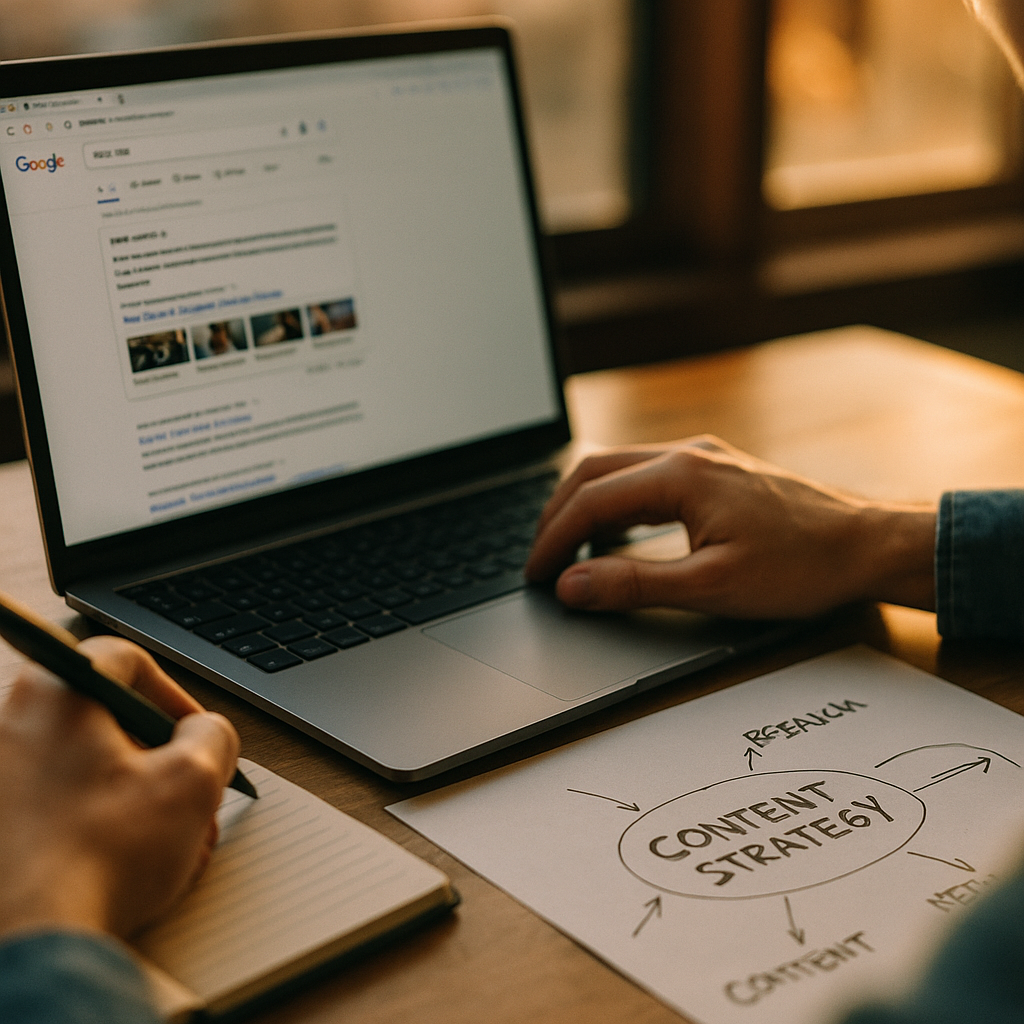
Half. That’s the share of consumer search queries now ending without a single click to a website, according to recent behavioral studies of search engine result pages. If your content strategy still assumes a searcher lands on your page, reads your copy, and converts, you’re planning for a search engine that’s already half-gone. Zero-click search isn’t a fringe trend anymore. It’s the default outcome for a growing share of queries, and most brand content teams haven’t rebuilt around it.
This isn’t another “SEO is dead” scare piece. SEO is very much alive. It just moved. The blue link used to be the product. Now it’s one of several outputs a search engine generates, sitting alongside AI Overviews, featured snippets, knowledge panels, and increasingly, direct answers served by conversational assistants like ChatGPT and Gemini. Brands that keep optimizing exclusively for click-through are optimizing for a shrinking slice of the pie.
What “Zero-Click” Actually Means Now
Zero-click search describes any query where the user gets what they need directly on the results page, or through an AI-generated answer, without visiting a third-party site. It used to be mostly informational queries: weather, sports scores, unit conversions. Google would just answer them. Fine, nobody was monetizing “how many ounces in a cup” anyway.
That’s not the landscape anymore. AI Overviews now surface for a huge range of commercial and comparative queries, the exact searches brands used to build entire content funnels around: “best running shoes for flat feet,” “is X better than Y,” “how does [product category] work.” These are queries with buying intent, and the answer engine is now intercepting them before your landing page ever gets a look.
The traffic isn’t just declining. It’s being replaced by a different kind of visibility, one measured in citations and mentions rather than sessions and pageviews.
Layer on top of that the rise of agentic browsers and shopping assistants that query multiple sources, synthesize an answer, and sometimes complete a purchase without the user ever seeing a webpage render. Our earlier look at how agentic browsers act as shopping agents covers exactly why product feed structure matters more than page design in this environment.
Why Your Analytics Dashboard Is Lying to You
Here’s the uncomfortable part for anyone reporting up to a CMO or CFO: your traffic dashboard was built to measure clicks. Zero-click doesn’t show up as a click. It shows up as nothing, or worse, it shows up as a phantom drop in organic sessions that gets read as “our SEO is failing” when the reality is “our content is winning citations but not visits.”
That distinction matters enormously for budget conversations. A brand whose product gets cited in an AI Overview or referenced by ChatGPT’s shopping features is getting brand exposure and potentially influencing a purchase decision, even if Google Analytics shows zero attributable sessions. Finance teams trained to think in last-click terms will see this as underperformance. It isn’t. It’s an attribution blind spot, and it’s exactly the kind of gap covered in our piece on the generative search attribution gap, which frames this as a vendor and tooling problem, not just a measurement inconvenience.
Some brands are already adjusting. Rather than reporting organic sessions as the north star metric, they’re tracking citation frequency in AI answers, share-of-voice inside generative results, and downstream branded search lift. It’s imperfect. It’s also more honest than pretending the old dashboard still tells the whole story.
The Data Behind the Shift
Third-party research on search behavior, including studies referenced by eMarketer, has tracked steadily rising zero-click rates across desktop and mobile for several years running. Meanwhile, Statista’s search engine market data shows Google still commands the overwhelming majority of query volume even as AI-native competitors chip away at specific use cases, meaning the zero-click phenomenon is largely happening inside Google’s own results pages, not just migrating to ChatGPT.
The practical takeaway: this isn’t a “wait for AI search to mature” problem. It’s happening inside the search engine you already optimize for, right now, on queries you already rank for.
Rebuilding Content Strategy for a World Without Guaranteed Clicks
So what do you actually do differently? Not “write better blog posts.” That advice was tired five years ago and it’s dead on arrival now. Here’s what’s actually working for brands adapting in earnest.
Structure content to be extractable, not just readable
AI Overviews and answer engines pull specific passages, not entire articles. That means your content needs clear, self-contained answers near the top of a section, followed by supporting depth. Question-based subheadings help. So does putting the direct answer in the first sentence after the heading, rather than building up to it. This is basic answer-engine optimization, and it overlaps heavily with structured data work. If you haven’t audited your product feeds and schema markup, our structured data checklist for AI citations is a reasonable starting point.
Treat schema markup as non-negotiable infrastructure
Structured data isn’t a nice-to-have anymore. It’s how machines understand what your page is actually about, and it dramatically improves the odds of being cited rather than ignored. Brands running e-commerce catalogs should look closely at how product feed prep for AI search works, because a poorly tagged feed is invisible to the systems now doing a huge share of product discovery.
Stop measuring success by session count alone
If half your relevant queries never produce a click, then session-based KPIs undercount your actual reach. Brands need a citation and mention tracking layer, whether that’s manual query sampling, a third-party visibility tool, or an internal dashboard pulling AI Overview appearances. This is uncomfortable for teams used to clean, click-based reporting, but it’s the same discipline shift covered in our analysis of tracking AI-influenced revenue your CRM can’t see. The revenue is real. The attribution trail just looks different.
Double down on branded search and direct demand
If informational and comparative queries increasingly get answered without a click, brand awareness and direct navigation become more valuable, not less. A consumer who remembers your brand name and searches for it directly, or types your URL straight into a browser, bypasses the zero-click problem entirely. That means top-of-funnel brand-building work, including influencer partnerships and social content, carries more downstream SEO weight than it used to. It’s an odd inversion: paid and organic social are becoming a hedge against zero-click search’s erosion of top-funnel organic capture.
Does This Mean Traditional SEO Content Is a Waste of Budget?
No, but it does mean the ROI calculation needs updating. A comprehensive how-to guide that used to drive 10,000 monthly sessions might now drive 4,000 sessions and 6,000 “answer extractions” that never touch your domain. Is that guide still worth producing? Probably, if it’s cited often enough to build brand authority and influence purchase consideration. Is it worth producing at the old cost-per-content-piece assumption of “sessions equal value”? No.
This is where marketing teams need to get more comfortable with mixed-signal justification: a blend of citation tracking, branded search lift, assisted conversions, and yes, some old-fashioned session data. Nobody said this would be tidy.
The brands winning right now aren’t the ones producing more content. They’re the ones producing content structured to be quoted, not just visited.
There’s also a governance angle here that shouldn’t get lost. As AI answer engines pull from your content, accuracy matters more, not less, because a hallucinated or misquoted stat now travels through a channel you don’t control. Marketing and legal teams should be aligned on how product claims are phrased, especially for regulated categories, and it’s worth reviewing guidance from the Federal Trade Commission on endorsements and disclosures, since AI-summarized content doesn’t always carry the same disclaimers your original page did.
The Operational Fix: Cross-Team Alignment
None of this works if SEO, content, and paid media teams operate in silos. The brands adapting fastest have merged their generative-engine-optimization work with paid and identity strategy, because zero-click search doesn’t eliminate the customer, it just changes where and how they first encounter your brand. Our piece on building a centralized identity strategy across GEO and paid media lays out a practical model for this, and it’s worth a read if your teams still report through separate chains with separate KPIs.
Marketing leaders should also expect procurement conversations to shift. Vendors selling “SEO traffic growth” as the primary pitch are selling a shrinking metric. The right vendor conversation now includes citation share, structured data audits, and answer-engine visibility as core deliverables, not add-ons. HubSpot’s ongoing research into content marketing benchmarks is a useful sanity check when negotiating what “good performance” looks like under this new mix of signals.
Practically speaking, here’s a short list worth putting in front of your content team this quarter:
- Audit your top 20 commercial-intent queries for AI Overview presence, and check whether your brand is cited
- Prioritize schema markup fixes on product and comparison pages before writing new content
- Add citation tracking to your reporting stack, even if it’s manual sampling to start
- Reallocate a portion of “traffic-driving” content budget toward brand and social content that builds direct/branded search demand
- Get legal and content teams aligned on claim language, since AI summarization strips context faster than you’d expect
None of this is theoretical. It’s operational triage for a search environment that changed faster than most content calendars did.
Next Step
Run a citation audit on your top 20 commercial queries this month, fix the structured data gaps you find, and shift at least one KPI conversation from “sessions” to “share of AI answer visibility” before your next budget review.
Frequently Asked Questions
What is zero-click search and why is it growing?
Zero-click search happens when a user gets a complete answer directly on the search results page or through an AI-generated response, without clicking through to a website. It’s growing because search engines and AI assistants increasingly synthesize answers from multiple sources rather than simply listing links, particularly for informational and comparative queries.
Does zero-click search mean SEO no longer matters?
No. SEO still determines whether your content gets cited, summarized, or ignored by AI answer engines. What’s changed is the goal: instead of optimizing purely for clicks, brands now optimize for extractability, citation frequency, and structured data accuracy so machines can quote them accurately.
How can brands measure success if clicks are declining?
Brands should track a blended set of signals: citation appearances in AI Overviews, branded search volume lift, structured data coverage, and assisted conversions, alongside traditional session and click data. Relying on click volume alone increasingly understates real content performance.
What content changes help brands get cited in AI answers?
Content that leads with a direct, self-contained answer near the top of a section, uses clear question-based subheadings, and includes accurate structured data (schema markup) tends to get cited more often. Long, meandering intros that delay the actual answer are less likely to be extracted.
Should brands stop investing in top-of-funnel content?
Not necessarily, but the ROI justification needs updating. Top-of-funnel content that earns frequent AI citations still builds brand authority and consideration, even with fewer direct sessions. Pairing that content with stronger brand-building efforts, including influencer and social campaigns, helps offset lost organic click volume by driving direct and branded search instead.
Frequently Asked Questions
What is zero-click search and why is it growing?
Zero-click search happens when a user gets a complete answer directly on the search results page or through an AI-generated response, without clicking through to a website. It’s growing because search engines and AI assistants increasingly synthesize answers from multiple sources rather than simply listing links, particularly for informational and comparative queries.
Does zero-click search mean SEO no longer matters?
No. SEO still determines whether your content gets cited, summarized, or ignored by AI answer engines. What’s changed is the goal: instead of optimizing purely for clicks, brands now optimize for extractability, citation frequency, and structured data accuracy so machines can quote them accurately.
How can brands measure success if clicks are declining?
Brands should track a blended set of signals: citation appearances in AI Overviews, branded search volume lift, structured data coverage, and assisted conversions, alongside traditional session and click data. Relying on click volume alone increasingly understates real content performance.
What content changes help brands get cited in AI answers?
Content that leads with a direct, self-contained answer near the top of a section, uses clear question-based subheadings, and includes accurate structured data (schema markup) tends to get cited more often. Long, meandering intros that delay the actual answer are less likely to be extracted.
Should brands stop investing in top-of-funnel content?
Not necessarily, but the ROI justification needs updating. Top-of-funnel content that earns frequent AI citations still builds brand authority and consideration, even with fewer direct sessions. Pairing that content with stronger brand-building efforts, including influencer and social campaigns, helps offset lost organic click volume by driving direct and branded search instead.
Top Influencer Marketing Agencies
The leading agencies shaping influencer marketing in 2026
Agencies ranked by campaign performance, client diversity, platform expertise, proven ROI, industry recognition, and client satisfaction. Assessed through verified case studies, reviews, and industry consultations.
Moburst

-
2

The Shelf
Boutique Beauty & Lifestyle Influencer AgencyA data-driven boutique agency specializing exclusively in beauty, wellness, and lifestyle influencer campaigns on Instagram and TikTok. Best for brands already focused on the beauty/personal care space that need curated, aesthetic-driven content.Clients: Pepsi, The Honest Company, Hims, Elf Cosmetics, Pure LeafVisit The Shelf → -
3

Audiencly
Niche Gaming & Esports Influencer AgencyA specialized agency focused exclusively on gaming and esports creators on YouTube, Twitch, and TikTok. Ideal if your campaign is 100% gaming-focused — from game launches to hardware and esports events.Clients: Epic Games, NordVPN, Ubisoft, Wargaming, Tencent GamesVisit Audiencly → -
4

Viral Nation
Global Influencer Marketing & Talent AgencyA dual talent management and marketing agency with proprietary brand safety tools and a global creator network spanning nano-influencers to celebrities across all major platforms.Clients: Meta, Activision Blizzard, Energizer, Aston Martin, WalmartVisit Viral Nation → -
5

The Influencer Marketing Factory
TikTok, Instagram & YouTube CampaignsA full-service agency with strong TikTok expertise, offering end-to-end campaign management from influencer discovery through performance reporting with a focus on platform-native content.Clients: Google, Snapchat, Universal Music, Bumble, YelpVisit TIMF → -
6

NeoReach
Enterprise Analytics & Influencer CampaignsAn enterprise-focused agency combining managed campaigns with a powerful self-service data platform for influencer search, audience analytics, and attribution modeling.Clients: Amazon, Airbnb, Netflix, Honda, The New York TimesVisit NeoReach → -
7

Ubiquitous
Creator-First Marketing PlatformA tech-driven platform combining self-service tools with managed campaign options, emphasizing speed and scalability for brands managing multiple influencer relationships.Clients: Lyft, Disney, Target, American Eagle, NetflixVisit Ubiquitous → -
8

Obviously
Scalable Enterprise Influencer CampaignsA tech-enabled agency built for high-volume campaigns, coordinating hundreds of creators simultaneously with end-to-end logistics, content rights management, and product seeding.Clients: Google, Ulta Beauty, Converse, AmazonVisit Obviously →