


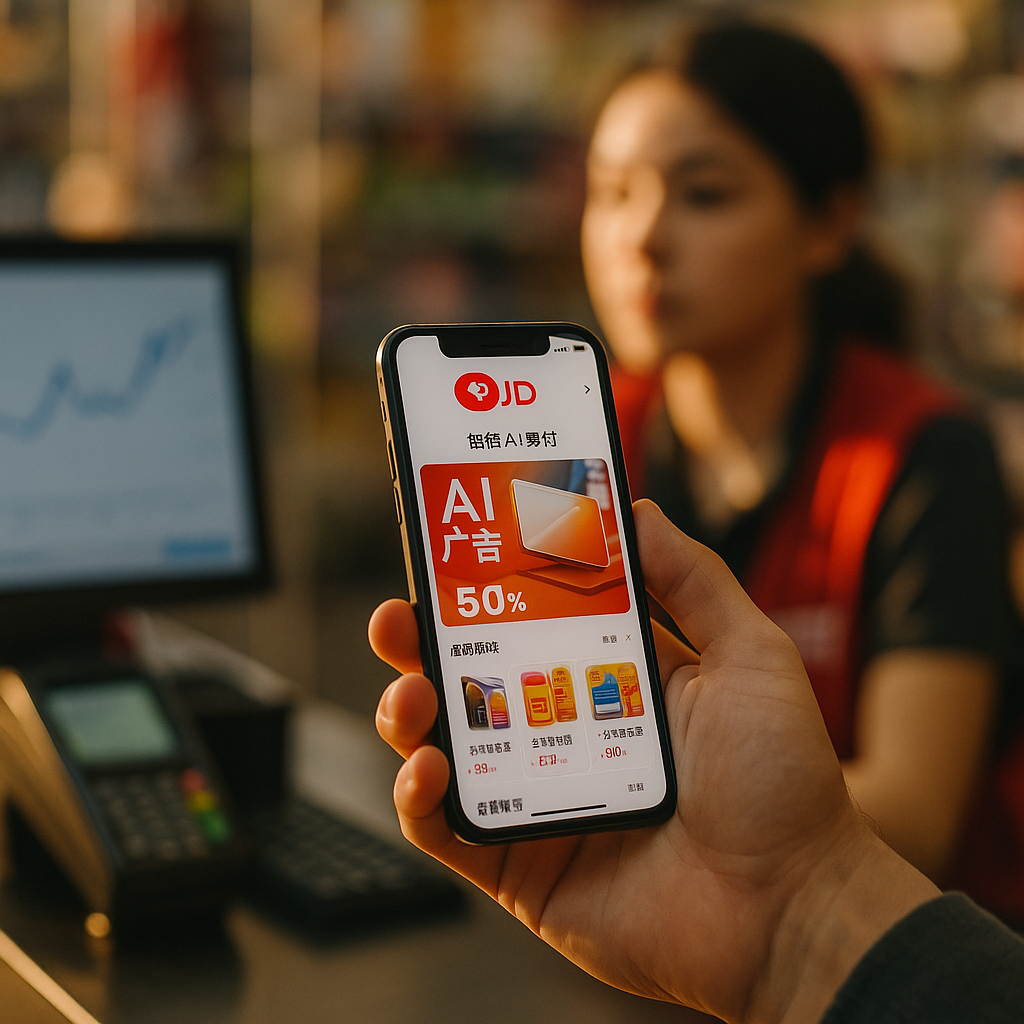
JD.com just told investors its advertising margins are climbing on the back of AI-driven targeting, and nobody outside China’s retail circles seems to be paying attention. That’s a mistake. Retail media’s AI targeting gains aren’t a regional curiosity; they’re a preview of where every major retailer, from Walmart Connect to Amazon Ads, is headed. If you’re allocating CPG budget without accounting for this shift, you’re already behind.
The Margin Story Nobody’s Watching Closely Enough
JD.com’s retail media business has quietly become one of its most profitable segments, and the company has been explicit that AI-optimized ad targeting is the reason. Better targeting means higher fill rates, fewer wasted impressions, and advertisers willing to pay premium CPMs because the return is measurable. That’s not a story unique to JD.com. It’s the same pattern playing out across Amazon Ads, Walmart Connect, and Instacart’s ad platform, all of which have reported accelerating retail media revenue even as broader ad markets wobble.
Here’s why this matters to a CPG brand manager sitting in a budget meeting right now: retail media networks are getting structurally better at converting ad spend into sales, and they’re pricing that improvement into your media plan whether you’ve noticed or not.
When a retail media platform improves targeting precision, it doesn’t just improve performance for advertisers who pay more attention. It shifts the entire cost curve, often making legacy “spray and pray” placements look worse by comparison, even if nothing about them changed.
What “AI Targeting Gains” Actually Means in Practice
Strip away the vendor jargon and JD.com’s improvement boils down to three mechanical shifts, all of which are replicable by any retail media network with enough first-party data and compute budget:
- Predictive audience scoring: Instead of targeting broad demographic or category segments, AI models now score individual shoppers on purchase propensity in near real-time, updating as browsing behavior changes within a single session.
- Dynamic bid optimization: Machine learning systems adjust bids automatically based on inventory, competitor activity, and conversion probability, squeezing more value out of every impression without manual intervention.
- Cross-category signal blending: Retailers are combining purchase history, search behavior, and even loyalty program data to identify intent signals that wouldn’t be obvious from any single data source alone.
The result is fewer wasted impressions and higher conversion rates per dollar spent. For the retailer, that’s margin expansion. For the advertiser, that’s supposed to be efficiency. But here’s the catch: efficiency gains at the platform level don’t automatically translate into savings for brands. Often they translate into higher prices for the same inventory, because demand for “smart” placements outpaces supply.
Why CPG Brands Should Care About a Chinese E-Commerce Platform’s Ad Margins
Retail media is a global playbook now, not a regional experiment. What JD.com demonstrates at scale, Amazon and Walmart are replicating with their own AI stacks, and mid-tier retailers like Kroger’s Precision Marketing and Target’s Roundel are racing to catch up. The mechanics are nearly identical: proprietary first-party data, machine learning models trained on purchase behavior, and advertiser tools that promise better ROAS in exchange for premium CPMs.
For CPG brands, this creates a genuine allocation dilemma. Do you shift more budget toward retail media networks that are demonstrably improving targeting precision, even as CPMs rise? Or do you hold spend in channels where costs are more predictable but targeting hasn’t kept pace?
The honest answer: it depends on category velocity and margin structure, not blanket strategy. A high-turnover snack brand competing on impulse purchase behavior benefits enormously from real-time intent signals. A slower-consideration category like premium skincare may get more value from brand-building channels where AI targeting matters less than narrative and trust. This is the same category-specific thinking we’ve argued for when brands match category to platform commerce models instead of applying one allocation formula across every SKU.
The Budget Reallocation Math Brands Are Getting Wrong
Too many CPG marketers are still evaluating retail media spend using last year’s ROAS benchmarks. That’s a problem, because AI-driven targeting improvements change the underlying cost-per-acquisition curve faster than annual budget cycles can adapt.
Consider what’s actually happening: if a retail media network’s targeting improves 15% year over year (a plausible figure given what platforms like JD.com and Amazon have reported), the effective CPA for a given campaign should drop, all else being equal. But CPMs on these platforms have also risen, often faster than the targeting improvement itself, according to data tracked by eMarketer on retail media ad pricing trends. Net effect: brands may be paying more for inventory that performs better, but the margin improvement is being captured disproportionately by the retailer, not the advertiser.
Retail media’s AI targeting gains are real, but they’re not evenly distributed. Platforms capture margin first. Brands only capture value if they actively renegotiate placement strategy and measurement, rather than assuming efficiency gains flow downhill automatically.
This is exactly the kind of gap we flagged in our coverage of the AI ROI gap, where the majority of marketers increased AI-related spend without being able to prove it worked. Retail media is no exception. If your team isn’t running incrementality tests against these AI-optimized placements, you’re trusting a black box with a growing share of your budget.
Three Allocation Moves That Actually Make Sense Right Now
Given what JD.com’s numbers reveal about the direction of retail media, here’s what forward-looking CPG brands should be doing with their budget conversations this planning cycle:
- Demand platform-level transparency on targeting methodology. Ask account teams directly: what changed in the targeting model, and how does that affect your audience overlap with competitors bidding on the same inventory? Vague answers are a red flag.
- Run marketing mix modeling alongside platform-reported ROAS. Retail media dashboards will always show you favorable numbers; they’re built to justify spend. Independent measurement, the kind we detailed in our piece on how marketing mix modeling fills the attribution gap, gives you a truer picture of incremental lift.
- Treat AI vendor selection as a risk decision, not just a performance one. Retail media platforms are increasingly acting as AI vendors with advertising attached. The same due diligence framework we recommend for broader martech decisions, outlined in our analysis of the $422B ad market shift and AI vendor selection, applies directly here: understand data usage, model transparency, and contractual exit terms before committing larger budget shares.
None of this means brands should pull back from retail media. The channel is too important, and the efficiency gains are too real to ignore entirely. It means treating budget increases as conditional on proof, not platform promises.
The Talent and Process Gap Behind the Budget Gap
There’s a quieter problem underneath all this: most CPG marketing teams don’t have staff who understand how AI targeting models actually work well enough to negotiate effectively with retail media reps. That’s not a knock on marketers, it’s a structural gap. Retail media platforms employ data scientists building these models; brand teams are often relying on account managers to explain them secondhand.
This is part of why algorithm fluency has become a hiring filter for senior marketing roles. CMOs who can’t ask sharp questions about targeting methodology are, in effect, negotiating blind against platforms whose entire business model depends on advertisers not asking sharp questions. That imbalance is precisely why JD.com and its peers can expand ad margins while calling it a win for everyone.
It’s also worth remembering that retail media dollars don’t operate in isolation. They interact with organic discovery, social commerce, and increasingly, AI shopping assistants that are reshaping how consumers find products before they ever reach a retailer’s search bar, a dynamic we’ve tracked closely in our coverage of AI shopping assistants rewriting product discovery. Budget decisions made purely on retail media ROAS, without accounting for these upstream discovery shifts, risk optimizing for the wrong funnel stage entirely.
What to Watch Over the Next Few Quarters
A few signals will tell you whether retail media’s AI targeting story is genuinely delivering brand-side value or simply padding platform margins:
- Whether CPMs on major platforms rise faster or slower than reported conversion improvements
- Whether retailers start offering more granular attribution data to advertisers, or continue to gatekeep it
- Whether mid-tier retail media networks (Kroger, Target, Instacart) can match the targeting sophistication of JD.com-style AI models, or fall behind on data scale
Brands that track these signals quarterly, rather than reacting only at annual planning, will be positioned to shift budget faster when the math changes. Given how quickly AI targeting capability is evolving, quarterly review isn’t overkill. It’s the minimum cadence needed to stay ahead of platform-side margin capture.
Next step: before your next budget cycle, request targeting methodology documentation from your top three retail media partners and run an independent incrementality test on at least one AI-optimized placement type. If the platform can’t or won’t explain how the model targets your audience, that’s your answer on where the margin is really going.
FAQs
What does JD.com’s advertising margin improvement mean for CPG brands outside China?
It signals where global retail media is headed. AI-driven targeting improvements that boost platform margins are being replicated by Amazon Ads, Walmart Connect, and other major retail media networks, meaning CPG brands everywhere should expect similar CPM and targeting shifts.
Should CPG brands increase retail media budgets because of AI targeting improvements?
Not automatically. Targeting improvements often come with higher CPMs, and platforms tend to capture margin gains before advertisers do. Brands should validate performance with independent measurement, like marketing mix modeling, before shifting significant budget share.
How can brands tell if retail media AI targeting is actually improving their ROI?
Run incrementality tests and compare platform-reported ROAS against independent marketing mix modeling. If platform dashboards show gains that don’t hold up under independent analysis, the targeting improvement is likely benefiting the platform more than the advertiser.
What categories benefit most from AI-driven retail media targeting?
High-velocity, impulse-driven categories like snacks, beverages, and household staples tend to benefit most from real-time intent signals. Slower-consideration categories, like premium skincare or supplements, often get more value from brand-building channels than hyper-targeted retail media placements.
What should marketing teams do to keep pace with AI-driven retail media changes?
Build internal algorithm fluency, demand targeting methodology transparency from platform partners, and treat retail media vendor selection with the same risk scrutiny applied to any major AI martech investment.
FAQs
What does JD.com’s advertising margin improvement mean for CPG brands outside China?
It signals where global retail media is headed. AI-driven targeting improvements that boost platform margins are being replicated by Amazon Ads, Walmart Connect, and other major retail media networks, meaning CPG brands everywhere should expect similar CPM and targeting shifts.
Should CPG brands increase retail media budgets because of AI targeting improvements?
Not automatically. Targeting improvements often come with higher CPMs, and platforms tend to capture margin gains before advertisers do. Brands should validate performance with independent measurement, like marketing mix modeling, before shifting significant budget share.
How can brands tell if retail media AI targeting is actually improving their ROI?
Run incrementality tests and compare platform-reported ROAS against independent marketing mix modeling. If platform dashboards show gains that don’t hold up under independent analysis, the targeting improvement is likely benefiting the platform more than the advertiser.
What categories benefit most from AI-driven retail media targeting?
High-velocity, impulse-driven categories like snacks, beverages, and household staples tend to benefit most from real-time intent signals. Slower-consideration categories, like premium skincare or supplements, often get more value from brand-building channels than hyper-targeted retail media placements.
What should marketing teams do to keep pace with AI-driven retail media changes?
Build internal algorithm fluency, demand targeting methodology transparency from platform partners, and treat retail media vendor selection with the same risk scrutiny applied to any major AI martech investment.
Top Influencer Marketing Agencies
The leading agencies shaping influencer marketing in 2026
Agencies ranked by campaign performance, client diversity, platform expertise, proven ROI, industry recognition, and client satisfaction. Assessed through verified case studies, reviews, and industry consultations.
Moburst

-
2

The Shelf
Boutique Beauty & Lifestyle Influencer AgencyA data-driven boutique agency specializing exclusively in beauty, wellness, and lifestyle influencer campaigns on Instagram and TikTok. Best for brands already focused on the beauty/personal care space that need curated, aesthetic-driven content.Clients: Pepsi, The Honest Company, Hims, Elf Cosmetics, Pure LeafVisit The Shelf → -
3

Audiencly
Niche Gaming & Esports Influencer AgencyA specialized agency focused exclusively on gaming and esports creators on YouTube, Twitch, and TikTok. Ideal if your campaign is 100% gaming-focused — from game launches to hardware and esports events.Clients: Epic Games, NordVPN, Ubisoft, Wargaming, Tencent GamesVisit Audiencly → -
4

Viral Nation
Global Influencer Marketing & Talent AgencyA dual talent management and marketing agency with proprietary brand safety tools and a global creator network spanning nano-influencers to celebrities across all major platforms.Clients: Meta, Activision Blizzard, Energizer, Aston Martin, WalmartVisit Viral Nation → -
5

The Influencer Marketing Factory
TikTok, Instagram & YouTube CampaignsA full-service agency with strong TikTok expertise, offering end-to-end campaign management from influencer discovery through performance reporting with a focus on platform-native content.Clients: Google, Snapchat, Universal Music, Bumble, YelpVisit TIMF → -
6

NeoReach
Enterprise Analytics & Influencer CampaignsAn enterprise-focused agency combining managed campaigns with a powerful self-service data platform for influencer search, audience analytics, and attribution modeling.Clients: Amazon, Airbnb, Netflix, Honda, The New York TimesVisit NeoReach → -
7

Ubiquitous
Creator-First Marketing PlatformA tech-driven platform combining self-service tools with managed campaign options, emphasizing speed and scalability for brands managing multiple influencer relationships.Clients: Lyft, Disney, Target, American Eagle, NetflixVisit Ubiquitous → -
8

Obviously
Scalable Enterprise Influencer CampaignsA tech-enabled agency built for high-volume campaigns, coordinating hundreds of creators simultaneously with end-to-end logistics, content rights management, and product seeding.Clients: Google, Ulta Beauty, Converse, AmazonVisit Obviously →