


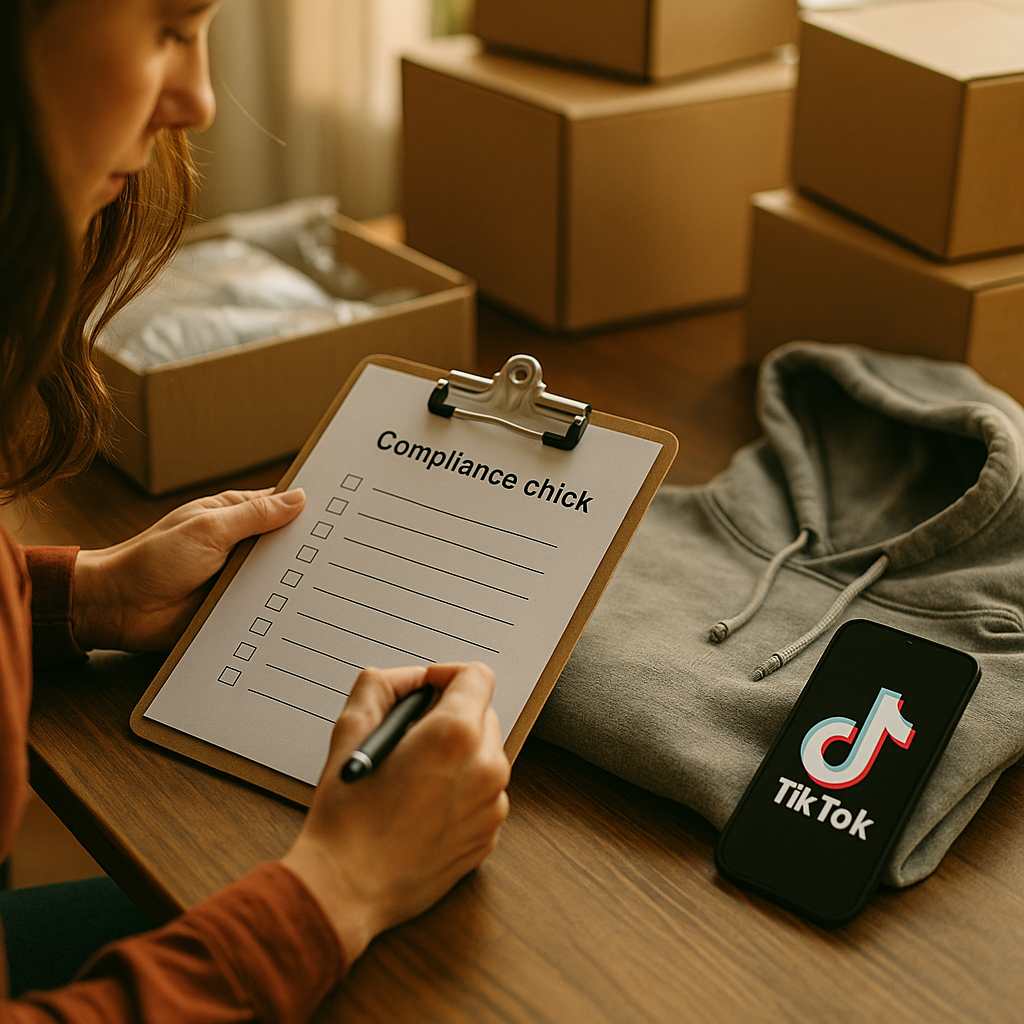
TikTok suspended over 15,000 seller accounts globally last year for shipping and fulfillment violations, and enforcement has only gotten sharper since. If your TikTok Shop compliance checklist doesn’t already account for return timing windows and shipping fraud triggers, holiday order volume will expose the gaps for you.
The platform doesn’t care that Q4 is your busiest stretch. Its automated systems flag late shipments, mismatched tracking, and slow refunds the same way in December as they do in March, just with more transactions to catch you in the act.
Why Holiday Volume Makes This Urgent
TikTok Shop’s seller policies aren’t new. What’s new is the scale at which they’ll be tested. Order volume during peak holiday weeks can jump 3-5x for active shops, according to seasonal data patterns tracked by eMarketer. That kind of surge strains warehouses, third-party logistics partners, and customer service teams simultaneously.
Here’s the problem: TikTok’s enforcement algorithms don’t adjust for seasonal strain. A shop that ships 98% of orders on time in October might slip to 91% in December simply because of carrier delays outside its control. TikTok’s system doesn’t ask why. It just counts violations against your seller score.
A single percentage-point drop in on-time shipping during peak weeks can push a shop from “healthy” to “at risk” status, triggering reduced visibility in the For You feed right when traffic matters most.
Brands that treat compliance as a pre-holiday checklist item, rather than an ongoing operational discipline, are the ones who get blindsided by suspensions in the middle of their best sales week.
The Return Timing Rules You Can’t Improvise
TikTok Shop requires sellers to process returns and refunds within specific windows, typically 2 business days for approval decisions and a set number of days for refund issuance once items are received back. Miss those windows repeatedly, and you’re not just annoying customers, you’re accumulating violations that feed directly into your shop’s health score.
The mechanics matter here. TikTok tracks:
- Time from return request to seller response
- Time from received return to refund processed
- Rate of auto-approved returns due to seller inaction
- Dispute escalation frequency tied to slow resolution
That last point trips up a lot of mid-size sellers. If your team is slow to respond, TikTok’s system can auto-approve the return on the customer’s behalf. That’s technically a “resolved” case in the data, but it also signals to TikTok that your operation isn’t keeping pace, and repeated auto-approvals count against you in ways manual approvals don’t.
During the holidays, return volume typically spikes in the two weeks after Christmas as gift recipients start requesting exchanges or refunds. If your customer service staffing plan doesn’t scale with that curve, you’ll bleed compliance standing exactly when you can least afford it.
Build a Response-Time Buffer, Not a Bare Minimum
Don’t design your team’s SLA to match TikTok’s minimum requirement. Build in a buffer. If the platform requires response within 48 hours, target 24. That cushion protects you when a staffing gap or system outage hits during a high-volume week. It also keeps your metrics comfortably inside the “healthy” range rather than hovering at the edge where one bad day tips you into penalty territory.
Shipping Fraud Enforcement: What’s Actually Being Flagged
Shipping fraud enforcement on TikTok Shop isn’t limited to sellers deliberately gaming the system. Plenty of legitimate merchants get flagged because their fulfillment data doesn’t match reality closely enough. The platform’s fraud detection looks for patterns like:
- Tracking numbers marked “shipped” with no carrier scan activity for extended periods
- Repeated use of invalid or reused tracking numbers
- Shipping labels purchased but packages not actually tendered to the carrier
- Delivery confirmation mismatches between TikTok’s system and the carrier’s own record
Sound familiar? These are the same categories of issues covered in shipping subsidy verification problems, where merchants claiming subsidized shipping rates get scrutinized for whether the underlying fulfillment actually happened as declared. The overlap isn’t a coincidence. TikTok is building a unified fulfillment integrity system, and shipping fraud flags feed the same risk model that governs subsidy eligibility and seller health scores.
During holiday season, the risk compounds. Third-party fulfillment centers get overwhelmed. Labels get printed in batches ahead of actual pickup. A package might sit in a warehouse for 36 hours before a carrier scans it, even though your system marked it “shipped” the moment the label printed. TikTok’s algorithm doesn’t know the difference between operational lag and fraud. It just sees a gap between claimed status and carrier confirmation.
If your fulfillment partner batches label printing separately from actual carrier pickup, you’re creating a data mismatch that looks identical to fraud from TikTok’s enforcement dashboard.
Building the Actual Checklist
Generic advice doesn’t survive contact with a holiday order surge. Here’s what an operational checklist should actually cover, broken into the categories that matter most for enforcement risk.
Fulfillment Data Accuracy
- Audit tracking number generation against actual carrier pickup timestamps weekly, not monthly
- Confirm your WMS or 3PL integration pushes real-time scan data to TikTok’s API, not batch updates
- Flag any tracking number showing “label created” status for more than 24 hours without a carrier scan
- Reconcile delivery confirmations between your internal system and TikTok Shop’s seller dashboard at least twice weekly during peak season
Return and Refund SLAs
- Document your return approval workflow with named owners for each step
- Set internal response targets tighter than TikTok’s stated minimums
- Build a holiday staffing plan specifically for the post-Christmas return surge
- Monitor auto-approval rates weekly; treat a rising trend as an early warning, not a footnote
Escalation and Dispute Tracking
- Assign a single compliance owner responsible for monitoring shop health metrics daily during Q4
- Create an internal escalation path for disputes nearing TikTok’s automatic resolution deadline
- Keep a log of external factors (carrier delays, weather, warehouse capacity) tied to any missed SLA, in case you need to appeal a penalty
That documentation step matters more than most sellers realize. TikTok does allow appeals for certain violations, particularly when there’s evidence of carrier-side failure rather than seller negligence. But you need contemporaneous records, not a reconstructed timeline built after the suspension notice lands.
Where Brands Get This Wrong
The most common mistake isn’t ignorance of the rules. It’s treating compliance as a one-time setup task rather than an ongoing monitoring function. Brands read the seller policy once, configure their systems accordingly, and assume they’re covered indefinitely.
TikTok updates its enforcement thresholds and fraud detection logic regularly, often without prominent announcement. What passed as acceptable shipping variance six months ago might trigger a flag today. This mirrors what we’ve seen with real IP re-verification requirements and other backend checks TikTok has tightened with little warning. The platform’s compliance posture is a moving target, and static checklists age out fast.
Another frequent gap: siloed ownership. Fulfillment sits with operations, refunds sit with customer service, and platform compliance sits with… nobody, usually, until something breaks. Holiday season punishes that fragmentation because the volume forces every team to move faster, and gaps between departments widen under pressure.
There’s also a data governance angle that gets overlooked. If your fulfillment and customer service systems pull from different data sources, syncing schedules matter. A refund processed in your CRM at 2pm that doesn’t sync to TikTok’s dashboard until the next morning creates a reporting lag that can misrepresent your actual compliance standing. If you’re managing this across multiple regions or brand entities, the coordination challenge looks a lot like what’s covered in guidance on multi-brand platform agreements, where consistent data flow between systems becomes a contractual and operational necessity, not just a nice-to-have.
What Enforcement Actually Looks Like in Practice
Violations don’t usually result in immediate suspension. TikTok typically issues warnings first, tied to specific metrics falling below threshold. Shop health scores get downgraded, which reduces product visibility and eligibility for certain promotional features like livestream shopping placement or affiliate program participation.
Repeated or severe violations escalate to temporary restrictions: inability to list new products, reduced payout frequency, or suspension of specific fulfillment methods. In the most serious fraud cases, TikTok can freeze payouts entirely pending investigation, which is catastrophic timing if it happens during your highest-revenue week of the year.
The FTC has also signaled increased attention to marketplace fulfillment practices more broadly, which adds regulatory pressure on top of platform-specific enforcement. Sellers operating across multiple channels should treat TikTok’s rules as a floor, not a ceiling, for their operational standards.
Sprout Social’s research on social commerce trust consistently shows that fulfillment failures damage brand perception far more than pricing issues do. A late shipment or slow refund doesn’t just risk a platform penalty. It costs you repeat customers who won’t come back after one bad experience.
Next Step
Don’t wait for a shop health warning to build this system. Assign one person ownership of TikTok Shop compliance monitoring this week, give them daily dashboard access, and run a fulfillment data audit before your first major holiday promotion goes live.
Frequently Asked Questions
What triggers a TikTok Shop shipping fraud flag?
Common triggers include tracking numbers with no carrier scan activity for extended periods, reused or invalid tracking numbers, labels purchased without actual carrier pickup, and mismatches between TikTok’s delivery confirmation data and the carrier’s own records. Most flags stem from data lag rather than intentional fraud, but the system doesn’t distinguish automatically.
How quickly must sellers respond to return requests on TikTok Shop?
TikTok generally requires sellers to respond to return requests within a short window, often around 2 business days, before the platform auto-approves the return on the customer’s behalf. Exact timeframes can vary by policy update, so sellers should check their current seller dashboard requirements regularly rather than relying on past guidance.
Can holiday shipping delays be excused from compliance penalties?
TikTok does allow appeals in some cases where documented carrier delays or third-party fulfillment failures caused missed SLAs. Sellers need contemporaneous records, such as carrier delay notices or 3PL communication logs, to support an appeal. Waiting to compile this evidence after a penalty is issued significantly weakens the case.
What happens if a shop’s health score drops during peak season?
A declining shop health score typically reduces product visibility in the For You feed and can limit eligibility for promotional features like livestream shopping or affiliate program placement. Severe or repeated violations can lead to listing restrictions, delayed payouts, or full payout freezes pending investigation.
How does return timing enforcement connect to shipping fraud rules?
Both fall under TikTok’s broader fulfillment integrity system, which evaluates whether a seller’s claimed order status matches actual carrier and customer service activity. Slow refunds and shipping data mismatches feed into the same underlying risk model, so weaknesses in one area often compound problems in the other.
Top Influencer Marketing Agencies
The leading agencies shaping influencer marketing in 2026
Agencies ranked by campaign performance, client diversity, platform expertise, proven ROI, industry recognition, and client satisfaction. Assessed through verified case studies, reviews, and industry consultations.
Moburst

-
2

The Shelf
Boutique Beauty & Lifestyle Influencer AgencyA data-driven boutique agency specializing exclusively in beauty, wellness, and lifestyle influencer campaigns on Instagram and TikTok. Best for brands already focused on the beauty/personal care space that need curated, aesthetic-driven content.Clients: Pepsi, The Honest Company, Hims, Elf Cosmetics, Pure LeafVisit The Shelf → -
3

Audiencly
Niche Gaming & Esports Influencer AgencyA specialized agency focused exclusively on gaming and esports creators on YouTube, Twitch, and TikTok. Ideal if your campaign is 100% gaming-focused — from game launches to hardware and esports events.Clients: Epic Games, NordVPN, Ubisoft, Wargaming, Tencent GamesVisit Audiencly → -
4

Viral Nation
Global Influencer Marketing & Talent AgencyA dual talent management and marketing agency with proprietary brand safety tools and a global creator network spanning nano-influencers to celebrities across all major platforms.Clients: Meta, Activision Blizzard, Energizer, Aston Martin, WalmartVisit Viral Nation → -
5

The Influencer Marketing Factory
TikTok, Instagram & YouTube CampaignsA full-service agency with strong TikTok expertise, offering end-to-end campaign management from influencer discovery through performance reporting with a focus on platform-native content.Clients: Google, Snapchat, Universal Music, Bumble, YelpVisit TIMF → -
6

NeoReach
Enterprise Analytics & Influencer CampaignsAn enterprise-focused agency combining managed campaigns with a powerful self-service data platform for influencer search, audience analytics, and attribution modeling.Clients: Amazon, Airbnb, Netflix, Honda, The New York TimesVisit NeoReach → -
7

Ubiquitous
Creator-First Marketing PlatformA tech-driven platform combining self-service tools with managed campaign options, emphasizing speed and scalability for brands managing multiple influencer relationships.Clients: Lyft, Disney, Target, American Eagle, NetflixVisit Ubiquitous → -
8

Obviously
Scalable Enterprise Influencer CampaignsA tech-enabled agency built for high-volume campaigns, coordinating hundreds of creators simultaneously with end-to-end logistics, content rights management, and product seeding.Clients: Google, Ulta Beauty, Converse, AmazonVisit Obviously →