


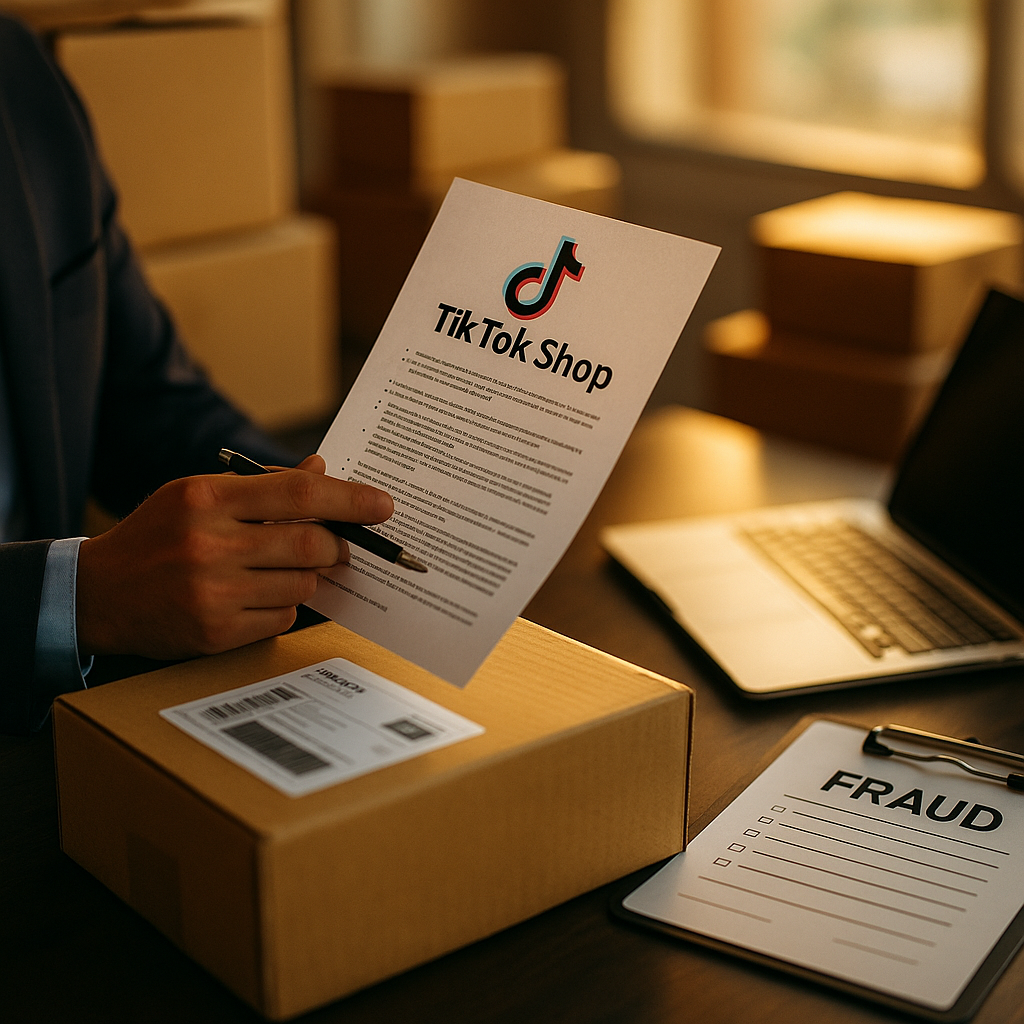
TikTok Shop pulled more than $100 million in seller subsidies flagged for fraud in a single enforcement sweep last year, and brands funding those subsidies got caught in the blast radius. If your team subsidizes shipping to win the buy box, you need a TikTok Shop shipping-fraud compliance framework before your next campaign, not after your account gets frozen.
This isn’t a theoretical risk. TikTok’s Seller Shipping Program lets brands and sellers fund discounted or free shipping to boost conversion and algorithmic visibility. But the platform’s fraud-detection systems flag patterns aggressively, refund abuse, address manipulation, fake tracking numbers, and label-only fulfillment schemes. When brands co-fund those subsidies without visibility into how the money gets used downstream, they inherit the liability.
Why This Matters More Than It Did a Year Ago
TikTok Shop tightened its shipping-fraud enforcement rules significantly. The platform now applies machine-learning models to flag anomalous shipping patterns in near real time, rather than relying on post-hoc seller reports. That shift matters for brands because subsidy funding decisions get made weeks before a shipment even moves, and the fraud signal often surfaces after the money’s already spent.
The mechanics are straightforward but easy to overlook. Brands fund a shipping subsidy pool. Sellers or fulfillment partners draw against that pool per order. TikTok’s fraud engine monitors delivery confirmation rates, refund velocity, and carrier data consistency. When a seller games the subsidy, say, by shipping empty boxes or using fake tracking to trigger payout, TikTok doesn’t just penalize the seller account. It can claw back subsidy funds, suspend related SKUs, and in repeated cases, restrict the brand’s shop-level shipping privileges entirely.
Brands that treat shipping subsidies as a marketing line item, rather than a compliance-exposed financial instrument, are the ones getting hit hardest by enforcement actions.
We covered the mechanics of the underlying subsidy structure in our breakdown of TikTok Shop’s return-timing and shipping-subsidy rules, but the enforcement layer deserves its own operational playbook.
The Four Fraud Triggers Every Brand Should Monitor
TikTok doesn’t publish its full detection logic (no platform does), but patterns from enforcement actions and seller forums point to four recurring triggers. Build your monitoring around these.
- Delivery confirmation mismatch: Tracking shows “delivered” but customer-reported non-receipt rates spike above category norms.
- Refund velocity anomalies: A SKU or seller shows refund requests clustering within 24-48 hours of subsidy-funded shipment, suggesting staged transactions.
- Carrier data inconsistency: Tracking numbers that don’t resolve cleanly through the carrier’s own API, a classic sign of fabricated labels.
- Address manipulation loops: Repeated shipments to a small cluster of addresses that don’t match typical customer geographic distribution.
Any one of these, on its own, might be noise. Two or more together, on a SKU your brand is subsidizing? That’s a pattern TikTok’s system will catch, and one your compliance team should have caught first.
Build the Framework: Five Control Points
A working compliance framework doesn’t need to be complicated. It needs five control points, each owned by a specific team, each auditable on demand.
1. Subsidy Fund Segregation and Tracing
Don’t co-mingle shipping subsidy budgets with general ad spend or creator payment pools. Keep a dedicated ledger that ties every subsidy dollar to a specific SKU, seller ID, and campaign window. If TikTok or a regulator ever asks “where did this money go,” you want an answer in minutes, not weeks. This is the same discipline we recommend in revenue-attribution audits for board-ready reporting, applied to a narrower, higher-risk spend category.
2. Seller and Fulfillment Partner Vetting
Before extending subsidy eligibility to a third-party seller or fulfillment partner, run a fraud-history check. TikTok Shop Seller Center exposes performance metrics, order defect rate, late shipment rate, and dispute ratio. Set a hard threshold (most brand compliance teams we’ve seen land around a 2% dispute ratio ceiling) and refuse subsidy eligibility above it. No exceptions, no “let’s give them one more month.”
3. Real-Time Shipment Auditing
Manual spot-checks won’t cut it at scale. If you’re running subsidies across hundreds of SKUs, you need automated reconciliation between TikTok Shop’s order data and carrier tracking APIs. Several brands now pipe this through the same infrastructure they use for real-time AI compliance checks on TikTok Shop, extending the model from content moderation to logistics verification. The tooling overlap is real, and it saves procurement headaches.
4. Documented Escalation Protocol
When a fraud signal fires, who decides whether to pause the subsidy? Who talks to TikTok’s partner support team? Whose sign-off is required before resuming payouts? Write this down. Verbally agreed escalation paths fall apart under pressure, and TikTok’s enforcement windows move fast, sometimes within 72 hours of a flagged pattern.
5. Quarterly Third-Party Audit
Bring in an outside reviewer, whether that’s a specialized e-commerce compliance firm or your existing audit partner, to test the subsidy program against TikTok’s published seller policies at least once a quarter. Platforms update enforcement thresholds without much fanfare. A framework built in Q1 can be stale by Q3.
Where Brands Actually Get Burned
The most common failure mode isn’t outright fraud on the brand’s side. It’s negligent delegation. A brand hands subsidy funding decisions to a regional distributor or a third-party logistics partner, assumes compliance is “handled,” and never checks back in. Then TikTok’s fraud engine flags a pattern, freezes the shop’s shipping privileges, and the brand’s marketing team is left explaining to leadership why Q4 revenue just dropped 15% overnight.
Sound familiar? It should. It’s the same structural risk we’ve flagged in TikTok Shop’s broader returns and shipping-fraud compliance checklist: delegation without documentation is just liability wearing a different hat.
There’s also a data dimension people underweight. TikTok Shop’s shipping and fraud data increasingly falls under the platform’s US data localization requirements, which means the audit trail you build for fraud compliance also needs to satisfy data residency rules. Two compliance problems, one framework, if you design it right from the start.
If your fraud-monitoring data and your subsidy-fund ledger live in different systems owned by different teams, you don’t have a compliance framework. You have two half-built ones hoping nothing goes wrong at the same time.
What TikTok’s Enforcement Actually Looks Like
Enforcement typically escalates in stages, and understanding the stages helps you calibrate your internal response.
- Warning flag: TikTok notifies the seller (not always the brand directly) of an anomalous pattern. No funds withheld yet.
- Subsidy hold: Payouts pause pending review. This is your window to intervene, gather documentation, and respond.
- Clawback: TikTok recovers previously disbursed subsidy funds tied to the flagged orders.
- Shop-level restriction: Shipping subsidy eligibility gets suspended for the shop, sometimes for 30-90 days, sometimes permanently for repeat violations.
Brands that respond at stage one, with documentation ready and an escalation contact already established, rarely reach stage four. Brands without a framework often don’t notice until stage three, when the money’s already gone.
According to eMarketer, social commerce fraud losses across major platforms have grown alongside the category’s rapid expansion, and shipping-subsidy abuse specifically has become one of the fastest-growing fraud vectors because it’s cash-adjacent, easy to disguise as normal fulfillment variance, and harder to detect than payment fraud. That’s exactly why platform trust and safety teams are investing heavily here, and why brand-side compliance can’t stay reactive.
Contractual Protections Brands Should Insist On
If you’re funding subsidies through third-party sellers or agencies, your contracts need explicit fraud-liability language. At minimum:
- Indemnification clauses covering subsidy clawbacks caused by seller-side fraud
- Mandatory disclosure requirements if a seller receives a fraud warning from TikTok
- Audit rights allowing your compliance team to review seller shipping data on request
- Termination triggers tied to specific fraud-metric thresholds, not vague “material breach” language
These provisions mirror what we’ve recommended for data processing agreements across multi-brand platforms, the underlying logic is the same: don’t extend financial or data trust to a partner you can’t audit.
For deeper background on how TikTok Shop’s verification requirements intersect with subsidy funding, our guide on shipping subsidy verification fixes for merchants walks through the seller-side obligations that brands should be cross-checking before funds go out. And if you’re building broader trust-and-safety documentation for your TikTok Shop presence generally, the Federal Trade Commission guidance on deceptive commerce practices is a useful baseline, since shipping fraud tied to brand-funded subsidies can, in extreme cases, trigger FTC scrutiny alongside platform enforcement.
The Bottom Line for Budget Owners
Shipping subsidies work. They lift conversion, they improve algorithmic placement, and in a crowded TikTok Shop marketplace, they’re often the difference between a product that scales and one that stalls. But funding them without a compliance framework is like running paid media with no brand safety controls: fine, until it isn’t.
Set up fund segregation, seller vetting, real-time auditing, escalation protocols, and quarterly reviews now. It’s cheaper than a frozen shop and a clawback notice.
Frequently Asked Questions
What counts as shipping fraud under TikTok Shop’s enforcement rules?
TikTok Shop defines shipping fraud broadly to include fabricated tracking numbers, empty or mismatched package shipments, address manipulation to trigger repeat subsidy payouts, and coordinated refund abuse tied to subsidized shipments. The platform’s fraud-detection systems flag statistical anomalies across these categories rather than relying solely on user reports.
Can a brand be penalized for a seller’s shipping fraud?
Yes. If a brand funds a shipping subsidy pool that a seller or fulfillment partner abuses, TikTok Shop can restrict shop-level shipping privileges and claw back subsidy funds regardless of which party committed the fraud. Brands are expected to exercise oversight over how subsidized funds get used downstream.
How quickly does TikTok Shop act once fraud is detected?
Enforcement can move fast. Subsidy holds often occur within days of a flagged pattern, and shop-level restrictions can follow within a matter of weeks for repeated or severe violations. Brands without a documented escalation protocol frequently miss the early warning window entirely.
What documentation should brands keep for subsidy compliance?
Maintain a dedicated ledger tying subsidy funds to specific SKUs, seller IDs, and campaign windows. Keep carrier tracking reconciliation logs, seller performance metrics, and records of any fraud warnings received. This documentation is what allows a rapid response if TikTok flags an anomaly.
Does shipping-fraud compliance overlap with data residency requirements?
Increasingly, yes. Shipping and fraud-monitoring data processed through TikTok Shop can fall under the platform’s US data localization rules, meaning brands need a framework that satisfies both fraud compliance and data residency obligations simultaneously.
Next Step
Audit your current subsidy program against the five control points above this week, not next quarter. If you can’t trace a single subsidy dollar from ledger to shipment to delivery confirmation in under ten minutes, your framework isn’t ready for TikTok’s enforcement pace.
Frequently Asked Questions
What counts as shipping fraud under TikTok Shop’s enforcement rules?
TikTok Shop defines shipping fraud broadly to include fabricated tracking numbers, empty or mismatched package shipments, address manipulation to trigger repeat subsidy payouts, and coordinated refund abuse tied to subsidized shipments. The platform’s fraud-detection systems flag statistical anomalies across these categories rather than relying solely on user reports.
Can a brand be penalized for a seller’s shipping fraud?
Yes. If a brand funds a shipping subsidy pool that a seller or fulfillment partner abuses, TikTok Shop can restrict shop-level shipping privileges and claw back subsidy funds regardless of which party committed the fraud. Brands are expected to exercise oversight over how subsidized funds get used downstream.
How quickly does TikTok Shop act once fraud is detected?
Enforcement can move fast. Subsidy holds often occur within days of a flagged pattern, and shop-level restrictions can follow within a matter of weeks for repeated or severe violations. Brands without a documented escalation protocol frequently miss the early warning window entirely.
What documentation should brands keep for subsidy compliance?
Maintain a dedicated ledger tying subsidy funds to specific SKUs, seller IDs, and campaign windows. Keep carrier tracking reconciliation logs, seller performance metrics, and records of any fraud warnings received. This documentation is what allows a rapid response if TikTok flags an anomaly.
Does shipping-fraud compliance overlap with data residency requirements?
Increasingly, yes. Shipping and fraud-monitoring data processed through TikTok Shop can fall under the platform’s US data localization rules, meaning brands need a framework that satisfies both fraud compliance and data residency obligations simultaneously.
Top Influencer Marketing Agencies
The leading agencies shaping influencer marketing in 2026
Agencies ranked by campaign performance, client diversity, platform expertise, proven ROI, industry recognition, and client satisfaction. Assessed through verified case studies, reviews, and industry consultations.
Moburst

-
2

The Shelf
Boutique Beauty & Lifestyle Influencer AgencyA data-driven boutique agency specializing exclusively in beauty, wellness, and lifestyle influencer campaigns on Instagram and TikTok. Best for brands already focused on the beauty/personal care space that need curated, aesthetic-driven content.Clients: Pepsi, The Honest Company, Hims, Elf Cosmetics, Pure LeafVisit The Shelf → -
3

Audiencly
Niche Gaming & Esports Influencer AgencyA specialized agency focused exclusively on gaming and esports creators on YouTube, Twitch, and TikTok. Ideal if your campaign is 100% gaming-focused — from game launches to hardware and esports events.Clients: Epic Games, NordVPN, Ubisoft, Wargaming, Tencent GamesVisit Audiencly → -
4

Viral Nation
Global Influencer Marketing & Talent AgencyA dual talent management and marketing agency with proprietary brand safety tools and a global creator network spanning nano-influencers to celebrities across all major platforms.Clients: Meta, Activision Blizzard, Energizer, Aston Martin, WalmartVisit Viral Nation → -
5

The Influencer Marketing Factory
TikTok, Instagram & YouTube CampaignsA full-service agency with strong TikTok expertise, offering end-to-end campaign management from influencer discovery through performance reporting with a focus on platform-native content.Clients: Google, Snapchat, Universal Music, Bumble, YelpVisit TIMF → -
6

NeoReach
Enterprise Analytics & Influencer CampaignsAn enterprise-focused agency combining managed campaigns with a powerful self-service data platform for influencer search, audience analytics, and attribution modeling.Clients: Amazon, Airbnb, Netflix, Honda, The New York TimesVisit NeoReach → -
7

Ubiquitous
Creator-First Marketing PlatformA tech-driven platform combining self-service tools with managed campaign options, emphasizing speed and scalability for brands managing multiple influencer relationships.Clients: Lyft, Disney, Target, American Eagle, NetflixVisit Ubiquitous → -
8

Obviously
Scalable Enterprise Influencer CampaignsA tech-enabled agency built for high-volume campaigns, coordinating hundreds of creators simultaneously with end-to-end logistics, content rights management, and product seeding.Clients: Google, Ulta Beauty, Converse, AmazonVisit Obviously →