


Third-party cookies are dead, creator partnerships are multiplying, and regulators are watching every data handshake between brands and influencers. So here’s the uncomfortable question: how confident are you that your last creator campaign didn’t quietly violate someone’s privacy rights? The marketing clean room category exists precisely because most brands can’t answer that with a straight face.
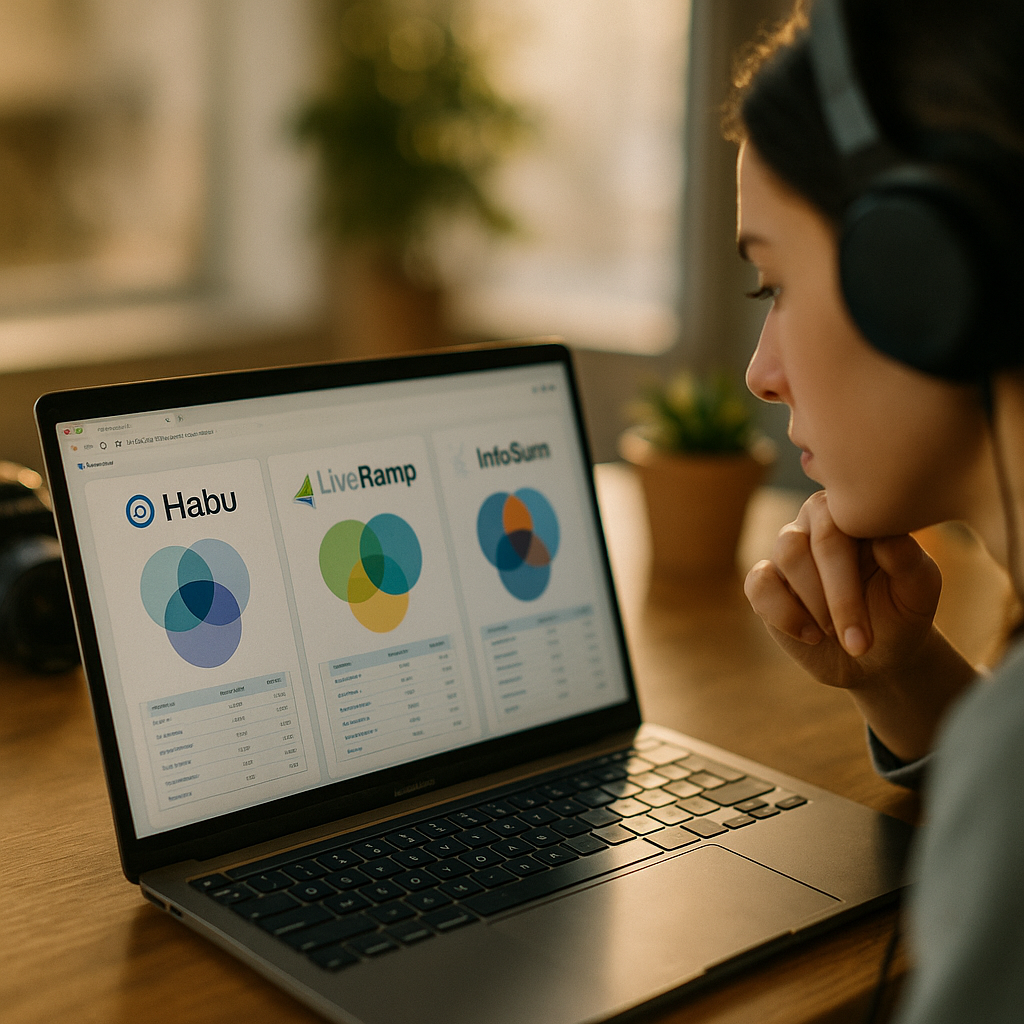
Clean rooms aren’t new. But the version built for creator-economy matching, where brand CRM data meets a creator’s platform audience without either side seeing raw records, is genuinely a fresh problem space. Habu, LiveRamp, and InfoSum have each built AI-native layers on top of their clean room infrastructure to solve it. They are not interchangeable. Picking wrong means paying for capability you’ll never use, or worse, discovering your “privacy-safe” match wasn’t as safe as the sales deck implied.
Why Creator Matching Broke the Old Data-Sharing Playbook
Traditional influencer vetting relied on platform-reported follower demographics, third-party audience overlap tools, or — let’s be honest — vibes and a media kit PDF. None of that holds up when a brand wants to know whether a creator’s audience actually overlaps with high-value CRM segments, without shipping that CRM data anywhere insecure.
Clean rooms solve the technical half of the problem: two parties can compute overlap, reach, and lookalike signals without either exposing raw personally identifiable information. The AI-native part is newer. Instead of static SQL-style queries, these platforms now layer machine learning models inside the room itself, generating lookalike audiences, predicting engagement propensity, and scoring creator-brand fit — all without the data ever leaving its walled environment.
The real shift isn’t that clean rooms exist. It’s that AI models can now run inside them, meaning brands get predictive creator-audience insight without ever touching a single raw record.
That distinction matters for compliance teams. Under FTC guidance and evolving state privacy statutes, “we didn’t touch the data” is a much stronger defense than “we anonymized it after the fact.” Brands running influencer programs at scale are increasingly asking legal to bless clean room architecture before a single dollar hits a creator contract — a trend we’ve also tracked in broader identity resolution procurement cycles.
Habu: The Interoperability Bet
Habu (now part of LiveRamp’s portfolio after its acquisition, though still often evaluated as a distinct capability layer) built its reputation on being platform-agnostic. It doesn’t force brands into one cloud ecosystem. Instead, it orchestrates clean room jobs across Snowflake, Databricks, BigQuery, and AWS, letting the brand’s data stay wherever it already lives.
For creator audience matching specifically, this matters because creator platforms — TikTok, YouTube, Whatnot, newer livestream commerce players — don’t standardize their data warehouses. A brand working with fifty micro-influencers across four platforms needs a clean room that doesn’t care where the audience data sits.
Habu’s AI layer focuses heavily on measurement: incrementality modeling, cross-channel attribution, and audience overlap scoring that plugs into existing BI dashboards. It’s less about generating novel lookalike creator recommendations and more about verifying whether a creator partnership actually moved the needle among a brand’s real customers.
- Strength: Multi-cloud flexibility means minimal re-architecture for brands with mature data stacks.
- Watch-out: Post-acquisition roadmap uncertainty. Ask directly whether Habu functionality is being folded into LiveRamp’s core product or sunset over the next renewal cycle.
- Best fit: Enterprise brands with existing Snowflake or Databricks investments who want clean room orchestration layered on top, not a full replacement stack.
If you’re already deep into a Databricks-centric identity strategy, this is worth reading alongside our breakdown of Amperity, LiveRamp, and Databricks for agentic marketing use cases — the overlap in vendor logic is significant.
LiveRamp: Scale, but Read the Fine Print on Creator Coverage
LiveRamp is the incumbent here, and it plays that role well. Its clean room, built around RampID, has the deepest network of pre-connected data partners of the three — retail media networks, CTV platforms, and a growing list of social and creator platforms integrated directly.
That scale is the pitch: less custom integration work, faster time to first match.
The catch? Not every creator platform is equally connected. LiveRamp has strong direct integrations with major social platforms and several retail media networks, but coverage for smaller or emerging creator platforms — Whatnot, newer livestream commerce apps, niche vertical communities — is thinner and often requires custom onboarding. Brands running influencer programs heavy on micro and nano creators outside the top five platforms should ask for a named-partner list, not a general capability claim.
A clean room’s value collapses fast if the creator platform your program actually depends on isn’t a connected partner. Always ask for the named integration list, not the marketing slide.
LiveRamp’s AI-native additions lean toward propensity modeling and lookalike expansion — take a brand’s known high-LTV customer segment, find creators whose audiences statistically resemble it, and rank partnership opportunities accordingly. This is genuinely useful for scaling beyond gut-feel creator selection, provided your legal team has signed off on how the propensity models were trained and whether any training data crossed clean room boundaries during model development. That’s a subtler compliance question than most procurement checklists capture, and it echoes concerns raised in our revenue attribution governance coverage.
According to eMarketer research on data clean room adoption, retail and CPG brands remain the heaviest LiveRamp adopters, which tracks with its retail media network density.
InfoSum: Privacy-First Architecture, Narrower Ecosystem
InfoSum takes the most conservative technical approach of the three, and for creator matching specifically, that conservatism can be a feature. Its “data never moves” architecture keeps each party’s data physically in place, with only mathematical representations (not even aggregated tables) crossing the boundary.
For brands in regulated categories — finance, healthcare, pharma — where legal will scrutinize every data flow, InfoSum’s architecture is often the easiest to get approved internally.
The tradeoff is ecosystem breadth. InfoSum has fewer pre-built creator platform integrations than LiveRamp, meaning more custom setup work per creator partnership. It’s a better fit for brands running fewer, larger creator partnerships (think major YouTube or streaming personalities with sizable, well-documented audiences) than for programs juggling hundreds of micro-influencer relationships that need fast onboarding.
InfoSum’s AI capabilities are newer and more narrowly scoped than Habu’s or LiveRamp’s — currently strongest in audience segmentation and overlap scoring, weaker in predictive lookalike generation. If your use case is “confirm this creator’s audience actually matches our target segment before we sign a six-figure contract,” InfoSum does that well. If your use case is “discover new creators we haven’t considered,” it’s not yet the strongest option.
- Strength: Architecture that satisfies the strictest privacy and legal review requirements.
- Watch-out: Slower onboarding per new creator platform; not built for high-volume micro-influencer matching.
- Best fit: Regulated industries, or brands prioritizing a handful of high-value creator relationships over scaled micro-influencer programs.
The Evaluation Framework That Actually Matters
Vendor comparisons tend to collapse into feature checklists. Skip that. Here’s what actually predicts whether a clean room deployment succeeds or quietly gets abandoned six months into the contract.
- Named creator platform coverage. Get the actual list, not a category claim. “Social platforms” isn’t an answer.
- Where the AI model actually runs. Inside the clean room boundary, or does training data get exported first? This is the single biggest compliance differentiator between vendors, and sales teams rarely lead with it.
- Match rate transparency. Ask for match rate benchmarks against your actual customer file, not an industry average. This is the same discipline we recommend in our identity resolution vendor claims framework — verify before you buy, always.
- Time-to-first-match for a new creator partnership. Days? Weeks? This directly affects campaign velocity.
- Audit trail depth. Can you produce a compliance report showing exactly what computation ran and what stayed private, on demand, six months from now?
Run this against your renewal cycle, not just new procurement. Plenty of brands signed clean room contracts eighteen months ago based on capabilities that didn’t yet include AI-native creator matching. Our AI vendor renewal scorecard is a useful structure for forcing that conversation with incumbent vendors before auto-renewal kicks in.
What This Means for Budget and Headcount
Clean room licensing isn’t cheap, and the AI-native tier costs more than legacy overlap-and-report functionality. Brands need to budget for two things beyond the license fee: integration engineering time (custom creator platform connections don’t build themselves) and ongoing data science oversight to validate that lookalike and propensity models aren’t drifting or introducing bias into creator selection.
Skipping that second cost is how brands end up with a clean room that’s technically privacy-compliant but operationally producing recommendations nobody trusts.
Also worth factoring in: none of these platforms replace the need for a solid first-party data foundation. A clean room is only as useful as the CRM segment you feed into it. Garbage segmentation in, garbage creator matches out, no matter how sophisticated the AI layer.
Per Statista tracking of privacy-tech investment, spend on data clean room infrastructure has grown steadily as cookie deprecation and state privacy laws (California, Colorado, and others) push brands toward architectures that don’t rely on shared identifiers. Creator marketing is simply the latest use case riding that wave, not the reason it started.
Bottom line: if your influencer program runs on more than a handful of platforms and needs fast onboarding, LiveRamp’s scale probably wins. If your legal team needs the strictest possible architecture and you’re running fewer, bigger creator bets, InfoSum earns its slower onboarding. If you’re already multi-cloud and want clean room orchestration without a full platform switch, Habu (watch that roadmap) fits the gap. Pick based on your actual creator roster, not the vendor with the best demo.
Frequently Asked Questions
What is a marketing clean room and how does it apply to creator partnerships?
A marketing clean room is a secure computing environment where two parties, such as a brand and a creator or platform, can analyze combined data (like audience overlap) without either side accessing the other’s raw, identifiable records. For creator partnerships, this lets brands verify audience fit before signing contracts, without violating either party’s privacy obligations.
How is an AI-native clean room different from a traditional one?
Traditional clean rooms run static queries, essentially SQL-style overlap reports. AI-native clean rooms run machine learning models inside the secure environment itself, generating lookalike audiences, propensity scores, and predictive creator-fit rankings without exporting training data outside the privacy boundary.
Which is better for creator matching: Habu, LiveRamp, or InfoSum?
It depends on your program structure. LiveRamp offers the broadest pre-built creator platform integrations, suited to brands running many partnerships at scale. InfoSum offers the strictest data-never-moves architecture, better for regulated industries or high-value single creator deals. Habu offers multi-cloud flexibility for brands already invested in Snowflake or Databricks, though its roadmap post-acquisition warrants direct questions to the vendor.
Do clean rooms guarantee full compliance with privacy regulations?
No platform guarantees compliance on its own. Clean rooms reduce risk by limiting raw data exposure, but brands remain responsible for consent management, data minimization, and disclosure practices under regulations enforced by bodies like the FTC and international authorities such as the ICO.
What should brands ask vendors before signing a clean room contract for creator marketing?
Request a named list of connected creator platforms, confirmation of where AI models execute (inside versus outside the clean room boundary), match rate benchmarks against your actual customer data, and audit trail capabilities for compliance reporting.
Frequently Asked Questions
Top Influencer Marketing Agencies
The leading agencies shaping influencer marketing in 2026
Agencies ranked by campaign performance, client diversity, platform expertise, proven ROI, industry recognition, and client satisfaction. Assessed through verified case studies, reviews, and industry consultations.
Moburst

-
2

The Shelf
Boutique Beauty & Lifestyle Influencer AgencyA data-driven boutique agency specializing exclusively in beauty, wellness, and lifestyle influencer campaigns on Instagram and TikTok. Best for brands already focused on the beauty/personal care space that need curated, aesthetic-driven content.Clients: Pepsi, The Honest Company, Hims, Elf Cosmetics, Pure LeafVisit The Shelf → -
3

Audiencly
Niche Gaming & Esports Influencer AgencyA specialized agency focused exclusively on gaming and esports creators on YouTube, Twitch, and TikTok. Ideal if your campaign is 100% gaming-focused — from game launches to hardware and esports events.Clients: Epic Games, NordVPN, Ubisoft, Wargaming, Tencent GamesVisit Audiencly → -
4

Viral Nation
Global Influencer Marketing & Talent AgencyA dual talent management and marketing agency with proprietary brand safety tools and a global creator network spanning nano-influencers to celebrities across all major platforms.Clients: Meta, Activision Blizzard, Energizer, Aston Martin, WalmartVisit Viral Nation → -
5

The Influencer Marketing Factory
TikTok, Instagram & YouTube CampaignsA full-service agency with strong TikTok expertise, offering end-to-end campaign management from influencer discovery through performance reporting with a focus on platform-native content.Clients: Google, Snapchat, Universal Music, Bumble, YelpVisit TIMF → -
6

NeoReach
Enterprise Analytics & Influencer CampaignsAn enterprise-focused agency combining managed campaigns with a powerful self-service data platform for influencer search, audience analytics, and attribution modeling.Clients: Amazon, Airbnb, Netflix, Honda, The New York TimesVisit NeoReach → -
7

Ubiquitous
Creator-First Marketing PlatformA tech-driven platform combining self-service tools with managed campaign options, emphasizing speed and scalability for brands managing multiple influencer relationships.Clients: Lyft, Disney, Target, American Eagle, NetflixVisit Ubiquitous → -
8

Obviously
Scalable Enterprise Influencer CampaignsA tech-enabled agency built for high-volume campaigns, coordinating hundreds of creators simultaneously with end-to-end logistics, content rights management, and product seeding.Clients: Google, Ulta Beauty, Converse, AmazonVisit Obviously →