


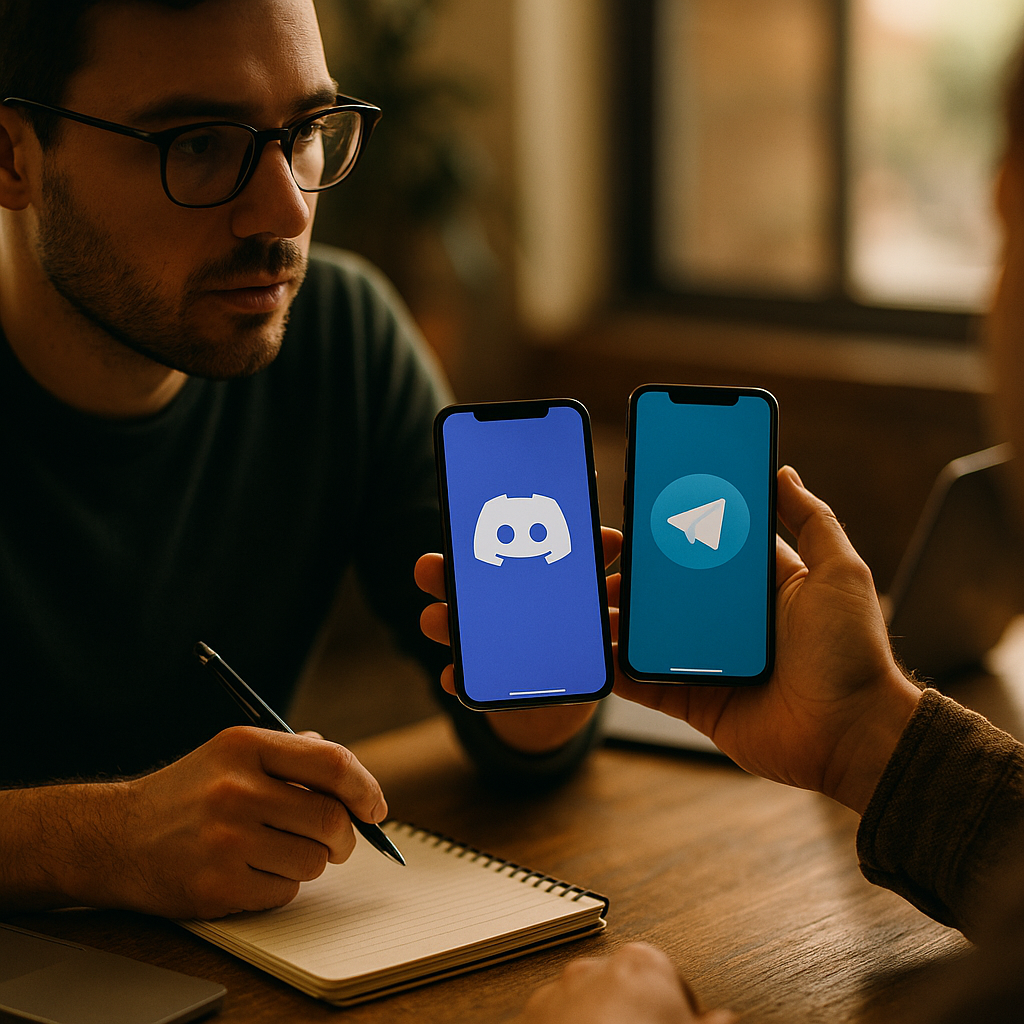
Discord now hosts over 200 million monthly active users, and most of them have never seen a banner ad in their favorite server. Try to run one, and you’ll get muted, kicked, or worse, mocked in the general chat. So how does a brand actually show up in these spaces? The micro-community cast format is becoming the answer: a directing approach that treats Discord and Telegram creators less like influencers and more like community hosts who happen to mention your product.
Why Micro-Communities Break the Old Playbook
Instagram and TikTok creators perform for an audience. Discord and Telegram creators live with one. That distinction changes everything about how you brief them.
A server or channel isn’t a feed you scroll past — it’s a room people return to daily, sometimes hourly. Members know each other’s usernames, inside jokes, and pet peeves. Drop a scripted ad read into that environment and it lands like a stranger crashing a dinner party. The community doesn’t just ignore it. They call it out, screenshot it, and post it elsewhere as a cautionary tale.
That’s the risk. The upside is bigger: trust in these spaces runs deeper than almost anywhere else in the creator economy. A recommendation from a Discord mod or Telegram channel admin carries the weight of a friend’s advice, not a media buy. Brands that figure out how to earn a mention — rather than buy one outright — get access to some of the highest-intent audiences in marketing.
Community trust is the actual product here. Treat it like inventory to be spent carefully, not a channel to be filled.
What “Cast Format” Actually Means
Borrowed loosely from film production, the cast format treats each creator as a character in an ongoing narrative rather than a one-off spokesperson. Instead of sending a single script, you give the creator a role: the skeptical tester, the resident expert, the community hype-person. They perform that role using their own voice, inside their own space, over multiple touchpoints.
Practically, this looks like:
- A creator hosting a live voice channel AMA where your product comes up organically, not as the headline event.
- A Telegram channel admin weaving a product mention into a regular content series (a weekly roundup, a deals thread, a “what I’m using” post).
- A Discord mod running a community poll or giveaway that naturally showcases the product without a formal “sponsored” framing dominating the post.
This is directing without scripting. You’re not writing lines. You’re building a container and trusting the creator to fill it in a way that fits their community’s norms. It’s a similar philosophy to what we’ve covered in rewriting briefs for casual-over-polished content — the more produced it feels, the less it works.
The Anti-Ad Norm Problem, Explained
Every closed community develops an immune system against overt commercialization. Reddit communities downvote obvious plugs into oblivion. Discord servers have entire bot systems dedicated to catching and removing promotional links. Telegram channels lose subscribers fast when the ratio of ads to genuine content tips too far.
This isn’t paranoia from platform admins. It’s survival. Communities that get overrun with ads die, and everyone in the space knows it. So the antibodies are strong, and they’re getting stronger as more brands try to muscle in.
For marketers, that means the old influencer brief — “mention the product by minute two, include this CTA, use this hashtag” — is a liability, not an asset. Rigid instructions produce content that reads as foreign to the community’s dialect. The algorithm doesn’t need to catch it; the members will.
Building a Brief That Directs Without Dictating
The core tension: brands need consistency and measurable outputs. Communities need authenticity and organic pacing. A good micro-community brief resolves this by separating the “what” from the “how.”
Here’s a structure that works across Discord and Telegram engagements:
- Define the narrative beat, not the script. Tell the creator what role the product plays in this week’s content (a solution to a recurring community complaint, a tool they discovered, a giveaway prize) and let them write the actual words.
- Set a mention window, not a mandate. Instead of “must appear in first 30 seconds,” specify a range across the week or across a series — similar to the pacing logic in a multi-episode arc format, where payoff builds over time instead of front-loading the pitch.
- Supply proof points, not phrasing. Give creators the real data, specs, or differentiators. Let them translate it into community-speak.
- Require disclosure placement, not disclosure language. This is non-negotiable from a compliance standpoint (more on that below), but you can be flexible on exactly how it’s worded as long as it’s clear and conspicuous.
- Build in a community reaction checkpoint. Ask the creator to report back on how the community responded. Pushback is data, not failure.
This approach mirrors what’s worked well in integrated content briefs that prioritize creator trust over rigid deliverables. The lower the perceived “adness,” the higher the completion and engagement rates tend to run.
Disclosure Doesn’t Disappear — It Adapts
Native doesn’t mean invisible. The FTC’s endorsement guidelines apply just as much inside a Discord server as they do on a public Instagram post — arguably more, since the closed nature of these platforms makes it easier for undisclosed relationships to hide.
A material connection needs a clear, understandable disclosure, whether it’s a paid partnership, free product, or affiliate link. “Native” is about tone and format. It is not a loophole for skipping disclosure.
Practically, this means:
- Telegram creators should disclose within the post itself, not buried in a channel description nobody reads.
- Discord voice-channel mentions need a verbal disclosure, ideally reinforced with a pinned text note in the channel.
- Giveaways and affiliate links need the same “#ad” or “sponsored” clarity as anywhere else — communities generally respect this far more than brands assume, as long as it’s not performative.
Interestingly, well-integrated disclosure can actually build trust rather than break the native feel. Communities are savvy. They know creators need to make money. What annoys them is deception, not compensation. A relevant parallel: our piece on series briefs that boost retention and FTC compliance found that upfront disclosure paired with strong storytelling actually outperformed content that tried to obscure the partnership.
Choosing the Right Creator for the Room
Not every Discord admin or Telegram operator should be on your roster. The traits that predict success here are different from typical influencer vetting criteria.
Look for:
- Moderation history, not just follower count. A creator who’s actively moderated their community for a year-plus understands its tolerance thresholds intuitively.
- Content cadence that already includes product mentions. If they’re organically talking about tools, gear, or brands already, integration will feel natural. If every post is pure lore or gameplay, forcing in a product mention will feel bolted on.
- Community size that matches intimacy, not just scale. A 3,000-member Discord with daily active engagement often outperforms a 50,000-member server that’s mostly dormant. According to Sprout Social’s research on community platforms, engagement depth is increasingly the metric brands weight over raw audience size.
Run a short pilot before committing to a season-long cast arrangement. One well-executed mention tells you more about fit than any pitch deck.
Measuring What Actually Matters
Standard influencer metrics don’t map cleanly here. Impressions are murky (Discord doesn’t expose them well), and click-through rates undersell the value of trust-based recommendations. Instead, track:
- Community sentiment shifts in the days following a mention (screenshots, reaction emoji patterns, follow-up questions in chat).
- Direct promo code or link usage, tagged specifically to that creator’s community.
- Repeat engagement — are members coming back to the topic unprompted days later?
- Mod/admin retention across multiple campaign waves, since churn here often signals the community pushed back harder than reported.
None of this fits neatly into a standard dashboard built for TikTok or Instagram reporting. Brands serious about this channel are building custom tracking layers, often borrowing techniques from performance-focused formats like those in dual-purpose video briefs, where qualitative signal and hard conversion data are tracked side by side.
Per eMarketer’s ongoing creator economy coverage, spend on niche and community-platform creator partnerships is one of the fastest-growing line items in brand budgets, even as overall influencer marketing growth moderates. That’s a signal worth acting on before the format gets crowded and the antibodies kick in harder.
Next Step
Start with one community, one creator, one low-stakes mention — measure the room’s reaction before you scale the cast. The brands that win here treat every server like its own market with its own rules, not a distribution channel to be optimized.
FAQs
What is the micro-community cast format?
It’s a directing approach for Discord and Telegram creators where brands assign a narrative role instead of a script, letting the creator integrate product mentions in their own voice across ongoing content rather than a single sponsored post.
Do FTC disclosure rules apply inside private Discord servers?
Yes. Material connections must be disclosed clearly regardless of platform, including closed communities like Discord servers and Telegram channels. Privacy or platform size doesn’t exempt a brand or creator from FTC requirements.
How is briefing a Discord creator different from briefing a TikTok creator?
Discord and Telegram audiences are communities that gather daily, not passive feeds. Briefs need to allow for organic pacing and community-specific tone, whereas TikTok briefs can be more scripted around hooks and short-form structure.
What metrics should brands track for community-platform campaigns?
Focus on sentiment shifts, promo code usage tied to specific communities, repeat unprompted engagement with the topic, and creator/mod retention across campaign waves, rather than standard impression or reach metrics.
How do you avoid triggering a community’s anti-ad backlash?
Give creators narrative flexibility instead of rigid scripts, choose creators who already mention products organically, and pilot with a single low-stakes mention before scaling to a full campaign arc.
FAQs
What is the micro-community cast format?
It’s a directing approach for Discord and Telegram creators where brands assign a narrative role instead of a script, letting the creator integrate product mentions in their own voice across ongoing content rather than a single sponsored post.
Do FTC disclosure rules apply inside private Discord servers?
Yes. Material connections must be disclosed clearly regardless of platform, including closed communities like Discord servers and Telegram channels. Privacy or platform size doesn’t exempt a brand or creator from FTC requirements.
How is briefing a Discord creator different from briefing a TikTok creator?
Discord and Telegram audiences are communities that gather daily, not passive feeds. Briefs need to allow for organic pacing and community-specific tone, whereas TikTok briefs can be more scripted around hooks and short-form structure.
What metrics should brands track for community-platform campaigns?
Focus on sentiment shifts, promo code usage tied to specific communities, repeat unprompted engagement with the topic, and creator/mod retention across campaign waves, rather than standard impression or reach metrics.
How do you avoid triggering a community’s anti-ad backlash?
Give creators narrative flexibility instead of rigid scripts, choose creators who already mention products organically, and pilot with a single low-stakes mention before scaling to a full campaign arc.
Top Influencer Marketing Agencies
The leading agencies shaping influencer marketing in 2026
Agencies ranked by campaign performance, client diversity, platform expertise, proven ROI, industry recognition, and client satisfaction. Assessed through verified case studies, reviews, and industry consultations.
Moburst

-
2

The Shelf
Boutique Beauty & Lifestyle Influencer AgencyA data-driven boutique agency specializing exclusively in beauty, wellness, and lifestyle influencer campaigns on Instagram and TikTok. Best for brands already focused on the beauty/personal care space that need curated, aesthetic-driven content.Clients: Pepsi, The Honest Company, Hims, Elf Cosmetics, Pure LeafVisit The Shelf → -
3

Audiencly
Niche Gaming & Esports Influencer AgencyA specialized agency focused exclusively on gaming and esports creators on YouTube, Twitch, and TikTok. Ideal if your campaign is 100% gaming-focused — from game launches to hardware and esports events.Clients: Epic Games, NordVPN, Ubisoft, Wargaming, Tencent GamesVisit Audiencly → -
4

Viral Nation
Global Influencer Marketing & Talent AgencyA dual talent management and marketing agency with proprietary brand safety tools and a global creator network spanning nano-influencers to celebrities across all major platforms.Clients: Meta, Activision Blizzard, Energizer, Aston Martin, WalmartVisit Viral Nation → -
5

The Influencer Marketing Factory
TikTok, Instagram & YouTube CampaignsA full-service agency with strong TikTok expertise, offering end-to-end campaign management from influencer discovery through performance reporting with a focus on platform-native content.Clients: Google, Snapchat, Universal Music, Bumble, YelpVisit TIMF → -
6

NeoReach
Enterprise Analytics & Influencer CampaignsAn enterprise-focused agency combining managed campaigns with a powerful self-service data platform for influencer search, audience analytics, and attribution modeling.Clients: Amazon, Airbnb, Netflix, Honda, The New York TimesVisit NeoReach → -
7

Ubiquitous
Creator-First Marketing PlatformA tech-driven platform combining self-service tools with managed campaign options, emphasizing speed and scalability for brands managing multiple influencer relationships.Clients: Lyft, Disney, Target, American Eagle, NetflixVisit Ubiquitous → -
8

Obviously
Scalable Enterprise Influencer CampaignsA tech-enabled agency built for high-volume campaigns, coordinating hundreds of creators simultaneously with end-to-end logistics, content rights management, and product seeding.Clients: Google, Ulta Beauty, Converse, AmazonVisit Obviously →