


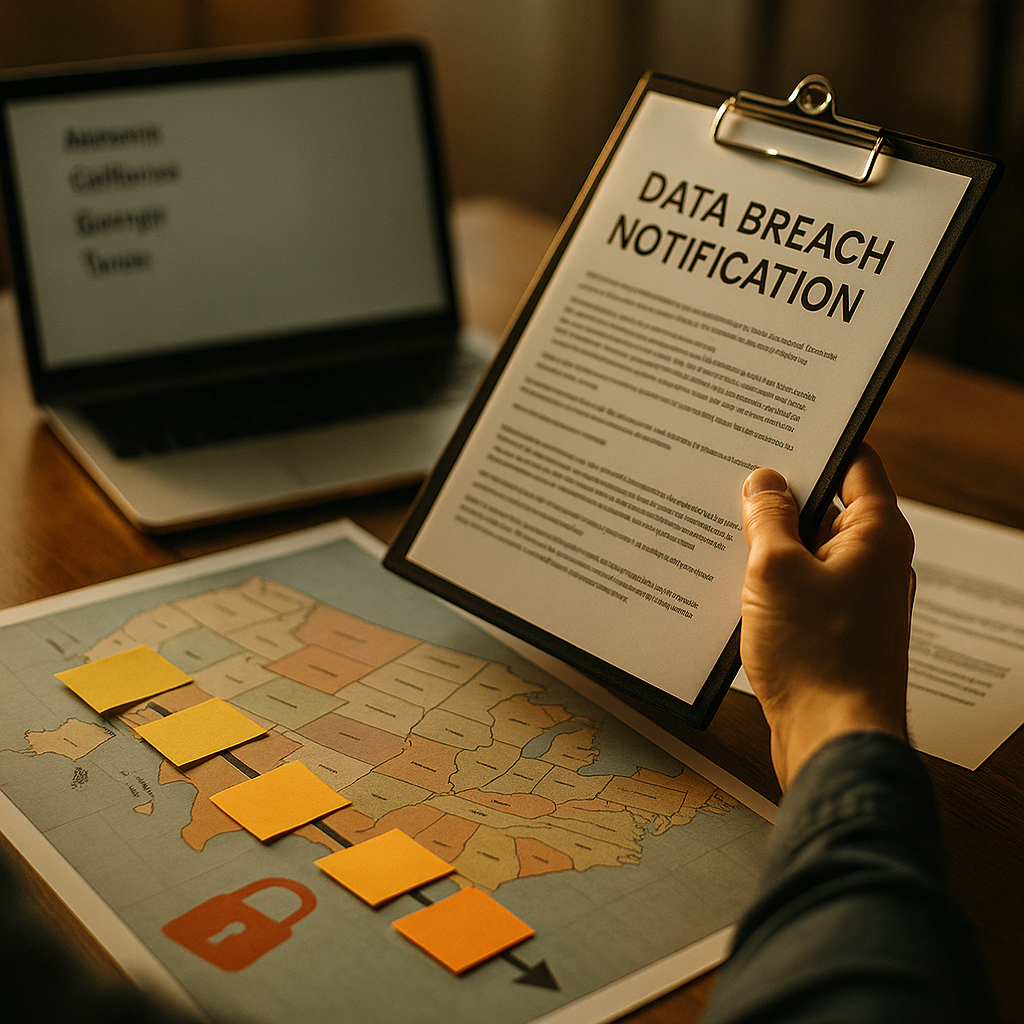
Fifty-four jurisdictions. Fifty-four different clocks. If your brand collects creator payment data, customer emails, or livestream identity verification records, a single breach can trigger notification duties in a dozen states before your legal team finishes its first coffee. Multi-state breach-notification rules are not a compliance footnote anymore — they’re an operational tripwire that catches marketing teams who assumed “we’ll notify people eventually” was a legal strategy.
It isn’t. Some states give you 24 hours. Others give you 30 days. Get the timeline wrong and you’re not just facing regulators — you’re facing customers who found out about the breach from a news outlet instead of from you.
Why Marketing Teams Own This Problem Now
Breach notification used to sit squarely with IT and legal. That’s changed. Brands running influencer programs, TikTok Shop storefronts, and livestream commerce now hold troves of consumer data: payment credentials, shipping addresses, age-verification records, biometric identity checks. When that data lives inside marketing-adjacent systems — CRM platforms, creator payment tools, affiliate dashboards — the marketing org becomes a first responder, whether it wants the job or not.
Consider the data brands now touch through creator commerce alone. Our peer-to-peer payment compliance checklist covers just how much financial data flows through influencer payout systems. Add in the identity-verification tools discussed in our piece on livestream hiring identity tools, and you’ve got a data footprint that reads like a regulator’s wish list for enforcement action.
A breach notification failure isn’t a one-time fine. It’s a pattern of distrust that follows your brand into every future data collection request — and customers remember.
The Patchwork Problem: No Federal Standard Exists
Here’s the uncomfortable truth: the United States has no single federal breach-notification law. Every state sets its own rules, and they genuinely conflict. California requires notice “in the most expedient time possible and without unreasonable delay.” Florida sets a hard 30-day cap. Colorado wants notice within 30 days too, but its definition of “personal information” is broader, sweeping in biometric data and username-password combos that other states exclude.
Some states, like Washington, drop the notification window to as little as 30 days but add a mandatory Attorney General report if more than 500 residents are affected. Others, like New York, layer in requirements under the SHIELD Act that go beyond notification into affirmative security-practice obligations. If your brand operates nationally — and if you’re running influencer campaigns across platforms, you almost certainly do — you’re not managing one law. You’re managing a mosaic of fifty-plus overlapping, occasionally contradictory statutes.
According to the Federal Trade Commission, breach-related consumer complaints have climbed steadily as more commerce moves through third-party platforms and creator-driven checkout flows. Regulators are watching the intersection of marketing tech and consumer data more closely than ever, and state attorneys general have shown they’ll act independently of federal timelines.
What Counts as a “Breach” Varies More Than You’d Think
Not every state agrees on what triggers the clock. Some define a breach as unauthorized acquisition of data. Others use unauthorized access, a much lower bar. That distinction matters enormously for brands running creator campaigns with third-party analytics vendors, affiliate tracking tools, or AI-driven personalization engines.
Say a vendor misconfigures an API and exposes a database of creator payout information for six hours before anyone notices. Under an “access” standard, that’s a reportable breach in several states even if no evidence shows the data was downloaded. Under an “acquisition” standard, you might have more breathing room. Brands that don’t map their vendor stack against these definitions are flying blind. Our guide on DPAs for TikTok, Instagram, and YouTube APIs walks through exactly why vendor agreements need to specify these thresholds explicitly, not leave them to interpretation after the fact.
The Fastest Clocks in the Country
- Colorado: 30 days, with expanded personal-information definitions covering biometric and login data.
- Florida: 30 days, extendable by 15 more with written justification.
- Washington: 30 days, plus mandatory AG notification for breaches over 500 residents.
- New York: “Most expedient time possible,” a standard courts have interpreted aggressively.
- California: No fixed number of days, but “unreasonable delay” has been litigated down to matters of weeks, not months.
Notice the pattern? States with vague “as soon as possible” language often end up being stricter in practice than states with hard 30-day deadlines, because plaintiffs’ attorneys and regulators interpret ambiguity in the consumer’s favor. Brands that wait until day 29 in a 30-day state, assuming they’re compliant, often discover that “reasonable” investigation timelines don’t excuse delay once a breach is confirmed.
Building an Actual Notification Playbook
Waiting until a breach happens to figure out your obligations is how brands end up issuing notices six weeks late. A working playbook needs four components, built before you need them:
- A data map by jurisdiction. Know which states your affected consumers live in before you need to notify anyone. If your creator program spans nationwide UGC campaigns, assume all fifty states are in play.
- A pre-approved notification template library. Different states mandate different disclosure content — some require specifics on the type of data exposed, others require credit monitoring offers. Draft templates in advance, reviewed by counsel, so legal isn’t drafting from scratch under pressure.
- A vendor breach-notification clause audit. Your creator payment processors, CRM vendors, and ad-tech partners should be contractually obligated to notify you within a tight window — ideally 24 to 48 hours — so your own clock doesn’t start late because a vendor sat on the news.
- A cross-functional response team that includes marketing, not just legal and IT. Marketing controls the channels — email, SMS, app push — that most notification laws require you to use.
This isn’t theoretical. Brands that store data tied to state-specific compliance regimes already know how fast these obligations stack. The California DROP system coverage we published shows how one state’s data rules can quietly reshape targeting and audience data nationwide. Breach notification works the same way: a single state’s aggressive enforcement posture forces brands to build compliance to the strictest common denominator, not the loosest.
Where Creator Commerce Adds Risk
Brands running TikTok Shop storefronts or livestream commerce programs collect more sensitive data than a typical e-commerce checkout. Age-assurance tools, identity verification for live sellers, and payment routing through creator accounts all create additional data categories that some states classify as sensitive personal information, triggering shorter notification windows or additional AG reporting.
Our breakdown of TikTok Shop data residency requirements touches on how data storage location itself can complicate which state’s breach law even applies. If a vendor stores creator payment data in a data center outside the consumer’s home state, does the consumer’s state law still govern? Generally yes — most state breach laws apply based on residency of the affected individual, not where the data physically sits. But that nuance gets lost fast in incident response chaos, and brands without pre-built jurisdictional logic waste critical hours figuring out basic applicability instead of executing notification.
The states don’t care that your incident response team is small. They care that your notification landed inside their statutory window — full stop.
What “Immediate Public Notice” Actually Means
Here’s where brands trip up most: conflating individual consumer notification with public notice. Several states — California, Florida, and others with large-breach thresholds — require public notice beyond direct consumer letters or emails once a breach crosses a certain size, often 500 or 1,000 affected residents. That can mean posting notice on your website homepage, filing with a state AG’s public breach database, or notifying major statewide media outlets.
This is a marketing function almost by default. Legal can draft the language, but marketing owns the website, the press relationships, and the public-facing tone. A breach notice that reads like a legal disclaimer erodes trust faster than the breach itself. Brands that treat public notice as a PR exercise instead of a compliance checkbox tend to retain more customer goodwill afterward — a lesson worth internalizing before it’s tested under pressure.
Industry data from Statista shows data breach costs and frequency both trending upward year over year, with notification and legal response representing a growing share of total incident cost. That trend isn’t slowing, and brands running consumer-data-heavy creator programs sit squarely in the exposure zone.
A Note on Third-Party Platform Risk
Brands often assume that if a breach happens on a platform’s infrastructure — say, a TikTok API vulnerability rather than their own servers — the platform bears sole notification responsibility. That’s rarely how state law works. If you’re the entity with the direct customer relationship, many states hold you responsible for notification even if a vendor or platform caused the underlying breach. This is precisely why data processing agreements matter so much; without clear contractual breach-notification obligations flowing from vendor to brand, you can end up legally on the hook with no practical way to meet the deadline because you found out too late.
Review vendor contracts now, not after an incident. If your creator payment processor, e-commerce platform, or ad-tech vendor doesn’t commit to notifying you within 24-48 hours of discovering a breach, renegotiate that clause immediately.
FAQs
The takeaway: build your jurisdictional data map and notification templates this quarter, not after your next incident. Assign a named owner inside marketing who coordinates with legal the moment a breach is suspected, because the clock in most states starts at discovery, not confirmation.
Frequently Asked Questions
How fast must brands notify consumers after a data breach?
It depends entirely on the state. Some states like Colorado and Florida set a hard 30-day cap, while others like California and New York use standards like “unreasonable delay” or “most expedient time possible,” which courts have interpreted as requiring notice within days or a few weeks of discovery.
Is there a single federal breach-notification law brands can rely on?
No. The United States has no comprehensive federal breach-notification statute. Brands must comply with each individual state’s law based on where affected consumers reside, which creates overlapping and sometimes conflicting obligations.
Does a vendor breach count as our brand’s breach for notification purposes?
In most states, yes, if your brand holds the direct customer relationship. Data processing agreements should require vendors to notify your brand within 24-48 hours of discovering an incident so you can meet your own statutory deadline.
What triggers “public notice” requirements versus individual consumer notice?
Most states impose public notice obligations, such as website posting or media notification, once a breach affects a certain threshold of residents, commonly 500 or 1,000 people. Below that threshold, direct individual notification is usually sufficient.
Does data storage location determine which state’s law applies?
Generally no. Most state breach-notification laws apply based on the residency of the affected consumer, not the physical location of the data storage or servers involved.
Top Influencer Marketing Agencies
The leading agencies shaping influencer marketing in 2026
Agencies ranked by campaign performance, client diversity, platform expertise, proven ROI, industry recognition, and client satisfaction. Assessed through verified case studies, reviews, and industry consultations.
Moburst

-
2

The Shelf
Boutique Beauty & Lifestyle Influencer AgencyA data-driven boutique agency specializing exclusively in beauty, wellness, and lifestyle influencer campaigns on Instagram and TikTok. Best for brands already focused on the beauty/personal care space that need curated, aesthetic-driven content.Clients: Pepsi, The Honest Company, Hims, Elf Cosmetics, Pure LeafVisit The Shelf → -
3

Audiencly
Niche Gaming & Esports Influencer AgencyA specialized agency focused exclusively on gaming and esports creators on YouTube, Twitch, and TikTok. Ideal if your campaign is 100% gaming-focused — from game launches to hardware and esports events.Clients: Epic Games, NordVPN, Ubisoft, Wargaming, Tencent GamesVisit Audiencly → -
4

Viral Nation
Global Influencer Marketing & Talent AgencyA dual talent management and marketing agency with proprietary brand safety tools and a global creator network spanning nano-influencers to celebrities across all major platforms.Clients: Meta, Activision Blizzard, Energizer, Aston Martin, WalmartVisit Viral Nation → -
5

The Influencer Marketing Factory
TikTok, Instagram & YouTube CampaignsA full-service agency with strong TikTok expertise, offering end-to-end campaign management from influencer discovery through performance reporting with a focus on platform-native content.Clients: Google, Snapchat, Universal Music, Bumble, YelpVisit TIMF → -
6

NeoReach
Enterprise Analytics & Influencer CampaignsAn enterprise-focused agency combining managed campaigns with a powerful self-service data platform for influencer search, audience analytics, and attribution modeling.Clients: Amazon, Airbnb, Netflix, Honda, The New York TimesVisit NeoReach → -
7

Ubiquitous
Creator-First Marketing PlatformA tech-driven platform combining self-service tools with managed campaign options, emphasizing speed and scalability for brands managing multiple influencer relationships.Clients: Lyft, Disney, Target, American Eagle, NetflixVisit Ubiquitous → -
8

Obviously
Scalable Enterprise Influencer CampaignsA tech-enabled agency built for high-volume campaigns, coordinating hundreds of creators simultaneously with end-to-end logistics, content rights management, and product seeding.Clients: Google, Ulta Beauty, Converse, AmazonVisit Obviously →