


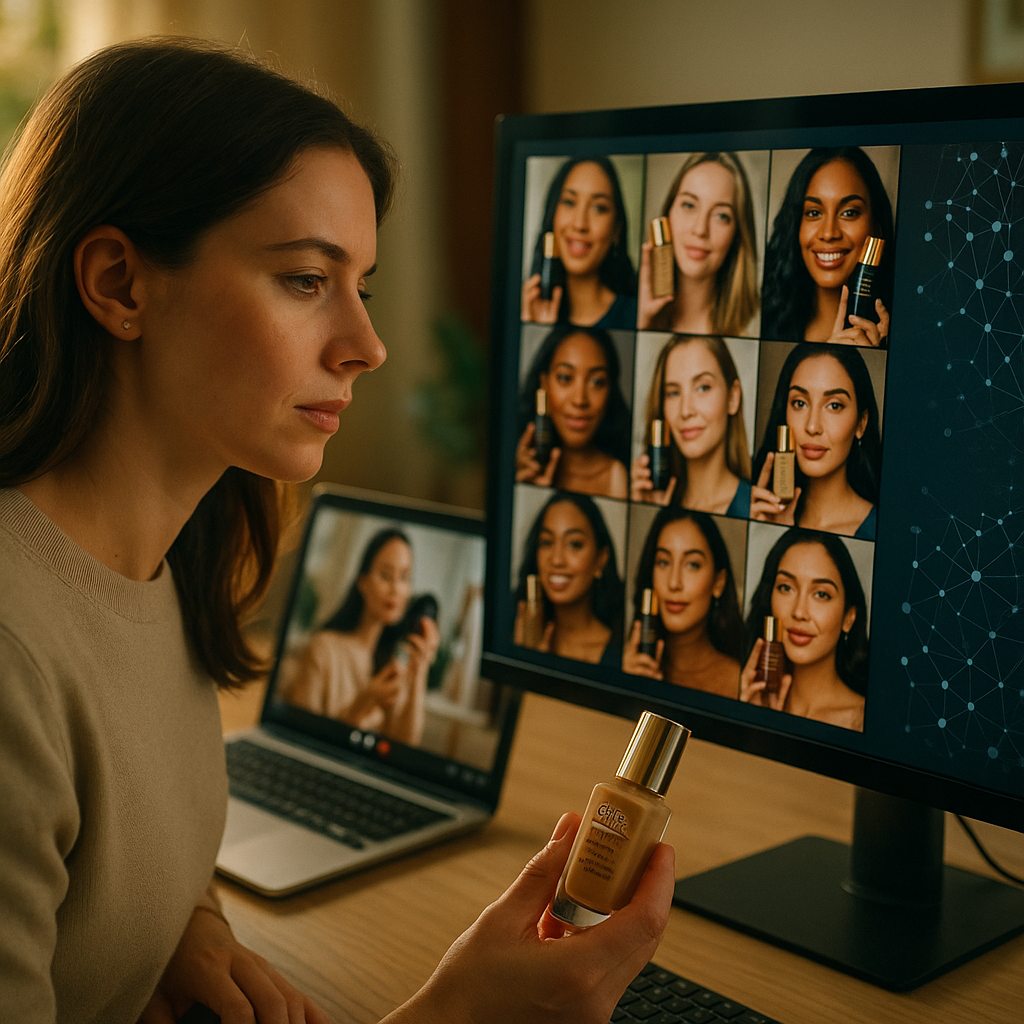
Estée Lauder now manages relationships with tens of thousands of creators across more than 20 markets. No human team vets that volume manually — not accurately, not fast enough, not without missing something that costs the brand a headline. That’s the quiet reality behind every enterprise AI-powered enterprise discovery platform conversation happening in beauty and CPG boardrooms right now: scale broke the old vetting playbook, and automation is the only replacement that works.
The Vetting Problem Nobody Budgets For
Every brand marketer knows the drill. A creator looks perfect on paper — right aesthetic, right follower count, right engagement rate. Then three weeks into the campaign, someone finds a two-year-old post that violates brand safety guidelines, or worse, a pattern of undisclosed paid placements that triggers regulatory scrutiny. Estée Lauder Companies, running influencer programs across MAC, Clinique, La Mer, and a dozen other house brands simultaneously, can’t afford that discovery cycle to happen post-launch.
Manual vetting worked when brands ran a handful of campaigns a year with a shortlist of known creators. It doesn’t work when a single global fragrance launch needs 500+ creators activated within a two-week window across US, UK, China, Brazil, and the Gulf states simultaneously. The math doesn’t hold. A vetting analyst reviewing content history, audience authenticity, and compliance flags might process 15-20 creator profiles a day if they’re thorough. Scale that to thousands of candidates per campaign cycle and you need a headcount that no CMO will approve.
The real cost of manual vetting isn’t the labor — it’s the campaigns that launch anyway, unvetted, because the deadline arrived before the review did.
What Enterprise Discovery Platforms Actually Automate
Strip away the vendor marketing language and enterprise discovery platforms do three things well: pattern-match content history against brand safety criteria, cross-reference audience data against fraud signals, and flag disclosure compliance gaps before contracts get signed. Platforms like Traackr, CreatorIQ, and Grin have spent the past several product cycles building exactly this — not just search-and-filter tools, but decision-support layers sitting on top of creator databases.
The mechanics look like this in practice. A brand defines vetting parameters — say, no political content in the past 12 months, minimum 60% audience authenticity score, FTC disclosure compliance history, no brand-conflicting partnerships in the last 90 days. The platform runs every candidate creator against those parameters automatically, using natural language processing to scan captions and comments, computer vision to flag problematic imagery, and network analysis to detect bot-driven engagement.
This isn’t hypothetical. Sprout Social’s creator and social intelligence research has repeatedly shown that brand safety incidents tied to influencer partnerships spike when vetting relies on spot-checks rather than systematic review. Automation closes that gap by making the systematic review the default, not the exception.
What makes this relevant beyond beauty is the underlying architecture. It’s the same logic covered in evaluating intent over volume — platforms that score quality signals rather than just surfacing high-follower accounts. Vetting at scale is fundamentally an intent-detection problem: does this creator’s history signal genuine alignment, or just enough surface-level fit to pass a cursory glance?
Why Estée Lauder’s Model Is the Reference Case
Estée Lauder doesn’t publicize its exact vetting stack, but the operational shape of its influencer program tells the story. Running simultaneous launches across dozens of brand houses and hundreds of markets requires vetting logic that’s centralized but locally adaptable — a creator flagged for one brand’s standards might be perfectly appropriate for another’s, and regional compliance rules (China’s disclosure requirements differ meaningfully from the US) can’t be hardcoded into a single global rule set.
This is where enterprise discovery platforms differentiate from smaller-scale tools. They support tiered rule sets: global non-negotiables (no hate speech, no fraud history) sitting above region-specific compliance layers (FTC guidelines in the US, ASA rules in the UK, ICO-relevant data handling in the EU) sitting above brand-specific taste filters. A creator gets vetted once, but scored differently depending on which brand house and which market is activating them.
Enterprise vetting isn’t one filter — it’s a stack of filters, and the platforms winning enterprise contracts are the ones that let brands configure that stack without engineering support.
That configurability matters because compliance requirements shift constantly. The FTC’s endorsement guidance has tightened repeatedly on disclosure clarity, and the UK’s ICO continues to scrutinize how creator data and audience data get handled in sponsored content. A vetting platform that requires a re-engineering project every time a regulator updates guidance isn’t actually solving the enterprise problem — it’s just moving the bottleneck.
The Fraud Detection Layer Most Brands Underestimate
Follower fraud isn’t new, but the sophistication has outpaced what manual review can catch. Bot farms now mimic organic engagement patterns closely enough that a human scrolling through a profile sees nothing suspicious. Enterprise discovery platforms catch this differently — through engagement velocity analysis, geographic distribution anomalies in the audience, and comment-quality scoring that flags templated or bot-generated responses.
eMarketer’s ongoing research into influencer marketing spend consistently notes that fraud-adjacent waste remains one of the largest unaddressed line items in creator budgets — not because brands don’t care, but because detecting it manually at scale is nearly impossible. This is precisely the kind of problem covered in autonomous decision engines comparing risk — systems designed to score risk continuously rather than at a single point-in-time check.
Here’s the part brands often miss: fraud detection isn’t a one-time gate. A creator can pass vetting clean and then buy followers three months into a retainer relationship. Enterprise platforms increasingly run continuous monitoring rather than single-point approval, re-scoring creators on a rolling basis throughout the partnership lifecycle. That shift — from gate to pipeline — is arguably the more important evolution than the initial vetting automation itself.
Where the ROI Case Actually Lands
CFOs don’t approve martech spend on “reduced risk” alone — they want a number. The ROI case for enterprise discovery platforms breaks down into three measurable buckets:
- Time-to-activation: Campaigns that used to take six to eight weeks for creator sourcing and vetting can compress to two to three weeks when automated scoring replaces manual review cycles.
- Reduced incident cost: Every brand safety incident carries PR cleanup cost, potential regulatory exposure, and — the hardest to quantify but most real — reputational drag on future campaign performance.
- Headcount efficiency: Vetting teams shift from manual reviewers to exception-handlers, reviewing only the edge cases the platform flags as ambiguous rather than every candidate.
HubSpot’s broader research on marketing operations efficiency (see HubSpot’s marketing resources) consistently finds that automation ROI comes less from headline labor savings and more from the compounding effect of faster cycle times across a full campaign calendar. Vetting automation isn’t a one-time win — it’s a multiplier applied to every subsequent launch.
This connects to a broader theme in enterprise martech right now: automation only pays off when the underlying data is clean. As covered in why AI agents need clean data first, a vetting platform fed inconsistent or fragmented creator data will produce inconsistent scoring, regardless of how sophisticated its models are. Brands rolling out enterprise discovery tools need to solve their data governance problem first, or they’re automating noise.
The Governance Gap Nobody Wants to Own
Who owns the rule set? That question sinks more enterprise vetting rollouts than any technical limitation. Marketing wants creative flexibility. Legal wants zero-tolerance compliance thresholds. Regional teams want local nuance respected. If nobody owns the arbitration between those competing priorities, the platform either gets configured too loosely (defeating the purpose) or too strictly (blocking creators who would have performed well).
The brands getting this right — and Estée Lauder’s structure suggests this — build a cross-functional governance committee that owns the rule set as a living document, reviewed quarterly, not a launch-day configuration that never gets revisited. This mirrors the governance frameworks discussed in governance checklists for agentic ad spend — the platform is only as good as the humans who keep its rules current.
Worth noting too: vetting automation doesn’t eliminate the need for human judgment, it relocates it. Instead of reviewing every creator, human teams review the flagged exceptions and calibrate the model’s thresholds over time. That’s a better use of senior talent, but it does require senior talent staying engaged with the system rather than treating it as fully autonomous.
What This Means for Mid-Market Brands Without Estée Lauder’s Budget
Not every brand needs the full enterprise stack. But the underlying principle — systematic, criteria-based vetting over manual spot-checks — scales down. Mid-market brands running a few hundred creator relationships a year can apply the same logic with lighter tooling, prioritizing the fraud detection and disclosure compliance layers first, since those carry the highest regulatory and reputational risk per dollar spent.
The mistake to avoid is assuming vetting automation is only a “later” problem, something to solve once the program hits enterprise scale. Bad creator partnerships happen at 50 creators just as easily as at 50,000 — the incident just gets less press coverage. Building vetting discipline early means the eventual scale-up doesn’t require rebuilding the process from scratch.
FAQs
Frequently Asked Questions
What is an AI-powered enterprise discovery platform in influencer marketing?
It’s a software system that automates creator sourcing and vetting by scoring candidates against brand safety, compliance, and authenticity criteria at scale, replacing manual profile-by-profile review with systematic, criteria-based screening.
How does automated creator vetting reduce brand risk?
It applies consistent screening criteria — content history analysis, audience fraud detection, and disclosure compliance checks — to every candidate creator, rather than relying on spot-checks that miss issues at scale.
Can smaller brands use enterprise discovery platforms, or is this only for companies like Estée Lauder?
Most platforms offer tiered pricing and functionality, so mid-market brands can apply the same vetting logic — fraud detection, disclosure compliance, content history review — without the full enterprise configuration.
Does automated vetting replace the need for human review entirely?
No. It shifts human effort from reviewing every candidate to handling flagged exceptions and calibrating scoring thresholds, which is a more efficient use of specialized compliance and marketing talent.
How often should vetting criteria be updated?
Given how quickly regulatory guidance and fraud tactics evolve, most enterprise teams review vetting rule sets quarterly, with immediate updates triggered by major regulatory changes such as FTC or ICO guidance shifts.
What’s the biggest risk of skipping automated vetting at scale?
Brand safety incidents and regulatory non-compliance become statistically inevitable once creator volume exceeds what manual review teams can thoroughly process, exposing the brand to reputational and legal risk.
The brands that win the next cycle of global creator programs won’t be the ones with the biggest influencer budgets — they’ll be the ones whose vetting infrastructure can approve a thousand creators as reliably as it approves ten. Start by auditing your current vetting bottleneck before you shop for a platform; the fix only works if you know exactly what it’s replacing.
Top Influencer Marketing Agencies
The leading agencies shaping influencer marketing in 2026
Agencies ranked by campaign performance, client diversity, platform expertise, proven ROI, industry recognition, and client satisfaction. Assessed through verified case studies, reviews, and industry consultations.
Moburst

-
2

The Shelf
Boutique Beauty & Lifestyle Influencer AgencyA data-driven boutique agency specializing exclusively in beauty, wellness, and lifestyle influencer campaigns on Instagram and TikTok. Best for brands already focused on the beauty/personal care space that need curated, aesthetic-driven content.Clients: Pepsi, The Honest Company, Hims, Elf Cosmetics, Pure LeafVisit The Shelf → -
3

Audiencly
Niche Gaming & Esports Influencer AgencyA specialized agency focused exclusively on gaming and esports creators on YouTube, Twitch, and TikTok. Ideal if your campaign is 100% gaming-focused — from game launches to hardware and esports events.Clients: Epic Games, NordVPN, Ubisoft, Wargaming, Tencent GamesVisit Audiencly → -
4

Viral Nation
Global Influencer Marketing & Talent AgencyA dual talent management and marketing agency with proprietary brand safety tools and a global creator network spanning nano-influencers to celebrities across all major platforms.Clients: Meta, Activision Blizzard, Energizer, Aston Martin, WalmartVisit Viral Nation → -
5

The Influencer Marketing Factory
TikTok, Instagram & YouTube CampaignsA full-service agency with strong TikTok expertise, offering end-to-end campaign management from influencer discovery through performance reporting with a focus on platform-native content.Clients: Google, Snapchat, Universal Music, Bumble, YelpVisit TIMF → -
6

NeoReach
Enterprise Analytics & Influencer CampaignsAn enterprise-focused agency combining managed campaigns with a powerful self-service data platform for influencer search, audience analytics, and attribution modeling.Clients: Amazon, Airbnb, Netflix, Honda, The New York TimesVisit NeoReach → -
7

Ubiquitous
Creator-First Marketing PlatformA tech-driven platform combining self-service tools with managed campaign options, emphasizing speed and scalability for brands managing multiple influencer relationships.Clients: Lyft, Disney, Target, American Eagle, NetflixVisit Ubiquitous → -
8

Obviously
Scalable Enterprise Influencer CampaignsA tech-enabled agency built for high-volume campaigns, coordinating hundreds of creators simultaneously with end-to-end logistics, content rights management, and product seeding.Clients: Google, Ulta Beauty, Converse, AmazonVisit Obviously →