


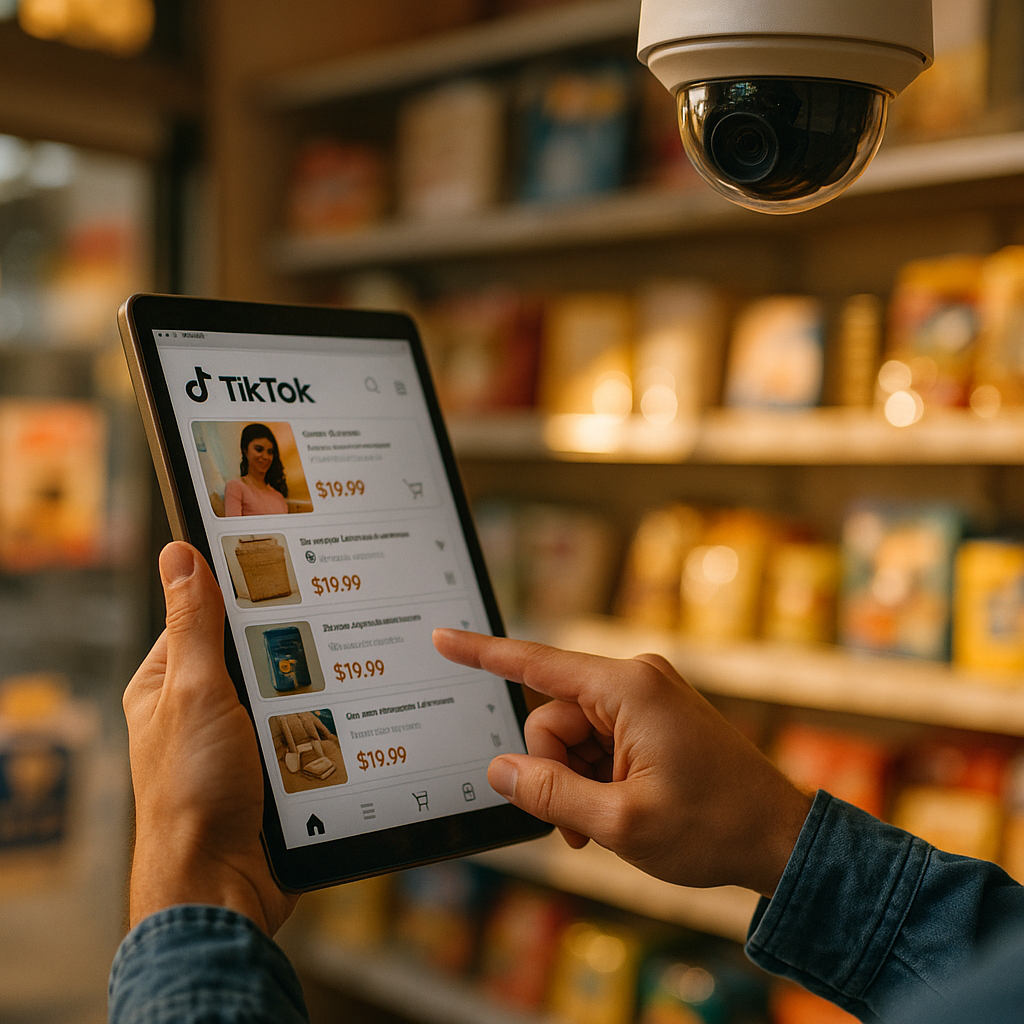
Seventy-two percent of TikTok Shop purchases start with an algorithm decision the shopper never sees: which product gets surfaced, at which price, in which feed. That’s not a UX detail anymore. It’s a regulatory exposure point. The FTC’s surveillance pricing guidance has made clear that opaque, data-driven personalization isn’t just a privacy issue — it’s a pricing fairness issue, and brands running TikTok Shop storefronts are squarely in the blast radius.
If your team hasn’t mapped out what data feeds your TikTok Shop recommendations, how pricing variance gets triggered, and what you’d show an investigator on request, you’re not compliant. You’re lucky. And luck is not a strategy anyone should be presenting to legal.
Why Surveillance Pricing Guidance Now Applies to Social Commerce
The FTC’s 6(b) inquiry into surveillance pricing was originally framed around retail giants and data brokers using browsing history, location, and device signals to vary prices in real time. But the underlying concern — consumers unknowingly paying different prices based on inferred willingness-to-pay — maps directly onto how TikTok’s recommendation engine works. TikTok Shop doesn’t just rank products; it can influence which discounts, bundles, or flash-sale prices a given user sees, based on engagement history, purchase signals, and behavioral clustering.
That’s algorithmic personalization functioning as de facto pricing personalization. The FTC has signaled it doesn’t much care whether the mechanism is a legacy pricing engine or a short-form video recommendation model. The output — differential pricing based on non-transparent data use — is what draws scrutiny.
If your TikTok Shop algorithm can show two shoppers different prices for the same item without a clear, disclosed reason, you already have a surveillance pricing problem — regardless of intent.
Brands that treated this as a “big platform” problem are catching up fast. Our earlier breakdown of the FTC personalized pricing rule laid out the baseline obligations. What’s changed is the algorithmic layer: TikTok Shop’s recommendation system is now explicitly the kind of “automated decision system” regulators expect brands to document.
What a Data-Use Disclosure Framework Actually Needs to Cover
Most brands’ current disclosure language is a single sentence buried in a privacy policy: “we may use your data to personalize your experience.” That won’t survive an FTC inquiry. A real framework needs five components, and each one needs an owner, not just a policy line.
- Data inventory: Every input feeding the recommendation and pricing model — watch time, cart abandonment, past purchase category, follower behavior, even comment sentiment in some TikTok implementations.
- Decision logic mapping: A plain-language description of how those inputs translate into what a user sees — ranked product, price tier, discount eligibility.
- Disclosure trigger points: The specific moments in the shopper journey where disclosure must appear — product page, checkout, price-drop notification.
- Consent and opt-out mechanics: How a shopper can decline personalized pricing without losing platform functionality entirely.
- Audit trail: Time-stamped records showing what disclosure version was live when a given pricing decision occurred.
Skip any one of these and you’ve got a framework with a hole big enough for a regulator to drive a subpoena through.
The Data Inventory Problem Is Bigger Than Marketing Thinks
Marketing teams typically know the customer-facing data — email, purchase history, loyalty tier. What they don’t always track is what TikTok’s API is pulling in on the backend to feed its own recommendation layer, separate from whatever first-party CRM data the brand controls. This is where a lot of brands get exposed: they disclose their own data use accurately but have no visibility into the platform-side signals shaping the algorithm’s output.
This is the same blind spot we flagged in our guide to DPAs for TikTok, Instagram, and YouTube APIs. If your data processing addendum with TikTok doesn’t specify what behavioral signals feed Shop recommendations, you can’t accurately disclose it to your own customers. You’re disclosing a guess.
Mapping the Decision Logic Without Reverse-Engineering TikTok’s Algorithm
You don’t need to know TikTok’s proprietary ranking weights. Nobody outside TikTok does, and the FTC isn’t asking brands to reverse-engineer platform IP. What’s expected is a good-faith, documented understanding of the categories of data that plausibly influence what a shopper sees, and a disclosure that reflects that understanding honestly.
Practically, this means three things:
- Pull TikTok Shop’s published seller documentation and merchant API terms — annotate every field that touches personalization or pricing eligibility.
- Run controlled test purchases across different account profiles (new account, high-engagement account, price-sensitive browsing history) to observe variance in offers shown.
- Document observed variance even if you can’t explain the exact mechanism — “users with X browsing pattern saw Y% more discount codes” is a disclosable, defensible finding.
This testing approach mirrors what compliance teams already do for algorithmic suppression claims. If you’ve read our piece on TikTok algorithm suppression and contract indemnification, the logic is nearly identical: you can’t control the black box, but you can document its observable behavior and build contractual and disclosure protections around what you find.
Where Most Frameworks Break: The Disclosure Trigger Point
Here’s the mistake almost every brand makes. They write a solid data-use disclosure and then park it in a privacy policy nobody clicks. The FTC’s guidance, consistent with its broader stance on consumer protection enforcement, expects disclosure at the point of decision — not buried three clicks deep.
For TikTok Shop specifically, that means:
- A short, plain-language notice on product pages when price or ranking may vary by user profile.
- A clarifying note at checkout if a discount code or price shown is personalized rather than universal.
- An accessible, one-tap explanation link — not a 4,000-word policy — that a reasonable shopper could actually read in under 30 seconds.
Compare this to how the FTC has treated personalized pricing disclosure versus state-level requirements. Our FTC vs. state law comparison is worth bookmarking here, because California, Colorado, and a growing list of states are layering their own disclosure timing rules on top of the federal guidance. A brand selling nationally on TikTok Shop needs a framework that satisfies the strictest applicable state, not just the federal floor.
Consent Mechanics: Give Shoppers a Real Off-Ramp
An opt-out that quietly degrades the entire shopping experience isn’t a real choice — regulators know this trick, and they don’t love it. If declining personalized pricing means a shopper can no longer see any deals at all, that’s a design pattern likely to draw a dark-pattern complaint on top of the pricing issue.
Build the opt-out so it disables the personalization layer specifically, not the whole commerce experience. Yes, this is more engineering work. It’s also the difference between “compliant friction” and “punitive friction,” and the FTC has shown it can tell the difference.
According to eMarketer research on social commerce growth, TikTok Shop’s U.S. GMV has scaled fast enough that even a modest compliance misstep now carries outsized financial exposure compared to two years ago.
Building the Audit Trail Without Drowning Your Team in Logs
Legal will ask for this eventually: “show me what disclosure was live on this product page on this date, for this pricing tier.” If your team can’t produce that in an afternoon, the audit trail doesn’t exist in any usable form.
Practical version control here doesn’t require enterprise-grade MLOps infrastructure. A version-stamped CMS log, tied to your product catalog updates and synced with your TikTok Shop listing changes, covers most of the requirement. Pair that with a quarterly internal review — treat it the same way you’d treat the review cadence in our multi-state breach notification timeline guide, where the whole point is having documentation ready before you need it, not scrambling after a complaint lands.
Two things tend to break audit trails in practice: agencies updating listings without looping in the compliance record, and rapid A/B price testing that outpaces documentation. Both are fixable with a lightweight approval gate — nothing that should meaningfully slow down commerce operations.
Who Owns This Inside the Org?
This is the part nobody wants to answer, so I’ll say it plainly: disclosure frameworks fail when they’re treated as a legal deliverable instead of a cross-functional operating process. Legal writes the language. Marketing controls the placement. Data/engineering controls the actual inputs. E-commerce ops controls the checkout flow where disclosure has to live.
If those four groups aren’t in the same working document, you’ll get a framework that’s technically accurate and practically invisible to shoppers — which is exactly the gap the FTC’s guidance is designed to close. Set a recurring monthly sync, not a one-time policy sign-off. Algorithms change; TikTok updates Shop’s recommendation logic regularly, and your disclosure has to keep pace or it becomes stale and misleading by omission.
For teams managing this alongside broader creator compliance work, it’s worth cross-referencing your data governance against the practices outlined in data processing addendums for AI decision engines — the contractual backbone for algorithm-driven commerce is largely the same whether you’re talking about pricing, recommendations, or creator matching.
Next Step
Don’t wait for an FTC inquiry letter to build this framework — start with a one-week data inventory sprint mapping every input that touches your TikTok Shop pricing and recommendation logic, then draft disclosure language for your top three highest-traffic product pages this quarter.
Frequently Asked Questions
What is surveillance pricing under the FTC’s guidance?
Surveillance pricing refers to the practice of setting or varying prices for individual consumers based on personal data — browsing behavior, location, purchase history, or inferred willingness-to-pay — often without clear disclosure to the consumer that pricing is personalized.
Does TikTok Shop actually use surveillance pricing?
TikTok Shop’s recommendation algorithm can influence which discounts, bundles, or price points a given shopper sees based on behavioral and engagement data, which functionally resembles surveillance pricing even if TikTok doesn’t label it that way. Brands are responsible for understanding and disclosing this regardless of platform terminology.
Who is liable if TikTok’s algorithm personalizes pricing without disclosure — the brand or TikTok?
Both can face exposure, but brands selling through TikTok Shop typically carry direct liability for consumer-facing disclosure obligations, since the FTC generally holds the seller of record accountable for how pricing is presented to consumers.
What data should be included in a data-use disclosure framework?
At minimum: behavioral inputs (browsing, watch time, cart activity), purchase history, engagement signals, any third-party data enrichment, and a plain-language explanation of how those inputs affect what price or product ranking a shopper sees.
How often should a TikTok Shop disclosure framework be updated?
Review it at least quarterly, and immediately after any significant change to TikTok’s Shop algorithm, your product catalog structure, or applicable state privacy law — stale disclosures create liability even if they were accurate when written.
Can shoppers opt out of algorithm-driven pricing on TikTok Shop?
Brands should build an opt-out mechanism that disables personalization specifically without degrading the entire shopping experience; opt-outs that punish users for declining personalization risk being flagged as manipulative design patterns.
FAQ Schema
Top Influencer Marketing Agencies
The leading agencies shaping influencer marketing in 2026
Agencies ranked by campaign performance, client diversity, platform expertise, proven ROI, industry recognition, and client satisfaction. Assessed through verified case studies, reviews, and industry consultations.
Moburst

-
2

The Shelf
Boutique Beauty & Lifestyle Influencer AgencyA data-driven boutique agency specializing exclusively in beauty, wellness, and lifestyle influencer campaigns on Instagram and TikTok. Best for brands already focused on the beauty/personal care space that need curated, aesthetic-driven content.Clients: Pepsi, The Honest Company, Hims, Elf Cosmetics, Pure LeafVisit The Shelf → -
3

Audiencly
Niche Gaming & Esports Influencer AgencyA specialized agency focused exclusively on gaming and esports creators on YouTube, Twitch, and TikTok. Ideal if your campaign is 100% gaming-focused — from game launches to hardware and esports events.Clients: Epic Games, NordVPN, Ubisoft, Wargaming, Tencent GamesVisit Audiencly → -
4

Viral Nation
Global Influencer Marketing & Talent AgencyA dual talent management and marketing agency with proprietary brand safety tools and a global creator network spanning nano-influencers to celebrities across all major platforms.Clients: Meta, Activision Blizzard, Energizer, Aston Martin, WalmartVisit Viral Nation → -
5

The Influencer Marketing Factory
TikTok, Instagram & YouTube CampaignsA full-service agency with strong TikTok expertise, offering end-to-end campaign management from influencer discovery through performance reporting with a focus on platform-native content.Clients: Google, Snapchat, Universal Music, Bumble, YelpVisit TIMF → -
6

NeoReach
Enterprise Analytics & Influencer CampaignsAn enterprise-focused agency combining managed campaigns with a powerful self-service data platform for influencer search, audience analytics, and attribution modeling.Clients: Amazon, Airbnb, Netflix, Honda, The New York TimesVisit NeoReach → -
7

Ubiquitous
Creator-First Marketing PlatformA tech-driven platform combining self-service tools with managed campaign options, emphasizing speed and scalability for brands managing multiple influencer relationships.Clients: Lyft, Disney, Target, American Eagle, NetflixVisit Ubiquitous → -
8

Obviously
Scalable Enterprise Influencer CampaignsA tech-enabled agency built for high-volume campaigns, coordinating hundreds of creators simultaneously with end-to-end logistics, content rights management, and product seeding.Clients: Google, Ulta Beauty, Converse, AmazonVisit Obviously →