


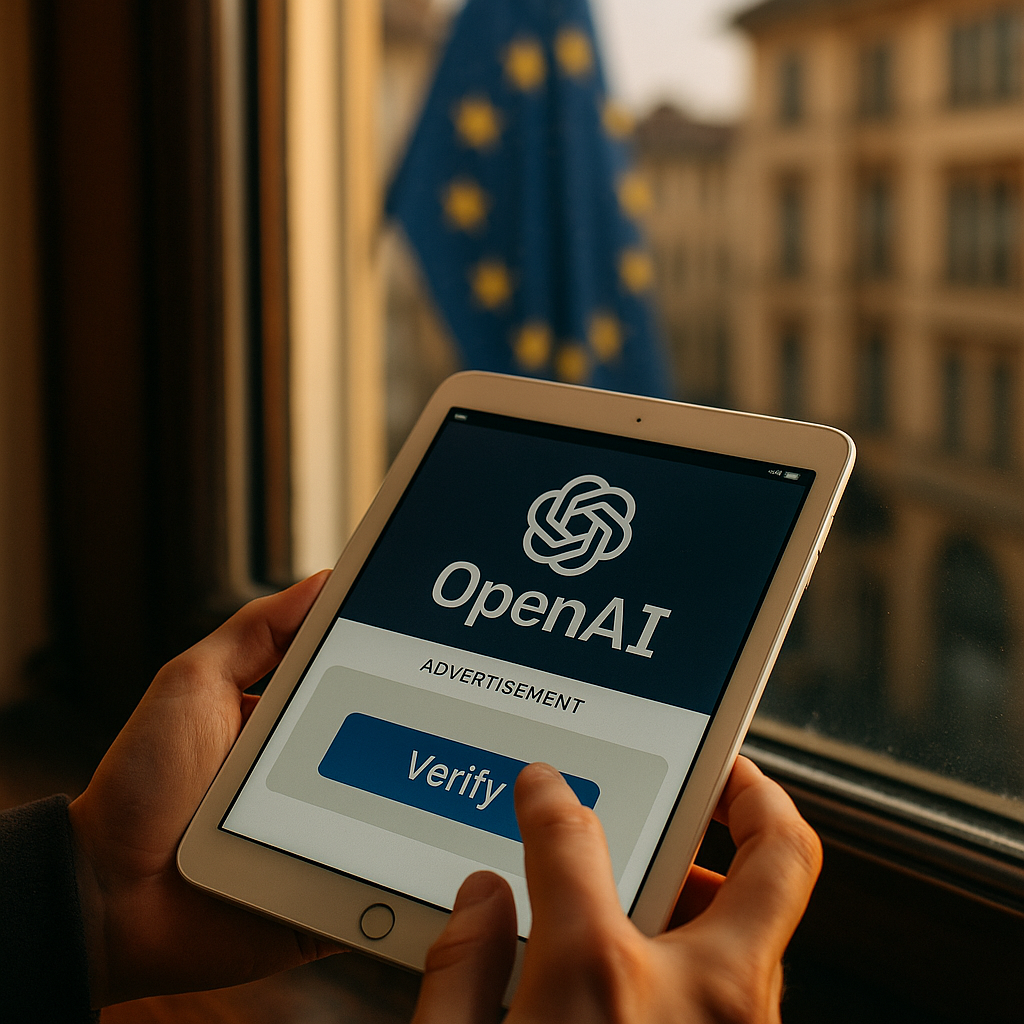
ChatGPT now reaches more than 180 million weekly users across Europe, and OpenAI just turned on ad infrastructure for 31 of those markets at once. That’s not a soft pilot. That’s a land grab for a slice of ad budgets that Google, Meta, and TikTok have owned for two decades. The question isn’t whether OpenAI’s ad business expansion matters — it’s whether your brand is ready to buy into it responsibly.
Why This Rollout Is Bigger Than a Feature Launch
Most platform expansions get a press release and a shrug. This one deserves more scrutiny. OpenAI isn’t just adding a “buy now” button to ChatGPT — it’s building an ad marketplace inside a conversational interface that hundreds of millions of Europeans now treat as a search replacement, a shopping assistant, and increasingly, a decision-making partner.
For brand advertisers, that shift changes the unit of attention. You’re no longer bidding for a spot on a results page. You’re bidding for a mention, a recommendation, or a product card inside an AI-generated answer. The mechanics of that auction, and the compliance obligations wrapped around it, are still being written in real time.
Thirty-one markets means thirty-one sets of privacy regulators watching how conversational ads handle consent, data retention, and disclosure — and GDPR enforcement in this space is not going to be gentle.
What’s Actually Live Right Now
OpenAI’s European ad push covers major economies (Germany, France, Italy, Spain) alongside smaller but high-value markets like the Netherlands, Sweden, Poland, and Ireland. Early ad formats reportedly lean on sponsored placements within ChatGPT responses and shopping-style product surfacing, similar in spirit to what Google has tested with AI Mode ad placements and what Microsoft has piloted in Copilot.
A few things brand teams should verify before committing spend:
- Format maturity. Early-stage ad units in conversational AI tend to have thin reporting. Ask your rep exactly what’s measurable at launch versus what’s “coming soon.”
- Market-by-market rules. GDPR compliance isn’t uniform enforcement across the EU. Germany’s data protection authorities and Ireland’s DPC (which oversees OpenAI’s EU entity) have historically taken different postures on ad tech scrutiny.
- Inventory scale. Thirty-one markets sounds massive, but actual addressable inventory depends on ChatGPT’s paid-vs-free user mix in each country, which varies significantly.
The ROI Question Nobody’s Answered Yet
Here’s the uncomfortable truth: there’s no mature benchmark for cost-per-acquisition inside a chatbot conversation. Google Ads has fifteen years of historical CPC data to lean on. Meta has lookalike audiences refined over a decade. OpenAI has a user base with extraordinary intent signal — people literally type out what they want — but almost no proven conversion data at scale for brand advertisers.
That asymmetry cuts both ways. Early movers might capture cheap inventory before CPMs rise, the way Facebook ads were a bargain in 2012. Or early movers might burn budget on a format that hasn’t found product-market fit for advertisers yet. Treat this like a test-and-learn line item, not a core channel reallocation, until you’ve got at least two quarters of first-party performance data.
Marketing leaders should also ask a harder question: does this spend cannibalize search budget, social budget, or something else entirely? If ChatGPT is replacing Google queries for your target buyer, the money probably needs to come from search. If it’s replacing product discovery on TikTok or Instagram, it’s a social-budget conversation. Get finance aligned on the source of funds before the media plan goes out the door.
Governance Can’t Be an Afterthought
Every AI ad platform launch brings the same risk: marketing teams move faster than legal and compliance can review. That’s how brands end up with an FTC inquiry or an ICO complaint six months after a campaign already ran.
Before allocating budget to OpenAI’s new ad inventory, loop in whoever owns AI governance at your organization. If you don’t have that function yet, this is a good forcing moment to build it. Gartner has been explicit that governance now precedes scale in AI marketing investment decisions, and this expansion is a textbook case of why.
Specific questions your compliance team should be asking OpenAI’s sales team:
- How is sponsored content disclosed to the end user inside a chat response?
- What data is OpenAI using to target or personalize ad placements, and is that data GDPR-compliant by default across all 31 markets?
- What happens if ChatGPT recommends a competitor’s product inside a paid placement meant for your brand? Is there a dispute or make-good process?
- How long is user conversation data retained for ad optimization purposes, and can users opt out per the EU’s data protection guidance?
None of this is paranoia. It’s the same due diligence brands should have applied to programmatic ad tech a decade ago, and largely didn’t, until regulators forced the issue.
How This Fits Your Existing AI Stack
If your team already runs AI agents for media buying, this expansion adds another system that needs oversight. Autonomous bidding tools have a documented error problem — agent-driven media buying still fails at a meaningful rate when platforms change auction mechanics without warning. A brand-new ad marketplace inside ChatGPT is exactly the kind of platform shift that trips up automated systems trained on stable ad environments.
Before you let any AI agent touch OpenAI ad spend autonomously, build in human checkpoints. This lines up with what’s emerging as best practice across the industry: controls before scale, not the reverse. Marketers who skip that step tend to discover budget leakage during the QBR, not before it.
There’s also a trust gap worth naming. Recent industry surveys show AI tool adoption among marketers has roughly doubled year over year, yet trust in AI-generated output hasn’t kept pace. Expect the same pattern with OpenAI’s ad platform: fast adoption, slow trust-building, and a lag before brands feel confident scaling spend without manual review.
Measurement Will Be the Hard Part
Attribution inside a conversational interface doesn’t map cleanly to existing analytics stacks. There’s no click-through URL structure that behaves like a traditional search ad. If OpenAI surfaces a product recommendation and a user later converts on your site three days later through a direct visit, your GA4 setup likely won’t connect those dots without configuration work.
This is the same challenge brands have already run into with AI assistant referral traffic across other platforms. Teams that got ahead of it by configuring GA4 to track AI assistant referrals are in a far better position to prove OpenAI ad ROI than teams starting from zero. Don’t wait for OpenAI’s own reporting dashboard to mature. Build your own tracking layer now, using UTM conventions and referral pattern matching, so you’re not dependent on a single vendor’s attribution claims.
According to eMarketer, AI-driven ad formats are projected to capture a growing share of digital ad budgets over the next several years, but measurement standardization is lagging well behind spend growth. That gap is where brand risk lives.
A Practical Allocation Framework
Rather than treating this as an all-or-nothing decision, consider a tiered approach:
- Test tier (5-10% of digital budget): Run controlled pilots in two or three markets where you already have strong first-party data and existing GDPR compliance infrastructure.
- Measurement tier: Invest in tracking infrastructure before scaling spend, not after. This includes GA4 configuration, UTM discipline, and a clear attribution model agreed upon with finance.
- Governance tier: Get legal and compliance sign-off on disclosure practices, data handling, and dispute resolution before the pilot, not during a post-mortem.
- Scale decision point: Set a firm review date, ideally two full quarters out, before committing to a larger budget shift.
This isn’t overly cautious. It’s the same playbook smart brands used when TikTok ads first opened up, and the ones who followed it outperformed the ones who chased hype. For more on how AI-driven discovery layers are reshaping product feeds and paid placement broadly, it’s worth reviewing how TikTok’s AI discovery layer forced brands to rebuild product feed strategy from scratch. OpenAI’s ad marketplace will likely demand something similar.
According to Statista, digital ad spend in Western Europe alone exceeds €90 billion annually, giving OpenAI a substantial pool to compete for even with a modest initial share. Brands that move deliberately, with governance and measurement in place, will be positioned to capture that shift without absorbing its early-stage risk.
Frequently Asked Questions
Which European markets are included in OpenAI’s ad business expansion?
OpenAI’s rollout covers 31 European markets, including major economies like Germany, France, Italy, and Spain, along with smaller markets such as the Netherlands, Sweden, Poland, and Ireland. Exact ad format availability may vary by country during the initial rollout phase.
Is OpenAI’s ad platform GDPR-compliant across all 31 markets?
OpenAI’s EU operations fall under Ireland’s Data Protection Commission, but GDPR enforcement and interpretation vary across member states. Brands should confirm data handling, consent mechanisms, and disclosure practices directly with OpenAI’s sales and legal teams before launching campaigns in any specific market.
How much budget should brands allocate to OpenAI ads initially?
Most marketing leaders recommend treating this as a test-and-learn allocation, roughly 5-10% of digital budget, rather than a core channel reallocation, until performance data and attribution tools mature over several quarters.
Can existing AI media-buying agents handle OpenAI’s new ad inventory?
Not without human oversight. Autonomous bidding tools trained on stable platforms like Google and Meta often struggle when a new ad marketplace introduces unfamiliar auction mechanics, making manual checkpoints essential during the early rollout period.
How should brands measure ROI on OpenAI ad spend?
Since native attribution tools inside conversational AI are still immature, brands should build their own tracking infrastructure using UTM parameters and GA4 configuration for AI referral traffic before scaling spend, rather than relying solely on OpenAI’s built-in reporting.
The brands that win this cycle won’t be the ones who moved fastest into OpenAI’s ad marketplace — they’ll be the ones who built measurement and governance infrastructure before the invoice arrived. Start with a small, well-tracked pilot in one or two markets, and let the data, not the hype, decide your next budget move.
Top Influencer Marketing Agencies
The leading agencies shaping influencer marketing in 2026
Agencies ranked by campaign performance, client diversity, platform expertise, proven ROI, industry recognition, and client satisfaction. Assessed through verified case studies, reviews, and industry consultations.
Moburst

-
2

The Shelf
Boutique Beauty & Lifestyle Influencer AgencyA data-driven boutique agency specializing exclusively in beauty, wellness, and lifestyle influencer campaigns on Instagram and TikTok. Best for brands already focused on the beauty/personal care space that need curated, aesthetic-driven content.Clients: Pepsi, The Honest Company, Hims, Elf Cosmetics, Pure LeafVisit The Shelf → -
3

Audiencly
Niche Gaming & Esports Influencer AgencyA specialized agency focused exclusively on gaming and esports creators on YouTube, Twitch, and TikTok. Ideal if your campaign is 100% gaming-focused — from game launches to hardware and esports events.Clients: Epic Games, NordVPN, Ubisoft, Wargaming, Tencent GamesVisit Audiencly → -
4

Viral Nation
Global Influencer Marketing & Talent AgencyA dual talent management and marketing agency with proprietary brand safety tools and a global creator network spanning nano-influencers to celebrities across all major platforms.Clients: Meta, Activision Blizzard, Energizer, Aston Martin, WalmartVisit Viral Nation → -
5

The Influencer Marketing Factory
TikTok, Instagram & YouTube CampaignsA full-service agency with strong TikTok expertise, offering end-to-end campaign management from influencer discovery through performance reporting with a focus on platform-native content.Clients: Google, Snapchat, Universal Music, Bumble, YelpVisit TIMF → -
6

NeoReach
Enterprise Analytics & Influencer CampaignsAn enterprise-focused agency combining managed campaigns with a powerful self-service data platform for influencer search, audience analytics, and attribution modeling.Clients: Amazon, Airbnb, Netflix, Honda, The New York TimesVisit NeoReach → -
7

Ubiquitous
Creator-First Marketing PlatformA tech-driven platform combining self-service tools with managed campaign options, emphasizing speed and scalability for brands managing multiple influencer relationships.Clients: Lyft, Disney, Target, American Eagle, NetflixVisit Ubiquitous → -
8

Obviously
Scalable Enterprise Influencer CampaignsA tech-enabled agency built for high-volume campaigns, coordinating hundreds of creators simultaneously with end-to-end logistics, content rights management, and product seeding.Clients: Google, Ulta Beauty, Converse, AmazonVisit Obviously →