


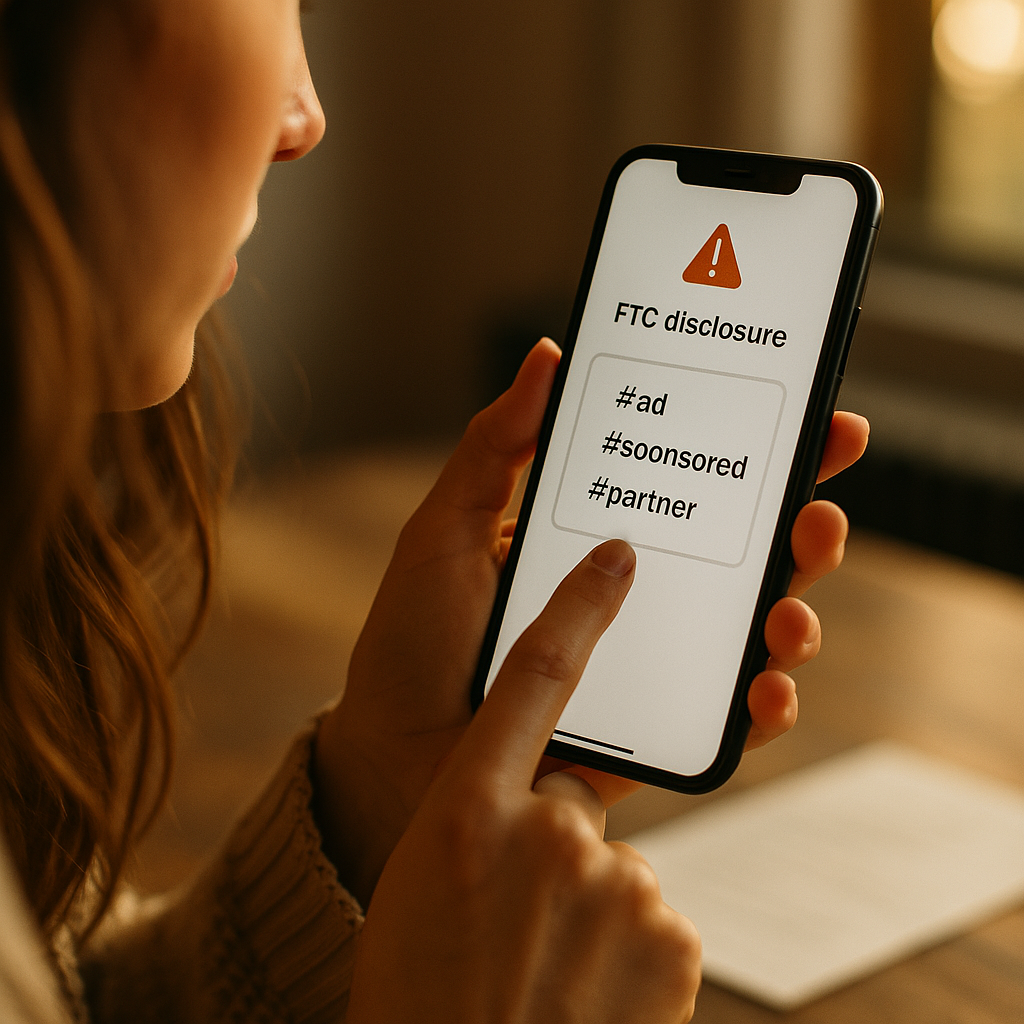
Only 9.7% of sponsored posts analyzed by compliance watchdogs in recent influencer marketing audits used disclosure language that would survive an actual FTC review. The rest leaned on vague tags like #ambassador, #partner, or #family, assuming a hashtag equals compliance. It doesn’t. The FTC endorsement guide naming rules are specific about what counts as a material connection disclosure, and “ambassador” isn’t on the list.
If your brand’s influencer program relies on generic ambassador tags to check the disclosure box, you’re carrying legal exposure you probably don’t know about.
Why “Ambassador” Doesn’t Mean What Legal Thinks It Means
Marketing teams love the word ambassador. It sounds prestigious, builds a sense of long-term partnership, and reads better in a press release than “paid promoter.” But the FTC doesn’t care how a title sounds. It cares whether an ordinary consumer, scrolling at normal speed, understands that money or free product changed hands.
Here’s the problem: “ambassador” is a relationship descriptor, not a disclosure. It tells the audience that a creator has an ongoing affiliation with a brand. It does not tell them that posts are paid, gifted, or incentivized in any specific way. The FTC’s own guidance under 16 CFR Part 255 requires that connections be disclosed “clearly and conspicuously,” using language a reasonable consumer would immediately understand as describing compensation or a business relationship.
A title implies status. A disclosure states a transaction. The FTC endorsement guide treats these as entirely different things, and conflating them is the single most common compliance failure brands make.
Compare the two: “#XYZAmbassador” versus “#Ad, I was paid by XYZ for this post.” One is branding. The other is disclosure. Only one of them holds up under FTC enforcement guidance.
The Specific Naming Failures Compliance Reviewers Flag
If you’ve run a brand safety or legal review on influencer content, you’ve probably seen these exact patterns rejected. Here’s what keeps showing up, and why it doesn’t pass.
- #Ambassador, #Partner, #Family: These describe affiliation, not compensation. No reasonable consumer infers “paid” from “family.”
- #Collab or #Collaboration: Implies creative partnership without clarifying whether payment, free product, or affiliate commission is involved.
- #Sp or #Spon: Abbreviated to the point of meaninglessness for most of the audience. The FTC has explicitly flagged shortened tags as insufficient.
- Buried disclosures: “#ad” placed after fifteen other hashtags, or hidden in a “see more” expansion on Instagram, fails the conspicuousness standard even if the word itself is correct.
- Platform-only disclosure tools used alone: Instagram’s “Paid Partnership” label or TikTok’s branded content toggle helps, but the FTC has said these tools don’t automatically satisfy the agency’s own disclosure requirements when used in isolation.
Notice the pattern? Every one of these failures centers on vagueness. The FTC isn’t asking for poetry. It wants plain words: paid, ad, sponsored, free product from. Brands that insist on cutesy or brand-specific hashtags instead of plain disclosure language are optimizing for aesthetics over legal defensibility.
What “Clear and Conspicuous” Actually Requires
The FTC’s enforcement actions over the last several years have clarified the bar. Disclosure needs to be:
- In the same language as the endorsement itself
- Visible without clicking “more” or scrolling past other text
- Understandable to someone unfamiliar with influencer marketing jargon
- Repeated in video content, not just buried in a text caption
- Present in the actual video or image for livestream and Stories formats, not just the post metadata
That last point matters more than brands realize as shoppable formats grow. If you’re running live shopping events, the same naming problem applies in real time, and it’s worse because there’s no caption to fall back on. We covered how this plays out operationally in our piece on real-time disclosure compliance for livestream formats.
Why This Became a Bigger Problem in the Creator Economy’s Current Phase
Ambassador programs exploded because they’re cost-efficient. Instead of negotiating individual campaign fees, brands lock in long-term creators with product, flat retainers, or affiliate commissions, then let the relationship run on autopilot. According to eMarketer data on creator economy spending, ambassador and always-on partnerships now represent a growing share of total influencer budgets, overtaking one-off campaign deals in many verticals.
But scale creates risk. When you have 50 or 200 creators in an ambassador cohort, you can’t manually review every caption. Brands default to a standard hashtag set baked into the contract, usually something like #XYZAmbassador or #XYZPartner, and assume it covers every post in perpetuity. It doesn’t. Disclosure obligations apply post by post, platform by platform, and format by format.
This is the same operational gap we flagged in our analysis of cross-platform disclosure rules: a single approved hashtag doesn’t travel cleanly across Instagram, TikTok, YouTube Shorts, and livestream formats, each with different visibility defaults and character limits.
The Compensation Type Doesn’t Change the Disclosure Standard
One misconception worth killing directly: brands often assume that disclosure rigor scales with payment size. Pay a creator $50,000 for a campaign, and legal gets involved. Send a creator a free $40 product, and nobody reviews the caption.
The FTC doesn’t grade on a curve. Free product is a material connection. Affiliate commission is a material connection. Discount codes tied to a creator’s name are a material connection. A long-term ambassador relationship with no direct payment per post, where the creator simply gets ongoing product access, still triggers disclosure obligations on every single post that mentions the brand.
If a creator benefits from mentioning your brand in any way, free product, commission, flat fee, or future partnership consideration, that post needs plain-language disclosure. Program size and dollar value are irrelevant to the legal standard.
What a Compliant Naming Convention Actually Looks Like
Fixing this isn’t complicated, but it does require brands to stop treating disclosure language as a creative decision and start treating it as a legal requirement with creative constraints layered on top.
Build naming conventions around these principles:
- Lead with plain words. “Ad,” “sponsored,” or “paid partnership” should appear first or very early in the caption, not buried after branded hashtags.
- Match disclosure to compensation type. “I was paid by” for cash deals, “XYZ sent me this for free” for gifted product, “I earn a commission on sales” for affiliate links. Generic ambassador language covers none of these distinctly.
- Repeat in-video for video content. A verbal mention or on-screen text overlay in the first few seconds, not just a caption.
- Standardize across the cohort, but allow platform-specific formatting. The underlying disclosure language stays consistent. The placement adapts to each platform’s conventions.
- Audit on a schedule, not just at onboarding. Creators drift back to old habits. Contracts signed with the right disclosure clause mean nothing if nobody checks the actual posts six months later.
That last point is where most programs actually fail. Legal writes a solid contract clause, marketing briefs the creator once, and then nobody looks again until a complaint or an FTC inquiry forces a reactive audit. We’ve written about how stale compliance assumptions compound over time in our piece on evergreen content audits, and the same logic applies to ambassador naming conventions specifically.
Who Owns This Risk Inside the Brand?
Typically it falls between legal, marketing, and whoever manages the influencer platform or agency relationship, and that’s exactly the problem. Shared ownership often means no ownership. The FTC doesn’t care whether your agency’s contract template used the right hashtag if the actual posted content didn’t match.
Brands that take this seriously assign a single compliance owner, usually someone in legal or risk management, who reviews a rolling sample of ambassador content monthly, not just at campaign launch. Pair that with the contractual protections covered in our analysis of creator indemnification clauses, which shift some financial exposure back to the creator or agency when disclosure terms are violated.
Insurance matters here too. If your ambassador program is large enough that a single enforcement action could generate real financial exposure, it’s worth reviewing how influencer marketing insurance policies handle FTC-related claims, since not every policy covers regulatory penalties the same way.
Practical Checklist Before Your Next Review
Run your current ambassador program through this quickly:
- Does every post disclose compensation in plain language, not just a brand-affiliated hashtag?
- Is the disclosure visible without clicking “more” on any platform?
- Does video content include an in-video disclosure, not just a caption?
- Does the disclosure language match what the creator actually received (cash, product, commission)?
- Has anyone reviewed actual posted content in the last quarter, not just the signed contract?
If you answered no to more than one of these, you have a live compliance gap, not a theoretical one. For a deeper resource on structuring the underlying brief, HubSpot’s marketing resources include general guidance on influencer campaign planning that pairs well with legal review, though the disclosure specifics always need to come from FTC guidance directly rather than general marketing best practices.
Frequently Asked Questions
Does using #ambassador alone ever satisfy FTC disclosure requirements?
No. The FTC requires plain-language disclosure of a material connection, such as “ad,” “sponsored,” or “paid partnership.” A relationship title like ambassador describes status, not compensation, and doesn’t meet the clear and conspicuous standard on its own.
Do free products require the same disclosure as paid campaigns?
Yes. Any material connection, including free product, discounts, affiliate commissions, or flat fees, triggers the same disclosure obligation. The FTC does not scale disclosure requirements based on compensation value.
Can platform tools like Instagram’s Paid Partnership label replace manual disclosure?
Not reliably. Platform labels help but the FTC has indicated these tools alone may not satisfy its disclosure standard, particularly if the label isn’t visible across all viewing contexts or doesn’t match the actual in-content language.
How often should brands audit ambassador content for disclosure compliance?
Quarterly at minimum, with monthly spot checks for high-volume programs. Disclosure drift happens quickly as creators revert to habitual tagging patterns, so one-time onboarding review isn’t sufficient.
Who is legally responsible if a creator’s disclosure fails FTC review, the brand or the creator?
Both can face liability. The FTC has pursued brands directly even when individual creators made the disclosure error, since brands are responsible for ensuring their endorsement programs comply with the guide.
Stop treating ambassador hashtags as a disclosure strategy. Pull a sample of your current program’s posts this week, check them against plain-language disclosure standards, and fix the naming convention before a regulator does it for you.
Top Influencer Marketing Agencies
The leading agencies shaping influencer marketing in 2026
Agencies ranked by campaign performance, client diversity, platform expertise, proven ROI, industry recognition, and client satisfaction. Assessed through verified case studies, reviews, and industry consultations.
Moburst

-
2

The Shelf
Boutique Beauty & Lifestyle Influencer AgencyA data-driven boutique agency specializing exclusively in beauty, wellness, and lifestyle influencer campaigns on Instagram and TikTok. Best for brands already focused on the beauty/personal care space that need curated, aesthetic-driven content.Clients: Pepsi, The Honest Company, Hims, Elf Cosmetics, Pure LeafVisit The Shelf → -
3

Audiencly
Niche Gaming & Esports Influencer AgencyA specialized agency focused exclusively on gaming and esports creators on YouTube, Twitch, and TikTok. Ideal if your campaign is 100% gaming-focused — from game launches to hardware and esports events.Clients: Epic Games, NordVPN, Ubisoft, Wargaming, Tencent GamesVisit Audiencly → -
4

Viral Nation
Global Influencer Marketing & Talent AgencyA dual talent management and marketing agency with proprietary brand safety tools and a global creator network spanning nano-influencers to celebrities across all major platforms.Clients: Meta, Activision Blizzard, Energizer, Aston Martin, WalmartVisit Viral Nation → -
5

The Influencer Marketing Factory
TikTok, Instagram & YouTube CampaignsA full-service agency with strong TikTok expertise, offering end-to-end campaign management from influencer discovery through performance reporting with a focus on platform-native content.Clients: Google, Snapchat, Universal Music, Bumble, YelpVisit TIMF → -
6

NeoReach
Enterprise Analytics & Influencer CampaignsAn enterprise-focused agency combining managed campaigns with a powerful self-service data platform for influencer search, audience analytics, and attribution modeling.Clients: Amazon, Airbnb, Netflix, Honda, The New York TimesVisit NeoReach → -
7

Ubiquitous
Creator-First Marketing PlatformA tech-driven platform combining self-service tools with managed campaign options, emphasizing speed and scalability for brands managing multiple influencer relationships.Clients: Lyft, Disney, Target, American Eagle, NetflixVisit Ubiquitous → -
8

Obviously
Scalable Enterprise Influencer CampaignsA tech-enabled agency built for high-volume campaigns, coordinating hundreds of creators simultaneously with end-to-end logistics, content rights management, and product seeding.Clients: Google, Ulta Beauty, Converse, AmazonVisit Obviously →