


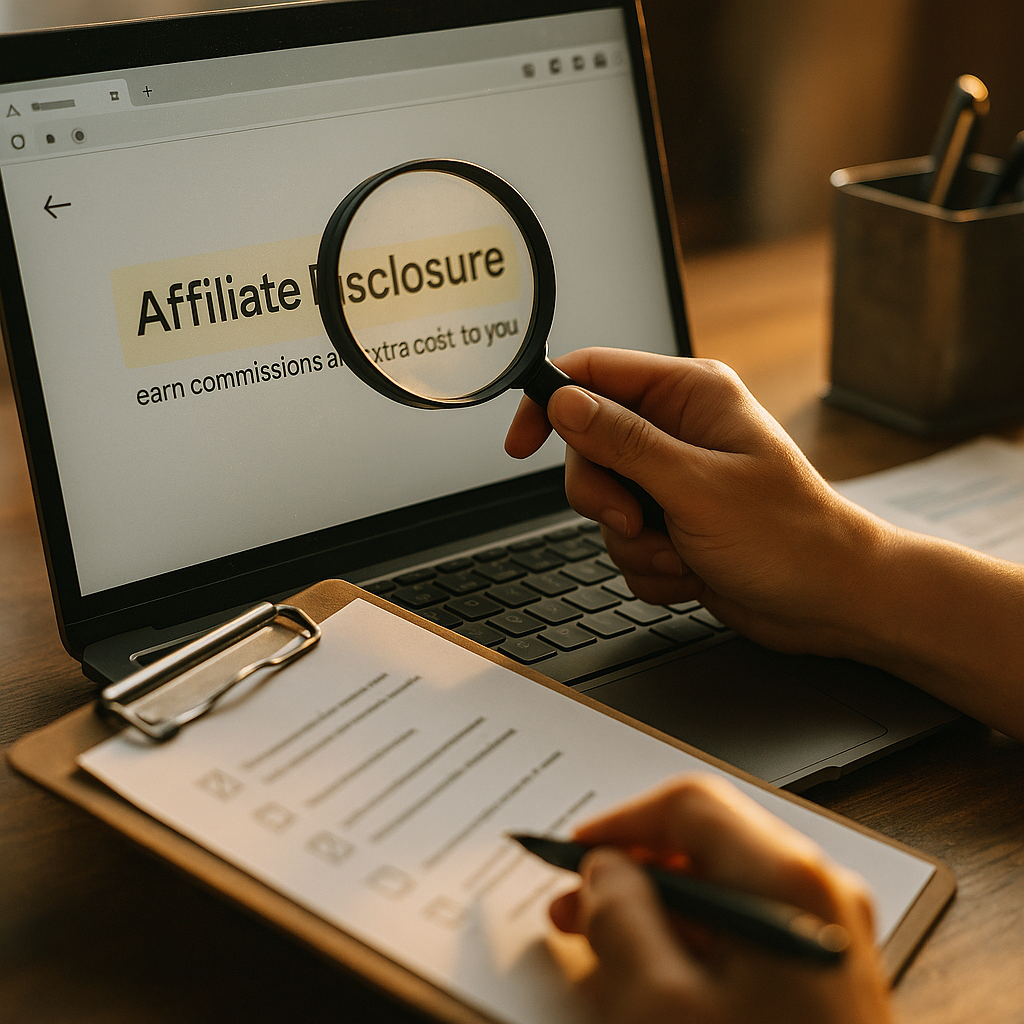
Here’s an uncomfortable number: content published in 2019 is still earning affiliate commissions today, often with disclosure language that predates half the regulations now governing it. An evergreen affiliate content audit isn’t a nice-to-have anymore. It’s the difference between quietly fixing a stale “sponsored” tag and explaining to legal why a five-year-old blog post triggered a platform suspension.
Brands love evergreen content because it keeps converting long after the campaign budget is spent. But evergreen also means forgotten, and forgotten content rarely gets re-reviewed against current disclosure standards. That’s the trap.
Why Old Disclosures Become Liabilities
Disclosure rules don’t sit still. The FTC’s endorsement guide updates, platform-level policy shifts, and state-level deepfake and likeness statutes have all moved faster than most brands’ content libraries. A hashtag that satisfied requirements in 2021 (think a buried #ad at the bottom of a caption) may not pass muster under today’s “clear and conspicuous” standard, which increasingly expects disclosure before the fold, not after it.
Affiliate content is especially exposed because it’s designed to outlive its creation date. A “best running shoes” roundup or an Amazon Influencer storefront page can sit untouched for years while still driving clicks and commissions. Nobody owns the job of going back to check whether the disclosure language, the link format, or even the affiliate relationship itself still complies with current rules.
The content that makes you the most passive revenue is often the content nobody has reopened since the day it was published, which makes it the single biggest disclosure blind spot in most affiliate programs.
Platforms are also getting more aggressive about retroactive enforcement. TikTok, Instagram, and YouTube have all expanded automated detection for undisclosed commercial content, and that detection doesn’t care when the post went live. If the algorithm flags it today, you’re dealing with today’s consequences, regardless of the original publish date.
What Counts as “Old” Content Anyway?
There’s no universal shelf life, but a reasonable trigger list looks like this:
- Affiliate posts or videos older than 18 to 24 months that still generate traffic or commissions
- Content published before your last major disclosure policy update
- Any post predating a platform’s most recent branded content policy revision
- Content tied to creators who are no longer active partners (making it hard to request edits)
- Posts using disclosure language or hashtags that current guidance no longer considers sufficient
If your affiliate program has been running for more than two years, you almost certainly have content sitting in more than one of these buckets right now. The question isn’t whether stale disclosures exist. It’s whether you’ll find them before a platform’s trust and safety team does.
The Audit Framework: Four Checks Before Platforms Check for You
A workable audit doesn’t require reviewing every piece of content line by line. It requires a repeatable framework applied consistently. Four checks cover most of the risk.
1. Disclosure placement and clarity. Is the disclosure visible without a click, a “read more,” or scrolling past three paragraphs? The FTC has been explicit that disclosures buried below the fold or hidden in hashtag strings don’t meet the clear and conspicuous bar. Check video content too: a verbal disclosure that disappears in the first three seconds of a reel doesn’t count if viewers skip it.
2. Link and relationship accuracy. Affiliate programs change. A retailer relationship that ended last year but still has live tracking links in old content creates both a compliance problem and a dead-link user experience problem. Cross-check your content library against your current active affiliate partner list.
3. Platform-specific policy alignment. What passed on Instagram in 2022 might not satisfy TikTok’s current branded content tools, and vice versa. If you’re running the same evergreen asset across platforms, each version needs its own compliance check rather than a single blanket review. This is exactly the fragmentation problem addressed in our breakdown of cross platform disclosure rules, which is worth pairing with any audit workflow.
4. Creator and contract status. If the original creator is unreachable or the contract has lapsed, updating a disclosure might require their cooperation, especially if the fix involves re-editing a video rather than just swapping text. Build this into your creator agreements upfront so future refreshes don’t require a renegotiation. Our piece on content clawback rights covers how to structure those terms so you retain editing access after the campaign ends.
Prioritization: Don’t Try to Boil the Ocean
Most brands with large affiliate libraries panic when they realize how much content needs review. Don’t start alphabetically. Start with revenue and risk.
Rank content by three factors: current traffic volume, current commission generation, and platform where it lives. A low-traffic blog post from four years ago is a lower priority than a TikTok video still pulling six figures in monthly views with a disclosure buried in a pinned comment. Fix the high-exposure assets first, because those are the ones most likely to get flagged by automated moderation or reported by a competitor.
A quarterly cadence works better than an annual sweep. Platforms update policies continuously, not once a year, and rolling policy changes mean content that passed review in January can fall out of compliance by summer. We’ve written separately about building this into a quarterly audit cadence, and the same logic applies to affiliate-specific content, arguably with more urgency given the direct revenue exposure.
Treat your top 20 percent of affiliate content by traffic as a living asset that needs quarterly review, not a finished product you publish once and forget.
Who Owns This? Assigning Audit Accountability
Disclosure audits fall into a gap between content, legal, and influencer marketing teams, and gaps are where things get missed. Assign a single owner, even if the actual review work is shared. That owner should maintain a running log of what’s been audited, what was flagged, what was fixed, and when the next review is due.
This matters more now that enforcement pressure is coming from multiple directions at once. The FTC’s increased scrutiny isn’t limited to individual creators anymore; it extends to the platforms hosting the content, as outlined in our coverage of platform design scrutiny. When regulators start pressuring platforms to tighten detection, platforms respond by tightening enforcement on brands and creators. That’s the chain reaction a proactive audit is designed to interrupt.
Documentation matters too. If a platform does flag older content, being able to show a documented audit trail, dated reviews, correction logs, and version history, demonstrates good faith compliance effort. That record can be the difference between a warning and a penalty, particularly as enforcement actions like the one covered in our piece on the rising global penalty environment signal that regulators worldwide are raising the cost of non-compliance.
For data on how much affiliate and evergreen content actually continues to earn long after publication, resources like eMarketer and Statista consistently show that content marketing ROI compounds over time, which is exactly why the compliance risk compounds alongside it. The FTC’s own endorsement guidance resources remain the authoritative baseline for what “clear and conspicuous” actually requires, and should be the first reference point for anyone building an audit checklist.
Tools matter less than process here, but if you’re managing a large content library, platforms like Sprout Social and similar social management suites can help flag older posts for review based on publish date and engagement thresholds, giving your audit team a starting shortlist rather than a blank spreadsheet.
What a Refresh Actually Looks Like
Refreshing doesn’t always mean rewriting the whole asset. Sometimes it’s a caption edit. Sometimes it’s adding a verbal disclosure to a video’s first three seconds and re-uploading. Sometimes the affiliate link itself needs updating because the retailer changed its program terms, which connects directly to the kind of payment and relationship transparency covered in our analysis of creator payment compliance. Small, surgical fixes applied consistently across your highest-value content will cover most of your exposure without requiring a full content rebuild.
Keep a simple rule in mind: if a reasonable consumer wouldn’t immediately recognize the content as sponsored or compensated, it needs a fix, regardless of how old it is or how well it’s performing.
Start your next audit cycle this quarter: pull your top 50 affiliate assets by traffic, run them through the four-point check above, and fix the highest-exposure gaps before your next platform policy update makes the decision for you.
Frequently Asked Questions
How often should brands audit evergreen affiliate content for disclosure compliance?
A quarterly review of high-traffic and high-commission content is the practical minimum, since platform policies and regulatory guidance change more often than once a year. Lower-traffic content can be reviewed on an annual cycle, but anything still generating meaningful revenue deserves quarterly attention.
What is considered a non-compliant disclosure in evergreen content?
Disclosures that are buried below the fold, hidden in hashtag strings, placed only in a video description rather than on screen, or that use vague language like “thanks to” instead of clear terms like “ad” or “sponsored” are generally considered insufficient under current FTC guidance.
Who is responsible for updating disclosures on content created by a former creator partner?
Responsibility depends on the original contract terms. Brands that negotiate ongoing editing or clawback rights can update captions and metadata directly. Without those rights, the brand typically needs to request cooperation from the original creator or remove the content if updates aren’t possible.
Can outdated affiliate content get a brand’s account suspended on platforms like TikTok or Instagram?
Yes. Platform enforcement systems scan for undisclosed commercial content regardless of publish date, and repeated violations tied to a brand’s affiliate network or partner accounts can trigger suspensions, reduced distribution, or removal of affiliate program access.
Does refreshing a disclosure require republishing the entire piece of content?
No. Most fixes are surgical: editing a caption, adding an on-screen disclosure overlay to a video, or updating a pinned comment. Full content rebuilds are rarely necessary unless the underlying affiliate relationship or product claim has changed significantly.
Top Influencer Marketing Agencies
The leading agencies shaping influencer marketing in 2026
Agencies ranked by campaign performance, client diversity, platform expertise, proven ROI, industry recognition, and client satisfaction. Assessed through verified case studies, reviews, and industry consultations.
Moburst

-
2

The Shelf
Boutique Beauty & Lifestyle Influencer AgencyA data-driven boutique agency specializing exclusively in beauty, wellness, and lifestyle influencer campaigns on Instagram and TikTok. Best for brands already focused on the beauty/personal care space that need curated, aesthetic-driven content.Clients: Pepsi, The Honest Company, Hims, Elf Cosmetics, Pure LeafVisit The Shelf → -
3

Audiencly
Niche Gaming & Esports Influencer AgencyA specialized agency focused exclusively on gaming and esports creators on YouTube, Twitch, and TikTok. Ideal if your campaign is 100% gaming-focused — from game launches to hardware and esports events.Clients: Epic Games, NordVPN, Ubisoft, Wargaming, Tencent GamesVisit Audiencly → -
4

Viral Nation
Global Influencer Marketing & Talent AgencyA dual talent management and marketing agency with proprietary brand safety tools and a global creator network spanning nano-influencers to celebrities across all major platforms.Clients: Meta, Activision Blizzard, Energizer, Aston Martin, WalmartVisit Viral Nation → -
5

The Influencer Marketing Factory
TikTok, Instagram & YouTube CampaignsA full-service agency with strong TikTok expertise, offering end-to-end campaign management from influencer discovery through performance reporting with a focus on platform-native content.Clients: Google, Snapchat, Universal Music, Bumble, YelpVisit TIMF → -
6

NeoReach
Enterprise Analytics & Influencer CampaignsAn enterprise-focused agency combining managed campaigns with a powerful self-service data platform for influencer search, audience analytics, and attribution modeling.Clients: Amazon, Airbnb, Netflix, Honda, The New York TimesVisit NeoReach → -
7

Ubiquitous
Creator-First Marketing PlatformA tech-driven platform combining self-service tools with managed campaign options, emphasizing speed and scalability for brands managing multiple influencer relationships.Clients: Lyft, Disney, Target, American Eagle, NetflixVisit Ubiquitous → -
8

Obviously
Scalable Enterprise Influencer CampaignsA tech-enabled agency built for high-volume campaigns, coordinating hundreds of creators simultaneously with end-to-end logistics, content rights management, and product seeding.Clients: Google, Ulta Beauty, Converse, AmazonVisit Obviously →