


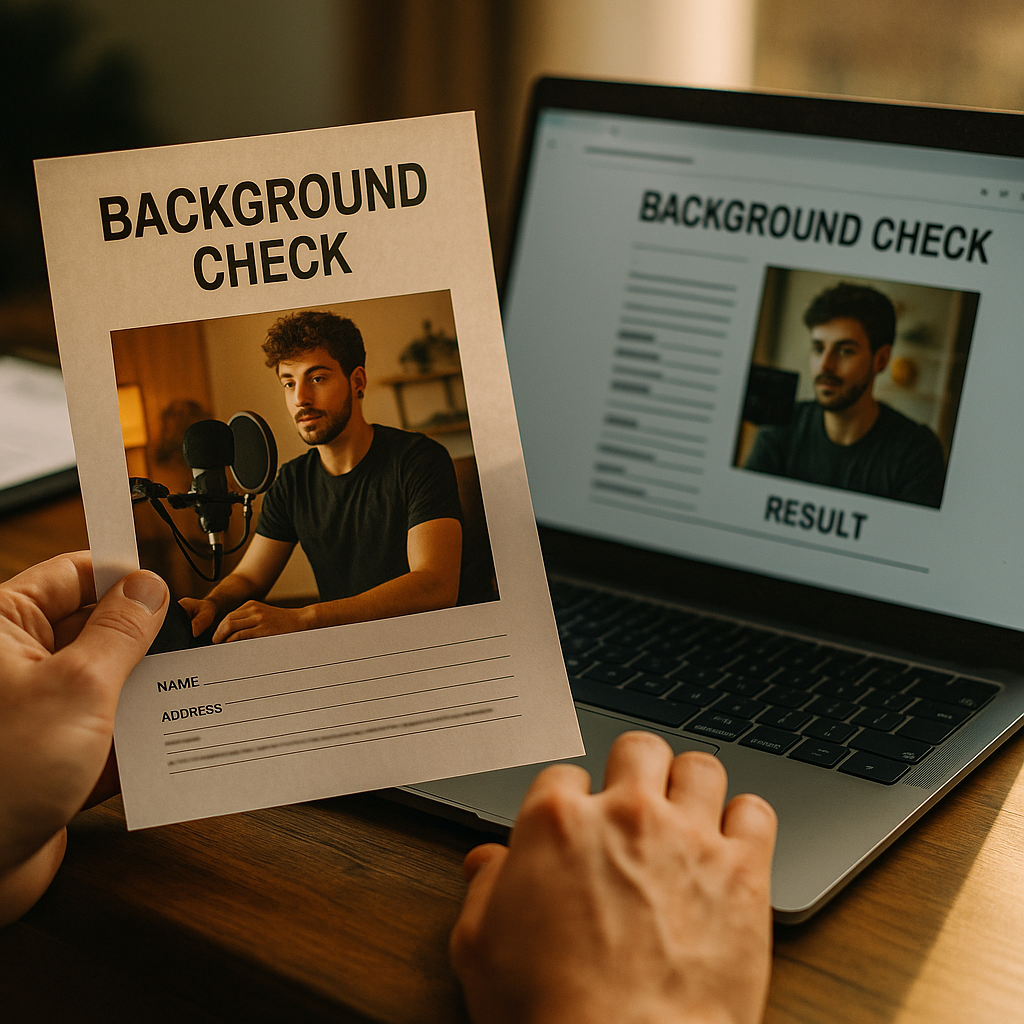
One deleted tweet from 2016 cost a six-figure campaign its launch date last quarter. The brand had vetted engagement rate, audience quality, even brand safety scores. Nobody ran a creator background check that looked past the metrics dashboard. If your vetting process stops at follower authenticity and engagement benchmarks, you’re not managing risk, you’re just measuring popularity.
Why Engagement Metrics Are a Weak Proxy for Character Risk
Engagement rate tells you whether an audience is active. It tells you nothing about whether that creator has a history of inflammatory posts, undisclosed legal trouble, or a pattern of walking back brand commitments mid-campaign. Marketing teams have gotten good at spotting bot followers and engagement pods. Most haven’t built equivalent rigor around character and conduct risk.
That gap matters more now. Creators operate as de facto spokespeople, and a single resurfaced post can trigger a PR crisis that engagement metrics never predicted. Sprout Social’s research on brand trust consistently shows audiences hold brands partially accountable for the people they pay to represent them. The metric that matters isn’t reach. It’s exposure.
A creator with a 6% engagement rate and a clean conduct history is a safer bet than one with 12% engagement and three unresolved controversies in the last eighteen months.
What a Creator Background Check Framework Actually Covers
A real framework goes well beyond a Google search the night before contract signing. Think of it as layered due diligence, each layer catching risk the one before it missed.
- Historical content audit: a scan of public posts, deleted content (where archivable), and past brand partnerships going back several years, not just the recent feed.
- Legal and regulatory screening: litigation history, FTC actions, state consumer protection complaints, and any securities-related flags if the creator touches finance content.
- Affiliation mapping: other brands, causes, political activity, or communities the creator is publicly tied to, and whether any conflict with your category or audience.
- Behavioral pattern review: has this person had public disputes with past brand partners? Walked off campaigns? Breached NDAs or exclusivity terms?
- Financial and payment compliance check: confirming the creator is operating as a legitimate business entity, not a flag risk for payment or tax exposure.
Each layer should produce a documented, dated record. Not a gut feeling from a junior account manager who “checked their Instagram.” If your legal team ever needs to show due diligence after a crisis, a spreadsheet of screenshots won’t hold up. A documented framework will.
Where Legal Risk Hides
Finance and health creators carry the highest regulatory stakes. A creator promoting a crypto token or supplement without proper disclosure isn’t just a brand safety problem, it’s a liability problem. Our earlier coverage of finfluencer compliance rules walks through how regulators are increasingly treating brands as co-liable for a creator’s past and present disclosure failures. A background check framework should flag any creator with a history of regulatory warnings before the contract is signed, not after the FTC sends a letter.
Payment structure matters too. Creators who’ve bounced between agencies, used shell entities, or had unresolved 1099 disputes can expose your finance team to downstream compliance headaches. The overlap between creator payment compliance and character vetting is bigger than most teams realize.
Building the Screening Workflow Without Slowing Down Campaigns
Marketers resist thorough vetting because it feels like it adds weeks to a timeline already running tight. Fair concern. But a tiered approach solves this.
- Tier 1 (automated, 24 to 48 hours): AI-assisted content scanning tools that flag past controversial posts, sentiment shifts, and keyword risks across a creator’s historical output.
- Tier 2 (manual review, 3 to 5 days): a human analyst reviews flagged items, checks legal databases, and confirms affiliation conflicts.
- Tier 3 (deep dive, reserved for high-spend partnerships): background check vendors, reference calls with past brand partners, and legal counsel review for any creator attached to a six-figure or multi-year deal.
Most creators clear Tier 1 and Tier 2 without issue. Reserve Tier 3 for the partnerships where exposure is highest, long-term ambassadorships, finance or health categories, or any creator with a large youth-skewing audience. If you’re already running AI creator matching tools, many now include basic content risk scoring as a built-in layer, which can feed directly into your Tier 1 screen.
The Role of AI Content Scanning Tools
Tools that scan years of historical posts for sentiment volatility, hate speech proximity, or political volatility have gotten dramatically better. They’re not perfect, false positives happen, especially with sarcasm or quoted content. But they compress what used to be a 20 hour manual review into a same-day flag report. Treat the AI output as a starting point for human judgment, not a final verdict. A flagged post from eight years ago when a creator was nineteen reads very differently than one from last month.
Deepfakes and Impersonation Add a New Layer
Character risk used to mean “did this person say something bad.” Now it also means “did someone impersonate this person, or did this person’s likeness get used in a way they never approved.” Brands vetting a creator need to also confirm the creator has control over their own likeness and hasn’t been a repeat target of impersonation scams that could confuse audiences about authenticity. Our breakdown of creator impersonation scams shows how quickly a lookalike account can muddy a legitimate campaign’s credibility, and background checks should confirm verified account ownership as a baseline step.
Separately, state-level likeness laws are tightening. If a creator has had disputes over unauthorized AI likeness use, that’s worth knowing before you build a campaign around their image. Review our analysis of deepfake likeness laws for how consent documentation factors into this.
What to Put in the Contract Once Vetting Is Done
A clean background check isn’t a permanent guarantee. Behavior can change mid-campaign. That’s why vetting and contract language need to work together.
- Morality and conduct clauses with clear, specific triggers (not vague “bring the brand into disrepute” language that’s hard to enforce).
- A clawback mechanism tied to post-signing conduct discoveries. Our guide to content clawback provisions covers how to structure this without souring the relationship from day one.
- Indemnification language that accounts for AI-related liability, especially if the creator uses AI tools in their own content production. See our piece on indemnification clauses for sample structures.
- Insurance backstops for high-spend partnerships. Influencer marketing insurance is increasingly standard for seven-figure ambassador deals.
Vetting catches the risk you can see today. Contract structure protects you from the risk that emerges tomorrow.
How Often Should You Re-Vet an Active Creator Partner?
This is the step most brands skip entirely. A background check at onboarding is a snapshot, not a subscription. Build a cadence: quarterly for ambassador-level relationships, at each renewal for one-off or campaign-based deals. Quarterly compliance audits aren’t just for disclosure language, they’re a natural checkpoint to re-run a lighter version of the Tier 1 content scan. According to eMarketer’s influencer marketing research, brands running multi-year ambassador programs report the highest rate of mid-contract conduct surprises precisely because initial vetting was never repeated.
A quick gut check: if you wouldn’t be comfortable explaining this creator’s last twelve months of public behavior to your CMO on short notice, it’s time to re-run the screen.
FAQs
What is a creator background check framework?
It’s a structured, repeatable process for evaluating a creator’s legal history, past content, affiliations, and behavioral patterns before and during a brand partnership, going beyond engagement and audience authenticity metrics.
How is this different from a brand safety score?
Brand safety scores typically assess content categories and audience quality algorithmically. A background check framework adds legal screening, historical content review, and documented human judgment, which algorithmic scores generally don’t cover.
How long should creator vetting take?
Standard partnerships can clear a tiered review in under a week using automated content scanning plus a manual flag review. Reserve deeper, multi-week vetting for high-spend or long-term ambassador deals.
Should nano and micro creators go through the same vetting?
Not at the same intensity. Apply automated Tier 1 screening broadly, since it’s low cost, but reserve manual and legal-deep review for creators tied to higher spend, finance or health categories, or long-term contracts.
Who should own the background check process internally?
Ideally a joint function between legal, compliance, and the influencer marketing team, with legal setting the risk thresholds and marketing executing the screening workflow.
Build the vetting layer once, document it, and apply it consistently. A documented framework is cheaper than a canceled campaign, and far cheaper than the headline that follows one.
FAQs
What is a creator background check framework?
It’s a structured, repeatable process for evaluating a creator’s legal history, past content, affiliations, and behavioral patterns before and during a brand partnership, going beyond engagement and audience authenticity metrics.
How is this different from a brand safety score?
Brand safety scores typically assess content categories and audience quality algorithmically. A background check framework adds legal screening, historical content review, and documented human judgment, which algorithmic scores generally don’t cover.
How long should creator vetting take?
Standard partnerships can clear a tiered review in under a week using automated content scanning plus a manual flag review. Reserve deeper, multi-week vetting for high-spend or long-term ambassador deals.
Should nano and micro creators go through the same vetting?
Not at the same intensity. Apply automated Tier 1 screening broadly, since it’s low cost, but reserve manual and legal-deep review for creators tied to higher spend, finance or health categories, or long-term contracts.
Who should own the background check process internally?
Ideally a joint function between legal, compliance, and the influencer marketing team, with legal setting the risk thresholds and marketing executing the screening workflow.
Top Influencer Marketing Agencies
The leading agencies shaping influencer marketing in 2026
Agencies ranked by campaign performance, client diversity, platform expertise, proven ROI, industry recognition, and client satisfaction. Assessed through verified case studies, reviews, and industry consultations.
Moburst

-
2

The Shelf
Boutique Beauty & Lifestyle Influencer AgencyA data-driven boutique agency specializing exclusively in beauty, wellness, and lifestyle influencer campaigns on Instagram and TikTok. Best for brands already focused on the beauty/personal care space that need curated, aesthetic-driven content.Clients: Pepsi, The Honest Company, Hims, Elf Cosmetics, Pure LeafVisit The Shelf → -
3

Audiencly
Niche Gaming & Esports Influencer AgencyA specialized agency focused exclusively on gaming and esports creators on YouTube, Twitch, and TikTok. Ideal if your campaign is 100% gaming-focused — from game launches to hardware and esports events.Clients: Epic Games, NordVPN, Ubisoft, Wargaming, Tencent GamesVisit Audiencly → -
4

Viral Nation
Global Influencer Marketing & Talent AgencyA dual talent management and marketing agency with proprietary brand safety tools and a global creator network spanning nano-influencers to celebrities across all major platforms.Clients: Meta, Activision Blizzard, Energizer, Aston Martin, WalmartVisit Viral Nation → -
5

The Influencer Marketing Factory
TikTok, Instagram & YouTube CampaignsA full-service agency with strong TikTok expertise, offering end-to-end campaign management from influencer discovery through performance reporting with a focus on platform-native content.Clients: Google, Snapchat, Universal Music, Bumble, YelpVisit TIMF → -
6

NeoReach
Enterprise Analytics & Influencer CampaignsAn enterprise-focused agency combining managed campaigns with a powerful self-service data platform for influencer search, audience analytics, and attribution modeling.Clients: Amazon, Airbnb, Netflix, Honda, The New York TimesVisit NeoReach → -
7

Ubiquitous
Creator-First Marketing PlatformA tech-driven platform combining self-service tools with managed campaign options, emphasizing speed and scalability for brands managing multiple influencer relationships.Clients: Lyft, Disney, Target, American Eagle, NetflixVisit Ubiquitous → -
8

Obviously
Scalable Enterprise Influencer CampaignsA tech-enabled agency built for high-volume campaigns, coordinating hundreds of creators simultaneously with end-to-end logistics, content rights management, and product seeding.Clients: Google, Ulta Beauty, Converse, AmazonVisit Obviously →