


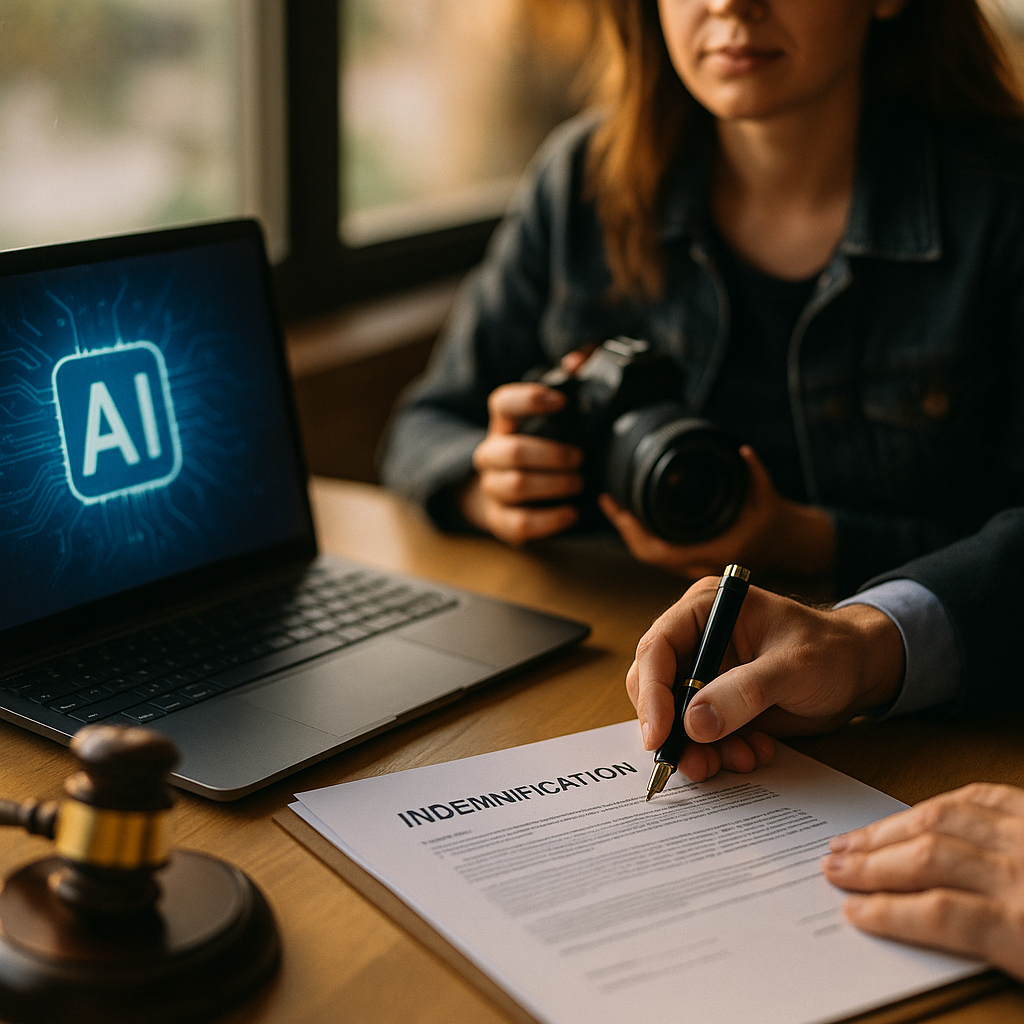
One unlabeled AI generated product claim in a creator’s video can trigger an FTC complaint, a platform strike, and a six figure recall bill, and your brand indemnification language was written for a world where creators just filmed themselves talking into a ring light. Creator contract indemnification clauses built before generative AI tools became standard in creator workflows are now the single biggest blind spot in influencer risk management. If your legal team hasn’t rewritten them this cycle, you’re carrying liability you don’t even know exists.
Why the Old Indemnification Language Doesn’t Hold Up
Most influencer agreements still in circulation were drafted around a simple premise: the creator makes the content, the creator owns the risk of what they say, and the brand gets indemnified if the creator defames someone, infringes copyright, or makes an unsubstantiated claim. That logic assumed a human being wrote the script, picked the music, and shot the footage.
Now creators use AI voice cloning tools to dub videos into other languages, generative video editors to insert product shots, and AI script assistants to draft hooks and captions. Each of those tools introduces a third party licensing chain, a training data provenance question, and a new category of output the creator didn’t fully originate. A standard indemnification clause that only covers “content created by Creator” has a gap the size of a freight truck once AI tools sit in the middle of production.
If your indemnification clause doesn’t name AI tools, AI generated likeness, or AI training data as covered risk categories, it probably doesn’t cover them at all.
What Counts as “AI Generated Content” in a Contract?
Brands and creators rarely agree on this definition, which is exactly why it needs to be spelled out contractually rather than assumed. A reasonable working definition for contract purposes should include:
- Any video, audio, or image material where generative AI tools produced or substantially altered the final output
- AI voice cloning or synthetic narration layered onto creator content, a growing concern covered in our breakdown of AI voice clone disclosure requirements
- AI generated backgrounds, product mockups, or visual elements inserted into otherwise human filmed footage
- Chatbot or AI assistant generated copy used in captions, scripts, or product descriptions
- Any content where an AI agent, rather than the creator, selected or recommended the product being featured, an emerging risk explored in our piece on agentic AI shopping assistants
Without this taxonomy in the contract, you’re negotiating indemnification scope after a problem surfaces, which is the worst possible time.
The Three Liability Scenarios Brands Actually Face
Indemnification clauses fail not because lawyers are careless, but because they’re drafted against hypothetical risks instead of the specific failure modes that actually happen in creator campaigns. Here are the three that show up repeatedly.
Scenario One: Undisclosed AI Manipulation
A creator uses an AI tool to generate a “before and after” transformation that never actually happened, then posts it under a brand hashtag. The FTC has been explicit that deceptive AI generated endorsements carry the same enforcement risk as fabricated testimonials, something we detailed in our coverage of the FTC’s fake ads notice. If your contract doesn’t require disclosure of AI manipulation and doesn’t shift liability back to the creator for failing to disclose, the brand absorbs the regulatory exposure by default.
Scenario Two: Biometric and Likeness Claims
AI tools that alter a creator’s face, voice, or body in user generated content increasingly trigger state biometric privacy statutes, not just advertising law. We’ve mapped this exposure in depth in our analysis of AI altered UGC biometric laws, and the short version is that a brand that reposts or amplifies AI altered creator content can become a co-defendant even when the creator made the edit independently.
Scenario Three: Third Party AI Vendor Failures
Creators increasingly license AI tools from third party vendors whose terms of service the brand never sees. If that vendor’s model was trained on copyrighted material, or if the tool itself mishandles data in violation of a regulation like GDPR, the liability chain runs through the creator back to the brand. This is the same provenance problem we flagged in our piece on AI creator matching platforms and data provenance gaps. Your indemnification clause needs a mechanism that lets you push liability down that chain rather than absorbing it at the brand level.
Drafting Language That Actually Protects the Brand
Generic indemnification boilerplate (“Creator shall indemnify Brand against all claims arising from Content”) is functionally useless once AI tools enter the workflow, because “Content” was never defined to include AI generated or AI modified material. Fix this with specificity, not volume. A few clauses worth building into every creator agreement now:
- AI tool disclosure requirement. Creator must disclose which AI tools were used in production, including voice, video, and script generation tools, before content goes live.
- Representation and warranty on AI inputs. Creator warrants that any AI tool used was properly licensed and that no copyrighted material was used to train or prompt the tool without authorization.
- Carve out for brand supplied AI tools. If the brand mandates a specific AI tool or platform, indemnification flows the other direction. The brand, not the creator, should bear liability for defects in tools it required the creator to use.
- Survival clause specific to AI claims. Standard survival periods (often one to two years) may be too short for AI related claims, since biometric and copyright suits can surface years after content was published.
- Insurance requirement tied to AI output. Require creators above a certain deal size to carry media liability coverage that explicitly includes AI generated content, not just general content liability.
That last point matters more than most brands realize. Virtual and AI augmented creator campaigns are already pushing insurers to rewrite policy language, a trend we cover in our piece on virtual influencer liability insurance. If your creator’s policy excludes AI generated content, your indemnification clause is backed by nothing.
Scaling This Across Nano and Micro Creator Rosters
Enterprise brands running campaigns with a handful of macro creators can negotiate custom indemnification language deal by deal. That approach collapses the moment you’re running programs with hundreds of nano or micro creators, where individual contract negotiation isn’t operationally feasible.
The fix is standardizing AI liability language into your master service agreement template and requiring click through acceptance at onboarding, similar to the scalable compliance model described in our guide to nano creator contracts at scale. Build the AI disclosure and indemnification terms into the template once, then let your creator management platform enforce acceptance automatically. Manual review doesn’t scale past a few dozen creators, and AI liability clauses are exactly the kind of thing legal teams miss when they’re moving fast through high volume onboarding.
A standardized AI liability clause enforced at onboarding protects a 500 creator roster better than a perfectly worded clause negotiated with five.
This also connects to your broader compliance audit cadence. If you’re already running quarterly reviews similar to the framework in our TikTok compliance review piece, add AI disclosure compliance as a standing audit line item rather than treating it as a separate workstream.
Regulatory Pressure Is Accelerating Faster Than Contract Updates
Multiple jurisdictions are moving on AI disclosure simultaneously, and brand legal teams are struggling to keep pace. The EU’s transparency requirements, covered in our rundown of EU AI transparency rules, require creator approval workflows that most indemnification clauses don’t yet account for. In the US, a growing patchwork of state AI disclosure laws means a single national creator contract template may not satisfy requirements in every state where content gets viewed.
According to FTC guidance, endorsement disclosure obligations apply regardless of whether a human or an algorithm generated the claim, which means ignorance of how the content was made is not a defense. Brands that treat AI disclosure as a creator side problem rather than a contractual obligation are the ones that end up named directly in enforcement actions.
Industry data tracked by eMarketer shows generative AI adoption in creator content production climbing sharply, which means the volume of unaddressed contracts is growing every quarter you wait. Platforms like Meta Business and TikTok for Business have also begun tightening their own AI labeling requirements, which creates a second layer of platform level risk sitting on top of regulatory exposure. Your contract indemnification language needs to reference platform policy compliance as a standalone warranty, not just lump it in with general legal compliance.
What to Do This Quarter
Pull every active creator contract and run a single test: does the indemnification clause mention AI tools, AI generated likeness, or AI training data by name? If it doesn’t, it’s not protecting you from the risk that’s already live in your campaigns. Get your legal team to add an AI liability rider to active agreements and bake the language into every new contract template before your next onboarding cycle.
Frequently Asked Questions
Do standard influencer contracts already cover AI generated content liability?
Most do not. Standard indemnification clauses were written to cover human authored content and rarely define “content” broadly enough to include AI generated video, audio, or images, leaving brands exposed to claims the clause never anticipated.
Who is liable if a creator uses an AI tool without disclosing it?
Liability can fall on both parties depending on contract language. Without a clause requiring AI disclosure and shifting responsibility to the creator for non disclosure, the brand often ends up as the deeper pocket in regulatory or civil claims.
Should brands require creators to carry AI specific liability insurance?
For higher value deals, yes. General media liability policies frequently exclude AI generated content, so brands should confirm coverage explicitly names AI tools and generated output rather than assuming it’s included.
How often should indemnification clauses be reviewed given how fast AI tools change?
At minimum annually, paired with quarterly compliance audits. Regulatory guidance and platform policies on AI disclosure are shifting quickly enough that contract language written even a year ago may already be outdated.
Can brands hold third party AI vendors liable instead of the creator?
Only if the contract builds in a mechanism to do so. Without a clause addressing third party AI vendor failures, the liability chain typically stops at the creator and then flows back to the brand.
Visible FAQ Section (HTML)
Frequently Asked Questions
Do standard influencer contracts already cover AI generated content liability?
Most do not. Standard indemnification clauses were written to cover human authored content and rarely define “content” broadly enough to include AI generated video, audio, or images, leaving brands exposed to claims the clause never anticipated.
Who is liable if a creator uses an AI tool without disclosing it?
Liability can fall on both parties depending on contract language. Without a clause requiring AI disclosure and shifting responsibility to the creator for non disclosure, the brand often ends up as the deeper pocket in regulatory or civil claims.
Should brands require creators to carry AI specific liability insurance?
For higher value deals, yes. General media liability policies frequently exclude AI generated content, so brands should confirm coverage explicitly names AI tools and generated output rather than assuming it’s included.
How often should indemnification clauses be reviewed given how fast AI tools change?
At minimum annually, paired with quarterly compliance audits. Regulatory guidance and platform policies on AI disclosure are shifting quickly enough that contract language written even a year ago may already be outdated.
Can brands hold third party AI vendors liable instead of the creator?
Only if the contract builds in a mechanism to do so. Without a clause addressing third party AI vendor failures, the liability chain typically stops at the creator and then flows back to the brand.
Top Influencer Marketing Agencies
The leading agencies shaping influencer marketing in 2026
Agencies ranked by campaign performance, client diversity, platform expertise, proven ROI, industry recognition, and client satisfaction. Assessed through verified case studies, reviews, and industry consultations.
Moburst

-
2

The Shelf
Boutique Beauty & Lifestyle Influencer AgencyA data-driven boutique agency specializing exclusively in beauty, wellness, and lifestyle influencer campaigns on Instagram and TikTok. Best for brands already focused on the beauty/personal care space that need curated, aesthetic-driven content.Clients: Pepsi, The Honest Company, Hims, Elf Cosmetics, Pure LeafVisit The Shelf → -
3

Audiencly
Niche Gaming & Esports Influencer AgencyA specialized agency focused exclusively on gaming and esports creators on YouTube, Twitch, and TikTok. Ideal if your campaign is 100% gaming-focused — from game launches to hardware and esports events.Clients: Epic Games, NordVPN, Ubisoft, Wargaming, Tencent GamesVisit Audiencly → -
4

Viral Nation
Global Influencer Marketing & Talent AgencyA dual talent management and marketing agency with proprietary brand safety tools and a global creator network spanning nano-influencers to celebrities across all major platforms.Clients: Meta, Activision Blizzard, Energizer, Aston Martin, WalmartVisit Viral Nation → -
5

The Influencer Marketing Factory
TikTok, Instagram & YouTube CampaignsA full-service agency with strong TikTok expertise, offering end-to-end campaign management from influencer discovery through performance reporting with a focus on platform-native content.Clients: Google, Snapchat, Universal Music, Bumble, YelpVisit TIMF → -
6

NeoReach
Enterprise Analytics & Influencer CampaignsAn enterprise-focused agency combining managed campaigns with a powerful self-service data platform for influencer search, audience analytics, and attribution modeling.Clients: Amazon, Airbnb, Netflix, Honda, The New York TimesVisit NeoReach → -
7

Ubiquitous
Creator-First Marketing PlatformA tech-driven platform combining self-service tools with managed campaign options, emphasizing speed and scalability for brands managing multiple influencer relationships.Clients: Lyft, Disney, Target, American Eagle, NetflixVisit Ubiquitous → -
8

Obviously
Scalable Enterprise Influencer CampaignsA tech-enabled agency built for high-volume campaigns, coordinating hundreds of creators simultaneously with end-to-end logistics, content rights management, and product seeding.Clients: Google, Ulta Beauty, Converse, AmazonVisit Obviously →