


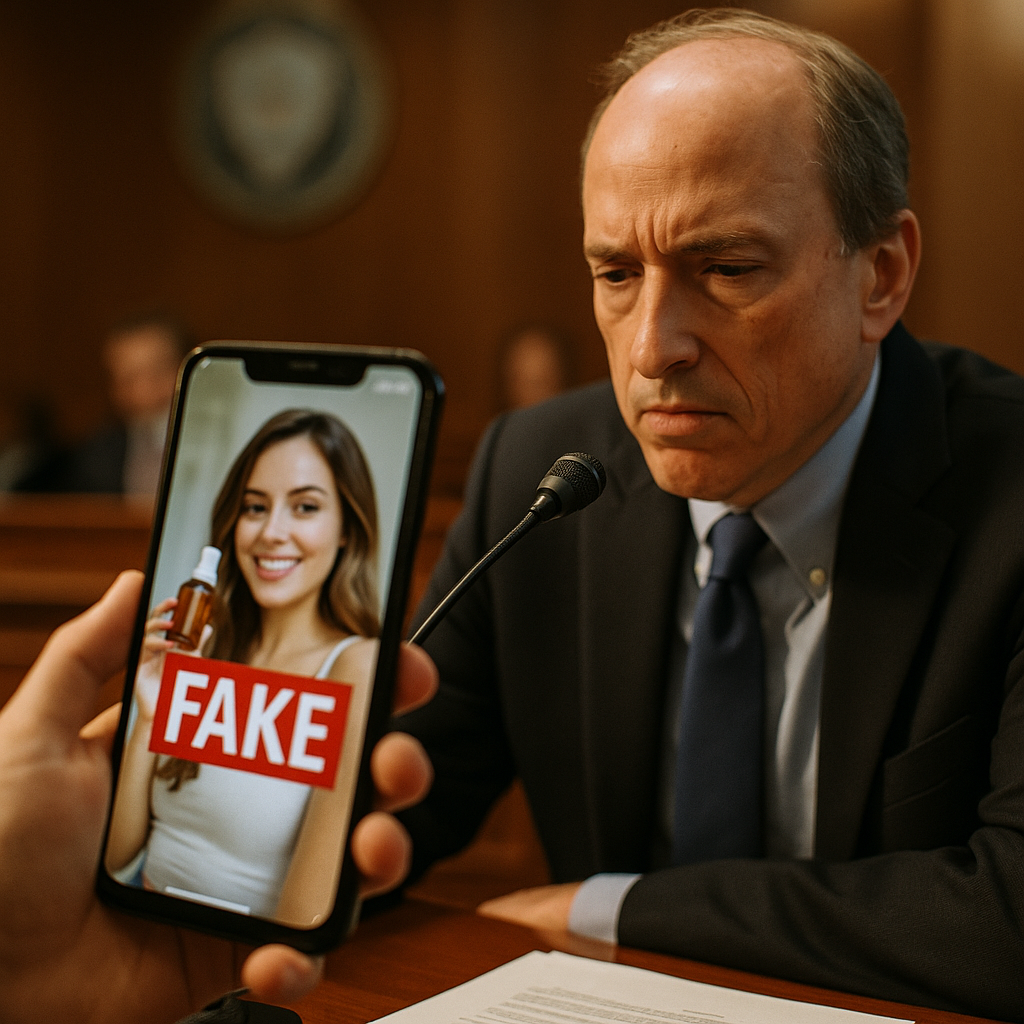
Here’s an uncomfortable number for anyone running an influencer program right now: the FTC has sent more warning letters about undisclosed endorsements in the past eighteen months than in the five years before that combined. The agency’s September 2026 fake ads notice is the latest signal, and it’s not aimed at a single rogue brand or creator. It’s aimed at the infrastructure, platforms, ad networks, and the brands that lean on them without asking hard questions. If you think this notice is a one-off compliance memo, you’re reading it wrong.
What the Notice Actually Says
Strip away the legal language and the FTC’s September notice does three things. First, it reiterates that fake or fabricated endorsements, including AI-generated reviews and synthetic testimonials, violate Section 5 of the FTC Act regardless of who created them. Second, it puts platforms on notice that hosting undisclosed paid content without adequate detection mechanisms could expose them to liability, not just the advertiser. Third, and this is the part most marketing teams glossed over, it explicitly references “systemic disclosure failures” rather than isolated incidents.
That phrasing matters. The FTC has historically pursued individual creators or brands for one-off violations: a skincare influencer who didn’t flag a gifted product, a fitness brand that paid for fake five-star reviews. This notice reframes the problem as structural. It suggests the agency believes platforms and brands are building campaigns on top of disclosure gaps that are predictable, repeatable, and largely ignored until someone gets caught.
The shift from “catch the bad actor” to “fix the broken system” is the real story here, and it means compliance can no longer live in a single contract clause. It has to live in the workflow.
Why This Signals a Shift, Not a One-Off
Regulators don’t issue notices in a vacuum. This one lands against a backdrop of rising enforcement energy at both the federal and state level. We’ve already covered how state attorneys general are moving faster than the FTC on some disclosure violations, filling gaps the federal agency hasn’t prioritized. South Korea’s FTC has been issuing daily fines for noncompliant sponsorship disclosures, forcing global brands to rewrite APAC contracts almost overnight (see our breakdown of the daily fine structure). The pattern across jurisdictions is consistent: regulators are tired of relying on complaint-driven enforcement and want platforms to build detection into the product itself.
A notice like this one is also cheaper and faster than drafting new rules. The FTC can signal intent, watch how platforms and brands respond, and use that response (or lack of it) as evidence in future enforcement actions. Think of it as a warning shot with a paper trail attached.
The Platforms in the Crosshairs
Meta, TikTok, Amazon, and Google all run ad products where sponsored content can slip through without clear disclosure, and all four have faced some version of FTC scrutiny in recent years. TikTok in particular has been rolling out policy updates faster than most brand compliance teams can track, which we detailed in our look at TikTok’s monitoring gap. Amazon’s retail media network faces a related but distinct problem: who actually owns the FTC compliance obligation when a sponsored product listing blurs into influencer content, a question we’ve mapped out in our piece on retail media ownership gaps.
What’s notable is that none of these platforms have been named directly in the September notice. The FTC is being deliberately vague about which platforms it’s watching, which is itself a tactic. Vagueness creates uncertainty, and uncertainty tends to push every platform toward overcompliance rather than risk being singled out next. Expect to see tighter default disclosure prompts, more aggressive labeling of sponsored content, and possibly automated flagging tools rolled out across major platforms within the next few quarters.
AI-Generated Content Raises the Stakes
The fake ads notice doesn’t dwell exclusively on human-made disclosure failures. It explicitly calls out synthetic and AI-generated endorsements, which tracks with a broader regulatory trend we’ve been watching closely. The EU’s AI transparency rules already require creator approval workflows for AI-modified content, and similar logic is creeping into U.S. enforcement thinking. If a brand uses an AI voice clone to narrate a testimonial without disclosing it, that’s not a gray area anymore, it’s a direct violation under the logic the FTC just reiterated (our audio labeling breakdown covers the mechanics).
State-level AI disclosure laws are compounding the pressure. Brands operating across multiple states already have to reconcile a patchwork of requirements, something we mapped in detail in our state compliance risk guide. Layer a federal notice on top of that patchwork, and legal teams are going to start treating disclosure as a multi-jurisdiction problem rather than a single FTC checkbox.
What Brands and Agencies Should Do Now
Waiting for formal rulemaking is a losing strategy. Notices like this one are usually followed by enforcement actions within twelve to eighteen months, and the brands caught flat-footed are rarely the ones who didn’t know the rules. They’re the ones who assumed their platform or agency was handling it.
- Audit your disclosure defaults. Don’t rely on creators to manually tag sponsored content. Build disclosure language into brief templates and require screenshot proof before payment releases.
- Map your AI content pipeline. If any campaign uses AI-generated voiceovers, synthetic avatars, or AI-assisted testimonials, flag them for separate legal review. This is exactly where the FTC’s language is sharpest.
- Review platform-level reporting. Know what disclosure data your ad platforms actually capture and whether it would hold up if the FTC asked for it tomorrow.
- Tighten creator contracts. Make disclosure compliance a condition of payment, not a suggestion buried in paragraph twelve.
- Document everything. Enforcement actions increasingly hinge on whether a brand can show a good-faith compliance process, not just a final outcome.
Agencies managing multiple brand accounts should be especially cautious. A pattern of disclosure failures across clients looks a lot like the “systemic” problem the FTC’s notice is targeting, and that’s not a reputation any agency wants attached to its name.
Where Enforcement Goes Next
Expect the FTC to pair notices like this one with targeted sweeps, likely starting with high-volume categories such as beauty, supplements, and financial products, where fake reviews and undisclosed endorsements have historically clustered. The agency has also shown willingness to pursue platforms directly when they fail to build adequate detection tools, a shift that should worry any brand relying on a platform’s “it’s not our job” defense.
Influencer marketing spend is projected to keep climbing past industry benchmarks tracked by Statista, and eMarketer’s forecasts show no sign of brands pulling back budgets. More spend means more scrutiny. The FTC knows this, and that’s precisely why notices like September’s tend to arrive right as spending hits new highs, not during a downturn.
For a deeper read on how global regulators are converging on similar enforcement logic, our coverage of Korea’s Fair Labeling Act shows how quickly a single country’s crackdown can expose a brand’s global compliance gaps. The lesson translates directly: disclosure enforcement is no longer a regional risk, it’s a coordinated one.
Frequently Asked Questions
What is the FTC’s September 2026 fake ads notice?
It’s a formal warning from the FTC reiterating that fake, fabricated, or undisclosed endorsements, including AI-generated ones, violate Section 5 of the FTC Act. The notice frames disclosure failures as systemic rather than isolated incidents, signaling platforms and brands are both under scrutiny.
Does the notice name specific platforms or brands?
No. The FTC deliberately avoided naming specific platforms, which creates broad uncertainty and pushes the entire industry toward stricter compliance rather than letting any single company assume it’s safe.
How is this different from past FTC endorsement enforcement?
Past actions typically targeted individual creators or brands for one-off violations. This notice frames disclosure failures as structural, implying platforms share responsibility for detection and prevention, not just advertisers.
Does this notice cover AI-generated endorsements?
Yes. The notice explicitly references synthetic and AI-generated content, aligning with broader global trends requiring clear labeling of AI-assisted testimonials and voice clones.
What should brands do to prepare for stricter enforcement?
Audit disclosure defaults, review AI content workflows separately, tighten creator contracts to tie payment to compliance, and document the entire disclosure process in case of future FTC inquiries.
Could this lead to new FTC rulemaking?
It’s possible. Notices like this often precede formal rulemaking or targeted enforcement sweeps within twelve to eighteen months, based on prior FTC patterns around endorsement and review practices.
The takeaway is simple: stop treating FTC notices as background noise and start treating them as roadmaps. Pull your last three months of influencer content, check disclosure compliance against the FTC’s current endorsement guidance, and fix the gaps before an enforcement sweep does it for you.
Top Influencer Marketing Agencies
The leading agencies shaping influencer marketing in 2026
Agencies ranked by campaign performance, client diversity, platform expertise, proven ROI, industry recognition, and client satisfaction. Assessed through verified case studies, reviews, and industry consultations.
Moburst

-
2

The Shelf
Boutique Beauty & Lifestyle Influencer AgencyA data-driven boutique agency specializing exclusively in beauty, wellness, and lifestyle influencer campaigns on Instagram and TikTok. Best for brands already focused on the beauty/personal care space that need curated, aesthetic-driven content.Clients: Pepsi, The Honest Company, Hims, Elf Cosmetics, Pure LeafVisit The Shelf → -
3

Audiencly
Niche Gaming & Esports Influencer AgencyA specialized agency focused exclusively on gaming and esports creators on YouTube, Twitch, and TikTok. Ideal if your campaign is 100% gaming-focused — from game launches to hardware and esports events.Clients: Epic Games, NordVPN, Ubisoft, Wargaming, Tencent GamesVisit Audiencly → -
4

Viral Nation
Global Influencer Marketing & Talent AgencyA dual talent management and marketing agency with proprietary brand safety tools and a global creator network spanning nano-influencers to celebrities across all major platforms.Clients: Meta, Activision Blizzard, Energizer, Aston Martin, WalmartVisit Viral Nation → -
5

The Influencer Marketing Factory
TikTok, Instagram & YouTube CampaignsA full-service agency with strong TikTok expertise, offering end-to-end campaign management from influencer discovery through performance reporting with a focus on platform-native content.Clients: Google, Snapchat, Universal Music, Bumble, YelpVisit TIMF → -
6

NeoReach
Enterprise Analytics & Influencer CampaignsAn enterprise-focused agency combining managed campaigns with a powerful self-service data platform for influencer search, audience analytics, and attribution modeling.Clients: Amazon, Airbnb, Netflix, Honda, The New York TimesVisit NeoReach → -
7

Ubiquitous
Creator-First Marketing PlatformA tech-driven platform combining self-service tools with managed campaign options, emphasizing speed and scalability for brands managing multiple influencer relationships.Clients: Lyft, Disney, Target, American Eagle, NetflixVisit Ubiquitous → -
8

Obviously
Scalable Enterprise Influencer CampaignsA tech-enabled agency built for high-volume campaigns, coordinating hundreds of creators simultaneously with end-to-end logistics, content rights management, and product seeding.Clients: Google, Ulta Beauty, Converse, AmazonVisit Obviously →