


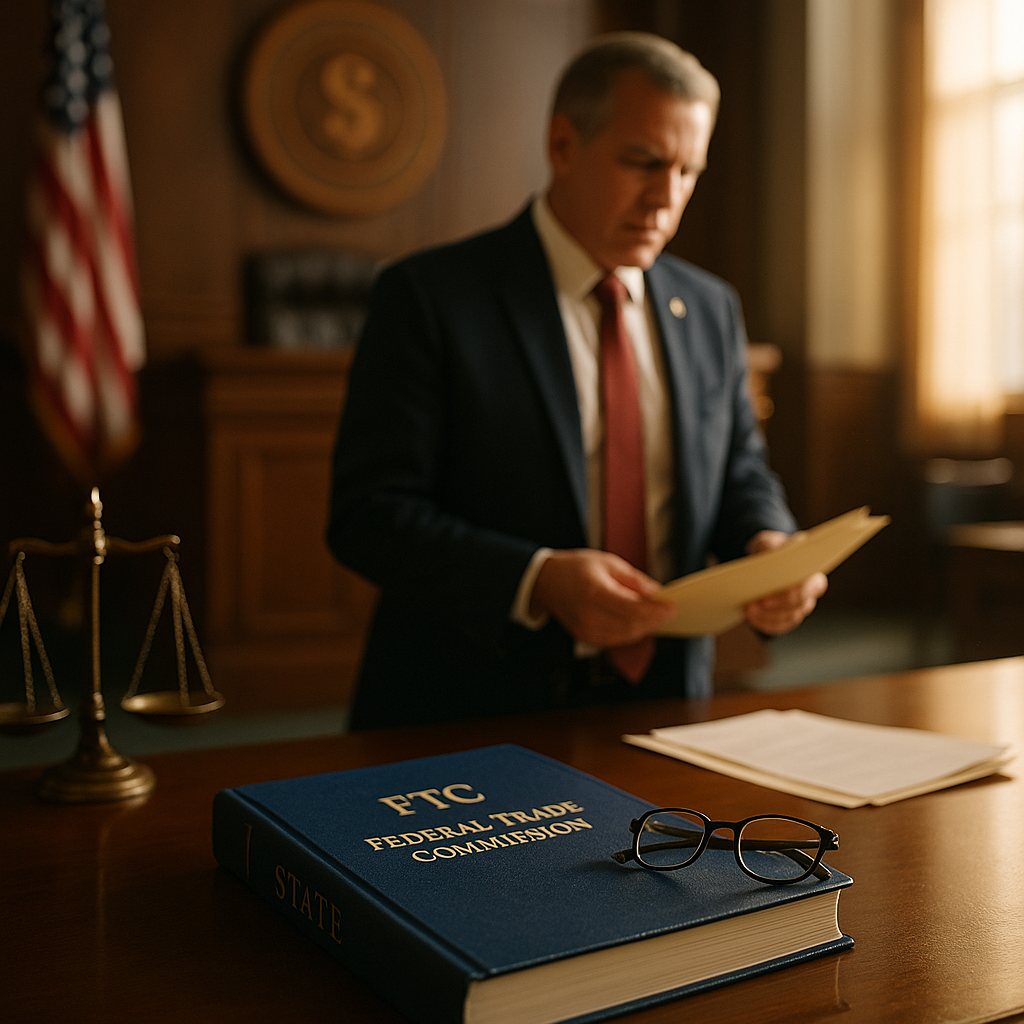
Forty state attorneys general. One settlement. Zero involvement from the FTC. If that lineup doesn’t reset your compliance calendar, nothing will. The Paramount Fanatics settlement over merchandise disclosure practices didn’t originate in Washington. It came from state capitals, and it signals that state attorneys general influencer marketing enforcement is now a bigger line item on your risk ledger than anything coming out of federal rulemaking.
The Paramount Settlement, A Quick Recap
Paramount and its retail partner Fanatics reached a multistate settlement after a coalition of state attorneys general alleged that sponsored content promoting licensed merchandise failed to meet basic disclosure standards. No federal complaint. No FTC consent order. Just a coordinated group of state regulators who decided the existing enforcement pace wasn’t good enough and built their own case.
That matters because it breaks the pattern brands have relied on for a decade. Compliance teams built their playbooks around FTC guidance: the Endorsement Guides, the occasional warning letter, the slow drip of enforcement actions that gave everyone time to adjust. State AGs don’t move at that pace, and they don’t wait for a federal green light.
Why State AGs, Why Now
Three forces converged. First, state consumer protection statutes (many modeled on “Little FTC Acts”) give attorneys general standing to pursue deceptive advertising claims independently of federal action. Second, state AG offices have added dedicated consumer protection and tech policy staff over the past several years, giving them the bandwidth to pursue influencer marketing cases that used to fall outside their resourcing. Third, and this is the part brands underestimate, multistate coalitions let AGs pool evidence and split enforcement costs, so a single case can cover dozens of jurisdictions at once.
Put those together and you get a regulatory environment where the FTC is one of several active enforcers, not the only one. State AGs don’t need federal rulemaking to act. They just need a state statute and a pattern of consumer complaints.
The Paramount settlement involved forty state attorneys general acting in coordination, a scale of enforcement that no single FTC action has matched in the influencer marketing space.
The Enforcement Gap Brands Keep Missing
Most brand compliance programs are built around a single regulator’s guidance. That’s the gap. The FTC’s Endorsement Guides are the baseline, but state statutes often have broader definitions of “deceptive practice” and lower thresholds for what counts as consumer harm. A disclosure that clears FTC scrutiny might still trigger a state-level complaint if it’s buried in a caption, placed after a “read more” cutoff, or inconsistent across platforms.
This is the same pattern we’ve flagged in blended CPM reporting disputes: brands assume federal substantiation standards are the ceiling, when in practice they’re the floor. State regulators are increasingly willing to test that floor.
There’s also a timing problem. FTC actions tend to follow a predictable cadence of investigation, warning, and settlement that gives brands room to course-correct. State AG actions can move faster and with less public warning, especially when a coalition is already building a case against a competitor or a shared vendor.
What This Means for Brand Risk Models
If your legal team still treats FTC compliance as the ceiling, it’s time to rebuild the model. A few practical implications:
- Disclosure consistency across state lines matters more now. A campaign running nationally needs disclosure language that satisfies the strictest applicable state standard, not the loosest.
- Vendor and creator contracts need updated indemnification language. The Paramount case made clear that brands can’t fully outsource disclosure liability to retail partners or creators without airtight contractual protection, a point covered in detail in our breakdown of the indemnification gap exposed by the settlement.
- Gifting and affiliate programs are exposed too. High-volume seeding programs that skip disclosure training are a soft target for state AG complaints, as we outlined in our analysis of gifting program disclosure gaps.
- AI-generated endorsements add another layer. The FTC’s own impersonation rule already covers fake or AI-assisted endorsements, and state regulators are watching that space closely too.
Insurance is catching up to this reality faster than most legal departments. Creator marketing insurance products increasingly ask brands to disclose state-specific compliance exposure as part of underwriting, which tells you how seriously the market now treats this risk.
Five Moves Brands Should Make Before the Next Settlement
- Audit disclosure language state by state. Don’t assume a single disclosure template clears every jurisdiction. Build a matrix of state requirements and apply the strictest common denominator.
- Rewrite indemnification clauses. Make sure creator and retail partner contracts explicitly assign disclosure compliance responsibility, with specific language covering multistate claims.
- Centralize creator contract records. If a state AG coalition comes knocking, you need to produce disclosure proof fast. Scattered records across agencies and platforms will slow you down when speed matters most.
- Train creators on platform-specific placement, not just wording. A disclosure that’s compliant on Instagram might not satisfy the same standard on TikTok Shop, where commission structures add another layer of scrutiny, a dynamic we covered in our piece on TikTok Shop commission deals.
- Monitor state legislative activity, not just FTC rulemaking. Several states have introduced or expanded consumer protection statutes specifically referencing social media endorsements. Your legal team needs a tracking process for this, not a once-a-year review.
According to eMarketer, influencer marketing spend continues to climb year over year, which means the dollar exposure tied to disclosure failures climbs right alongside it. Statista data on social commerce growth tells the same story from a different angle: more spend flowing through creator channels means more surface area for state regulators to find violations.
For a sense of how fragmented this enforcement landscape has become, consider how many adjacent compliance issues are now live at once: AI disclosure rules tied to the EU AI Act, greenwashing claims tied to ESG audit trails, and now multistate consumer protection actions. Brands trying to manage each in isolation will fall behind. The ones treating disclosure compliance as a single integrated system, across federal, state, and platform rules, will be the ones who avoid the next headline settlement.
Frequently Asked Questions
Common questions marketing and legal teams are asking as state-level enforcement expands.
FAQs
What was the Paramount settlement actually about?
A coalition of state attorneys general alleged that sponsored content promoting Fanatics merchandise tied to Paramount properties failed to meet adequate disclosure standards, resulting in a multistate settlement without direct FTC involvement.
Does this mean the FTC is less relevant to influencer marketing compliance?
No. The FTC remains the baseline authority through its Endorsement Guides, but state attorneys general are now acting as an additional and sometimes faster enforcement layer, especially through coordinated multistate actions.
How can brands prepare for multistate attorney general actions?
Brands should audit disclosure language against the strictest applicable state standard, update indemnification clauses in creator and partner contracts, and maintain centralized, retrievable records of disclosure compliance across campaigns.
Are small and mid-size brands at risk, or only major companies like Paramount?
Any brand running sponsored content across state lines is exposed. State AG coalitions often target high-visibility cases first, but the underlying statutes apply regardless of company size.
Does gifting and affiliate marketing carry the same disclosure risk?
Yes. High-volume gifting and affiliate programs are frequently under-trained on disclosure requirements, making them a common target for both FTC and state-level complaints.
Next step: Pull your current disclosure templates and run them against the strictest state standard your brand operates in, not the FTC baseline. If your contracts don’t already assign multistate compliance liability explicitly, fix that before your next campaign launch, not after a settlement notice arrives.
FAQs
What was the Paramount settlement actually about?
A coalition of state attorneys general alleged that sponsored content promoting Fanatics merchandise tied to Paramount properties failed to meet adequate disclosure standards, resulting in a multistate settlement without direct FTC involvement.
Does this mean the FTC is less relevant to influencer marketing compliance?
No. The FTC remains the baseline authority through its Endorsement Guides, but state attorneys general are now acting as an additional and sometimes faster enforcement layer, especially through coordinated multistate actions.
How can brands prepare for multistate attorney general actions?
Brands should audit disclosure language against the strictest applicable state standard, update indemnification clauses in creator and partner contracts, and maintain centralized, retrievable records of disclosure compliance across campaigns.
Are small and mid-size brands at risk, or only major companies like Paramount?
Any brand running sponsored content across state lines is exposed. State AG coalitions often target high-visibility cases first, but the underlying statutes apply regardless of company size.
Does gifting and affiliate marketing carry the same disclosure risk?
Yes. High-volume gifting and affiliate programs are frequently under-trained on disclosure requirements, making them a common target for both FTC and state-level complaints.
Top Influencer Marketing Agencies
The leading agencies shaping influencer marketing in 2026
Agencies ranked by campaign performance, client diversity, platform expertise, proven ROI, industry recognition, and client satisfaction. Assessed through verified case studies, reviews, and industry consultations.
Moburst

-
2

The Shelf
Boutique Beauty & Lifestyle Influencer AgencyA data-driven boutique agency specializing exclusively in beauty, wellness, and lifestyle influencer campaigns on Instagram and TikTok. Best for brands already focused on the beauty/personal care space that need curated, aesthetic-driven content.Clients: Pepsi, The Honest Company, Hims, Elf Cosmetics, Pure LeafVisit The Shelf → -
3

Audiencly
Niche Gaming & Esports Influencer AgencyA specialized agency focused exclusively on gaming and esports creators on YouTube, Twitch, and TikTok. Ideal if your campaign is 100% gaming-focused — from game launches to hardware and esports events.Clients: Epic Games, NordVPN, Ubisoft, Wargaming, Tencent GamesVisit Audiencly → -
4

Viral Nation
Global Influencer Marketing & Talent AgencyA dual talent management and marketing agency with proprietary brand safety tools and a global creator network spanning nano-influencers to celebrities across all major platforms.Clients: Meta, Activision Blizzard, Energizer, Aston Martin, WalmartVisit Viral Nation → -
5

The Influencer Marketing Factory
TikTok, Instagram & YouTube CampaignsA full-service agency with strong TikTok expertise, offering end-to-end campaign management from influencer discovery through performance reporting with a focus on platform-native content.Clients: Google, Snapchat, Universal Music, Bumble, YelpVisit TIMF → -
6

NeoReach
Enterprise Analytics & Influencer CampaignsAn enterprise-focused agency combining managed campaigns with a powerful self-service data platform for influencer search, audience analytics, and attribution modeling.Clients: Amazon, Airbnb, Netflix, Honda, The New York TimesVisit NeoReach → -
7

Ubiquitous
Creator-First Marketing PlatformA tech-driven platform combining self-service tools with managed campaign options, emphasizing speed and scalability for brands managing multiple influencer relationships.Clients: Lyft, Disney, Target, American Eagle, NetflixVisit Ubiquitous → -
8

Obviously
Scalable Enterprise Influencer CampaignsA tech-enabled agency built for high-volume campaigns, coordinating hundreds of creators simultaneously with end-to-end logistics, content rights management, and product seeding.Clients: Google, Ulta Beauty, Converse, AmazonVisit Obviously →