


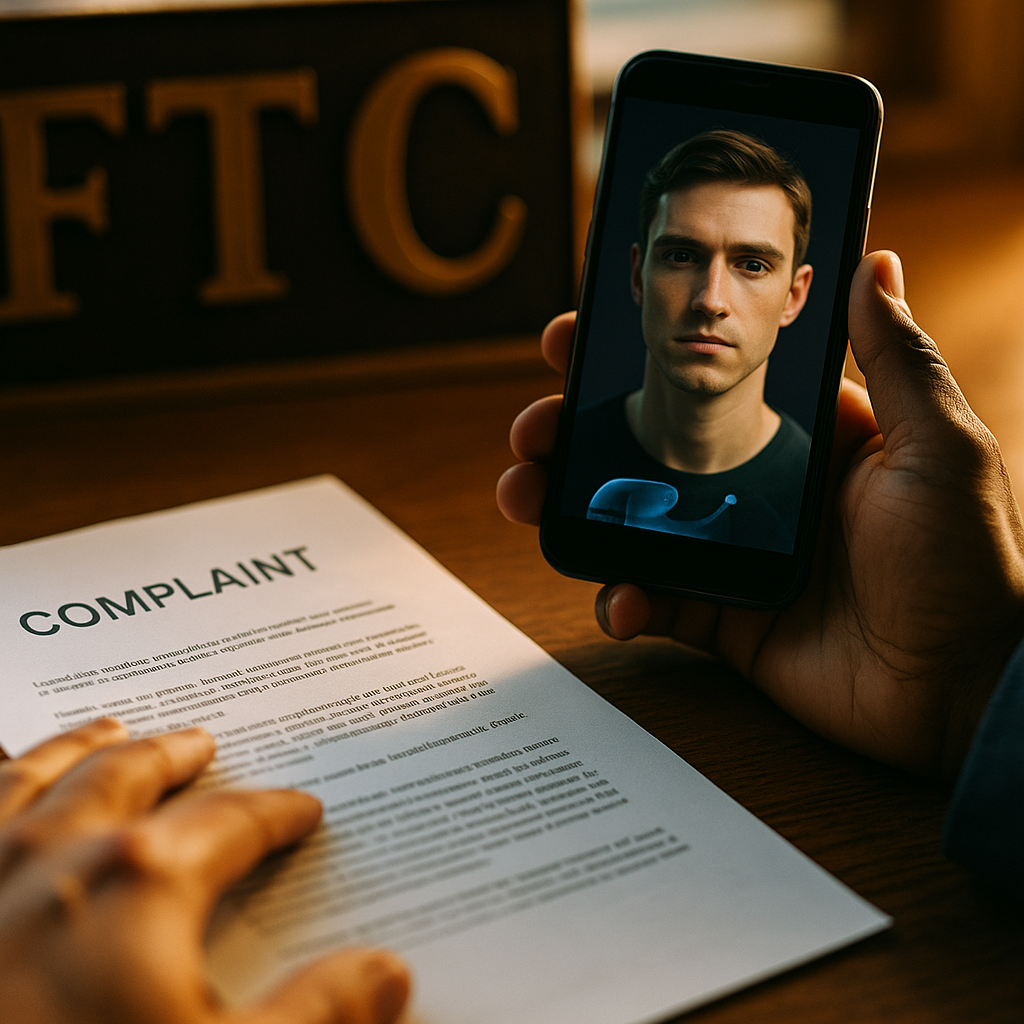
Deepfake endorsements cost advertisers an estimated $12 billion globally last year, and regulators have finally caught up. The FTC’s 2026 impersonation rule expands liability well beyond the creator who posts a fake review. If your brand’s name appears anywhere near an AI generated testimonial, a cloned voice, or a synthetic influencer that never existed, you could be on the hook. Is your compliance team ready?
This isn’t a theoretical risk anymore. Synthetic creator content has moved from novelty to normal, and the agencies that built programs around “just get disclosure language right” are discovering that disclosure alone no longer covers them.
What the Impersonation Rule Actually Covers
The rule closes a gap that existed since the FTC’s original Endorsement Guides: it never clearly addressed content generated by AI that impersonates a real person, or content featuring a wholly fabricated “creator” presented as human. Now it does, explicitly.
Three categories fall under enforcement scope:
- Voice and likeness cloning, where a real creator’s face or voice is used without consent, often via AI tools scraping public video.
- Synthetic personas, fully AI generated “influencers” marketed as authentic humans with lived product experience.
- AI amplified fake reviews, bulk generated testimonials designed to mimic organic consumer language patterns.
Brands that commissioned content without verifying how it was produced, meaning they didn’t ask whether a vendor used generative tools to fabricate a testimonial, are named as co-respondents in early enforcement actions. That’s the part catching marketing teams off guard. You don’t need to have built the deepfake. You just need to have profited from it.
The FTC’s own enforcement sweep data shows brands, not just creators, named in a majority of recent settlements tied to fabricated endorsements. Ignorance of how content was produced is no longer an acceptable defense.
We covered the groundwork for this shift in our breakdown of the FTC endorsement sweep, which flagged brand side liability well before this rule formalized it. If you haven’t revisited your vendor contracts since that sweep, now’s the time.
Why AI Driven Creator Scams Are Different From Old School Fake Reviews
Fake reviews used to be cheap and sloppy: broken English, stock photos, obviously bot generated patterns. Detection was manual but doable. AI changes the economics entirely.
A single generative tool can now produce hundreds of unique “creator” voices, each with consistent posting history, distinct vocabulary, and photorealistic video. Platforms like TikTok and Instagram struggle to flag this content because it doesn’t look like spam. It looks like a real person who happens to love your skincare line.
According to eMarketer, synthetic media detection remains one of the fastest growing line items in brand safety budgets, and for good reason. The tools creating the problem are improving faster than the tools meant to catch it.
This isn’t just a regulatory problem. It’s a trust problem. Consumers who discover a “testimonial” was AI fabricated don’t just distrust the creator, they distrust the brand that paid for it. That reputational hit often outlasts any FTC fine.
The Compliance Checklist: What Brands Need Before Q1 Audits
Start treating AI provenance like you treat FTC disclosure language: a non negotiable line item in every contract and every creative review.
- Require AI disclosure clauses in every creator contract. Creators and agencies must disclose if any portion of the content (voiceover, visuals, script) involved generative AI tools.
- Audit your vendor stack. If you work with UGC agencies or content mills, ask directly how content is sourced and whether synthetic actors are used. Our look at UGC actor likeness rights covers the consent gaps hiding in this exact workflow.
- Build a verification layer into creator vetting. Reverse image search, voice pattern analysis, and cross platform posting history checks should be standard, not optional, before signing new talent.
- Document your due diligence. If the FTC comes asking, “we didn’t know” isn’t a defense, but “here’s our verification log” might reduce your exposure significantly.
- Train legal and marketing teams jointly. Compliance can’t live in a silo anymore. The person approving creative needs to understand what AI generated content looks like.
- Update agency agreements to assign liability clearly. Know who eats the risk if a vendor’s AI generated content gets flagged.
That last point matters more than most brands realize. Agency contracts written five years ago rarely contemplated synthetic media at all, let alone who absorbs regulatory penalties when it surfaces. We dug into this exact exposure in agency vicarious liability, and the gaps are wider than most legal teams assume.
Where Multi Platform Campaigns Create Extra Risk
Here’s a wrinkle a lot of compliance teams miss: a single piece of synthetic content rarely stays on one platform. It gets clipped, reposted, repurposed across TikTok, Instagram Reels, and YouTube Shorts, sometimes by the original creator, sometimes by bad actors capitalizing on a trending sound or format.
That multiplication effect means your brand’s exposure isn’t limited to the original post. If a cloned testimonial spreads across five platforms before anyone flags it, you’re facing five separate instances of potential violation, each with its own audience, its own disclosure requirements, and its own paper trail (or lack of one).
This is where the disclosure gaps we flagged in creator deal bundling intersect directly with impersonation risk. Bundled deals that span multiple platforms need bundled verification, not a single check box at the start of a campaign.
State Laws Are Already Moving Faster Than Federal Enforcement
The federal rule sets the floor, not the ceiling. Several states have already passed or proposed their own AI disclosure statutes that layer additional requirements on top of FTC guidance, and the patchwork is only getting more complicated.
Our analysis of state AI disclosure laws maps which states currently require more granular labeling than the federal baseline. If your brand runs national campaigns, you can’t just comply with the FTC rule and call it done. You need a compliance matrix that accounts for the strictest applicable state law, every time.
Search and AI answer engines add another layer. As generative search tools increasingly surface creator content directly in response to shopping queries, the disclosure question extends beyond the original platform. We explored this in our piece on AI answer engine citations, which is worth a read if your brand relies heavily on creator content for discovery traffic.
What This Means for Budget and Vendor Selection
Compliance costs money, but so does an FTC settlement, and so does the PR fallout from being named in a deepfake scandal. Smart brands are building verification costs into campaign budgets now rather than treating them as an emergency line item later.
Practical moves worth making this quarter:
- Request AI usage disclosures as a standard line item in every creator brief, not an optional add on.
- Prioritize platforms and agencies that already have synthetic media detection built into their vetting process. Sprout Social and similar platforms have started building this into their influencer discovery tools.
- Reassess insurance coverage. Standard media liability policies often exclude AI generated content disputes, a gap we detailed in creator marketing insurance.
- Budget for third party audits on high spend influencer programs, especially anything involving health, finance, or supplement categories where FTC scrutiny already runs hot.
According to HubSpot research on marketing compliance spend, brands that invest proactively in verification infrastructure report fewer campaign delays tied to legal review bottlenecks. Front loading the cost saves time later, and time is the thing marketing teams never have enough of during a product launch.
FAQs
What qualifies as AI impersonation under the new FTC rule?
Any content that uses a real person’s cloned voice or likeness without consent, or presents a fully synthetic persona as a genuine human endorser, falls under the rule’s scope. This includes deepfake video, AI generated voiceovers mimicking a known creator, and fabricated testimonials designed to appear organic.
Can a brand be held liable if a vendor used AI without the brand’s knowledge?
Yes. Recent enforcement actions have named brands as co-respondents even when they claimed no direct knowledge of how content was produced. The FTC’s position is that brands benefiting from the content bear responsibility for verifying its origin.
Does disclosure language alone satisfy the impersonation rule?
No. Disclosure addresses whether a relationship exists between brand and creator. The impersonation rule separately addresses whether the “creator” is even real, or whether their likeness was used without consent. Both issues require distinct compliance steps.
How can marketing teams detect AI generated creator content before publishing?
Reverse image and video searches, voice pattern analysis tools, and cross referencing posting history across platforms are standard first steps. Many influencer vetting platforms are now building synthetic media detection directly into their discovery tools.
Are state AI disclosure laws stricter than the federal rule?
In several cases, yes. Some states require more granular labeling or faster disclosure timelines than the federal baseline, which means national campaigns need a compliance strategy built around the strictest applicable law rather than the federal minimum.
Next step: Pull your current creator contracts this week and check for an AI provenance clause. If it’s missing, that’s your highest priority fix before your next campaign launch, not your next audit cycle.
FAQs
What qualifies as AI impersonation under the new FTC rule?
Any content that uses a real person’s cloned voice or likeness without consent, or presents a fully synthetic persona as a genuine human endorser, falls under the rule’s scope. This includes deepfake video, AI generated voiceovers mimicking a known creator, and fabricated testimonials designed to appear organic.
Can a brand be held liable if a vendor used AI without the brand’s knowledge?
Yes. Recent enforcement actions have named brands as co-respondents even when they claimed no direct knowledge of how content was produced. The FTC’s position is that brands benefiting from the content bear responsibility for verifying its origin.
Does disclosure language alone satisfy the impersonation rule?
No. Disclosure addresses whether a relationship exists between brand and creator. The impersonation rule separately addresses whether the “creator” is even real, or whether their likeness was used without consent. Both issues require distinct compliance steps.
How can marketing teams detect AI generated creator content before publishing?
Reverse image and video searches, voice pattern analysis tools, and cross referencing posting history across platforms are standard first steps. Many influencer vetting platforms are now building synthetic media detection directly into their discovery tools.
Are state AI disclosure laws stricter than the federal rule?
In several cases, yes. Some states require more granular labeling or faster disclosure timelines than the federal baseline, which means national campaigns need a compliance strategy built around the strictest applicable law rather than the federal minimum.
Top Influencer Marketing Agencies
The leading agencies shaping influencer marketing in 2026
Agencies ranked by campaign performance, client diversity, platform expertise, proven ROI, industry recognition, and client satisfaction. Assessed through verified case studies, reviews, and industry consultations.
Moburst

-
2

The Shelf
Boutique Beauty & Lifestyle Influencer AgencyA data-driven boutique agency specializing exclusively in beauty, wellness, and lifestyle influencer campaigns on Instagram and TikTok. Best for brands already focused on the beauty/personal care space that need curated, aesthetic-driven content.Clients: Pepsi, The Honest Company, Hims, Elf Cosmetics, Pure LeafVisit The Shelf → -
3

Audiencly
Niche Gaming & Esports Influencer AgencyA specialized agency focused exclusively on gaming and esports creators on YouTube, Twitch, and TikTok. Ideal if your campaign is 100% gaming-focused — from game launches to hardware and esports events.Clients: Epic Games, NordVPN, Ubisoft, Wargaming, Tencent GamesVisit Audiencly → -
4

Viral Nation
Global Influencer Marketing & Talent AgencyA dual talent management and marketing agency with proprietary brand safety tools and a global creator network spanning nano-influencers to celebrities across all major platforms.Clients: Meta, Activision Blizzard, Energizer, Aston Martin, WalmartVisit Viral Nation → -
5

The Influencer Marketing Factory
TikTok, Instagram & YouTube CampaignsA full-service agency with strong TikTok expertise, offering end-to-end campaign management from influencer discovery through performance reporting with a focus on platform-native content.Clients: Google, Snapchat, Universal Music, Bumble, YelpVisit TIMF → -
6

NeoReach
Enterprise Analytics & Influencer CampaignsAn enterprise-focused agency combining managed campaigns with a powerful self-service data platform for influencer search, audience analytics, and attribution modeling.Clients: Amazon, Airbnb, Netflix, Honda, The New York TimesVisit NeoReach → -
7

Ubiquitous
Creator-First Marketing PlatformA tech-driven platform combining self-service tools with managed campaign options, emphasizing speed and scalability for brands managing multiple influencer relationships.Clients: Lyft, Disney, Target, American Eagle, NetflixVisit Ubiquitous → -
8

Obviously
Scalable Enterprise Influencer CampaignsA tech-enabled agency built for high-volume campaigns, coordinating hundreds of creators simultaneously with end-to-end logistics, content rights management, and product seeding.Clients: Google, Ulta Beauty, Converse, AmazonVisit Obviously →