


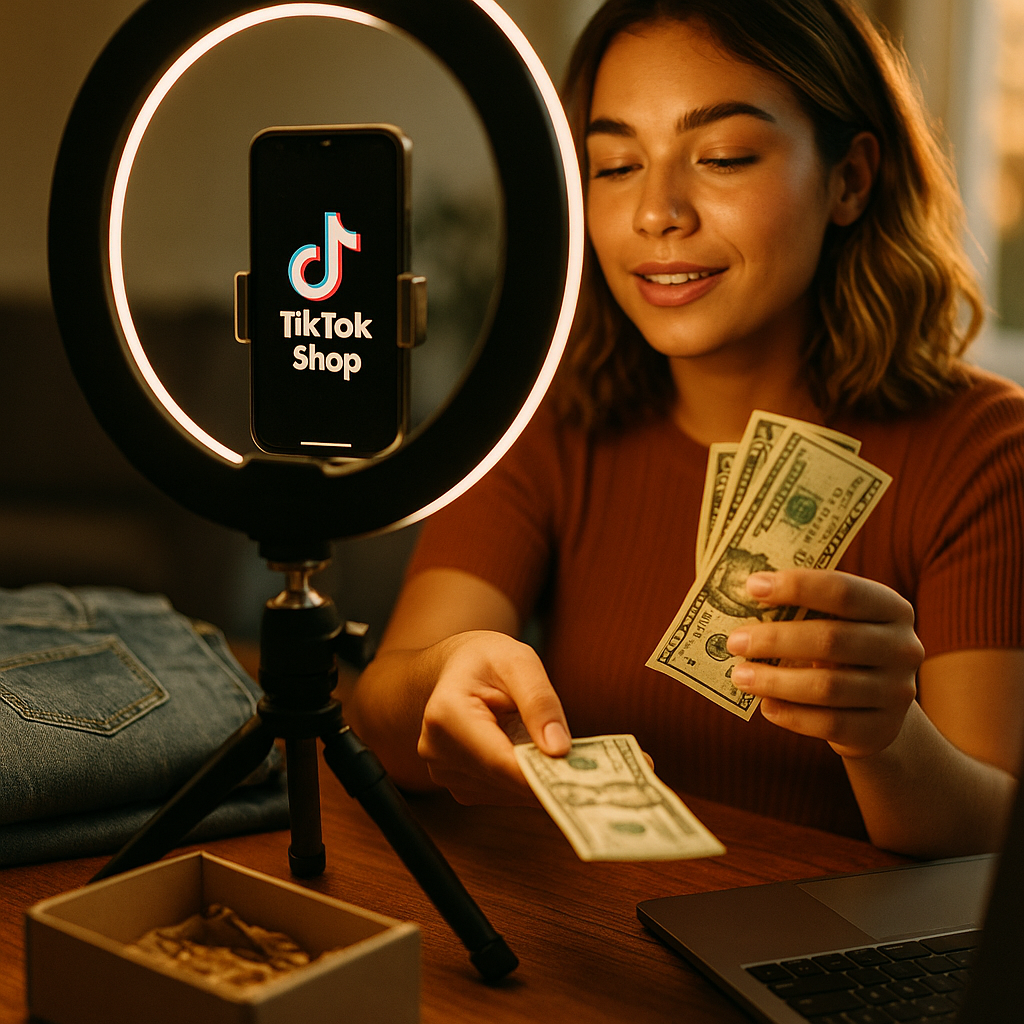
The IRS collected over $13 billion in misclassification-related back taxes and penalties from businesses last year, and TikTok Shop’s commission structure is a near-perfect template for the next wave of audits. Creator misclassification risk isn’t some abstract legal footnote anymore. It’s sitting inside thousands of active affiliate agreements right now, and most brand marketing teams have no idea.
Why TikTok Shop Deals Look Like Employment on Paper
Here’s the uncomfortable truth: the more control a brand exerts over a creator’s TikTok Shop content, the more that creator starts to resemble an employee in the eyes of the IRS and state labor boards. Commission-heavy deals are the worst offenders because they combine performance pay with behavioral control, and that combination is exactly what regulators look for.
Think about a typical TikTok Shop affiliate arrangement. The brand sets posting frequency, mandates specific hooks or scripts, requires exclusive promotion windows, dictates which products to feature and when, and pays out through a shifting blend of flat fees, commission tiers, and bonus thresholds. Add in brand-provided inventory, required use of TikTok’s Shop tab tagging, and mandatory reporting on performance metrics, and you’ve built a relationship that checks nearly every box on the IRS’s 20-factor control test.
Commission structure alone doesn’t create misclassification risk. It’s the combination of performance pay plus operational control that turns a 1099 contractor into a legal gray zone.
Compare that to a flat-fee sponsored post with no content mandates, and the distinction becomes obvious. One looks like a vendor relationship. The other looks like a sales job with extra steps.
h3>The Commission Trap Specifically
Commission-based pay is treated by courts as a double-edged sword. It can signal independent business risk (the creator only gets paid if they perform, which argues for contractor status) or it can signal integration into the brand’s sales operation (the creator is functioning as a de facto member of the sales team, which argues against it). TikTok Shop deals tend to land on the wrong side because brands rarely stop at “here’s a commission rate.” They also specify content format, exclusivity, and reporting cadence, which pushes the relationship toward employee-like control.
What’s Actually at Stake for Brands
Misclassification isn’t a creator problem. It’s a brand problem, and it’s an expensive one. If a state labor board or the Department of Labor reclassifies your affiliate roster as employees, you’re on the hook for retroactive payroll taxes, unemployment insurance contributions, workers’ comp premiums, and potentially benefits under state-specific rules like California’s AB5 or New York’s Freelance Isn’t Free Act.
- Back taxes on FICA contributions the brand never withheld
- State unemployment insurance penalties, often with interest compounding monthly
- Workers’ compensation exposure if a creator claims injury during a brand-mandated shoot
- Class action risk if multiple creators under similar terms file jointly
- Reputational fallout when creator advocacy groups publicize the dispute
And here’s the part that should worry CFOs more than CMOs: this exposure scales with program size. A micro-influencer program with twenty creators is a manageable cleanup. A commission-heavy TikTok Shop affiliate network with two thousand creators is a payroll liability the size of a small acquisition.
Is TikTok Shop’s Infrastructure Making This Worse?
TikTok Shop’s own tools add fuel here. The platform’s affiliate marketplace encourages brands to set granular commission tiers, bonus structures tied to GMV thresholds, and content requirements enforced through the Shop’s creator dashboard. That’s great for performance marketing. It’s also a paper trail showing exactly how much control the brand exercised, which is precisely what a plaintiff’s attorney wants during discovery.
Brands running these programs through third-party affiliate networks or TikTok’s native tools often assume the platform or agency absorbs the classification risk. It doesn’t. TikTok’s advertising terms place compliance obligations on the advertiser, not the platform. If you’re the brand cutting the commission checks, you’re the party named in the labor complaint.
This mirrors a pattern we’ve covered before in blended compensation models generally. The blended CPM contract structure raises nearly identical red flags because it also fuses performance pay with content control, and the legal exposure doesn’t disappear just because the payout math is different.
Supplement and Regulated Categories Face Double Jeopardy
If your TikTok Shop affiliate program sits in a regulated vertical like supplements, financial products, or health claims, misclassification risk stacks on top of disclosure risk. Our earlier coverage of TikTok Shop supplement affiliates detailed how FTC disclosure failures compound when brands exert heavy content control over commission-based creators. The same control that creates an FTC disclosure problem is the control that creates a labor classification problem. It’s the same root cause wearing two different regulatory hats.
Building a Defensible Structure
You don’t have to abandon commission-based TikTok Shop deals to manage this risk. You have to restructure how much operational control sits inside the contract versus how much creative discretion stays with the creator.
- Separate the commission structure from content mandates. Pay commission on sales performance, but let creators choose format, timing, and creative approach within brand guidelines, not brand scripts.
- Eliminate exclusivity clauses where possible. True independent contractors work with multiple clients. Exclusive, long-term, single-brand commission arrangements look like employment.
- Audit your reporting requirements. Requiring daily check-ins, approval workflows on every post, or mandatory response times to brand messages all signal control, not collaboration.
- Document the business relationship properly. Independent contractor agreements, W-9 collection, and clear statements of work matter, but they’re not a shield if the actual working relationship contradicts the paperwork.
- Bring legal counsel into contract design before scaling, not after a complaint. A quick classification review before you onboard your 500th affiliate creator costs far less than a retroactive audit covering two years of payouts.
Agencies managing these programs on behalf of brands should also flag this during vendor scoping. The same diligence frameworks used to vet creator scoring tools for data compliance can be extended to flag contract language that creates classification exposure before the deal goes live.
What Does “Reasonable Control” Actually Look Like?
Marketers often ask where the line sits. Courts generally tolerate brand guidelines on messaging accuracy, legal disclosure requirements, and brand safety standards (no profanity, no competitor mentions, FTC-compliant tagging). What pushes a deal into risky territory is dictating exact filming locations, requiring specific daily posting windows, mandating exclusive brand representation, or requiring creators to use brand-owned equipment and follow brand-set working hours. The more your contract reads like an employee handbook, the more it will be treated like one.
The Compliance Gap Isn’t Going Away
State labor agencies have been increasingly aggressive about gig economy classification since the rideshare and delivery wars of the last decade, and creator commerce is next in line. The Department of Labor’s independent contractor rule updates have already tightened the “economic reality” test nationally, and several states apply even stricter standards. TikTok Shop’s explosive growth, now processing tens of billions in annual GMV according to eMarketer’s platform commerce data, means regulators have a much bigger target than they did two years ago.
Brands that treat this as a legal afterthought are betting that enforcement stays slow. That’s a risky bet given how fast state agencies have moved on gig worker classification in food delivery and rideshare, two sectors that didn’t have anywhere near TikTok Shop’s current growth trajectory when enforcement actions started.
Next step: Pull your current TikTok Shop affiliate contracts and run them against the IRS 20-factor test or your state’s ABC test before your legal team has to do it reactively during an audit. If your commission structure is bundled with heavy content control, exclusivity, and mandatory reporting, fix the contract language now, not after a creator files a complaint.
FAQs
What is creator misclassification risk in the context of TikTok Shop?
It refers to the legal exposure brands face when a creator paid through commission-based TikTok Shop deals functions, in practice, more like an employee than an independent contractor, based on the level of control the brand exercises over their work.
Does paying creators through commission automatically create misclassification risk?
No. Commission pay alone isn’t the problem. Risk arises when commission is combined with heavy operational control, such as mandated scripts, exclusivity, fixed posting schedules, or required equipment and reporting.
Who is liable if a TikTok Shop creator is misclassified?
The brand paying the creator typically bears the liability, not TikTok or any third-party affiliate network. Platform terms generally place compliance obligations on the advertiser.
How can brands reduce misclassification risk while keeping commission-based deals?
Separate commission structure from content mandates, avoid exclusivity requirements, limit mandatory reporting cadences, and have legal counsel review contract language before scaling the program.
Are regulated categories like supplements at higher risk?
Yes. Brands in regulated verticals face compounded exposure because the same content control that triggers misclassification risk often also triggers FTC disclosure violations.
Top Influencer Marketing Agencies
The leading agencies shaping influencer marketing in 2026
Agencies ranked by campaign performance, client diversity, platform expertise, proven ROI, industry recognition, and client satisfaction. Assessed through verified case studies, reviews, and industry consultations.
Moburst

-
2

The Shelf
Boutique Beauty & Lifestyle Influencer AgencyA data-driven boutique agency specializing exclusively in beauty, wellness, and lifestyle influencer campaigns on Instagram and TikTok. Best for brands already focused on the beauty/personal care space that need curated, aesthetic-driven content.Clients: Pepsi, The Honest Company, Hims, Elf Cosmetics, Pure LeafVisit The Shelf → -
3

Audiencly
Niche Gaming & Esports Influencer AgencyA specialized agency focused exclusively on gaming and esports creators on YouTube, Twitch, and TikTok. Ideal if your campaign is 100% gaming-focused — from game launches to hardware and esports events.Clients: Epic Games, NordVPN, Ubisoft, Wargaming, Tencent GamesVisit Audiencly → -
4

Viral Nation
Global Influencer Marketing & Talent AgencyA dual talent management and marketing agency with proprietary brand safety tools and a global creator network spanning nano-influencers to celebrities across all major platforms.Clients: Meta, Activision Blizzard, Energizer, Aston Martin, WalmartVisit Viral Nation → -
5

The Influencer Marketing Factory
TikTok, Instagram & YouTube CampaignsA full-service agency with strong TikTok expertise, offering end-to-end campaign management from influencer discovery through performance reporting with a focus on platform-native content.Clients: Google, Snapchat, Universal Music, Bumble, YelpVisit TIMF → -
6

NeoReach
Enterprise Analytics & Influencer CampaignsAn enterprise-focused agency combining managed campaigns with a powerful self-service data platform for influencer search, audience analytics, and attribution modeling.Clients: Amazon, Airbnb, Netflix, Honda, The New York TimesVisit NeoReach → -
7

Ubiquitous
Creator-First Marketing PlatformA tech-driven platform combining self-service tools with managed campaign options, emphasizing speed and scalability for brands managing multiple influencer relationships.Clients: Lyft, Disney, Target, American Eagle, NetflixVisit Ubiquitous → -
8

Obviously
Scalable Enterprise Influencer CampaignsA tech-enabled agency built for high-volume campaigns, coordinating hundreds of creators simultaneously with end-to-end logistics, content rights management, and product seeding.Clients: Google, Ulta Beauty, Converse, AmazonVisit Obviously →