


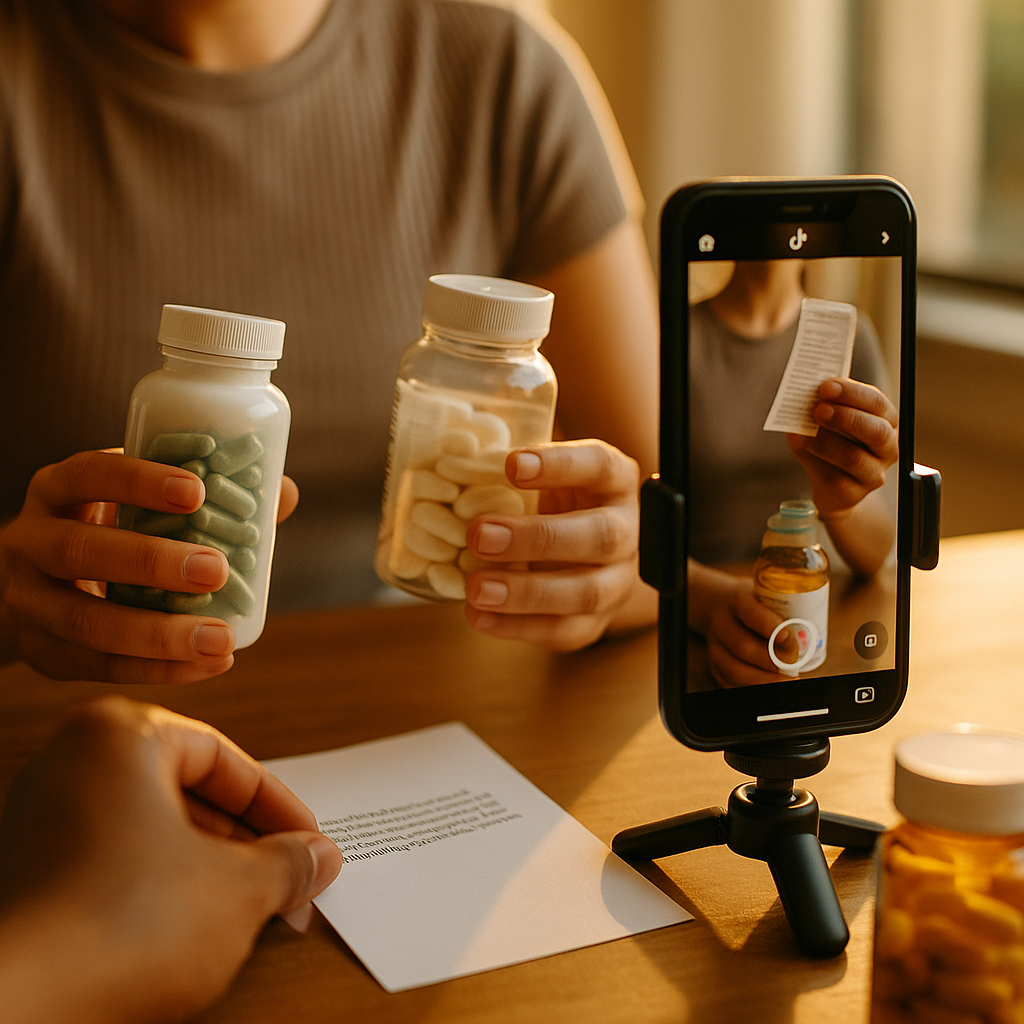
Supplement brands running TikTok Shop affiliate programs are sitting on a compliance time bomb, and most don’t know it. A single undisclosed “ad” on a creator’s TikTok Shop video selling your gummy vitamins can trigger an FTC inquiry that costs more in legal fees than the entire campaign earned in commissions. With TikTok Shop affiliate GMV for health and wellness products climbing fast, the gap between platform-native disclosure tools and actual FTC supplement advertising rules has never been wider.
Here’s the uncomfortable truth: TikTok’s built-in “Paid Partnership” label was never designed to satisfy FTC health claim substantiation requirements. It flags an ad. It does nothing to confirm that the creator’s claims about your probiotic or weight management product are truthful, non-misleading, and backed by competent scientific evidence. That distinction is where brands get burned.
Why Supplement Affiliate Programs Carry Extra Risk
Affiliate commission structures incentivize volume. Creators earn a percentage per sale, so the economic pressure is to push conversion, not caution. That’s fine for phone cases. It’s a legal liability for anything ingested, applied topically, or marketed with a health outcome attached.
The FTC has been explicit for years: supplement and health product endorsements require clear and conspicuous disclosure of material connections, plus claims that match what’s actually substantiated by evidence. The agency’s own guidance on endorsements and testimonials makes clear that “I’m not a doctor but” disclaimers don’t neutralize an unsubstantiated cure-all claim. Yet scroll through TikTok Shop’s health and wellness category for ten minutes and you’ll find creators implying their affiliate-linked supplement “cured” anxiety, reversed aging, or replaced prescription medication, often with no disclosure at all, or a buried one in a caption nobody reads.
This isn’t hypothetical anxiety. The FTC’s recent enforcement posture against influencer marketing makes the risk concrete. Our coverage of the FTC endorsement sweep showed that regulators are no longer just fining creators. They’re naming the brands behind the commission structure.
A brand doesn’t need to write the deceptive script to be liable for it. If your affiliate program’s commission structure incentivized the claim, the FTC can treat you as the responsible party.
The Disclosure Gap TikTok Shop Doesn’t Close
TikTok Shop’s affiliate infrastructure is built for speed. A creator joins your Shop campaign, grabs a product link, films a video, and tags it. The platform auto-applies a “TikTok Shop” badge and, in many cases, a “Paid Partnership” tag if the creator opts in. Neither of those labels functions as an FTC-compliant disclosure for a health claim.
Why? Because FTC disclosure rules require two separate things that often get conflated into one:
- Material connection disclosure: telling viewers the creator earns money from the sale (commission, free product, or both).
- Claim substantiation: ensuring any health, efficacy, or safety statement is backed by competent and reliable scientific evidence, not anecdote or “it worked for me.”
TikTok’s native tools handle the first, imperfectly. They do nothing for the second. A creator can disclose “#ad” clearly and still make an unsubstantiated claim that your gut health supplement “fixes bloating in 48 hours.” That video is still a liability even with a perfect hashtag.
What an Audit Actually Looks Like
Most brands have never run a structured disclosure audit on their TikTok Shop affiliate roster. They rely on a creator agreement clause and hope. That’s not a compliance program, that’s a prayer.
A real audit has four layers. Treat it like a quarterly operational task, not a one-time checkbox.
1. Pull every live affiliate video, not just top performers
Compliance teams tend to review the top 10 earners and call it done. That’s backwards. Low-follower micro-affiliates with high commission velocity are statistically more likely to skip disclosure because they’re less experienced and less worried about brand deals drying up. Pull the full roster export from TikTok Shop’s seller dashboard and review every video with meaningful impressions, not just the top line.
2. Score disclosure placement, not just presence
“Clear and conspicuous” has a specific meaning under FTC guidance: viewers shouldn’t have to click “see more,” pause the video, or scrub through 30 seconds of content to find the disclosure. Score each video on whether the disclosure appears in the first three seconds, whether it’s verbal or on-screen text (both is best), and whether it survives the platform’s auto-crop on different feed placements.
3. Flag health claims against your approved claims list
Every supplement brand running an affiliate program should maintain a living document of approved, legally reviewed claims language. Cross-reference each affiliate video’s spoken and on-screen claims against that list. Anything outside it gets flagged for creator correction or takedown request. This is tedious. It’s also the single highest-leverage compliance activity you can run, because claim drift is where most FTC actions originate.
4. Document everything, timestamped
If regulators come asking, “we have a policy” isn’t a defense. “Here’s our audit log showing we reviewed this creator’s content on this date and required this correction” is. Jurisdictions are increasingly codifying this expectation. Our look at audit readiness requirements in other markets shows where US enforcement is likely headed: toward mandatory record retention, not just good-faith effort.
An undocumented compliance process is functionally the same as no compliance process once the FTC asks for records.
Where Agencies and Brands Split Liability
If you’re running your TikTok Shop affiliate program through an agency of record, don’t assume the liability sits entirely with them. Courts and regulators have increasingly looked at who controls the commission structure and who approved the product for affiliate distribution, not just who signed the creator contract. Our analysis of agency vicarious liability breaks down how responsibility actually gets allocated when a creator’s disclosure fails, and the short version is: it’s rarely one party alone.
Supplement brands specifically should build audit rights into every agency contract. You want the ability to pull disclosure compliance data on demand, not quarterly reports written by the agency marking its own homework.
AI-Generated Health Claims Add a New Layer
A growing share of TikTok Shop affiliate content now uses AI voice clones, AI-written scripts, or AI avatar creators to scale affiliate video production. That introduces a compliance wrinkle most supplement brands haven’t priced in yet: AI-generated testimonials carry their own disclosure obligations separate from the standard material connection rule. Our piece on AI generated testimonials walks through why an AI avatar claiming personal results with your product, even accurately, is a distinct FTC exposure point if viewers believe they’re watching a real human testimonial.
If any part of your affiliate creator roster is using AI tools to generate content at scale, your audit needs a dedicated checklist item for that alone.
Practical Fixes You Can Ship This Quarter
- Tier your affiliate program by product risk. Not every SKU needs the same scrutiny. A reusable water bottle isn’t a supplement. Build separate onboarding flows and claims training for health category affiliates.
- Require a disclosure template, not a suggestion. Give creators exact on-screen text and verbal phrasing options. Specificity reduces drift far more than a vague “please disclose per FTC rules” clause buried in a contract.
- Build a takedown SLA. When an audit flags a noncompliant claim, how fast does it come down? Twenty-four hours should be the ceiling, documented in your affiliate terms.
- Train before you pay, not after you flag. A short onboarding video explaining supplement claims rules, shown before a creator’s first commission payout, catches most violations before they go live.
- Re-audit quarterly. Creator rosters turn over constantly on affiliate programs. A clean audit in one quarter means nothing for the next cohort of affiliates who join.
Platforms like Sprout Social and similar social listening tools can help automate parts of this monitoring, flagging keyword patterns in affiliate video transcripts that match restricted claims language. It won’t replace a human compliance reviewer for supplement content, but it narrows what that reviewer needs to manually check.
The Business Case, Not Just the Legal One
Framing this purely as risk avoidance undersells the opportunity. Brands with documented, clean disclosure practices in the supplement category increasingly use that as a trust signal in their own marketing. Retailers and marketplace partners are starting to ask for compliance documentation before approving expanded affiliate distribution. An eMarketer analysis of social commerce growth notes that trust signals increasingly influence platform algorithm visibility, meaning clean compliance can actually correlate with better organic affiliate reach, not just lower legal exposure.
There’s also a simpler argument: supplement customers who get burned by an exaggerated claim don’t just return the product. They leave reviews, file complaints, and in the worst cases, contribute to the kind of product liability exposure covered in our piece on product recall liability and creator hype. Disclosure compliance and product safety compliance aren’t separate workstreams. They’re the same risk, viewed from different angles.
Next Step
Don’t wait for an FTC letter to start your first audit. Pull your top 50 active TikTok Shop affiliates this week, score their disclosure placement and claims language against your approved list, and fix the gaps before next quarter’s commission run.
FAQs
Does TikTok Shop’s “Paid Partnership” label satisfy FTC disclosure requirements for supplements?
No. The label flags a paid relationship but doesn’t address whether health claims made in the video are substantiated, which is a separate FTC requirement specific to supplement and health product advertising.
Who is liable if a TikTok Shop affiliate makes an unsubstantiated health claim about my supplement?
Liability can extend to the brand, not just the creator, particularly if the affiliate commission structure incentivized the sale or the brand approved the product for affiliate distribution without claims oversight.
How often should a supplement brand audit its TikTok Shop affiliate content?
Quarterly at minimum. Affiliate rosters turn over frequently, so a clean audit for one cohort of creators doesn’t guarantee compliance for new affiliates joining the program.
What counts as a “clear and conspicuous” disclosure under FTC rules?
A disclosure viewers can see or hear without clicking “see more,” scrubbing the video, or searching the caption. On-screen text appearing in the first few seconds, paired with verbal mention, is the safest standard.
Do AI-generated affiliate videos need different disclosures than human-created ones?
Yes. AI avatars or voice clones presenting as personal testimonials carry additional disclosure obligations beyond standard material connection rules, since viewers may assume they’re watching a real human’s genuine experience.
FAQs
Does TikTok Shop’s “Paid Partnership” label satisfy FTC disclosure requirements for supplements?
No. The label flags a paid relationship but doesn’t address whether health claims made in the video are substantiated, which is a separate FTC requirement specific to supplement and health product advertising.
Who is liable if a TikTok Shop affiliate makes an unsubstantiated health claim about my supplement?
Liability can extend to the brand, not just the creator, particularly if the affiliate commission structure incentivized the sale or the brand approved the product for affiliate distribution without claims oversight.
How often should a supplement brand audit its TikTok Shop affiliate content?
Quarterly at minimum. Affiliate rosters turn over frequently, so a clean audit for one cohort of creators doesn’t guarantee compliance for new affiliates joining the program.
What counts as a “clear and conspicuous” disclosure under FTC rules?
A disclosure viewers can see or hear without clicking “see more,” scrubbing the video, or searching the caption. On-screen text appearing in the first few seconds, paired with verbal mention, is the safest standard.
Do AI-generated affiliate videos need different disclosures than human-created ones?
Yes. AI avatars or voice clones presenting as personal testimonials carry additional disclosure obligations beyond standard material connection rules, since viewers may assume they’re watching a real human’s genuine experience.
Top Influencer Marketing Agencies
The leading agencies shaping influencer marketing in 2026
Agencies ranked by campaign performance, client diversity, platform expertise, proven ROI, industry recognition, and client satisfaction. Assessed through verified case studies, reviews, and industry consultations.
Moburst

-
2

The Shelf
Boutique Beauty & Lifestyle Influencer AgencyA data-driven boutique agency specializing exclusively in beauty, wellness, and lifestyle influencer campaigns on Instagram and TikTok. Best for brands already focused on the beauty/personal care space that need curated, aesthetic-driven content.Clients: Pepsi, The Honest Company, Hims, Elf Cosmetics, Pure LeafVisit The Shelf → -
3

Audiencly
Niche Gaming & Esports Influencer AgencyA specialized agency focused exclusively on gaming and esports creators on YouTube, Twitch, and TikTok. Ideal if your campaign is 100% gaming-focused — from game launches to hardware and esports events.Clients: Epic Games, NordVPN, Ubisoft, Wargaming, Tencent GamesVisit Audiencly → -
4

Viral Nation
Global Influencer Marketing & Talent AgencyA dual talent management and marketing agency with proprietary brand safety tools and a global creator network spanning nano-influencers to celebrities across all major platforms.Clients: Meta, Activision Blizzard, Energizer, Aston Martin, WalmartVisit Viral Nation → -
5

The Influencer Marketing Factory
TikTok, Instagram & YouTube CampaignsA full-service agency with strong TikTok expertise, offering end-to-end campaign management from influencer discovery through performance reporting with a focus on platform-native content.Clients: Google, Snapchat, Universal Music, Bumble, YelpVisit TIMF → -
6

NeoReach
Enterprise Analytics & Influencer CampaignsAn enterprise-focused agency combining managed campaigns with a powerful self-service data platform for influencer search, audience analytics, and attribution modeling.Clients: Amazon, Airbnb, Netflix, Honda, The New York TimesVisit NeoReach → -
7

Ubiquitous
Creator-First Marketing PlatformA tech-driven platform combining self-service tools with managed campaign options, emphasizing speed and scalability for brands managing multiple influencer relationships.Clients: Lyft, Disney, Target, American Eagle, NetflixVisit Ubiquitous → -
8

Obviously
Scalable Enterprise Influencer CampaignsA tech-enabled agency built for high-volume campaigns, coordinating hundreds of creators simultaneously with end-to-end logistics, content rights management, and product seeding.Clients: Google, Ulta Beauty, Converse, AmazonVisit Obviously →