


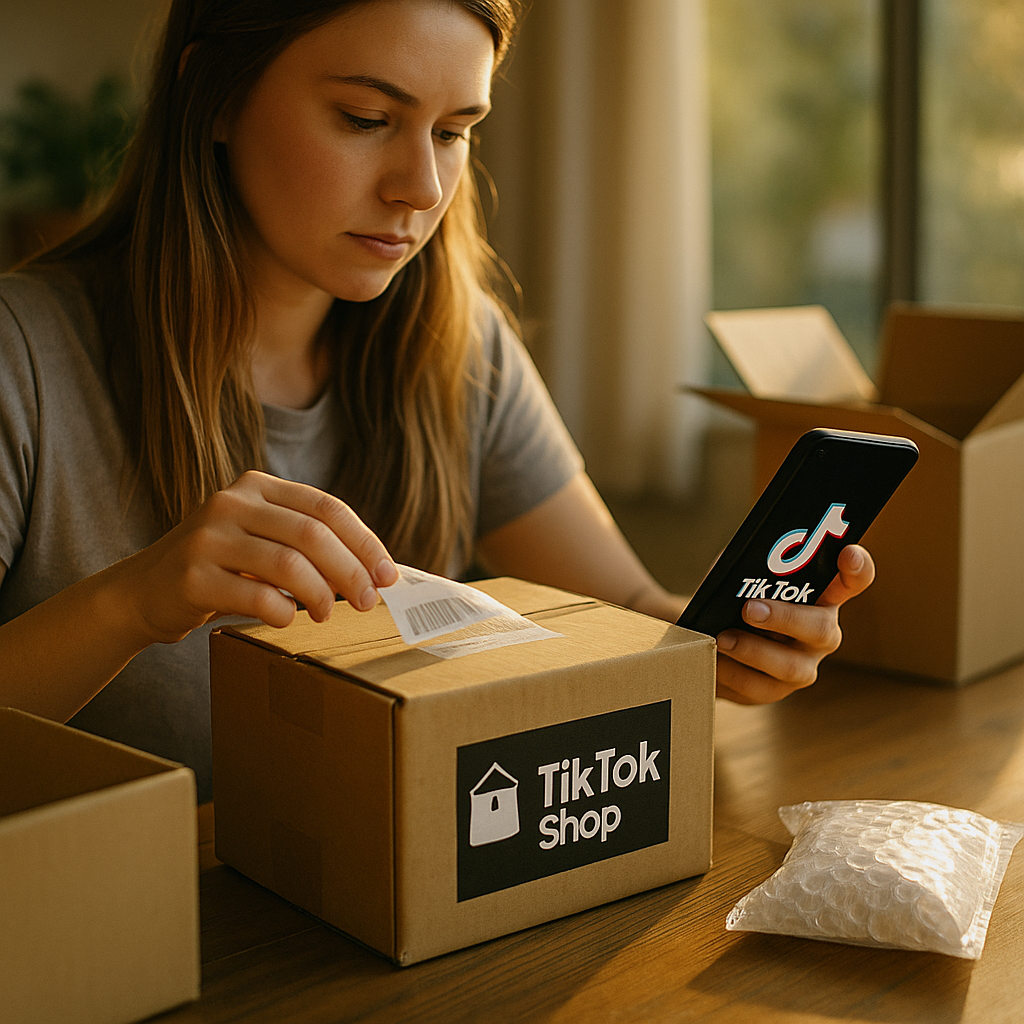
Nearly 60% of online shoppers check a retailer’s return policy before completing a purchase. That single data point explains why TikTok just struck a deal that has nothing to do with content and everything to do with cardboard boxes, QR codes, and drop off locations. TikTok Shop’s new box free returns partnership with Happy Returns is designed to solve a problem that algorithms can’t fix: shoppers who add to cart, then bail because returning the item sounds like a hassle. The question for brands is simple. Does easier logistics actually move the conversion needle, or is this another feature that looks good in a press release and does little at checkout?
What Box Free Returns With Happy Returns Actually Means
Happy Returns, owned by UPS, operates a network of thousands of physical return bars across the US, many tucked inside Staples, Ulta, and other retail partners. The pitch is straightforward: a shopper buys something on TikTok Shop, decides it’s not right, and instead of hunting for a box, printing a label, and driving to a shipping counter, they walk into a nearby drop off point, show a QR code, and hand over the item. No box. No label. No packing tape negotiations with a toddler in the backseat.
For TikTok Shop sellers, this means plugging into an existing reverse logistics network rather than building one from scratch. That’s the operational win. Returns get consolidated, processed in bulk, and routed back to warehouses more efficiently than individual mailed packages, which in theory lowers cost per return for merchants while removing a friction point for buyers.
It’s worth remembering that TikTok Shop has been aggressively courting sellers who’ve grown skeptical of the platform’s early chaos around inventory sync and fulfillment reliability. A smoother returns experience is part of a broader push to convince brands that TikTok Shop can behave like a mature commerce channel, not just a viral traffic source that occasionally converts.
Why Returns Friction Kills Shop Conversion Rates
Cart abandonment isn’t a mystery. Shoppers leave because shipping costs surprise them, checkout takes too long, or they simply aren’t sure what happens if the product disappoints. Returns policy clarity sits right alongside price and shipping cost as a top reason for walking away, according to research frequently cited by Statista on ecommerce behavior. Apparel and beauty, TikTok Shop’s two biggest categories, are also the categories with the highest return rates industry wide. Sizing is inconsistent. Shades don’t match skin tones the way a filtered video promised. That combination makes returns anxiety especially acute for exactly the products TikTok Shop sells the most of.
When your two highest volume categories are also your two highest return rate categories, returns policy isn’t a back office detail. It’s a front door conversion lever.
Think about the buyer journey here. Someone scrolls past a creator’s video, gets hit with impulse energy, taps the shopping cart icon, and lands on a product page mid scroll. That’s a fragile moment. Any friction, real or perceived, snaps the impulse. If shoppers have learned (rightly or wrongly) that TikTok Shop returns mean mailing something back at their own expense and waiting weeks for a refund, that hesitation shows up as an abandoned cart, not a complaint. Nobody files a support ticket over a purchase they never made.
Will Easier Logistics Actually Lift Conversion Rates?
Here’s where the hype needs a reality check. Happy Returns itself has published data showing that merchants using its network see measurably higher repeat purchase rates, largely because shoppers trust brands more when returns feel low stakes. That’s a retention story first and a conversion story second. The conversion lift, if it exists, likely comes from the policy visibility at the point of purchase rather than the physical mechanics of the return itself.
In other words, a shopper deciding whether to buy a $38 top rarely researches the exact return logistics in advance. What they do respond to is a visible badge or line of copy that says “free, easy returns” near the buy button. That reassurance signal reduces perceived risk instantly, and perceived risk is what kills conversion, not the actual friction of a future return that may never happen.
So will box free returns lift shop conversion rates? Probably yes, modestly, for categories where return anxiety is already high (apparel, shoes, beauty). The lift will likely show up more clearly in average order value and repeat purchase rate than in a dramatic swing in first time conversion. Brands expecting a silver bullet will be disappointed. Brands expecting a steady, compounding improvement in trust and retention are closer to reality.
The Hidden Cost Side of the Equation
Easier returns for shoppers usually means someone else absorbs the cost and complexity. For TikTok Shop sellers, that someone is often the merchant, not TikTok. Happy Returns charges merchants a per return fee for network access, and bulk shipping consolidation, while cheaper than individual postage, isn’t free. Brands running thin margins on viral products need to model this cost into unit economics before assuming the feature is a pure upside.
There’s also a fulfillment speed question. Consolidated returns from drop off locations get batched and shipped back to warehouses on a schedule, not instantly. That can mean a longer window before a returned item is back in sellable inventory, which matters for fast moving trend products where a two week delay can mean the item is no longer trending by the time it’s restocked.
Smart sellers will want to run the math the same way they already do for GMV velocity and affiliate payout structures. A returns program that lowers conversion friction but quietly erodes margin isn’t automatically a win. It’s a trade that needs to be measured, not assumed.
Operational Checklist Before You Flip the Switch
- Model the per return cost against your current return rate by category, and compare it to what you’re currently spending on customer service and manual label generation.
- Audit product pages to make sure the easier returns messaging actually appears near the add to cart button, not buried in a policy page nobody reads.
- Coordinate with affiliate creators so returns policy language in captions and pinned comments matches what’s live on the product page. Inconsistency here creates disputes and chargebacks.
- Check inventory restock timing against your sell through cycle, especially for limited drops where delayed restocking kills the opportunity entirely.
- Watch for compliance overlap with existing TikTok Shop payment and dispute workflows, since return refunds often trigger scrutiny under existing payment security protocols.
None of this is complicated, but it does require someone on the ops side actually owning the rollout rather than treating it as a passive platform update that happens in the background.
How This Fits the Bigger TikTok Shop Trust Push
Box free returns don’t exist in a vacuum. They’re one piece of TikTok’s broader campaign to shed its early reputation for being fast, chaotic, and occasionally unreliable as a commerce platform. The company has spent the past year tightening compliance enforcement, rolling out better attribution reporting, and expanding seller protections. Easier returns logistics is a trust signal aimed at both shoppers and the brands deciding whether to allocate serious ad and creator budget to the channel.
Compare that to Amazon, where Amazon’s influencer program benefits from decades of returns infrastructure shoppers already trust implicitly. TikTok Shop is trying to close that gap in a fraction of the time. Whether Happy Returns’ network density matches Amazon’s return counter ubiquity in every market is a fair question, and the honest answer is: not yet, not everywhere.
Brand strategists comparing channels should also weigh this against adjacent platforms. Pinterest’s shopping pins carry different return expectations entirely, since Pinterest rarely drives the same impulse purchase behavior that makes returns friction such a live issue on TikTok.
What Marketing Leaders Should Actually Do Next
Run a controlled test before rolling this out across your entire TikTok Shop catalog. Pick one or two high return rate SKUs, enable the Happy Returns messaging prominently on those product pages, and track conversion rate, average order value, and net margin over a full sales cycle, not just a launch week spike. Treat the data, not the press release, as your decision maker.
Frequently Asked Questions
What is TikTok’s box free returns feature?
It’s a partnership with Happy Returns that lets TikTok Shop customers return items at physical drop off locations using a QR code, without needing a box or printed shipping label.
Does box free returns cost merchants money?
Yes. Happy Returns typically charges merchants a per return processing fee for access to its network, which brands need to weigh against savings from reduced customer service overhead and consolidated shipping.
Will easier returns actually increase TikTok Shop conversion rates?
Likely a modest lift, concentrated in apparel and beauty where return anxiety is highest. The bigger measurable impact tends to show up in repeat purchase rate and average order value rather than a dramatic jump in first time conversion.
How does this compare to Amazon’s return process?
Amazon has a larger, more established return infrastructure built over many years. TikTok Shop’s Happy Returns network is newer and may have less drop off density in some regions, though it closes much of that trust gap quickly.
Should every TikTok Shop seller enable this feature immediately?
No. Sellers should model the cost per return against current return rates and test on a small set of SKUs first, particularly high return rate categories, before rolling it out catalog wide.
Top Influencer Marketing Agencies
The leading agencies shaping influencer marketing in 2026
Agencies ranked by campaign performance, client diversity, platform expertise, proven ROI, industry recognition, and client satisfaction. Assessed through verified case studies, reviews, and industry consultations.
Moburst

-
2

The Shelf
Boutique Beauty & Lifestyle Influencer AgencyA data-driven boutique agency specializing exclusively in beauty, wellness, and lifestyle influencer campaigns on Instagram and TikTok. Best for brands already focused on the beauty/personal care space that need curated, aesthetic-driven content.Clients: Pepsi, The Honest Company, Hims, Elf Cosmetics, Pure LeafVisit The Shelf → -
3

Audiencly
Niche Gaming & Esports Influencer AgencyA specialized agency focused exclusively on gaming and esports creators on YouTube, Twitch, and TikTok. Ideal if your campaign is 100% gaming-focused — from game launches to hardware and esports events.Clients: Epic Games, NordVPN, Ubisoft, Wargaming, Tencent GamesVisit Audiencly → -
4

Viral Nation
Global Influencer Marketing & Talent AgencyA dual talent management and marketing agency with proprietary brand safety tools and a global creator network spanning nano-influencers to celebrities across all major platforms.Clients: Meta, Activision Blizzard, Energizer, Aston Martin, WalmartVisit Viral Nation → -
5

The Influencer Marketing Factory
TikTok, Instagram & YouTube CampaignsA full-service agency with strong TikTok expertise, offering end-to-end campaign management from influencer discovery through performance reporting with a focus on platform-native content.Clients: Google, Snapchat, Universal Music, Bumble, YelpVisit TIMF → -
6

NeoReach
Enterprise Analytics & Influencer CampaignsAn enterprise-focused agency combining managed campaigns with a powerful self-service data platform for influencer search, audience analytics, and attribution modeling.Clients: Amazon, Airbnb, Netflix, Honda, The New York TimesVisit NeoReach → -
7

Ubiquitous
Creator-First Marketing PlatformA tech-driven platform combining self-service tools with managed campaign options, emphasizing speed and scalability for brands managing multiple influencer relationships.Clients: Lyft, Disney, Target, American Eagle, NetflixVisit Ubiquitous → -
8

Obviously
Scalable Enterprise Influencer CampaignsA tech-enabled agency built for high-volume campaigns, coordinating hundreds of creators simultaneously with end-to-end logistics, content rights management, and product seeding.Clients: Google, Ulta Beauty, Converse, AmazonVisit Obviously →