


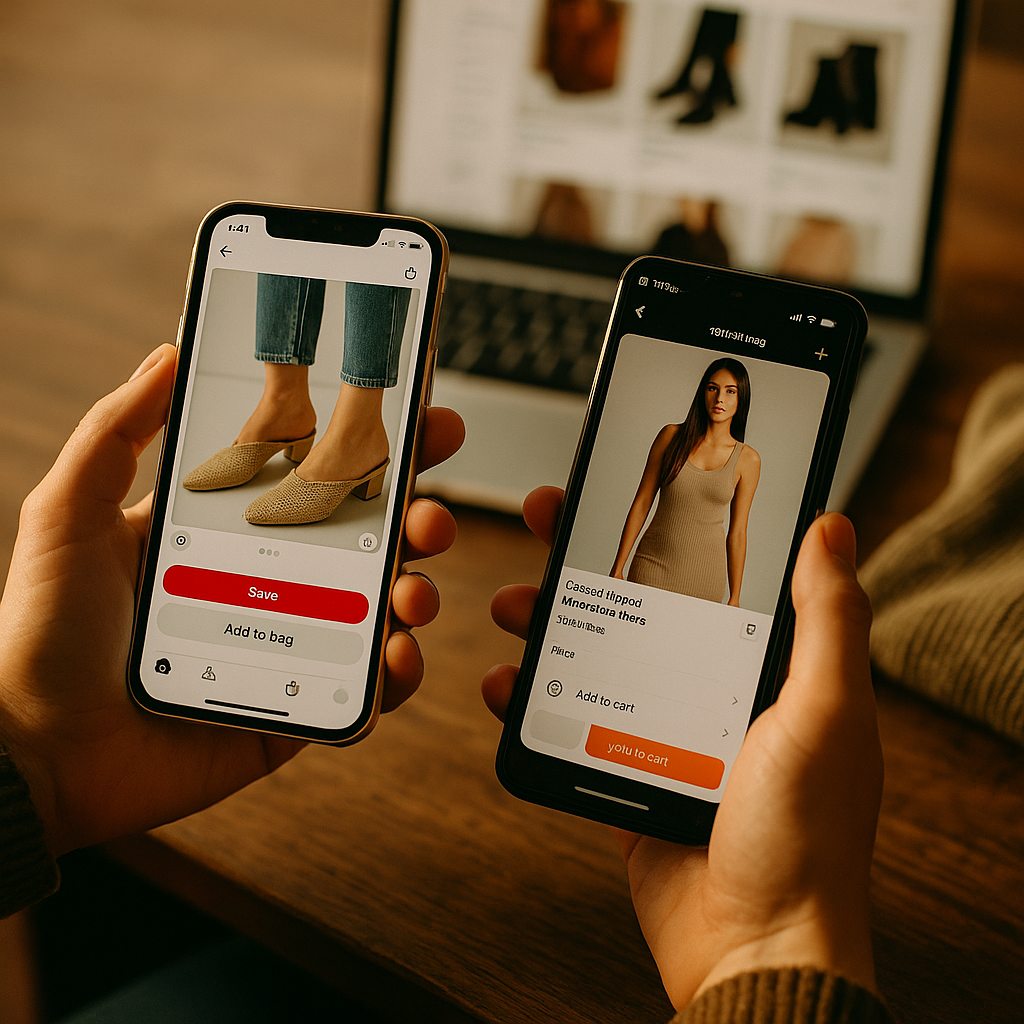
TikTok Shop creators can pull jaw-dropping GMV numbers, but ask most performance marketers what their blended CAC looks like after affiliate commissions, seeding costs, and return rates, and the mood shifts fast. Meanwhile, Pinterest Shopping Pins are quietly converting high-intent searchers at a fraction of the cost, with far less creative churn. Is Pinterest the boring, profitable alternative your paid social mix has been missing?
The CAC Math TikTok Shop Doesn’t Advertise
TikTok Shop’s pitch is seductive: creators drive discovery, viewers buy on impulse, and GMV compounds through the affiliate network. The problem is what sits underneath that GMV number. Brands running TikTok Shop at scale report blended CACs inflated by high return rates (often north of 20% for apparel and beauty), affiliate commission stacking, and the constant production cost of keeping creators fed with new hooks every few days. Our GMV attribution breakdown covers how murky that revenue proof actually gets once you strip out organic halo sales.
Pinterest operates on a completely different intent model. Users aren’t scrolling for entertainment and getting ambushed by a product. They’re actively planning a purchase, a renovation, a wardrobe refresh, a gift. That distinction matters enormously for acquisition cost because you’re not paying to interrupt attention, you’re paying to meet demand that already exists.
Pinterest’s own advertiser data has long shown that Pins tied to purchase intent (think “kitchen remodel ideas” or “capsule wardrobe”) convert at rates traditional scroll-based feeds rarely match, because the user arrived with a shopping mindset already activated.
Why Intent Beats Impulse for Mid-Funnel Efficiency
TikTok Shop thrives on impulse. That’s not a criticism, it’s the format’s entire value proposition. But impulse-driven purchases carry baggage: higher return rates, lower repeat purchase rates, and a creator dependency that never really ends because the algorithm rewards novelty over consistency.
Pinterest Shopping Pins work on a search-and-save behavior loop. A user saves a Pin today, comes back in three weeks when they’re ready to buy, and converts with far less buyer’s remorse because the decision wasn’t made in a six-second dopamine window. That longer consideration cycle sounds like a weakness on paper. In practice, it’s a CAC advantage because the purchases stick, reducing the refund-adjusted cost of each conversion.
Marketers who’ve run both channels side by side consistently note one thing: Pinterest’s cost per acquisition looks less flashy in a weekly report, but it holds up better over a quarter. TikTok Shop CAC can look great in week one and ugly in week six once returns and ad fatigue catch up.
What Creator Content Actually Looks Like on Pinterest
This isn’t about abandoning creators. It’s about changing what you ask them to produce. Pinterest Shopping Pins favor static and short-video product content optimized for save-and-search behavior rather than viral hooks. Think styled product photography, idea boards, tutorial carousels, seasonal lookbooks. Creators who already produce evergreen, aspirational content (home, fashion, beauty, food) translate naturally into Pinterest’s format without needing a constant stream of trend-chasing videos.
That has a direct operational benefit: content longevity. A TikTok Shop video has a shelf life measured in days before the algorithm moves on. A well-optimized Pinterest Pin can keep driving traffic and sales for months, sometimes over a year, because Pinterest functions more like a visual search engine than a social feed. Fewer refreshes mean lower production spend per dollar of revenue generated, which is the real lever behind lower CAC.
Where the Budget Should Actually Move
If you’re running an always-on budget split across platforms, Pinterest deserves a bigger line item than most brands currently give it. A reasonable test structure looks like this:
- Shift 15 to 20 percent of TikTok Shop affiliate budget into Pinterest creator partnerships for one full quarter.
- Brief creators for evergreen, search-optimized content instead of trend-reactive clips.
- Track save rate and click-through-to-purchase lag, not just same-day conversion, since Pinterest’s buying cycle is longer.
- Compare blended CAC inclusive of returns, not just media cost per click.
Brands that treat Pinterest like a slower TikTok will be disappointed. Treat it like a visual search engine with a shopping layer, and the budget reallocation starts paying for itself within one or two cycles. This mirrors the thinking in our Instagram feed to Reels reallocation guide, where format-native content outperformed repurposed assets every time.
Risk and Compliance: The Quiet Advantage
TikTok Shop carries regulatory exposure that shouldn’t be underestimated. Between ongoing platform uncertainty in the U.S. and the complexity of affiliate disclosure compliance across creator networks, brand legal teams have legitimate reasons to diversify. Pinterest’s advertising policies are comparatively stable, and its Shopping Pins sit within a more conventional e-commerce disclosure framework that’s easier to audit.
FTC disclosure rules still apply to sponsored Pins exactly as they do everywhere else, so brands shouldn’t treat Pinterest as a compliance-free zone. Review the FTC’s endorsement guidance before briefing creators on any platform, Pinterest included. But the platform’s lower volatility, no live-selling checkout disputes, no real-time inventory sync failures, means fewer operational fire drills for brand teams already stretched thin managing TikTok Shop logistics. If inventory issues have burned you before, our stockout prevention guide is worth revisiting as a cautionary comparison.
The Measurement Problem Nobody Talks About
Here’s the uncomfortable truth: Pinterest’s attribution window is longer and messier to report on than TikTok Shop’s in-app purchase tracking. Executives who want same-day GMV dashboards will find Pinterest’s delayed conversion pattern frustrating at first glance. The fix isn’t abandoning the channel, it’s adjusting reporting cadence. Set 30 and 60-day attribution windows instead of 24-hour ones, and loop Pinterest conversion data into a unified dashboard using a programmatic reporting setup so stakeholders see the full-funnel lift, not just click-day numbers.
Tools like Sprout Social and standard e-commerce platforms can tie Pinterest-driven sessions to purchase events over longer windows, which gives a far more honest CAC comparison against TikTok Shop’s same-day affiliate dashboard numbers. For deeper context on how affiliate dashboards can oversell short-term wins, see our affiliate dashboard workflow guide.
A Realistic Verdict, Not a Platform Switch
None of this means dump TikTok Shop and run to Pinterest. TikTok Shop still wins on raw volume and speed, especially for trend-driven, low-price-point categories where impulse buying is the whole point. But for home goods, beauty, fashion, and any category with a longer consideration cycle, Pinterest Shopping Pins offer a CAC profile that’s harder to beat once returns and content churn are factored in. The smart move is portfolio thinking: let TikTok Shop handle volume and discovery, let Pinterest handle intent capture and long-tail conversion. According to eMarketer’s retail media forecasts, visual search-driven commerce continues gaining share precisely because it sidesteps the fatigue cycles plaguing short-form video ad formats.
Brands that run both channels and measure CAC honestly, returns included, tend to land on a split rather than a switch. That split is where the real margin lives.
Next step: Pull your last quarter’s TikTok Shop CAC including return costs, then run a four-week Pinterest Shopping Pins test with evergreen creator content against the same product category. Compare the numbers at the 60-day mark, not the 7-day one.
FAQs
Are Pinterest Shopping Pins actually cheaper than TikTok Shop creator campaigns?
Generally yes, once return rates and content production churn are factored into blended CAC. Pinterest’s intent-driven traffic converts at lower refund rates and Pins have a much longer usable lifespan than TikTok Shop videos, lowering cost per retained sale.
What product categories work best for Pinterest Shopping Pins?
Home goods, fashion, beauty, food and beverage, and wedding or event-related products perform strongly because these categories align with Pinterest’s planning and inspiration-driven search behavior.
Do I need different creators for Pinterest versus TikTok Shop?
Not necessarily different creators, but definitely different briefs. Pinterest rewards evergreen, styled, search-optimized content, while TikTok Shop rewards fast, trend-reactive hooks. The same creator can often produce both with separate creative direction.
How long does it take to see ROI from Pinterest Shopping Pins?
Expect a longer attribution window than TikTok Shop, often 30 to 60 days versus same-day conversions. Brands should adjust reporting cadence accordingly instead of judging performance on week-one data alone.
Is Pinterest subject to the same FTC disclosure rules as TikTok Shop?
Yes. Sponsored Shopping Pins and paid creator partnerships on Pinterest must follow the same FTC endorsement and disclosure guidelines that apply across all social platforms.
Top Influencer Marketing Agencies
The leading agencies shaping influencer marketing in 2026
Agencies ranked by campaign performance, client diversity, platform expertise, proven ROI, industry recognition, and client satisfaction. Assessed through verified case studies, reviews, and industry consultations.
Moburst

-
2

The Shelf
Boutique Beauty & Lifestyle Influencer AgencyA data-driven boutique agency specializing exclusively in beauty, wellness, and lifestyle influencer campaigns on Instagram and TikTok. Best for brands already focused on the beauty/personal care space that need curated, aesthetic-driven content.Clients: Pepsi, The Honest Company, Hims, Elf Cosmetics, Pure LeafVisit The Shelf → -
3

Audiencly
Niche Gaming & Esports Influencer AgencyA specialized agency focused exclusively on gaming and esports creators on YouTube, Twitch, and TikTok. Ideal if your campaign is 100% gaming-focused — from game launches to hardware and esports events.Clients: Epic Games, NordVPN, Ubisoft, Wargaming, Tencent GamesVisit Audiencly → -
4

Viral Nation
Global Influencer Marketing & Talent AgencyA dual talent management and marketing agency with proprietary brand safety tools and a global creator network spanning nano-influencers to celebrities across all major platforms.Clients: Meta, Activision Blizzard, Energizer, Aston Martin, WalmartVisit Viral Nation → -
5

The Influencer Marketing Factory
TikTok, Instagram & YouTube CampaignsA full-service agency with strong TikTok expertise, offering end-to-end campaign management from influencer discovery through performance reporting with a focus on platform-native content.Clients: Google, Snapchat, Universal Music, Bumble, YelpVisit TIMF → -
6

NeoReach
Enterprise Analytics & Influencer CampaignsAn enterprise-focused agency combining managed campaigns with a powerful self-service data platform for influencer search, audience analytics, and attribution modeling.Clients: Amazon, Airbnb, Netflix, Honda, The New York TimesVisit NeoReach → -
7

Ubiquitous
Creator-First Marketing PlatformA tech-driven platform combining self-service tools with managed campaign options, emphasizing speed and scalability for brands managing multiple influencer relationships.Clients: Lyft, Disney, Target, American Eagle, NetflixVisit Ubiquitous → -
8

Obviously
Scalable Enterprise Influencer CampaignsA tech-enabled agency built for high-volume campaigns, coordinating hundreds of creators simultaneously with end-to-end logistics, content rights management, and product seeding.Clients: Google, Ulta Beauty, Converse, AmazonVisit Obviously →