


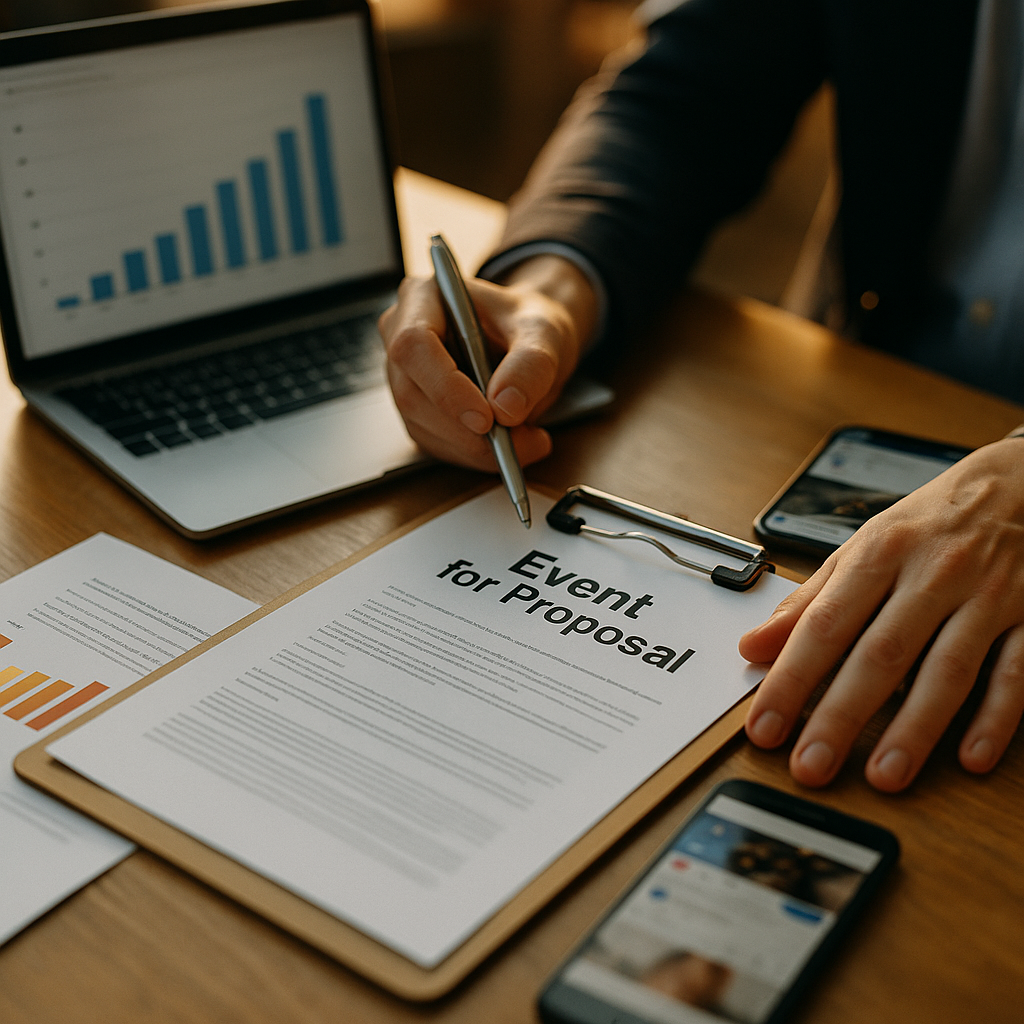
Only a fraction of meetings booked at creator economy events ever convert into signed deals. Brands walk away with a stack of business cards and a half-filled notebook, while the creators and agencies they met forget the conversation by the following Tuesday. The fix isn’t a better pitch deck. It’s a tighter RFP, written before you ever book a table at IMCX or Platform Social, that turns a speed-dating floor into a sourcing pipeline.
If your team still shows up to deal-focused creator events with a vague brief and a vibe, you’re leaving budget on the table. This playbook covers how to build an RFP that actually works inside the compressed, high-volume format these events demand.
Why Deal-Focused Events Break Traditional RFP Timelines
A standard influencer RFP process assumes weeks: discovery calls, portfolio review, legal redlines, a slow back-and-forth on rates. Events like IMCX and Platform Social compress that into twenty-minute meeting slots stacked back to back across two or three days. You might sit across from eight creator management agencies before lunch on day one.
That compression is the point. These events exist to shortcut sourcing cycles. But it only works in your favor if you walk in with a document that lets a creator manager say yes, no, or “let’s talk numbers” within minutes, not days. Show up without one and you’ll spend your meeting slots re-explaining campaign basics instead of negotiating terms.
An RFP built for a deal-focused event isn’t a procurement formality. It’s a negotiating tool designed to compress weeks of back-and-forth into a single floor meeting.
This is the same logic covered in our playbook on structured deal events: the format rewards preparation over improvisation. Agencies and platforms attending these events are running the same math you are. They’re trying to fill a limited number of meeting slots with brands most likely to close. A sharp RFP signals you’re one of them.
What Belongs in a Deal-Event RFP (and What Doesn’t)
Forget the twelve-page procurement document your legal team loves. For event use, you need something a creator manager can skim on their phone between meetings and reference again that evening. Aim for two pages, three at most.
Core sections that earn their place:
- Campaign objective in one sentence. Awareness, conversion, UGC licensing, or ambassador pipeline. Pick one primary goal, not a wish list.
- Budget range, not a single number. A band like “$15,000 to $40,000 per creator package” lets agencies self-select instead of guessing.
- Creator tier and category fit. Be specific about niche, audience demo, and follower range rather than “lifestyle creators with engaged audiences,” a phrase that means nothing to someone fielding fifty pitches that day.
- Deliverables and usage rights, stated plainly. Spell out whitelisting, paid amplification rights, and content exclusivity windows. These are the terms that actually move price.
- Timeline for decision and launch. Agencies attending these events want to know if you’re signing in two weeks or two quarters. Say which.
- Compliance baseline. A one-line note that FTC disclosure and platform policy adherence are non-negotiable sets expectations before the contract stage.
What doesn’t belong: lengthy brand history, full legal terms, or exhaustive creative briefs. Save those for the follow-up after you’ve identified a real match. At the event itself, the RFP’s job is matchmaking, not final contracting.
Rate Transparency Isn’t Optional Anymore
Creator agencies have gotten sharper about reading vague RFPs as a red flag. If you won’t name a budget range, many will assume you’re either underfunded or fishing for free strategy. Transparent rate bands, benchmarked against current data, speed up every conversation that follows. Our breakdown of platform rate benchmarks is a useful gut check before you finalize your range, and resources like the Sprout Social benchmark reports can validate you’re not pitching numbers from two years ago.
Build the RFP Around the Meeting Format, Not Your Internal Process
Here’s the mistake most brand teams make: they bring the same RFP template they’d send to a full-service agency, built for a months-long engagement, and try to use it in a fifteen-minute speed meeting. It doesn’t translate. The document needs to answer the three questions a creator manager is silently asking in the first ninety seconds: Is this budget real? Does my roster fit? Can we move fast?
Structure your one-pager so those three answers sit in the first third of the page. Save nuance (content approval workflows, specific hashtag requirements, reporting cadence) for a follow-up document you send after the meeting, once there’s mutual interest. Nobody wants to negotiate approval workflows standing up at a conference table.
If you’re attending with multiple team members splitting meetings across the day, make sure every version of the RFP is identical. Nothing kills credibility faster than two people from the same brand quoting different budget ranges to agencies who compare notes between sessions, which they will.
Vetting Can’t Wait Until After the Handshake
Deal velocity is the whole appeal of these events, but velocity without a vetting gate is how brands end up signing creators with disclosure violations buried in old posts or engagement numbers that don’t hold up under a second look. Build your vetting criteria into the RFP itself, even in abbreviated form, so agencies know upfront what disqualifies a creator from consideration.
This is where a lot of brand teams get burned. They treat the event meeting as the finish line instead of the starting gate. Our guide to vetting creators before signing walks through the due diligence steps that should happen between the floor meeting and the contract, and it’s worth building a condensed version of that checklist into your RFP so expectations are set from the first conversation.
Compliance language deserves its own line item too. An RFP that references FTC disclosure standards and platform-specific labeling requirements signals you’re a brand that won’t need hand-holding on legal basics later. For teams building this out formally, our FTC-compliant vetting RFP template is a solid structural starting point, and the FTC’s own endorsement guidance should be the baseline every brand RFP references, even in summary form.
Treat the event meeting as the start of diligence, not the end of it. A handshake on the floor isn’t a signed contract, and your RFP should make that distinction clear to every agency you meet.
Budget Bands That Actually Get Responses
Pricing in creator deals has gotten more fragmented since platforms like TikTok Shop and Instagram’s affiliate tools introduced performance-based compensation alongside flat fees. Your RFP needs to specify which model you’re proposing, because an agency reading “budget: $25,000” without context doesn’t know if that’s a flat package fee or a commission pool.
Break your budget band into components where possible: base creator fee, usage rights premium, and any performance bonus structure. This level of detail might feel excessive for a floor meeting, but it’s exactly what lets an experienced creator manager mentally map your brief onto their roster in real time instead of promising a follow-up email that never gets prioritized.
If your program spans nano through macro tiers, make that range explicit too. A single RFP trying to cover a $2,000 nano package and a $50,000 macro placement without segmentation reads as unfocused. Agencies attending these events often specialize, and signaling which tier you’re actually there to source saves everyone time. For teams managing a tiered mix, the budgeting logic in our nano creator fleet budgeting piece translates well into event-ready RFP language.
After the Floor: Turning Meeting Notes Into Signed Deals
The RFP’s job doesn’t end when the event does. The real failure point for most brands isn’t the meeting itself, it’s the three weeks after, when a stack of promising conversations quietly dies because nobody owns follow-up. Build a simple scoring system before you even arrive: budget fit, audience match, content quality, and compliance history, each rated on the spot or within twenty-four hours while the meeting is still fresh.
Assign a single owner per lead the moment the meeting ends. Internal handoffs are where deals go to die, especially when a marketing manager meets a creator agency on the floor but procurement owns the actual contract. Clarify that chain before the event, not after.
Teams that treat event leads like a sales pipeline, with stages, deadlines, and a CRM entry rather than a notebook scribble, close noticeably more of them. If your organization is weighing whether to run this process in-house or route it through an agency partner, the cost comparison in our in-house versus agency breakeven analysis is a useful companion read before your next event cycle, and general sales-pipeline hygiene principles from HubSpot’s CRM resources apply just as well to creator deal flow as they do to traditional B2B sales.
Finally, build event learnings into your next quarterly roadmap instead of letting them sit in a slide deck nobody revisits. Connecting floor conversations to a funded plan is exactly the gap covered in our piece on turning panel notes into a funded roadmap, and it’s the step that separates brands who treat these events as a line item from brands who treat them as a sourcing channel.
Visible FAQ
FAQs
How long should an RFP be for a deal-focused creator event like IMCX or Platform Social?
Keep it to two or three pages. The format demands something a creator manager can scan in under a minute between meetings, so lead with budget, deliverables, and timeline, and save detailed legal terms for a follow-up document.
Should I share exact budget numbers in the RFP?
Share a budget range rather than a single figure. A clear band like “$15,000 to $40,000 per package” lets agencies self-select quickly, which is exactly what you need in a high-volume meeting format.
What’s the biggest mistake brands make at these events?
Treating the floor meeting as the finish line. Deals made in a twenty-minute conversation still need vetting, compliance review, and contract negotiation before they’re real. Build a follow-up process before you arrive, not after.
Do I need separate RFPs for different creator tiers?
Yes, if your program spans nano through macro creators. A single unsegmented RFP reads as unfocused to agencies who often specialize by tier, so specify which range you’re sourcing for at a given event or meeting.
How do I track leads after the event ends?
Assign a single internal owner to each lead immediately and score contacts on budget fit, audience match, and compliance history while the conversation is still fresh. Treat it like a sales pipeline with stages and deadlines, not a stack of notes.
Next step: before your next IMCX or Platform Social, draft your one-page RFP, assign a single lead-tracking owner, and run your compliance checklist past legal so follow-up contracts move in days, not weeks.
Top Influencer Marketing Agencies
The leading agencies shaping influencer marketing in 2026
Agencies ranked by campaign performance, client diversity, platform expertise, proven ROI, industry recognition, and client satisfaction. Assessed through verified case studies, reviews, and industry consultations.
Moburst

-
2

The Shelf
Boutique Beauty & Lifestyle Influencer AgencyA data-driven boutique agency specializing exclusively in beauty, wellness, and lifestyle influencer campaigns on Instagram and TikTok. Best for brands already focused on the beauty/personal care space that need curated, aesthetic-driven content.Clients: Pepsi, The Honest Company, Hims, Elf Cosmetics, Pure LeafVisit The Shelf → -
3

Audiencly
Niche Gaming & Esports Influencer AgencyA specialized agency focused exclusively on gaming and esports creators on YouTube, Twitch, and TikTok. Ideal if your campaign is 100% gaming-focused — from game launches to hardware and esports events.Clients: Epic Games, NordVPN, Ubisoft, Wargaming, Tencent GamesVisit Audiencly → -
4

Viral Nation
Global Influencer Marketing & Talent AgencyA dual talent management and marketing agency with proprietary brand safety tools and a global creator network spanning nano-influencers to celebrities across all major platforms.Clients: Meta, Activision Blizzard, Energizer, Aston Martin, WalmartVisit Viral Nation → -
5

The Influencer Marketing Factory
TikTok, Instagram & YouTube CampaignsA full-service agency with strong TikTok expertise, offering end-to-end campaign management from influencer discovery through performance reporting with a focus on platform-native content.Clients: Google, Snapchat, Universal Music, Bumble, YelpVisit TIMF → -
6

NeoReach
Enterprise Analytics & Influencer CampaignsAn enterprise-focused agency combining managed campaigns with a powerful self-service data platform for influencer search, audience analytics, and attribution modeling.Clients: Amazon, Airbnb, Netflix, Honda, The New York TimesVisit NeoReach → -
7

Ubiquitous
Creator-First Marketing PlatformA tech-driven platform combining self-service tools with managed campaign options, emphasizing speed and scalability for brands managing multiple influencer relationships.Clients: Lyft, Disney, Target, American Eagle, NetflixVisit Ubiquitous → -
8

Obviously
Scalable Enterprise Influencer CampaignsA tech-enabled agency built for high-volume campaigns, coordinating hundreds of creators simultaneously with end-to-end logistics, content rights management, and product seeding.Clients: Google, Ulta Beauty, Converse, AmazonVisit Obviously →