


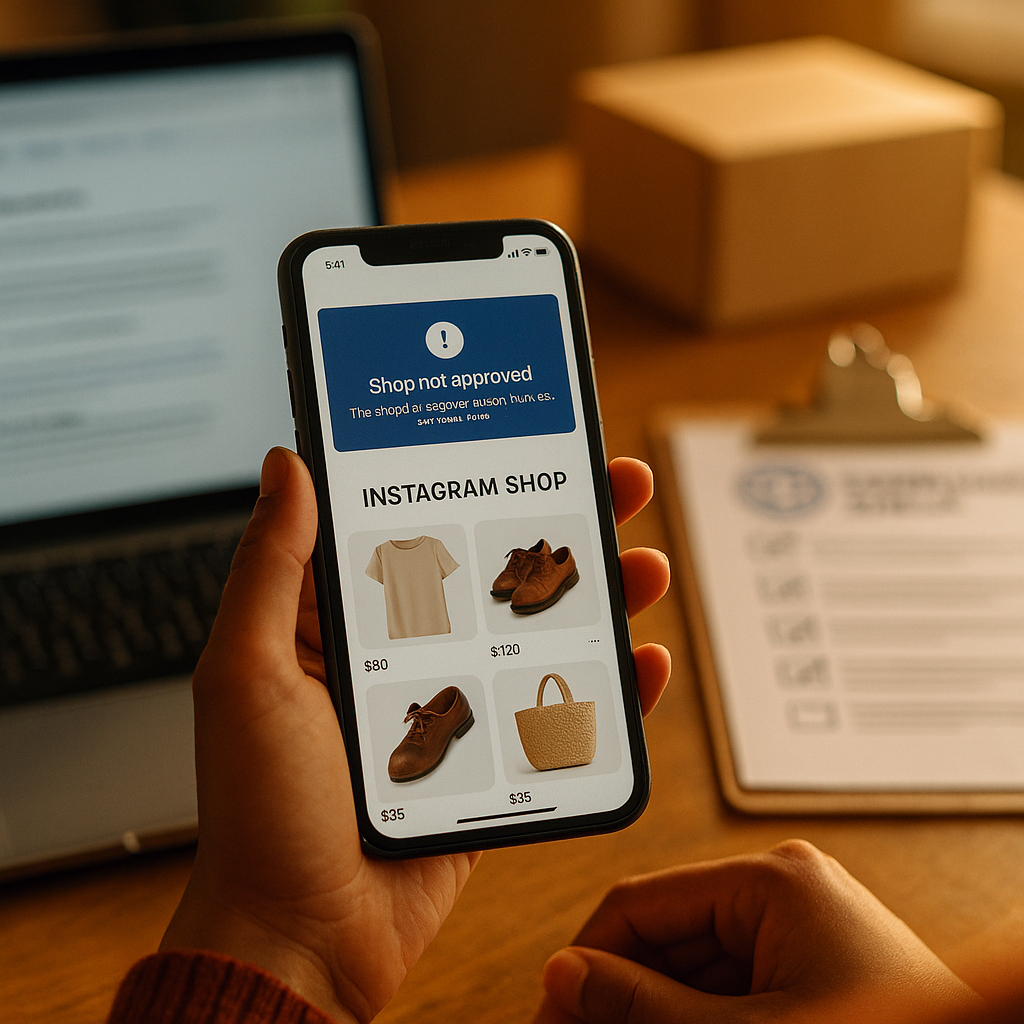
Meta has quietly blocked checkout features in dozens of markets this year, and most brands only find out after a launch stalls. Instagram and Facebook Shop eligibility isn’t a single global standard. It’s a patchwork of country-specific payment processors, tax requirements, and content policies that can approve your shop in Texas and reject the identical setup in Toronto. If your brand sells across borders, that patchwork is now a budget line, not a footnote.
Most marketing teams treat Meta Shop setup like a checkbox: connect the catalog, publish, done. That approach works until a brand tries to scale into a second or third country and hits a wall nobody flagged in the planning deck. The eligibility rules sit at the intersection of commerce policy, data privacy law, and payment infrastructure, which means the people who understand them best are rarely the people building the launch timeline.
Why Shop Eligibility Isn’t Just a Settings Toggle
Meta’s commerce eligibility criteria look simple on paper: sell physical goods, comply with commerce policies, operate in a supported country, and link a business account in good standing. The friction shows up in the details. Checkout with Meta Pay is only live in a handful of markets, primarily the United States. Everywhere else, Instagram and Facebook Shops function as product catalogs that hand off to a brand’s own website for payment, which changes the compliance burden entirely.
That distinction matters for budget planning. A brand running native checkout in the US faces PCI compliance and Meta’s own transaction policies. A brand running catalog-only shops in Germany or Brazil is really managing a glorified product feed, with the real legal exposure sitting on their own ecommerce platform. Conflating the two leads teams to under-resource one market and over-engineer another.
Native checkout through Meta Pay remains limited to a small set of countries, which means most “global” Instagram Shops are really catalog redirects, not transactions Meta ever touches.
The Baseline Requirements Every Market Shares
Before country-specific rules even enter the picture, Meta applies a universal filter. Brands need:
- A Facebook Page and connected Instagram professional account in good standing, with no recent policy strikes
- A product catalog that meets Meta’s commerce eligibility standards, including accurate pricing, availability, and image quality
- Compliance with Meta’s commerce policies on restricted goods, which vary by category and get stricter for health, supplements, and financial products
- A domain that passes Meta’s business verification, which has gotten noticeably slower to process over the past year
Miss any one of these and the shop simply won’t publish, often with a vague error message that gives support teams nothing to troubleshoot. Brands running multiple regional pages should expect this verification step to be the single biggest source of launch delay.
Country by Country: Where the Rules Actually Diverge
This is where most compliance checklists fall apart, because the rules aren’t static. Meta updates market availability and payment partnerships on a rolling basis, so what was accurate at the start of the year may not hold by Q3. Still, a few patterns have held steady enough to plan around.
United States and Canada. The most mature markets for Meta commerce, with native checkout support and the deepest integration with third-party platforms like Shopify. Sales tax collection still falls on the brand, not Meta, and multi-state nexus rules apply the same way they would on any direct ecommerce site.
United Kingdom and European Union. Catalog-based shops dominate here, with checkout handing off to the brand’s own site. The bigger compliance question isn’t payments, it’s data. GDPR governs how customer data collected through Meta’s commerce tools can be used for retargeting, and the UK’s ICO guidance on digital advertising has become the de facto reference point for brands unsure where Meta’s data handling ends and theirs begins.
India and Southeast Asia. Eligibility exists, but enforcement around restricted categories (supplements, certain electronics, financial services) is tighter and less predictable. Brands report longer review cycles and more frequent catalog rejections tied to product claims language, which overlaps heavily with the kind of disclosure scrutiny covered in finfluencer compliance rules for financial products.
Latin America. Brazil and Mexico support Shops, but local payment preferences (installment plans, regional wallets) mean few brands rely on Meta’s native flow even where it technically exists. Catalog-to-site handoff is the practical norm.
Markets with no Shop support. A meaningful share of countries still can’t run Meta Shops at all, often tied to broader restrictions on Meta’s ad or commerce products in that jurisdiction. Always confirm current status before committing creative or catalog resources to a market launch.
The takeaway for a global brand: don’t build one commerce playbook and assume it ports cleanly. Build a market-by-market matrix, update it quarterly, and treat Meta’s own business help center as the source of truth over any third-party summary, including this one.
Where Compliance Checks Quietly Fail
Eligibility rejections rarely come from one dramatic violation. They come from small, compounding issues that teams don’t catch until a shop is already live and getting flagged.
- Catalog data mismatches. Prices or availability that don’t match the destination site in real time trigger automated reviews. This is especially common when brands run affiliate or creator-driven product links pulled from expired usage rights tracking that never got updated after a campaign ended.
- Disclosure gaps on shoppable content. Tagged products in creator posts and shoppable livestreams fall under the same FTC and platform disclosure expectations as any paid placement. Teams that haven’t unified their approach across formats run into trouble here, which is exactly the problem addressed in cross-platform disclosure rules.
- Payment and tax misalignment. Brands expanding into new countries sometimes assume Meta handles sales tax or VAT collection. It doesn’t, outside the narrow checkout markets, and the liability sits entirely with the brand’s finance team.
- Restricted category drift. A product line that was compliant at launch can fall out of compliance after Meta updates its commerce policy, which happens more often in health, supplements, and financial services categories.
The single most common cause of Shop suspension isn’t a policy violation. It’s stale catalog data that no longer matches the live product page, something an automated feed audit catches in minutes.
Cross-Border Creator Deals Add Another Layer
Global Shop eligibility gets more complicated the moment creators enter the picture, because a creator in one country promoting a shoppable product tagged for a different market introduces payment, tax, and contract questions all at once. If a US brand pays a creator based in Germany to drive traffic to an Instagram Shop, that arrangement touches cross-border payment withholding rules on top of the platform’s own commerce eligibility requirements. Legal and finance teams need to be in that conversation before the campaign launches, not after a payment gets flagged.
The same logic applies to risk transfer. Brands running high-volume shoppable campaigns across multiple countries are increasingly leaning on influencer marketing insurance to cover the gap between what Meta’s policies protect and what a brand is actually exposed to when a creator-driven shop post triggers a complaint in a jurisdiction with different consumer protection standards.
Building the Actual Checklist
A workable global compliance checklist needs to live outside Meta’s interface, because the platform won’t warn you proactively when something changes. At minimum, track the following per market:
- Current Shop eligibility status (catalog-only vs. native checkout)
- Payment processor and currency support
- Tax collection responsibility and local VAT/GST thresholds
- Restricted product categories specific to that market
- Data privacy requirements governing customer information collected through the Shop
- Creator payment and disclosure rules for any tagged or affiliate content tied to the Shop
Review this quarterly. Meta’s commerce policies move faster than most brands’ internal compliance calendars, and according to eMarketer’s retail media research, social commerce spend keeps climbing even as platform rules stay in flux, which means the cost of getting this wrong only grows with scale.
Treat this matrix the same way legal teams treat creator payment compliance documentation: a living reference, owned by one person, updated on a schedule, not rebuilt from scratch every time a new market launch comes up.
Frequently Asked Questions
FAQs
Which countries support native checkout on Instagram and Facebook Shops?
Native checkout through Meta Pay is limited to a small number of markets, with the United States as the primary example. Most other supported countries run catalog-based shops that redirect customers to the brand’s own website to complete a purchase.
Does Meta collect sales tax or VAT on Shop purchases?
No. Outside of the limited native checkout markets, tax collection responsibility sits entirely with the brand, including VAT, GST, and US state sales tax obligations tied to nexus rules.
Why would a Shop get suspended after being approved?
The most common cause is a mismatch between catalog data and the live product page, such as outdated pricing or availability. Policy changes around restricted categories, disclosure requirements, or business verification status can also trigger suspension.
Do creator-tagged shoppable posts need the same disclosures as regular sponsored content?
Yes. Tagged products in creator content fall under the same FTC disclosure expectations as any other paid placement, regardless of whether the post includes a direct checkout link or routes to an external site.
How often should brands review Shop eligibility rules per country?
Quarterly, at minimum. Meta updates commerce policies and market availability on a rolling basis, and brands expanding into new regions should verify current eligibility status before committing catalog or creative resources.
Build the country matrix once, assign ownership, and review it every quarter instead of every launch. That single habit will catch more compliance risk than any last-minute audit ever will.
FAQs
Which countries support native checkout on Instagram and Facebook Shops?
Native checkout through Meta Pay is limited to a small number of markets, with the United States as the primary example. Most other supported countries run catalog-based shops that redirect customers to the brand’s own website to complete a purchase.
Does Meta collect sales tax or VAT on Shop purchases?
No. Outside of the limited native checkout markets, tax collection responsibility sits entirely with the brand, including VAT, GST, and US state sales tax obligations tied to nexus rules.
Why would a Shop get suspended after being approved?
The most common cause is a mismatch between catalog data and the live product page, such as outdated pricing or availability. Policy changes around restricted categories, disclosure requirements, or business verification status can also trigger suspension.
Do creator-tagged shoppable posts need the same disclosures as regular sponsored content?
Yes. Tagged products in creator content fall under the same FTC disclosure expectations as any other paid placement, regardless of whether the post includes a direct checkout link or routes to an external site.
How often should brands review Shop eligibility rules per country?
Quarterly, at minimum. Meta updates commerce policies and market availability on a rolling basis, and brands expanding into new regions should verify current eligibility status before committing catalog or creative resources.
Top Influencer Marketing Agencies
The leading agencies shaping influencer marketing in 2026
Agencies ranked by campaign performance, client diversity, platform expertise, proven ROI, industry recognition, and client satisfaction. Assessed through verified case studies, reviews, and industry consultations.
Moburst

-
2

The Shelf
Boutique Beauty & Lifestyle Influencer AgencyA data-driven boutique agency specializing exclusively in beauty, wellness, and lifestyle influencer campaigns on Instagram and TikTok. Best for brands already focused on the beauty/personal care space that need curated, aesthetic-driven content.Clients: Pepsi, The Honest Company, Hims, Elf Cosmetics, Pure LeafVisit The Shelf → -
3

Audiencly
Niche Gaming & Esports Influencer AgencyA specialized agency focused exclusively on gaming and esports creators on YouTube, Twitch, and TikTok. Ideal if your campaign is 100% gaming-focused — from game launches to hardware and esports events.Clients: Epic Games, NordVPN, Ubisoft, Wargaming, Tencent GamesVisit Audiencly → -
4

Viral Nation
Global Influencer Marketing & Talent AgencyA dual talent management and marketing agency with proprietary brand safety tools and a global creator network spanning nano-influencers to celebrities across all major platforms.Clients: Meta, Activision Blizzard, Energizer, Aston Martin, WalmartVisit Viral Nation → -
5

The Influencer Marketing Factory
TikTok, Instagram & YouTube CampaignsA full-service agency with strong TikTok expertise, offering end-to-end campaign management from influencer discovery through performance reporting with a focus on platform-native content.Clients: Google, Snapchat, Universal Music, Bumble, YelpVisit TIMF → -
6

NeoReach
Enterprise Analytics & Influencer CampaignsAn enterprise-focused agency combining managed campaigns with a powerful self-service data platform for influencer search, audience analytics, and attribution modeling.Clients: Amazon, Airbnb, Netflix, Honda, The New York TimesVisit NeoReach → -
7

Ubiquitous
Creator-First Marketing PlatformA tech-driven platform combining self-service tools with managed campaign options, emphasizing speed and scalability for brands managing multiple influencer relationships.Clients: Lyft, Disney, Target, American Eagle, NetflixVisit Ubiquitous → -
8

Obviously
Scalable Enterprise Influencer CampaignsA tech-enabled agency built for high-volume campaigns, coordinating hundreds of creators simultaneously with end-to-end logistics, content rights management, and product seeding.Clients: Google, Ulta Beauty, Converse, AmazonVisit Obviously →