


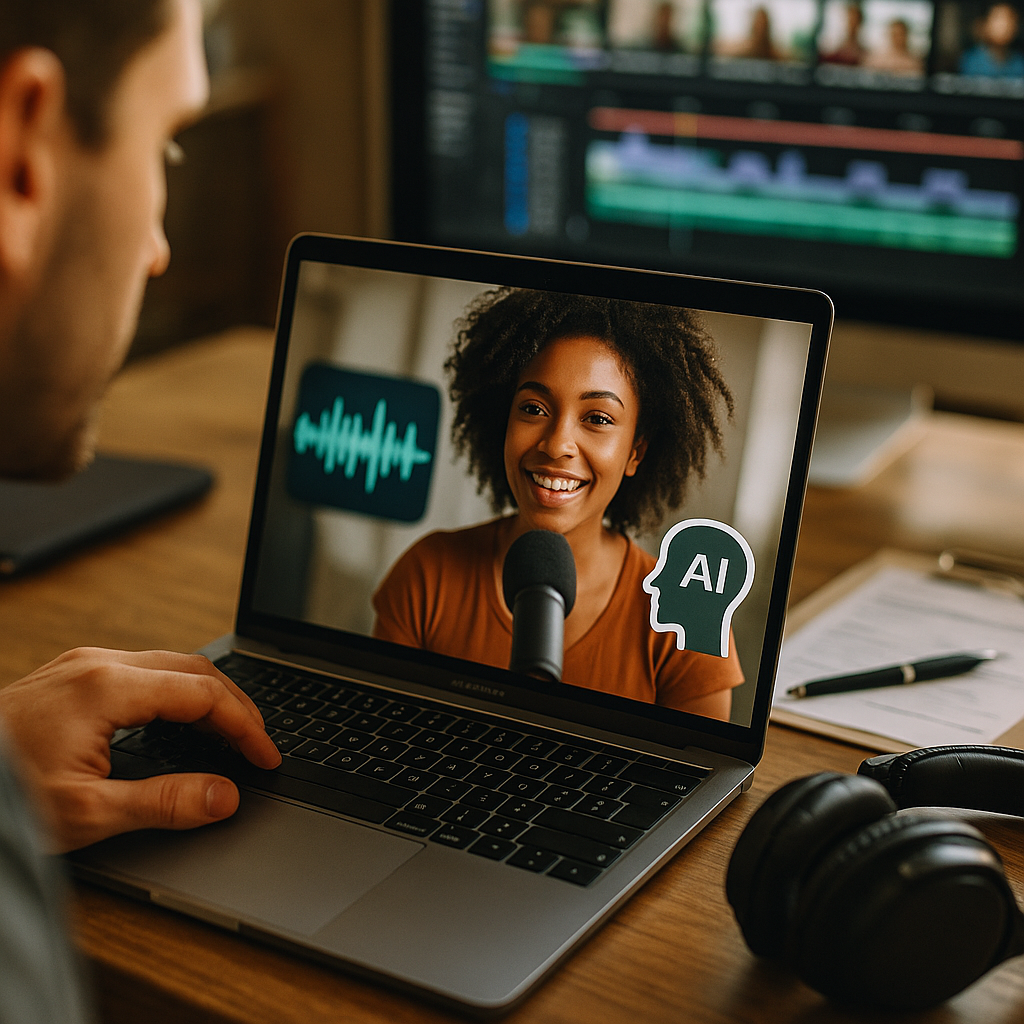
Seventy-three percent of consumers say they’re more likely to buy a product when marketing content is available in their native language, according to Statista research on localization. Yet most brands still ship creator content into new markets with subtitles slapped on as an afterthought. The AI localization engine market exists to fix that gap — and it’s about to decide who wins the next round of international creator marketing.
If you’re a brand or agency eyeing expansion into Brazil, Indonesia, or the Gulf states, the question isn’t whether to dub creator content. It’s which vendor can do it fast, cheap, and without making your spokesperson sound like a poorly synced kung-fu movie.
Why Dubbing Suddenly Matters for Creator Campaigns
Influencer content used to travel across borders through subtitles and hope. That worked when creator marketing was a nice-to-have line item. It doesn’t work now that creator spend represents a meaningful chunk of the media mix for global brands entering markets where English fluency and reading habits vary wildly.
Voice matters more than text in short-form video. A TikTok or Reel lives or dies on the first three seconds, and subtitle-only localization forces viewers to split attention between reading and watching. Native-language voiceovers, delivered in a voice that still sounds like the original creator, keep engagement intact. That’s the entire value proposition of AI localization engines: dub content at scale without re-shooting, without hiring twelve voice actors per market, and without waiting six weeks for a localization agency to turn something around.
The brands winning in new language markets aren’t the ones with the biggest ad budgets — they’re the ones who figured out how to make a creator sound like they were born speaking Tagalog, without losing a single follower’s trust in the process.
What “Real-Time” Actually Means Here
Vendors throw “real-time” around loosely. In practice, it means one of three things, and the distinction matters for your workflow planning.
- True real-time: live-stream dubbing with sub-two-second latency, used mostly for live shopping events or webinars.
- Near-real-time batch processing: a video uploaded and dubbed within minutes, the category most creator content localization actually falls into.
- Marketing-speak real-time: turnaround in hours rather than days, still branded as “real-time” because it beats traditional dubbing houses.
Know which one you’re buying before you sign a contract. A brand running always-on creator content across ten markets needs near-real-time batch reliability, not live-stream latency. A brand doing a single flagship live launch event in Japan needs the opposite.
The Core Evaluation Criteria
After running RFPs and pilot tests across several localization vendors, a handful of criteria separate the tools worth paying for from the ones that generate viral blooper reels for the wrong reasons.
Lip-sync accuracy under motion
Static talking-head content is easy. Every vendor demo nails it. The real test is dubbing a creator who’s walking, gesturing, laughing, or filming a cooking segment with fast head turns. Ask for a sample using your actual creator roster’s most kinetic content, not the vendor’s polished demo reel. Tools like HeyGen, ElevenLabs’ dubbing studio, and Papercup handle motion differently, and the gap widens noticeably in unscripted UGC-style footage versus produced brand content.
Voice cloning consent and rights management
This is the risk-mitigation section, and it deserves more attention than most procurement teams give it. If your engine clones a creator’s voice to generate the dubbed track, you need documented, revocable consent from that creator covering every target language and every usage window. The FTC has signaled increased scrutiny of AI-generated endorsements, and voice cloning without airtight consent language is exactly the kind of practice that draws enforcement attention. Build a consent clause into every creator contract before you localize a single video.
A single dubbed video without proper voice consent isn’t just a compliance headache — it’s a potential FTC violation, a creator relationship torched, and a PR story you don’t want written about your brand.
Latency and turnaround SLAs
Vendors quote best-case processing times in sales decks. Ask instead for the P90 turnaround, the number that reflects what actually happens on a busy Tuesday when three other clients are running batch jobs. Get this in the contract as a service-level agreement with penalties, not a verbal promise.
Language and dialect coverage depth
“Spanish” isn’t one language for dubbing purposes. Mexican Spanish, Castilian Spanish, and Rioplatense Spanish carry different slang, cadence, and cultural reference points. The same goes for Arabic dialects across the Gulf versus the Levant. Ask vendors for dialect-specific accuracy benchmarks, not a single blended “Spanish” score. This is where a lot of localization projects quietly underperform — the dubbing is technically correct but culturally flat.
Emotional tone preservation
A creator’s excitement, sarcasm, or comedic timing needs to survive translation. Some engines optimize purely for phonetic accuracy and lose emotional nuance in the process. Run a blind test: show the dubbed output to native speakers in the target market without telling them it’s AI-generated, and ask them to rate authenticity on a simple scale. If it fails that test, no amount of lip-sync precision will save the campaign.
Vendor Landscape: Who’s Actually Shipping
The category has consolidated faster than most martech verticals. A few names show up repeatedly in brand RFPs right now.
- ElevenLabs leads on voice cloning fidelity and language breadth, with strong dubbing studio tooling built for scale. Best for brands prioritizing voice authenticity over video-native lip movement adjustment.
- HeyGen pairs voice dubbing with facial re-sync, useful for talking-head and studio-produced content where visible lip movement matters more.
- Papercup focuses on longer-form media and has stronger enterprise workflow tooling for publishers and broadcasters expanding creator partnerships internationally.
- Deepdub targets entertainment and media localization with strong emotional-tone modeling, increasingly courting brand and agency clients.
- Rask AI and similar mid-market players undercut on price for brands running high-volume, lower-stakes UGC localization where perfection matters less than speed and cost.
None of these vendors dominate every use case. The right pick depends on whether your priority is voice fidelity, visual lip-sync, dialect depth, or raw throughput at the lowest cost per minute.
Building the Pilot Before You Commit Budget
Don’t sign an annual contract off a demo. Run a structured pilot across three dimensions: content type (produced vs. UGC-style), target market count (start with two, not ten), and native-speaker review panels in each market. Budget four to six weeks for a proper pilot, including at least one round of vendor iteration based on your feedback.
Track cost per minute of finished dubbed content, not just the subscription fee — hidden costs in review cycles and manual QA add up fast. This mirrors the discipline brands are applying to vendor renewal audits across the martech stack generally: don’t just measure the sticker price, measure the operational drag.
Attribution matters here too. If you’re localizing creator content to drive performance in a new market, you need clean measurement to prove it worked. Brands already wrestling with creator ROI attribution domestically will find the problem compounds internationally, where identity resolution and cross-device tracking get messier. Pair your localization rollout with a measurement plan from day one, not as an afterthought once the dubbed content is already live.
Data governance deserves a mention too. Once you’re processing creator voice data through a third-party AI engine, you’re creating new data flows that need the same scrutiny applied to data contracts for marketing AI elsewhere in your stack. Voice biometric data carries specific regulatory weight in markets like the EU and UK, where the ICO has published guidance on biometric processing that applies directly to voice cloning workflows.
The Compliance Layer Nobody Budgets For
Every market you enter has different rules about disclosed AI-generated content. The EU’s AI Act requires labeling for synthetic media in specific contexts. Some Asian markets are drafting similar disclosure rules for AI-dubbed advertising content. Build a disclosure line item into your localization workflow now, because retrofitting compliance after your content is already live in twelve markets is expensive and slow.
Agencies running multi-market creator programs should treat this the same way they’d treat infrastructure migration planning for attribution: map the requirements before you scale, not after a regulator sends a letter.
Localization vendors sell speed. Your legal team needs to sell caution. The winning brands find the operational rhythm that satisfies both — usually by building disclosure and consent into the pilot phase, not the post-mortem.
Where This Is Heading
Expect consolidation. The current field of a dozen credible vendors will likely shrink to four or five within the next eighteen months as larger martech and creator platforms acquire the best dubbing tech outright. eMarketer has flagged AI localization as one of the faster-growing line items in international creator budgets, which means the vendors with staying power will be the ones that integrate directly into existing creator management platforms rather than operating as standalone point solutions.
Brands that lock into a single-purpose dubbing tool now risk a migration headache later. Favor vendors with open APIs and export flexibility over closed ecosystems, even if the closed option looks slightly better today.
Next step: Before your next international creator campaign brief goes out, run a two-market, four-week pilot with your top two vendor candidates, scored by native-speaker panels and a documented consent workflow — not a vendor demo reel.
Frequently Asked Questions
What is an AI localization engine for creator content?
It’s software that automatically translates and dubs creator video content into another language, using AI voice cloning and lip-sync technology to preserve the original creator’s voice characteristics and visual timing rather than replacing them with a generic voiceover.
How much does AI dubbing cost compared to traditional localization?
Traditional dubbing with human voice actors and studios typically runs significantly higher per minute than AI-based tools, and takes days to weeks longer. AI localization engines generally charge per minute of finished content, with pricing scaling based on language count, voice cloning complexity, and turnaround speed requirements.
Do I need creator consent to clone their voice for dubbing?
Yes. Voice cloning without explicit, documented consent creates legal exposure under emerging AI disclosure regulations and existing right-of-publicity laws in many markets. Consent language should be built into creator contracts before any dubbing work begins, specifying which languages and usage windows are covered.
What’s the difference between real-time and near-real-time dubbing?
True real-time dubbing processes content with latency low enough for live streaming, typically under two seconds. Near-real-time, which covers most creator content localization use cases, processes uploaded video in minutes rather than seconds, which is sufficient for scheduled content but not live events.
Which industries benefit most from AI localization engines?
Brands running influencer and creator campaigns across multiple language markets simultaneously see the biggest efficiency gains, particularly in beauty, consumer tech, gaming, and travel verticals where video-first content dominates and international expansion is a core growth strategy.
Top Influencer Marketing Agencies
The leading agencies shaping influencer marketing in 2026
Agencies ranked by campaign performance, client diversity, platform expertise, proven ROI, industry recognition, and client satisfaction. Assessed through verified case studies, reviews, and industry consultations.
Moburst

-
2

The Shelf
Boutique Beauty & Lifestyle Influencer AgencyA data-driven boutique agency specializing exclusively in beauty, wellness, and lifestyle influencer campaigns on Instagram and TikTok. Best for brands already focused on the beauty/personal care space that need curated, aesthetic-driven content.Clients: Pepsi, The Honest Company, Hims, Elf Cosmetics, Pure LeafVisit The Shelf → -
3

Audiencly
Niche Gaming & Esports Influencer AgencyA specialized agency focused exclusively on gaming and esports creators on YouTube, Twitch, and TikTok. Ideal if your campaign is 100% gaming-focused — from game launches to hardware and esports events.Clients: Epic Games, NordVPN, Ubisoft, Wargaming, Tencent GamesVisit Audiencly → -
4

Viral Nation
Global Influencer Marketing & Talent AgencyA dual talent management and marketing agency with proprietary brand safety tools and a global creator network spanning nano-influencers to celebrities across all major platforms.Clients: Meta, Activision Blizzard, Energizer, Aston Martin, WalmartVisit Viral Nation → -
5

The Influencer Marketing Factory
TikTok, Instagram & YouTube CampaignsA full-service agency with strong TikTok expertise, offering end-to-end campaign management from influencer discovery through performance reporting with a focus on platform-native content.Clients: Google, Snapchat, Universal Music, Bumble, YelpVisit TIMF → -
6

NeoReach
Enterprise Analytics & Influencer CampaignsAn enterprise-focused agency combining managed campaigns with a powerful self-service data platform for influencer search, audience analytics, and attribution modeling.Clients: Amazon, Airbnb, Netflix, Honda, The New York TimesVisit NeoReach → -
7

Ubiquitous
Creator-First Marketing PlatformA tech-driven platform combining self-service tools with managed campaign options, emphasizing speed and scalability for brands managing multiple influencer relationships.Clients: Lyft, Disney, Target, American Eagle, NetflixVisit Ubiquitous → -
8

Obviously
Scalable Enterprise Influencer CampaignsA tech-enabled agency built for high-volume campaigns, coordinating hundreds of creators simultaneously with end-to-end logistics, content rights management, and product seeding.Clients: Google, Ulta Beauty, Converse, AmazonVisit Obviously →