


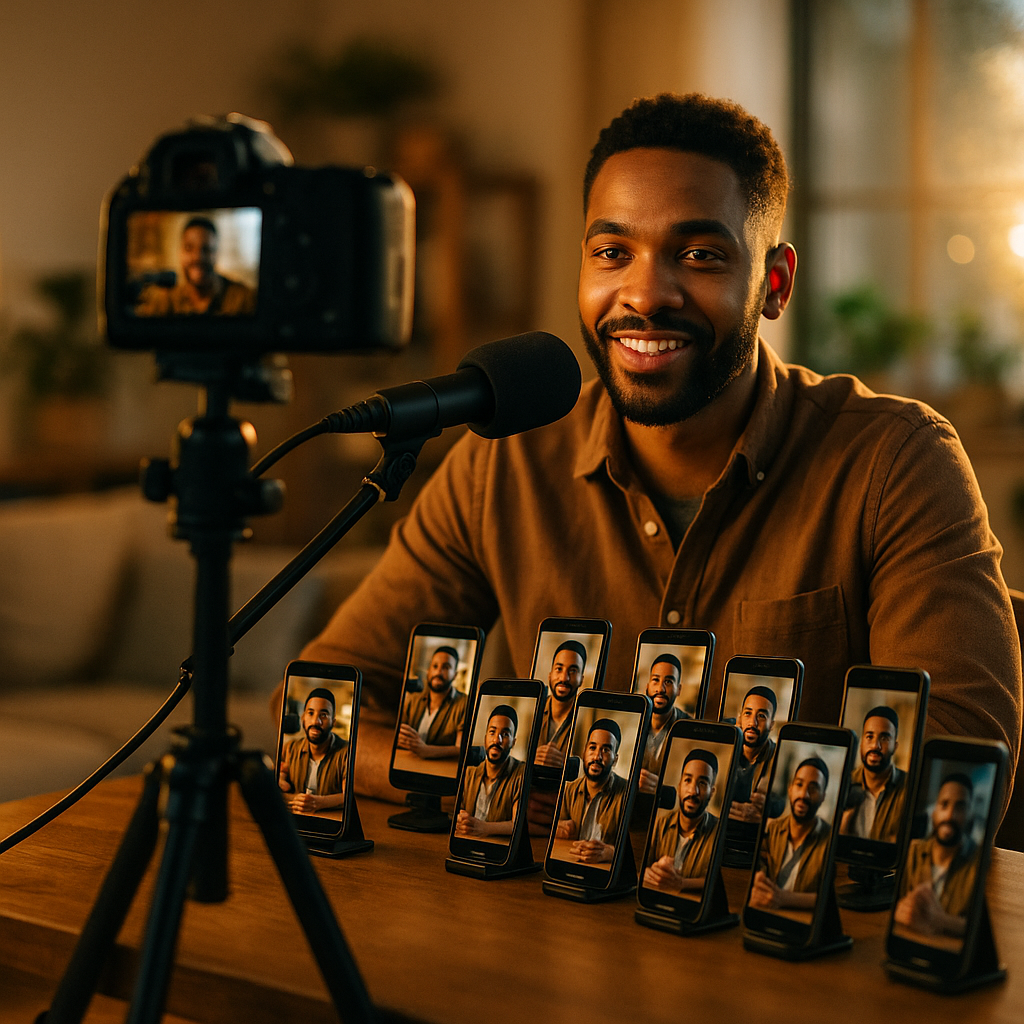
One creator shoot. Twelve pieces of content. Zero extra briefs. That’s the pitch behind the hybrid long-form-anchor, short-form-amplifier distribution model, and it’s quietly become the default operating structure for brands trying to make creator budgets stretch further without sacrificing reach. Sound too efficient to be true? It isn’t — but it does require a rethink of how you brief, shoot, and measure creator work.
Why One Asset Now Has to Do Five Jobs
Creator budgets aren’t shrinking, but expectations attached to them are ballooning. Marketers are being asked to hit awareness, consideration, and conversion goals from the same line item that used to just cover “brand content.” Dedicated long-form placements have gotten expensive — dedicated YouTube videos now outprice integrations in most mid-tier creator tiers, which means brands can no longer afford to commission long-form and short-form separately and treat them as unrelated line items.
The hybrid model solves this by inverting the production logic. Instead of shooting a 60-second TikTok and a separate 12-minute YouTube video, brands commission one substantial “anchor” asset — a long-form video, podcast episode, or in-depth tutorial — and then slice it into a dozen short-form “amplifier” clips distributed across TikTok, Reels, Shorts, and even Pinterest idea pins.
Brands running hybrid anchor-amplifier programs report getting 8-15 distinct pieces of usable content from a single creator production day, compared to 2-3 pieces under legacy briefing structures.
What the Anchor Asset Actually Looks Like
The anchor isn’t just a longer ad. It needs narrative depth, multiple discrete “moments,” and enough tonal variety that it can be chopped into standalone pieces without feeling like a mutilated ad. Think:
- A 15-20 minute YouTube deep-dive or product walkthrough with 6-8 distinct segments
- A podcast-style conversation between the creator and a founder or expert
- A day-in-the-life vlog that naturally threads product placement through multiple scenes
- An extended tutorial or “how I actually use this” demo
The brief has to be written backward from distribution. That’s the part most teams get wrong. You can’t shoot a generic long-form asset and hope it yields good clips later — you need to identify, before the camera rolls, which three or four moments are “clippable” as hooks. Good creators already think this way; the smart ones will tell you mid-shoot, “that reaction right there is your TikTok open.”
The Amplifier Layer: Distribution, Not Duplication
Short-form clips pulled from the anchor aren’t meant to be smaller versions of the same message. They’re distribution vehicles engineered for platform-native behavior. A clip that opens with the anchor’s most surprising statistic works as a Reel. A clip built around the emotional payoff works as a TikTok. A tight, practical clip works as a YouTube Short that loops back to the full video.
This is where the model earns its ROI case. Instead of paying for reach once, brands are paying for production once and buying reach multiple times, across platforms with wildly different algorithmic logic and audience intent. That matters more now that vertical media growth outside China has hit 42% — audiences are consuming short-form at volume, but they’re doing it across more apps than ever, which fragments where an amplifier clip actually needs to live.
Sequencing Matters More Than People Think
Do you release the anchor first and clip afterward, or seed short-form teasers before the long-form drop? Both work, but they solve different problems. Teaser-first sequencing builds anticipation and works well for launches. Anchor-first sequencing is safer for evergreen or educational content, since you’re not gambling reach on a piece that doesn’t exist yet.
Most performance marketing teams I’ve spoken with default to a staggered release: anchor drops, three amplifier clips go out within 48 hours, then two or three more trickle out over the following two weeks as “proof point” content once early engagement data tells you which clips are working.
Where the Money Actually Gets Saved
The hybrid model isn’t primarily a creative strategy — it’s a cost-structure strategy dressed up as one. Production costs, usage rights negotiation, and creator fatigue all get compressed into a single engagement instead of three or four separate briefs. That has knock-on effects for how agencies staff and price creator programs, similar to the shift documented in Estée Lauder’s creator tiering model, where consolidating asset types under fewer, better-compensated creators cut overall agency spend without cutting output volume.
There’s also a licensing angle brands underweight. Usage rights for one anchor asset, negotiated once, typically cover derivative cuts under most current creator contracts — but confirm this explicitly. Ambiguous usage-rights language is one of the most common disputes agencies flag when repurposing creator content across paid and organic placements.
Negotiating usage rights once for an anchor asset, rather than per-format, can cut licensing costs by 30-40% versus commissioning short-form and long-form separately — but only if the contract explicitly covers derivative cuts.
The Platform-Fit Problem Nobody Talks About
Here’s the tension the hybrid model doesn’t fully resolve: not every platform rewards repurposed content equally. TikTok’s algorithm has historically favored content that feels native to the app, and audiences can smell a re-edited YouTube clip from a mile away. This isn’t fatal — plenty of high-performing amplifier clips are visibly “cut from something longer” — but it does mean editing discipline matters. Captions, pacing, and hook placement need platform-specific tuning, not a one-size crop.
This connects to a broader diversification problem brands are grappling with. Spreading one asset across five platforms sounds efficient, but each platform now has its own discovery mechanics, ad products, and risk profile. The platform-property paradox shows that diversifying distribution without a coherent strategy actually taxes ROI rather than protecting it. The hybrid model only pays off if you’re deliberate about which platforms get which clips — not just posting everywhere because you can.
There’s also a structural risk worth flagging: platform dependency. If your amplifier strategy leans heavily on one app’s algorithm and that platform faces regulatory or ownership disruption, your distribution plan is exposed. Brands still recalibrating after developments like TikTok’s US joint venture know this risk isn’t hypothetical.
Measurement: Stop Treating Every Clip as a Separate Campaign
The biggest reporting mistake brands make with hybrid distribution is measuring each amplifier clip in isolation, as if it were an independent campaign with its own ROI target. That’s backward. The anchor and its amplifiers should be measured as a single funnel: amplifiers drive discovery and traffic, the anchor drives depth and conversion intent, and attribution should reflect that relationship rather than crediting each piece separately.
This is easier said than done given how fractured measurement already is. Search behavior itself is splintering across AI chat interfaces, TikTok search, and traditional engines, a shift covered in search fragmentation forcing a media mix rebuild. If your attribution model can’t account for a viewer discovering a brand via a TikTok clip and converting three days later after watching the full YouTube anchor, you’re underreporting the model’s actual value.
Tools like Sprout Social and platform-native analytics (Meta Business Suite, TikTok Ads Manager) can help stitch together cross-format performance, but most brands still need a custom dashboard layer to connect anchor view-through data with amplifier click behavior. If you’re not already tracking this holistically, start there before scaling clip volume.
A Quick Gut-Check Before You Brief Your Next Shoot
- Does the anchor asset have at least 4-6 genuinely distinct, clippable moments?
- Have you confirmed usage rights explicitly cover derivative short-form cuts?
- Is your editing team platform-tuning each clip, or just cropping aspect ratios?
- Are you measuring the anchor and amplifiers as one funnel, or as isolated campaigns?
- Have you mapped which platforms actually deserve a clip, rather than posting everywhere by default?
If you can’t answer yes to most of these, you’re not running a hybrid distribution model — you’re just repurposing content and hoping the math works out. It sometimes does. It’s just not a strategy you can scale reliably, and scale is the entire point.
Frequently Asked Questions
What is the hybrid long-form-anchor, short-form-amplifier distribution model?
It’s a content strategy where brands commission one substantial long-form creator asset — the “anchor” — and then edit it into multiple short-form clips, or “amplifiers,” distributed across platforms like TikTok, Instagram Reels, and YouTube Shorts. The goal is maximizing content output and platform reach from a single production budget.
How many short-form clips can typically come from one long-form anchor asset?
Most brands report generating 8-15 usable short-form clips from a single well-planned long-form shoot, compared to just 2-3 pieces under traditional single-format briefing approaches.
Does this model save money compared to commissioning long-form and short-form separately?
Yes, primarily through consolidated production costs and one-time usage rights negotiation. Brands can see licensing cost reductions of 30-40% when contracts explicitly cover derivative short-form cuts, versus negotiating rights separately for each format.
How should brands measure performance across anchor and amplifier content?
Treat the anchor and its amplifier clips as a single funnel rather than isolated campaigns. Amplifiers typically drive discovery and top-of-funnel traffic, while the anchor asset drives deeper engagement and conversion intent. Attribution models should reflect that relationship rather than crediting each piece independently.
What’s the biggest risk with this distribution model?
Treating repurposed clips as generic crops rather than platform-native content. Each platform’s algorithm and audience behavior differ, so amplifier clips need format-specific editing, pacing, and hooks to perform — not just resized dimensions from the original anchor asset.
The Bottom Line
Start your next creator brief by identifying the anchor’s clippable moments before the shoot, not after — that single planning shift is what separates a scalable hybrid distribution program from expensive content recycling.
Top Influencer Marketing Agencies
The leading agencies shaping influencer marketing in 2026
Agencies ranked by campaign performance, client diversity, platform expertise, proven ROI, industry recognition, and client satisfaction. Assessed through verified case studies, reviews, and industry consultations.
Moburst

-
2

The Shelf
Boutique Beauty & Lifestyle Influencer AgencyA data-driven boutique agency specializing exclusively in beauty, wellness, and lifestyle influencer campaigns on Instagram and TikTok. Best for brands already focused on the beauty/personal care space that need curated, aesthetic-driven content.Clients: Pepsi, The Honest Company, Hims, Elf Cosmetics, Pure LeafVisit The Shelf → -
3

Audiencly
Niche Gaming & Esports Influencer AgencyA specialized agency focused exclusively on gaming and esports creators on YouTube, Twitch, and TikTok. Ideal if your campaign is 100% gaming-focused — from game launches to hardware and esports events.Clients: Epic Games, NordVPN, Ubisoft, Wargaming, Tencent GamesVisit Audiencly → -
4

Viral Nation
Global Influencer Marketing & Talent AgencyA dual talent management and marketing agency with proprietary brand safety tools and a global creator network spanning nano-influencers to celebrities across all major platforms.Clients: Meta, Activision Blizzard, Energizer, Aston Martin, WalmartVisit Viral Nation → -
5

The Influencer Marketing Factory
TikTok, Instagram & YouTube CampaignsA full-service agency with strong TikTok expertise, offering end-to-end campaign management from influencer discovery through performance reporting with a focus on platform-native content.Clients: Google, Snapchat, Universal Music, Bumble, YelpVisit TIMF → -
6

NeoReach
Enterprise Analytics & Influencer CampaignsAn enterprise-focused agency combining managed campaigns with a powerful self-service data platform for influencer search, audience analytics, and attribution modeling.Clients: Amazon, Airbnb, Netflix, Honda, The New York TimesVisit NeoReach → -
7

Ubiquitous
Creator-First Marketing PlatformA tech-driven platform combining self-service tools with managed campaign options, emphasizing speed and scalability for brands managing multiple influencer relationships.Clients: Lyft, Disney, Target, American Eagle, NetflixVisit Ubiquitous → -
8

Obviously
Scalable Enterprise Influencer CampaignsA tech-enabled agency built for high-volume campaigns, coordinating hundreds of creators simultaneously with end-to-end logistics, content rights management, and product seeding.Clients: Google, Ulta Beauty, Converse, AmazonVisit Obviously →