


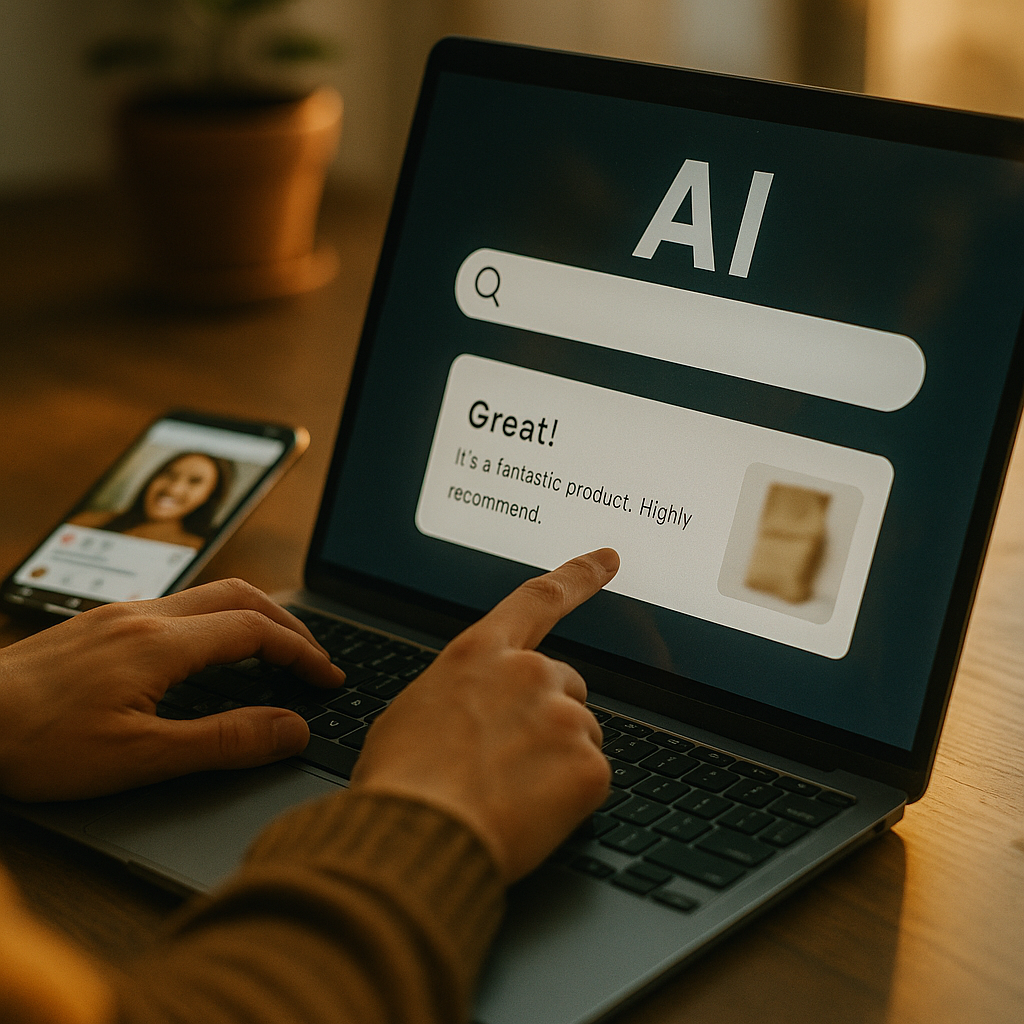
84 percent. That is how often AI search engines cite earned media over paid placements when answering product and brand queries, according to recent data on AI citation patterns. If your influencer strategy still leans on paid posts and sponsored content, the machines answering your customers’ questions are quietly ignoring you. Welcome to the new SEO battlefield, where earned media is the primary keyword for relevance.
For the better part of a decade, “earned media” sat in the corner of marketing decks, respected but underfunded. PR teams chased it. Performance marketers shrugged at it because it didn’t have a clean attribution model. Paid influencer deals, with their trackable links and guaranteed deliverables, won the budget fights almost every time. That calculus just flipped, and it flipped because of how large language models decide what to surface.
Why AI Models Trust Earned Mentions More Than Sponsored Posts
Generative search tools like Google’s AI Overviews, Perplexity, and ChatGPT’s browsing mode do not rank pages the way traditional search engines do. They synthesize answers from a corpus of content, and they weight signals of independence and consensus heavily. A sponsored Instagram post disclosed with #ad carries an inherent bias flag. A product mentioned organically across five independent review sites, three Reddit threads, and a creator’s unpaid “what I actually use” video carries the opposite signal: unprompted agreement from unrelated sources.
Think about how you’d evaluate a rumor from five different friends who don’t know each other versus a press release from the company itself. AI models are trained to do something similar. Repetition across independent, non-commercial sources reads as truth. A single paid asset, no matter how polished, reads as an outlier.
When five unrelated creators independently praise the same product feature, AI models treat that convergence as a reliability signal, something no single paid placement can replicate.
This isn’t a theoretical shift either. Marketers tracking brand mentions in AI-generated answers have found that content originating from genuine user experience, think Reddit threads, YouTube tutorials made without brand involvement, and creator reviews posted without compensation, gets pulled into AI summaries at dramatically higher rates than branded content. The pattern lines up with broader findings that paid PR is losing ground in the exact channels where buying decisions now begin.
The Death of the Trackable Link Did Not Kill Measurement
Here’s the part that makes performance marketers nervous. Earned media has always been harder to measure than paid placements. There’s no UTM parameter on an organic mention buried in a comment thread. But the rise of AI search has actually created a new, if imperfect, measurement layer: brand citation frequency inside AI-generated answers.
Tools are emerging that track how often and in what context a brand appears across ChatGPT, Perplexity, Claude, and Google’s AI Overviews. This is becoming the new share-of-voice metric, and it behaves nothing like a traditional funnel. A brand doesn’t need a single viral post. It needs consistent, independent presence across dozens of smaller touchpoints that collectively train the model’s perception of relevance.
That’s a fundamentally different operating model than the one most influencer programs were built on. Campaigns built around one-off paid bursts with a single creator and a single flight date don’t generate the kind of sustained, organic density that AI models reward. This is one reason micro influencer engagement has been climbing in relevance scores even as follower-based metrics decline. Volume and independence beat reach and polish.
What “Earned” Actually Means in an AI-First World
Earned media used to mean press coverage you didn’t pay for. Now the definition has stretched to include almost any third-party content a brand didn’t directly commission: unboxing videos, Reddit recommendations, TikTok “dupe alert” posts, Amazon reviews, forum comparisons, even Discord server chatter if it’s indexed and public. AI models don’t distinguish between a Forbes article and a well-upvoted Reddit comment when both demonstrate consensus. They just weigh frequency, independence, and recency.
This reframes the entire creator vetting conversation. Brands spent the last two years tightening creator vetting playbooks to filter out low-quality paid UGC. Now they need a parallel system to identify and nurture creators whose organic, unpaid content is already shaping AI perception of their brand, often without the brand’s knowledge.
That’s an uncomfortable position for marketers used to controlling the narrative. You can’t commission earned media. You can only create conditions that make it more likely: send product to creators without strings attached, respond generously to community questions, and build genuinely good products that people want to talk about unprompted. It’s PR logic applied to a performance marketing budget, which is exactly the tension most CMOs are navigating right now.
Where Paid Creator Spend Still Wins
None of this means paid influencer deals are dead. Paid placements still drive immediate, trackable commerce, particularly in live commerce formats and affiliate-driven GMV-focused campaigns. If your goal is a conversion spike this quarter, a well-briefed paid creator deal with a tracked link still outperforms waiting for organic mentions to accumulate.
The shift isn’t paid versus earned as a binary choice. It’s recognizing that paid media now serves short-term commerce goals while earned media increasingly governs long-term discoverability inside AI-mediated search. Brands need both, budgeted and measured separately, because they’re solving different problems. Conflating the two, as many brands did during the peak of influencer marketing’s growth phase, is how budgets get misallocated.
Smart brands are now explicitly funding “earned media generation” as its own line item: seeding product to creators with zero contractual content requirements, investing in community management that encourages organic discussion, and treating Reddit and forum presence as seriously as paid social. This overlaps with the creator seeding budget shift already underway, where gifting programs are being reclassified from marginal PR expense to core media spend.
The Compliance Angle Nobody’s Talking About Enough
There’s a risk lurking here. If AI models favor content that appears independent, there’s an obvious incentive for brands to disguise paid content as organic, skipping disclosure to game the system. That’s not a hypothetical. The FTC has already made clear that endorsement disclosure requirements apply regardless of platform or format, and UK advertisers face similarly firm guidance from the ICO on data and advertising practices. Brands that strip disclosure to boost AI visibility are walking into regulatory exposure that will cost far more than any ranking gain.
This is the same tension playing out in creator commerce compliance gaps more broadly. The pressure to appear organic is colliding with legal obligations to disclose paid relationships, and brands that try to thread that needle by hiding sponsorships are setting themselves up for both regulatory penalties and the kind of consumer backlash that undoes years of trust-building in a single news cycle.
How Should Brands Actually Respond?
Start by auditing where your brand currently shows up in AI-generated answers, and how. Run the same ten to fifteen queries a potential customer would ask across ChatGPT, Perplexity, and Google’s AI Overviews. Note whether your brand appears, what sources get cited, and whether the sentiment is accurate. This is the new baseline, and most marketing teams haven’t done it yet.
Then shift measurement frameworks. Reach and impressions were already losing favor at industry conferences demanding attribution proof. Add AI citation frequency and sentiment to your creator scorecard alongside engagement rate and GMV. A creator who drives modest paid conversion but generates consistent organic mentions across review sites and forums may be more valuable to long-term discoverability than one who posts a single high-performing sponsored video.
Finally, rebuild creator relationships around genuine advocacy rather than transactional deliverables. Programs that treat creators as long-term brand partners, giving them creative freedom and product access without rigid scripts, tend to generate the kind of organic cross-platform chatter that AI models reward. This isn’t new advice exactly, but it’s now backed by a harder business case than “authenticity feels right.”
Brands that measure success only in trackable clicks are optimizing for a search paradigm that AI is already replacing.
The uncomfortable truth is that earned media was never obsolete. It was just hard to measure, so it got deprioritized in favor of channels that produced clean dashboards. AI search has forced the issue by making earned presence directly visible in the outputs consumers now trust more than traditional search results. According to data tracked by eMarketer, consumer reliance on AI-generated summaries for product research is climbing fast, and brands ignoring that shift are optimizing for a search engine that’s steadily losing relevance.
The Takeaway
Audit your AI visibility this quarter, not next year. Reallocate a portion of your paid creator budget toward unrestricted product seeding and community engagement, and start tracking AI citation frequency as a core KPI alongside GMV and engagement rate. The brands that treat earned media as infrastructure, not an afterthought, will own the answers AI gives your customers before your competitors even notice the shift happened.
Frequently Asked Questions
What is earned media in the context of AI search engines?
Earned media refers to brand mentions, reviews, and recommendations that appear without direct payment or commissioning, including organic social posts, forum discussions, and independent reviews. AI search engines like ChatGPT and Perplexity weight this content heavily because it signals independent consensus rather than brand-controlled messaging.
Why do AI search engines favor earned media over paid influencer content?
AI models are trained to detect patterns of independent agreement across sources. Sponsored content carries an inherent bias signal due to disclosure requirements, while repeated organic mentions across unrelated sources, such as Reddit threads, review sites, and unpaid creator content, read as more trustworthy consensus.
Does this mean brands should stop paid influencer campaigns?
No. Paid campaigns still drive trackable, short-term commerce results, particularly in live shopping and affiliate-driven formats. The shift means brands need separate strategies and budgets for paid conversion goals versus long-term earned visibility in AI-generated answers.
How can brands measure their presence in AI search results?
Brands can manually test common customer queries across major AI platforms and track whether their brand appears, what sources get cited, and the accuracy of sentiment. Emerging tools are also beginning to offer automated AI citation tracking similar to traditional share-of-voice reporting.
What compliance risks come with chasing AI visibility through earned media?
Brands that disguise paid partnerships as organic content to appear more “independent” to AI models risk violating FTC disclosure requirements and similar regulations from bodies like the ICO. Proper disclosure remains mandatory regardless of how content performs in AI search contexts.
Top Influencer Marketing Agencies
The leading agencies shaping influencer marketing in 2026
Agencies ranked by campaign performance, client diversity, platform expertise, proven ROI, industry recognition, and client satisfaction. Assessed through verified case studies, reviews, and industry consultations.
Moburst

-
2

The Shelf
Boutique Beauty & Lifestyle Influencer AgencyA data-driven boutique agency specializing exclusively in beauty, wellness, and lifestyle influencer campaigns on Instagram and TikTok. Best for brands already focused on the beauty/personal care space that need curated, aesthetic-driven content.Clients: Pepsi, The Honest Company, Hims, Elf Cosmetics, Pure LeafVisit The Shelf → -
3

Audiencly
Niche Gaming & Esports Influencer AgencyA specialized agency focused exclusively on gaming and esports creators on YouTube, Twitch, and TikTok. Ideal if your campaign is 100% gaming-focused — from game launches to hardware and esports events.Clients: Epic Games, NordVPN, Ubisoft, Wargaming, Tencent GamesVisit Audiencly → -
4

Viral Nation
Global Influencer Marketing & Talent AgencyA dual talent management and marketing agency with proprietary brand safety tools and a global creator network spanning nano-influencers to celebrities across all major platforms.Clients: Meta, Activision Blizzard, Energizer, Aston Martin, WalmartVisit Viral Nation → -
5

The Influencer Marketing Factory
TikTok, Instagram & YouTube CampaignsA full-service agency with strong TikTok expertise, offering end-to-end campaign management from influencer discovery through performance reporting with a focus on platform-native content.Clients: Google, Snapchat, Universal Music, Bumble, YelpVisit TIMF → -
6

NeoReach
Enterprise Analytics & Influencer CampaignsAn enterprise-focused agency combining managed campaigns with a powerful self-service data platform for influencer search, audience analytics, and attribution modeling.Clients: Amazon, Airbnb, Netflix, Honda, The New York TimesVisit NeoReach → -
7

Ubiquitous
Creator-First Marketing PlatformA tech-driven platform combining self-service tools with managed campaign options, emphasizing speed and scalability for brands managing multiple influencer relationships.Clients: Lyft, Disney, Target, American Eagle, NetflixVisit Ubiquitous → -
8

Obviously
Scalable Enterprise Influencer CampaignsA tech-enabled agency built for high-volume campaigns, coordinating hundreds of creators simultaneously with end-to-end logistics, content rights management, and product seeding.Clients: Google, Ulta Beauty, Converse, AmazonVisit Obviously →