


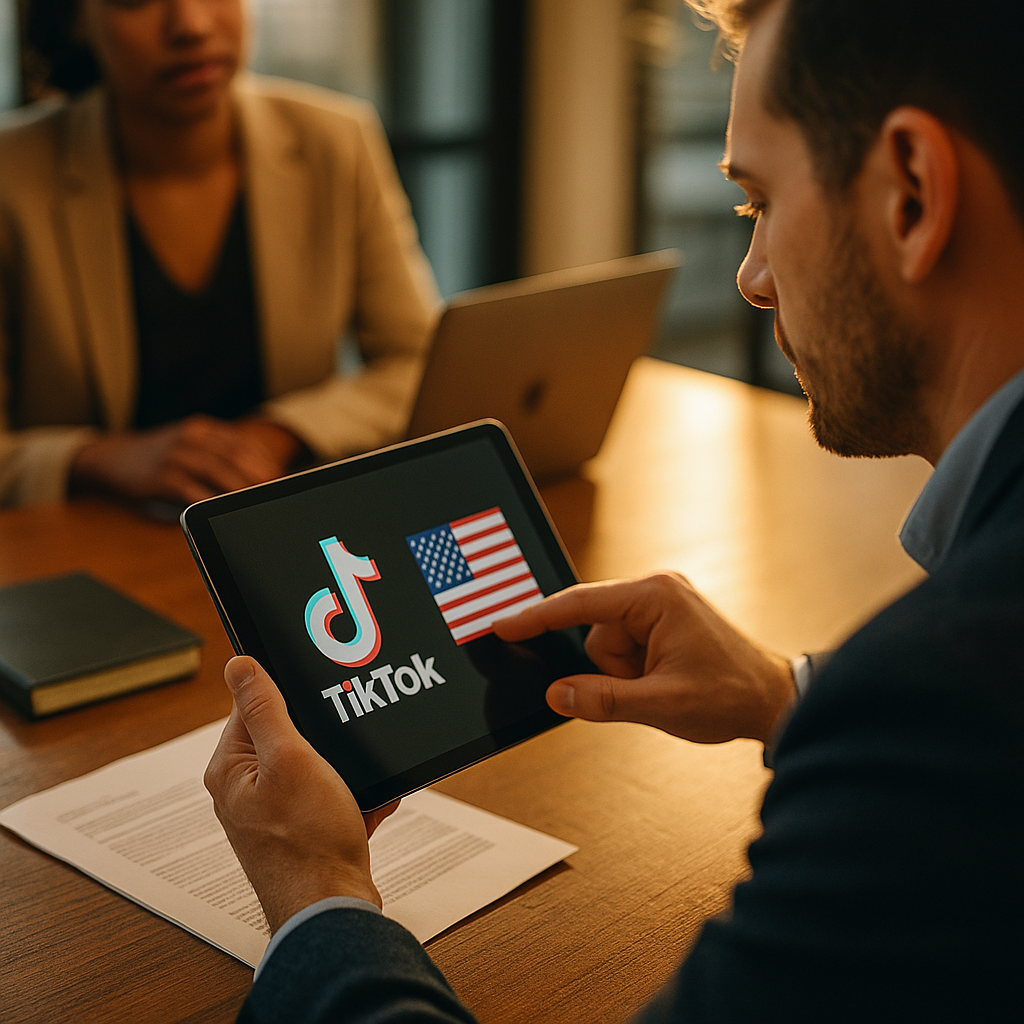
Roughly 170 million US users. One algorithm. And now, a new ownership structure that hands majority control to a consortium of American investors. If your brand safety review still treats TikTok like a Chinese-owned wildcard, you’re already behind. The TikTok US-majority joint venture changes the risk calculus, but not in the way most marketing teams assume.
This isn’t a compliance footnote. It’s a structural shift that touches data governance, content moderation accountability, and even how you frame influencer contracts. Let’s break down what actually changed, and what it means for the people signing off on creator budgets.
What Actually Changed in the Ownership Structure
After years of political back-and-forth, the deal landed: a new joint venture entity now holds majority US ownership, with American investors controlling the board and, critically, the algorithm’s training data pipeline for US users. ByteDance retains a minority stake, but the operational firewall between Beijing and the US platform is now contractual, not just promised in a press release.
Here’s the part brand teams keep missing: the ownership change doesn’t eliminate risk, it redistributes it. You’re no longer primarily worried about foreign government data access. Now you’re dealing with a newly formed entity, fresh governance processes, and moderation policies that may shift as new stakeholders assert priorities. New CFIUS-style oversight bodies, new compliance officers, new precedent. That’s a different risk profile, not a lower one.
Ownership change doesn’t eliminate platform risk for brands. It redistributes it into new categories: governance maturity, policy volatility, and data-handling transparency.
Why This Matters More Than the Ban Threat Ever Did
The years-long ban saga trained brand safety teams to think in binary terms: TikTok stays or TikTok goes. That framing was always too simple, and it’s officially obsolete now. The real question isn’t “will TikTok survive” — it clearly will. The question is whether the new joint venture’s data practices, ad targeting logic, and content moderation standards meet the same bar you’d apply to Meta or Google.
Most brands never actually audited TikTok’s data practices with that rigor. They just watched the headlines. That’s a gap worth closing immediately.
Data Ownership: What’s Actually Different Now
Under the new structure, US user data is reportedly housed and processed through US-based infrastructure, overseen by the joint venture’s board rather than ByteDance directly. That’s a meaningful shift for any brand that runs paid TikTok Shop campaigns or relies on first-party data syncs for retargeting.
But “US-based” isn’t the same as “fully transparent.” Ad tech due diligence teams should be asking pointed questions:
- Who has audit rights into the recommendation algorithm’s training inputs?
- What third-party verification exists for data residency claims?
- How does the new entity handle law enforcement data requests compared to the old structure?
- Are creator payment and analytics data pipelines routed through the same infrastructure as consumer behavioral data?
If your legal or procurement team can’t get straight answers to those four questions, that’s your risk flag, not the ownership headline itself.
Reassessing Brand Risk: A Practical Framework
Brand risk assessments built around “is this platform Chinese-owned” are now outdated. Replace that binary with a maturity-based framework across four dimensions:
Governance transparency. Does the new joint venture publish clear data handling policies, and are they independently auditable? Compare this to how Meta documents its advertising standards at Meta Business, or how Google discloses ad policy enforcement through its support resources.
Content moderation consistency. New ownership often means new moderation leadership. Track whether brand safety controls, keyword exclusion lists, and creator vetting tools remain stable through the transition, or whether policies are being rewritten in real time.
Data portability and retention. If the joint venture restructures again (and given the political pressure involved, that’s not far-fetched), can your brand extract campaign data and creator performance history cleanly? This matters more for teams running verified influencer ROI tracking across multiple quarters.
Creator contract exposure. Existing influencer agreements that reference “ByteDance” or platform-specific data clauses may need legal review. Ambiguous language about who owns campaign data, especially UGC and Shop-linked content, becomes a liability under new corporate ownership.
The Compliance Angle Nobody’s Talking About Enough
FTC disclosure rules don’t change because ownership changed. But your risk exposure around platform-level data handling might. If the new joint venture’s privacy practices trigger scrutiny from the Federal Trade Commission or draw attention from international regulators like the UK’s ICO, brands running global campaigns through TikTok inherit reputational spillover even if they’re not the direct target.
This is especially relevant if you’re coordinating regional creator strategies. Brands using a brand-regional-local model for global marketing need country-specific legal review now, not after the next headline.
What This Means for Your Media Mix Right Now
Should you pull budget from TikTok? Almost certainly not. The platform’s commerce engine is still outperforming expectations, and TikTok Shop’s hiring surge signals the platform is doubling down on retention-first commerce infrastructure, not retreating. Pulling spend over an ownership transition you haven’t actually audited is reactionary, not strategic.
What you should do is treat this like any other platform infrastructure shift: run a formal risk reassessment, document it, and update your creator brief templates accordingly. Teams already moving toward multi-creator testing models instead of single-bet TikTok campaigns are naturally better insulated here. Diversified creator bets mean platform-level shocks hit smaller slices of your program.
The brands most exposed right now aren’t the ones spending heavily on TikTok. They’re the ones who never diversified their creator testing model in the first place.
Update Your Vendor Risk Questionnaire
If your agency or in-house team uses a standard vendor risk questionnaire for platform partners, this is the moment to revise it. Add specific line items about the joint venture’s board composition, data processing agreements, and audit rights. Benchmarking data from eMarketer on platform ad spend allocation can help you contextualize whether reduced TikTok exposure elsewhere in the industry is happening for strategic reasons or just headline-driven panic.
Also worth checking: how your measurement stack handles attribution across the transition. If you’re already grappling with attribution trust gaps tied to identity resolution, a platform ownership change adds another variable to an already messy measurement picture.
The Creator Contract Language You Need to Revisit
Most influencer agreements written before this year include boilerplate language about platform ownership, data rights, and force majeure clauses tied to regulatory action. That language is now stale.
Work with legal to update three specific clause types: platform-specific data ownership definitions, termination triggers tied to ownership or governance changes, and IP rights for content created for TikTok Shop specifically. Brands with mature tiered influencer models already have standardized contract templates; this is the moment to push an update through legal review across the entire creator roster, not just new signings.
Smaller brands without dedicated legal ops should treat this as a prompt to formalize what’s likely been an informal process. A one-page addendum addressing the ownership transition, reviewed by counsel, costs far less than discovering a data liability gap mid-campaign.
Where This Leaves Brand Safety Teams
The honest answer? Mostly in a holding pattern, but a more informed one. The joint venture is new enough that best practices are still forming. Brands that move now to formalize risk frameworks, update contracts, and diversify creator testing will be better positioned than those waiting for a “final answer” that may never fully arrive. Platform ownership structures evolve. Your risk assessment process should evolve with them, not react to each news cycle.
Frequently Asked Questions
Does the TikTok US-majority joint venture change how brands should handle data privacy compliance?
Yes. Brands should update vendor risk questionnaires to address the new entity’s data residency claims, audit rights, and law enforcement request handling, rather than relying on old ByteDance-era compliance language.
Should brands pause TikTok ad spend during the ownership transition?
Most brand safety experts recommend against pausing spend outright. Instead, run a formal risk reassessment, diversify creator testing, and monitor governance transparency as the joint venture matures its policies.
What should change in influencer contracts because of this ownership shift?
Update platform-specific data ownership clauses, termination triggers tied to governance changes, and IP rights language for TikTok Shop content. Legal teams should review existing creator agreements referencing the old ownership structure.
Is TikTok Shop affected by the new ownership structure?
The commerce infrastructure itself hasn’t changed operationally, but brands should verify that creator payment and analytics data pipelines are routed through auditable, US-based infrastructure under the new joint venture.
How does this compare to Meta or Google’s data governance standards?
The joint venture is newer and less battle-tested than Meta or Google’s established compliance frameworks, so brands should apply the same audit rigor rather than assuming parity based on US ownership alone.
Frequently Asked Questions
Does the TikTok US-majority joint venture change how brands should handle data privacy compliance?
Yes. Brands should update vendor risk questionnaires to address the new entity’s data residency claims, audit rights, and law enforcement request handling, rather than relying on old ByteDance-era compliance language.
Should brands pause TikTok ad spend during the ownership transition?
Most brand safety experts recommend against pausing spend outright. Instead, run a formal risk reassessment, diversify creator testing, and monitor governance transparency as the joint venture matures its policies.
What should change in influencer contracts because of this ownership shift?
Update platform-specific data ownership clauses, termination triggers tied to governance changes, and IP rights language for TikTok Shop content. Legal teams should review existing creator agreements referencing the old ownership structure.
Is TikTok Shop affected by the new ownership structure?
The commerce infrastructure itself hasn’t changed operationally, but brands should verify that creator payment and analytics data pipelines are routed through auditable, US-based infrastructure under the new joint venture.
How does this compare to Meta or Google’s data governance standards?
The joint venture is newer and less battle-tested than Meta or Google’s established compliance frameworks, so brands should apply the same audit rigor rather than assuming parity based on US ownership alone.
Bottom line: pull your legal and brand safety teams into a room this quarter, run the four-question data audit above, and update creator contract language before your next renewal cycle, not after.
Top Influencer Marketing Agencies
The leading agencies shaping influencer marketing in 2026
Agencies ranked by campaign performance, client diversity, platform expertise, proven ROI, industry recognition, and client satisfaction. Assessed through verified case studies, reviews, and industry consultations.
Moburst

-
2

The Shelf
Boutique Beauty & Lifestyle Influencer AgencyA data-driven boutique agency specializing exclusively in beauty, wellness, and lifestyle influencer campaigns on Instagram and TikTok. Best for brands already focused on the beauty/personal care space that need curated, aesthetic-driven content.Clients: Pepsi, The Honest Company, Hims, Elf Cosmetics, Pure LeafVisit The Shelf → -
3

Audiencly
Niche Gaming & Esports Influencer AgencyA specialized agency focused exclusively on gaming and esports creators on YouTube, Twitch, and TikTok. Ideal if your campaign is 100% gaming-focused — from game launches to hardware and esports events.Clients: Epic Games, NordVPN, Ubisoft, Wargaming, Tencent GamesVisit Audiencly → -
4

Viral Nation
Global Influencer Marketing & Talent AgencyA dual talent management and marketing agency with proprietary brand safety tools and a global creator network spanning nano-influencers to celebrities across all major platforms.Clients: Meta, Activision Blizzard, Energizer, Aston Martin, WalmartVisit Viral Nation → -
5

The Influencer Marketing Factory
TikTok, Instagram & YouTube CampaignsA full-service agency with strong TikTok expertise, offering end-to-end campaign management from influencer discovery through performance reporting with a focus on platform-native content.Clients: Google, Snapchat, Universal Music, Bumble, YelpVisit TIMF → -
6

NeoReach
Enterprise Analytics & Influencer CampaignsAn enterprise-focused agency combining managed campaigns with a powerful self-service data platform for influencer search, audience analytics, and attribution modeling.Clients: Amazon, Airbnb, Netflix, Honda, The New York TimesVisit NeoReach → -
7

Ubiquitous
Creator-First Marketing PlatformA tech-driven platform combining self-service tools with managed campaign options, emphasizing speed and scalability for brands managing multiple influencer relationships.Clients: Lyft, Disney, Target, American Eagle, NetflixVisit Ubiquitous → -
8

Obviously
Scalable Enterprise Influencer CampaignsA tech-enabled agency built for high-volume campaigns, coordinating hundreds of creators simultaneously with end-to-end logistics, content rights management, and product seeding.Clients: Google, Ulta Beauty, Converse, AmazonVisit Obviously →