


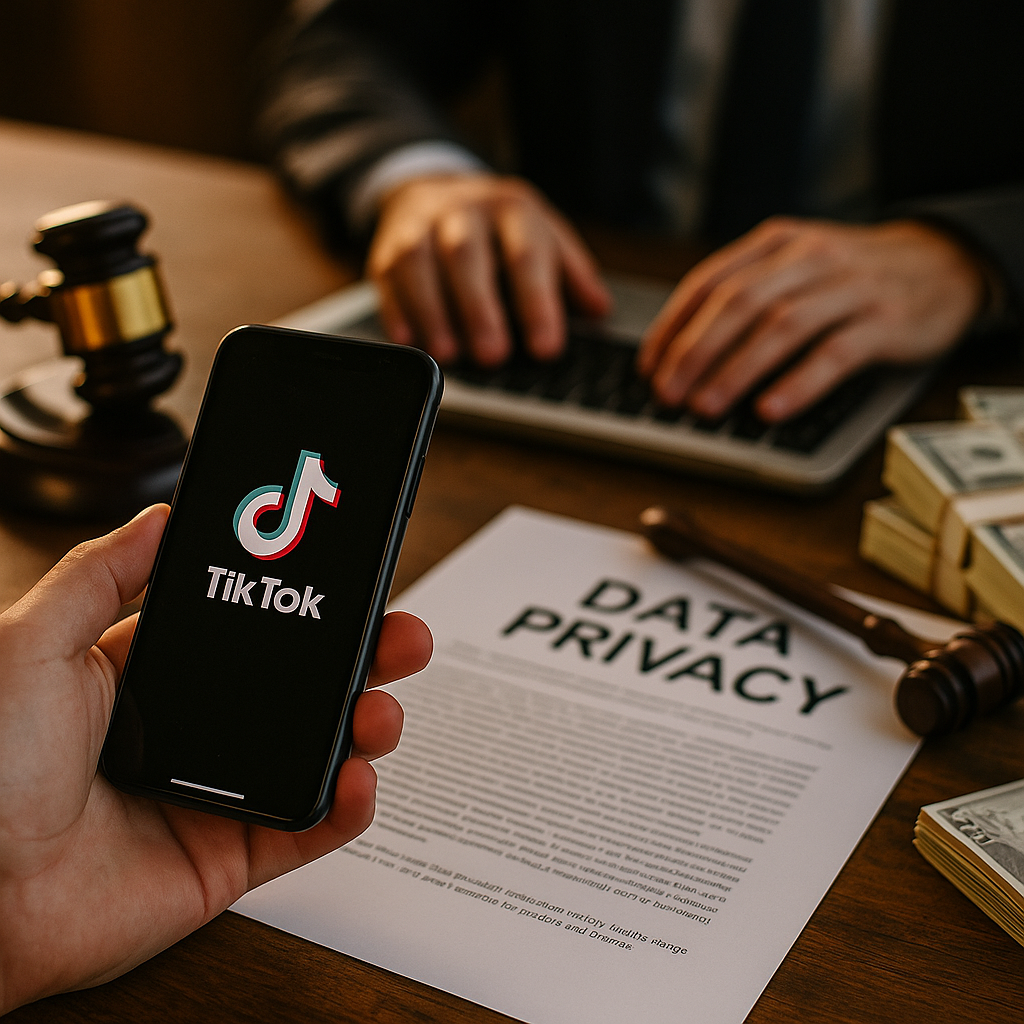
Four hundred million dollars. That’s what TikTok is paying to settle allegations it let millions of children under 13 onto the platform without parental consent, then quietly fed their data into ad systems. If your brand runs any campaign that touches teen or tween audiences, the TikTok children’s privacy settlement just rewrote your targeting playbook.
This isn’t another fine that gets absorbed into a legal budget line and forgotten. The settlement comes bundled with a mandatory age-moderation overhaul, and that overhaul changes how the platform identifies, segments, and monetizes users going forward. For brands and agencies, the fallout touches everything from lookalike audiences to creator vetting to how you document consent.
What Actually Happened
The settlement resolves a multi-agency investigation into TikTok’s handling of underage users, building on years of scrutiny that started with COPPA violations and expanded into broader questions about age verification, data retention, and ad personalization aimed at minors. Regulators alleged TikTok’s age-gating was largely cosmetic: type in a fake birthdate, and you’re in. Once inside, those accounts got treated like any other data source, feeding engagement signals, interest graphs, and eventually ad targeting models.
The $400 million figure grabs headlines, but the operational mandate is the real story. TikTok now has to implement stronger age-assurance technology, restrict data collection from suspected minors, and submit to ongoing compliance audits. We covered the enforcement mechanics in detail in our earlier piece on underage data enforcement, but the settlement formalizes what was previously guidance into binding, auditable requirements.
The settlement doesn’t just penalize past behavior — it forces TikTok to rebuild its age-inference architecture, which means the audience segments brands have relied on for years are about to shift underneath them.
Why Age-Moderation Overhauls Hit Ad Targeting Harder Than You’d Think
Here’s the part media buyers should sit with: age moderation isn’t a content-safety feature bolted onto the side of TikTok’s ad engine. It’s woven into the same signal pipeline that powers targeting.
When TikTok tightens age-assurance thresholds, it doesn’t just remove confirmed minors from certain ad pools. It also becomes more conservative about ambiguous accounts, meaning some legitimate 18-24 users get reclassified, excluded, or shifted into narrower serving categories out of caution. We’ve already seen this pattern play out, as detailed in our coverage of how COPPA age-assurance rules squeeze targeting. Expect the effect to intensify as the new moderation requirements roll out platform-wide.
Practically, that means:
- Lookalike audiences built on historical engagement data may shrink or drift, since some of the seed data used to train them could get purged for age-compliance reasons.
- Interest-based targeting for categories like beauty, gaming, and toys, where teen engagement is heaviest, will face tighter guardrails and more manual review.
- Retargeting pools tied to app installs or on-platform purchases could lose volume if a meaningful share of those users get reclassified as unverified minors.
None of this shows up in a press release. It shows up three weeks later as an unexplained CPM spike or a reach forecast that suddenly looks 15% smaller than last quarter’s.
The TikTok Shop Angle Nobody’s Talking About Enough
If your brand sells through TikTok Shop, the stakes climb further. Shop-linked ad campaigns depend heavily on granular behavioral and purchase-intent data, exactly the kind of data regulators flagged as improperly collected from minors.
We’ve already published a full compliance audit framework for TikTok Shop underage-user data rules, and it’s worth revisiting now that the settlement has teeth. Age verification isn’t optional friction anymore; it’s a legal requirement with financial consequences attached. Brands running affiliate or livestream commerce programs should also check how age-assurance changes intersect with data processing agreements, especially for beauty and wellness categories where age-restricted products are common. Our breakdown of tighter beauty DPAs under the new age-verification rules is a useful starting point.
Toy and gaming brands face a distinct wrinkle. Their core audience often skews toward the exact age band TikTok is now scrutinizing hardest. If your campaigns lean on influencer unboxings or gameplay content aimed at tweens, you need a documented parental consent process that doesn’t rely solely on TikTok’s own age gate. We laid out a practical model in our parental consent framework for toy and gaming brands, and it’s more relevant now than when we first published it.
State Law Is the Wildcard the Settlement Doesn’t Fix
Here’s a mistake we’re already seeing brand compliance teams make: assuming the federal settlement covers them everywhere. It doesn’t.
Several states have their own youth data privacy statutes, some stricter than what this settlement requires. California’s age-appropriate design provisions, for instance, impose obligations that go beyond COPPA’s baseline. If your targeting strategy treats the settlement as a national ceiling rather than a floor, you’re exposed. We detailed exactly where the gaps sit in why the settlement won’t cover state youth privacy laws, and it’s essential reading before you brief your legal team on “what’s changed.”
There’s also a quieter data issue worth flagging: California’s DROP system and similar state-level data broker registries are shrinking the addressable pool for certain ad audiences independent of what TikTok does internally. Combine that with platform-side age moderation, and you get a compounding squeeze on reach for any brand targeting younger demographics. See our analysis of how California’s DROP system is shrinking ad audiences for the mechanics.
What This Means for Your Creator Vetting Process
Age moderation isn’t just a targeting-side issue. It touches creator partnerships too, particularly for brands working with younger creators or creators whose audiences skew young.
If you’re running influencer campaigns on TikTok aimed at family, education, or youth lifestyle verticals, expect more platform-side scrutiny of the creator’s follower demographics and the data used to justify partnership fit. Agencies should update their creator briefs to require documented audience-age disclosures, not just engagement-rate screenshots. This is also a good moment to revisit material connection disclosure practices generally. Our guide on TikTok AI labels versus FTC material connection compliance covers adjacent disclosure risk that often gets bundled into the same audits.
Treat the settlement as a preview of the audit standard regulators will expect from every platform, not a TikTok-specific problem you can wall off.
Four Moves to Make Before the Overhaul Fully Rolls Out
- Audit your current TikTok audience segments. Pull historical performance data and flag any segments heavily reliant on 13-17 or ambiguous-age cohorts. Model what a 10-20% contraction looks like for Q3 planning.
- Update data processing addendums. If you’re pulling first-party data into TikTok’s ad systems via API integrations, confirm your DPAs reflect the new age-assurance standards. Our guide to data processing addendums for AI decision engines is a solid template starting point.
- Diversify platform mix for youth-adjacent categories. Don’t rebuild your entire media plan overnight, but reduce single-platform dependency for categories like gaming, toys, and teen fashion while the moderation changes stabilize.
- Document everything. Regulators are increasingly treating “we relied on the platform’s compliance” as an insufficient defense. Keep your own audit trail of consent mechanisms, age-verification steps, and creator vetting criteria. Our data storage checklist for brands breaks this down step by step.
According to eMarketer, TikTok remains one of the top three platforms for reaching Gen Z and younger millennial audiences in ad spend allocation, which means this isn’t a niche compliance issue affecting a handful of kids’ brands. It’s a mainstream targeting recalibration. Marketers tracking platform policy shifts should also monitor FTC enforcement actions directly, since COPPA-adjacent rulings tend to move faster than platform announcements.
The Bigger Pattern: Platforms Are Getting Squeezed From Every Direction
Zoom out and this settlement fits a broader trend we’ve tracked across multiple platforms this year: regulators forcing structural changes to ad-adjacent data pipelines, not just fining bad behavior after the fact. YouTube’s watch-time changes disrupted disclosure placement timing, as we covered in our analysis of that shift. Meta faces its own governance pressure around AI-driven ad budget decisions, detailed in our governance charter piece. TikTok’s children’s privacy settlement is simply the loudest, most expensive example of a pattern that’s becoming the norm across the industry.
Brands that build compliance infrastructure now, rather than reacting platform-by-platform, will spend less time firefighting and more time actually running campaigns. Tools like Sprout Social and other social management platforms are already adding compliance-tracking features in response to exactly this kind of regulatory pressure, worth evaluating if your current stack lacks audit-trail capability.
FAQs
Frequently Asked Questions
What is the TikTok children’s privacy settlement about?
The settlement resolves allegations that TikTok allowed millions of children under 13 to create accounts without verified parental consent and used their data for ad personalization, in violation of children’s privacy protections. TikTok agreed to pay $400 million and implement a mandatory age-moderation overhaul with ongoing compliance audits.
How does this affect brand targeting on TikTok?
Stricter age-assurance systems mean some ambiguous or previously miscategorized accounts will be reclassified or excluded from ad delivery, which can shrink lookalike audiences, tighten interest-based targeting, and reduce retargeting pool sizes, particularly for categories like beauty, gaming, and toys.
Does the settlement replace state-level youth privacy laws?
No. The federal settlement sets minimum requirements, but states like California maintain separate, sometimes stricter, youth data privacy statutes. Brands need to comply with both, not treat the settlement as a universal ceiling.
Should brands stop targeting teen audiences on TikTok entirely?
Not necessarily, but brands should reduce over-reliance on a single platform for youth-adjacent categories, tighten documentation of consent and age-verification processes, and diversify media mix while the moderation changes stabilize.
What should agencies update in creator vetting because of this settlement?
Agencies should require documented audience-age disclosures from creators, not just engagement metrics, and build stronger material connection and consent documentation into influencer briefs, especially for family, education, and youth lifestyle campaigns.
Next step: Pull your last two quarters of TikTok performance data this week and flag every audience segment tied to ambiguous or teen-adjacent age signals — that’s your real exposure map, not the settlement headline.
Top Influencer Marketing Agencies
The leading agencies shaping influencer marketing in 2026
Agencies ranked by campaign performance, client diversity, platform expertise, proven ROI, industry recognition, and client satisfaction. Assessed through verified case studies, reviews, and industry consultations.
Moburst

-
2

The Shelf
Boutique Beauty & Lifestyle Influencer AgencyA data-driven boutique agency specializing exclusively in beauty, wellness, and lifestyle influencer campaigns on Instagram and TikTok. Best for brands already focused on the beauty/personal care space that need curated, aesthetic-driven content.Clients: Pepsi, The Honest Company, Hims, Elf Cosmetics, Pure LeafVisit The Shelf → -
3

Audiencly
Niche Gaming & Esports Influencer AgencyA specialized agency focused exclusively on gaming and esports creators on YouTube, Twitch, and TikTok. Ideal if your campaign is 100% gaming-focused — from game launches to hardware and esports events.Clients: Epic Games, NordVPN, Ubisoft, Wargaming, Tencent GamesVisit Audiencly → -
4

Viral Nation
Global Influencer Marketing & Talent AgencyA dual talent management and marketing agency with proprietary brand safety tools and a global creator network spanning nano-influencers to celebrities across all major platforms.Clients: Meta, Activision Blizzard, Energizer, Aston Martin, WalmartVisit Viral Nation → -
5

The Influencer Marketing Factory
TikTok, Instagram & YouTube CampaignsA full-service agency with strong TikTok expertise, offering end-to-end campaign management from influencer discovery through performance reporting with a focus on platform-native content.Clients: Google, Snapchat, Universal Music, Bumble, YelpVisit TIMF → -
6

NeoReach
Enterprise Analytics & Influencer CampaignsAn enterprise-focused agency combining managed campaigns with a powerful self-service data platform for influencer search, audience analytics, and attribution modeling.Clients: Amazon, Airbnb, Netflix, Honda, The New York TimesVisit NeoReach → -
7

Ubiquitous
Creator-First Marketing PlatformA tech-driven platform combining self-service tools with managed campaign options, emphasizing speed and scalability for brands managing multiple influencer relationships.Clients: Lyft, Disney, Target, American Eagle, NetflixVisit Ubiquitous → -
8

Obviously
Scalable Enterprise Influencer CampaignsA tech-enabled agency built for high-volume campaigns, coordinating hundreds of creators simultaneously with end-to-end logistics, content rights management, and product seeding.Clients: Google, Ulta Beauty, Converse, AmazonVisit Obviously →