


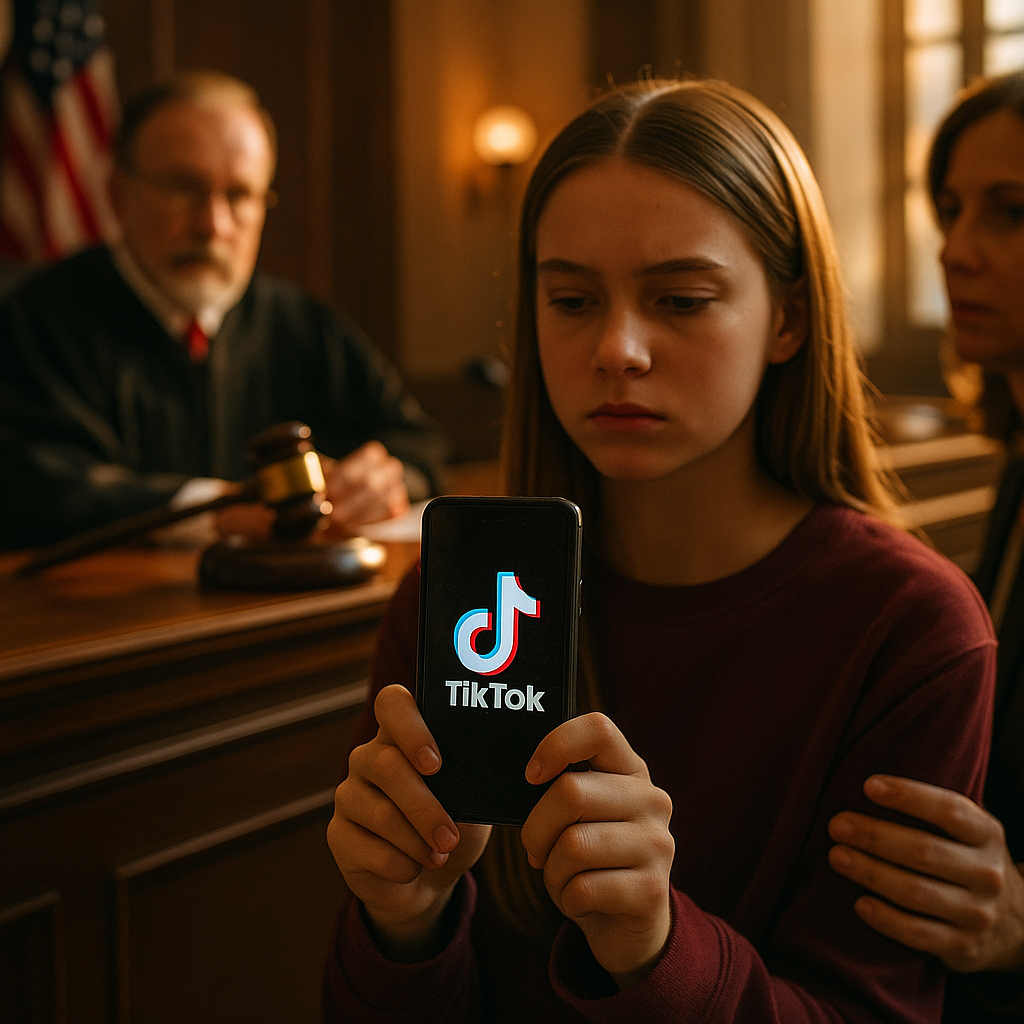
Roughly $400 million. That’s the size of the TikTok settlement that just forced the platform to roll out sweeping parental-oversight tools nationwide. But here’s the problem nobody’s talking about: the TikTok privacy settlement requirements and existing state youth social media laws don’t automatically line up. For brands running influencer campaigns aimed at teens, that gap is where compliance risk lives now.
If your team assumed the settlement’s Family Pairing upgrades satisfy Utah’s, California’s, or Texas’s youth privacy statutes, you assumed wrong. These are separate legal regimes with different triggers, different age thresholds, and different enforcement bodies. Reconciling them isn’t optional homework — it’s the difference between a clean campaign and a regulatory headache.
What the Settlement Actually Requires
The TikTok settlement — stemming from consolidated litigation over children’s data practices — mandates a specific set of parental-oversight mechanics. TikTok has to expand Family Pairing to cover more granular controls: screen time limits, content filtering by maturity level, direct message restrictions, and a visible audit trail of changes parents make to a linked teen account. There’s also a data-minimization component requiring TikTok to limit ad personalization for accounts flagged as under 18, echoing the age-assurance shifts we covered in our breakdown of TikTok’s COPPA age-assurance rules.
Sounds comprehensive. It is, within TikTok’s walls. The problem is that the settlement only governs TikTok’s product behavior. It says nothing about how brands, agencies, or creators collect, use, or disclose data from minors interacting with branded content on the platform. That’s where state law takes over — and where most marketing teams have a blind spot.
A platform-level fix doesn’t equal legal compliance for your brand. The settlement changes what TikTok must build; state law changes what your marketing team must prove.
The State Law Patchwork You’re Actually Liable For
At least a dozen states now have some form of youth social media or data privacy statute with provisions specific to minors. They are not harmonized. A few examples that matter for brand marketers:
- California’s Age-Appropriate Design Code Act pushes default high-privacy settings and restricts profiling of minors regardless of what platform-level parental tools exist.
- Utah and Texas impose affirmative parental consent requirements for account creation and, in some drafts, for engagement with commercial content targeting minors.
- Connecticut and Virginia layer broader state privacy law obligations — data minimization, opt-out rights — on top of youth-specific provisions.
None of these statutes say “TikTok’s Family Pairing tool satisfies our requirements.” Why would they? They were largely drafted independent of any single platform’s settlement terms. That means a brand running a campaign that touches teen audiences in California and Utah simultaneously needs to satisfy two different consent and disclosure standards, on top of whatever TikTok itself requires at the platform level.
This is the same fragmentation problem we flagged in our analysis of personalized pricing disclosure across state lines — national campaigns colliding with state-by-state legal variance. Youth privacy is arguably worse, because the penalties are steeper and the political appetite for enforcement is higher.
Where Brands Get Exposed
Three scenarios keep surfacing in compliance audits we’ve reviewed:
- Age-gating theater. Brands rely on TikTok’s self-reported age data as their entire compliance defense, without independent verification or documentation. If a state regulator investigates, “TikTok told us the user was 18” isn’t a legal shield.
- Data collection creep. Branded hashtag challenges, UGC contests, or comment-based giveaways collect more data than needed — names, emails, sometimes location — from accounts that turn out to be minors. State minimization rules don’t care that TikTok’s parental tools existed; they care what your brand did with the data it captured.
- Consent assumption. Marketing teams assume a parent linking their teen’s account via Family Pairing constitutes consent to brand-level data processing. It doesn’t. Platform consent and brand consent are legally distinct events.
We’ve already seen this exact tension play out in the toy and gaming category, which is why our parental consent framework guide is worth revisiting if your campaigns touch under-18 audiences even tangentially.
Building a Reconciliation Framework, Not a Patchwork Response
Treating this as a checklist exercise — “check TikTok settlement box, check state law box” — misses the point. You need a framework that maps obligations by jurisdiction and layers them, so nothing falls through the cracks when a campaign runs nationally.
Start with a three-tier documentation structure:
Tier one: platform-level compliance. Confirm your brand’s TikTok Shop and ad accounts are configured to respect the settlement’s new defaults — no ad personalization on flagged minor accounts, no bypassing of Family Pairing content restrictions through influencer-seeded links. This overlaps heavily with the underage-data controls detailed in our TikTok Shop compliance audit for underage-user data rules.
Tier two: state-specific consent capture. For any campaign with meaningful reach into California, Utah, Texas, Connecticut, or Virginia, build consent flows that meet the strictest applicable standard and apply it universally. It’s operationally simpler to over-comply nationally than to maintain five different consent scripts.
Tier three: contractual pass-through. Your influencer and agency contracts need explicit language requiring creators to avoid soliciting personal data from clearly underage followers, and to flag any campaign mechanic (giveaways, comment-to-enter, DM-based redemption codes) that could trigger data collection from minors. This is an extension of the same logic behind our tighter beauty DPA guidance — push compliance obligations down into your creator agreements, don’t just hold them at the brand level.
Why “Wait and See” Is the Riskiest Option
Some legal teams are advising clients to hold off on major framework changes until enforcement patterns clarify. Understandable instinct. Bad strategy here.
State attorneys general have shown they will move fast on youth privacy — look at how quickly multistate coalitions have coordinated on FTC children’s privacy actions in adjacent cases. Waiting for a clean enforcement roadmap means waiting for a lawsuit to define your obligations for you. Not a great look in a board meeting.
Enforcement in this space rarely waits for regulatory clarity — the first few cases usually define the standard for everyone else.
Practical Steps for the Next Quarter
You don’t need a six-month legal review to make progress. Here’s what’s actionable now:
- Audit current campaigns for any mechanic that collects data from users likely to be minors — contests, quizzes, DM-triggered discount codes.
- Update creator briefs to explicitly prohibit data solicitation tactics aimed at or likely to reach under-18 audiences, especially in categories like beauty, gaming, and fashion where teen engagement is disproportionately high.
- Cross-reference your top five campaign markets against active state youth privacy statutes. If California, Utah, or Texas are in your top five by impression volume, prioritize those consent flows first.
- Loop in your data processing addendums. If you’re using AI-driven targeting or content recommendation tools alongside TikTok campaigns, make sure those vendor contracts reflect the new minimization standards — our DPA guide for AI decision engines covers the contractual language gaps most teams miss.
- Document everything. Regulators and plaintiffs’ attorneys in this space consistently reward brands that can show a good-faith compliance trail, even if it’s imperfect.
Industry data backs the urgency here. Recent eMarketer research on teen social platform usage shows engagement with shoppable content continuing to climb among under-18 users, meaning the exposure surface for brands is growing, not shrinking, even as compliance obligations tighten. Meanwhile, tools tracked by Statista show youth privacy legislation activity accelerating across state legislatures at a pace that outstrips most brands’ compliance review cycles.
The Multi-State Notification Angle
One overlooked wrinkle: if your brand experiences a data incident involving minor users collected through TikTok campaign mechanics, breach notification obligations vary significantly by state, and several youth privacy statutes carry lower reporting thresholds than general breach laws. Our multi-state breach notification timeline guide is a useful reference if you haven’t mapped this against your incident response plan recently.
FAQs
Frequently Asked Questions
Does the TikTok privacy settlement replace state youth social media laws?
No. The settlement governs TikTok’s own product features and defaults. State laws impose separate obligations on brands, advertisers, and platforms operating within that state, and those obligations remain fully in force regardless of what TikTok builds into its app.
Can brands rely on TikTok’s age verification as their sole compliance defense?
Not safely. Platform-reported age signals help, but most state statutes expect brands to exercise independent diligence, especially around data collection mechanics like contests, giveaways, or DM-based promotions that could reach minors.
Which states currently have the strictest youth social media data requirements?
California, Utah, Texas, Connecticut, and Virginia currently have some of the most detailed youth-specific privacy and consent provisions, though the legislative landscape is shifting quickly and brands should monitor new state bills each legislative session.
What campaign types carry the highest youth privacy risk right now?
Comment-to-enter giveaways, hashtag challenges, quiz-based lead capture, and DM-triggered discount codes carry elevated risk because they often collect personal data without robust age screening, particularly in categories like beauty, gaming, and fast fashion.
Should influencer contracts address youth data collection directly?
Yes. Contracts should explicitly prohibit creators from soliciting personal data through mechanics likely to attract underage followers, and should require creators to flag any campaign element that could trigger data collection from minors.
Reconciling settlement compliance with state law isn’t a one-time fix — it’s an ongoing mapping exercise. Start by auditing your active campaigns against the three-tier framework above, and treat every new state youth privacy bill as a trigger to revisit your creator contracts, not just your legal team’s watchlist.
Frequently Asked Questions
Does the TikTok privacy settlement replace state youth social media laws?
No. The settlement governs TikTok’s own product features and defaults. State laws impose separate obligations on brands, advertisers, and platforms operating within that state, and those obligations remain fully in force regardless of what TikTok builds into its app.
Can brands rely on TikTok’s age verification as their sole compliance defense?
Not safely. Platform-reported age signals help, but most state statutes expect brands to exercise independent diligence, especially around data collection mechanics like contests, giveaways, or DM-based promotions that could reach minors.
Which states currently have the strictest youth social media data requirements?
California, Utah, Texas, Connecticut, and Virginia currently have some of the most detailed youth-specific privacy and consent provisions, though the legislative landscape is shifting quickly and brands should monitor new state bills each legislative session.
What campaign types carry the highest youth privacy risk right now?
Comment-to-enter giveaways, hashtag challenges, quiz-based lead capture, and DM-triggered discount codes carry elevated risk because they often collect personal data without robust age screening, particularly in categories like beauty, gaming, and fast fashion.
Should influencer contracts address youth data collection directly?
Yes. Contracts should explicitly prohibit creators from soliciting personal data through mechanics likely to attract underage followers, and should require creators to flag any campaign element that could trigger data collection from minors.
Top Influencer Marketing Agencies
The leading agencies shaping influencer marketing in 2026
Agencies ranked by campaign performance, client diversity, platform expertise, proven ROI, industry recognition, and client satisfaction. Assessed through verified case studies, reviews, and industry consultations.
Moburst

-
2

The Shelf
Boutique Beauty & Lifestyle Influencer AgencyA data-driven boutique agency specializing exclusively in beauty, wellness, and lifestyle influencer campaigns on Instagram and TikTok. Best for brands already focused on the beauty/personal care space that need curated, aesthetic-driven content.Clients: Pepsi, The Honest Company, Hims, Elf Cosmetics, Pure LeafVisit The Shelf → -
3

Audiencly
Niche Gaming & Esports Influencer AgencyA specialized agency focused exclusively on gaming and esports creators on YouTube, Twitch, and TikTok. Ideal if your campaign is 100% gaming-focused — from game launches to hardware and esports events.Clients: Epic Games, NordVPN, Ubisoft, Wargaming, Tencent GamesVisit Audiencly → -
4

Viral Nation
Global Influencer Marketing & Talent AgencyA dual talent management and marketing agency with proprietary brand safety tools and a global creator network spanning nano-influencers to celebrities across all major platforms.Clients: Meta, Activision Blizzard, Energizer, Aston Martin, WalmartVisit Viral Nation → -
5

The Influencer Marketing Factory
TikTok, Instagram & YouTube CampaignsA full-service agency with strong TikTok expertise, offering end-to-end campaign management from influencer discovery through performance reporting with a focus on platform-native content.Clients: Google, Snapchat, Universal Music, Bumble, YelpVisit TIMF → -
6

NeoReach
Enterprise Analytics & Influencer CampaignsAn enterprise-focused agency combining managed campaigns with a powerful self-service data platform for influencer search, audience analytics, and attribution modeling.Clients: Amazon, Airbnb, Netflix, Honda, The New York TimesVisit NeoReach → -
7

Ubiquitous
Creator-First Marketing PlatformA tech-driven platform combining self-service tools with managed campaign options, emphasizing speed and scalability for brands managing multiple influencer relationships.Clients: Lyft, Disney, Target, American Eagle, NetflixVisit Ubiquitous → -
8

Obviously
Scalable Enterprise Influencer CampaignsA tech-enabled agency built for high-volume campaigns, coordinating hundreds of creators simultaneously with end-to-end logistics, content rights management, and product seeding.Clients: Google, Ulta Beauty, Converse, AmazonVisit Obviously →