


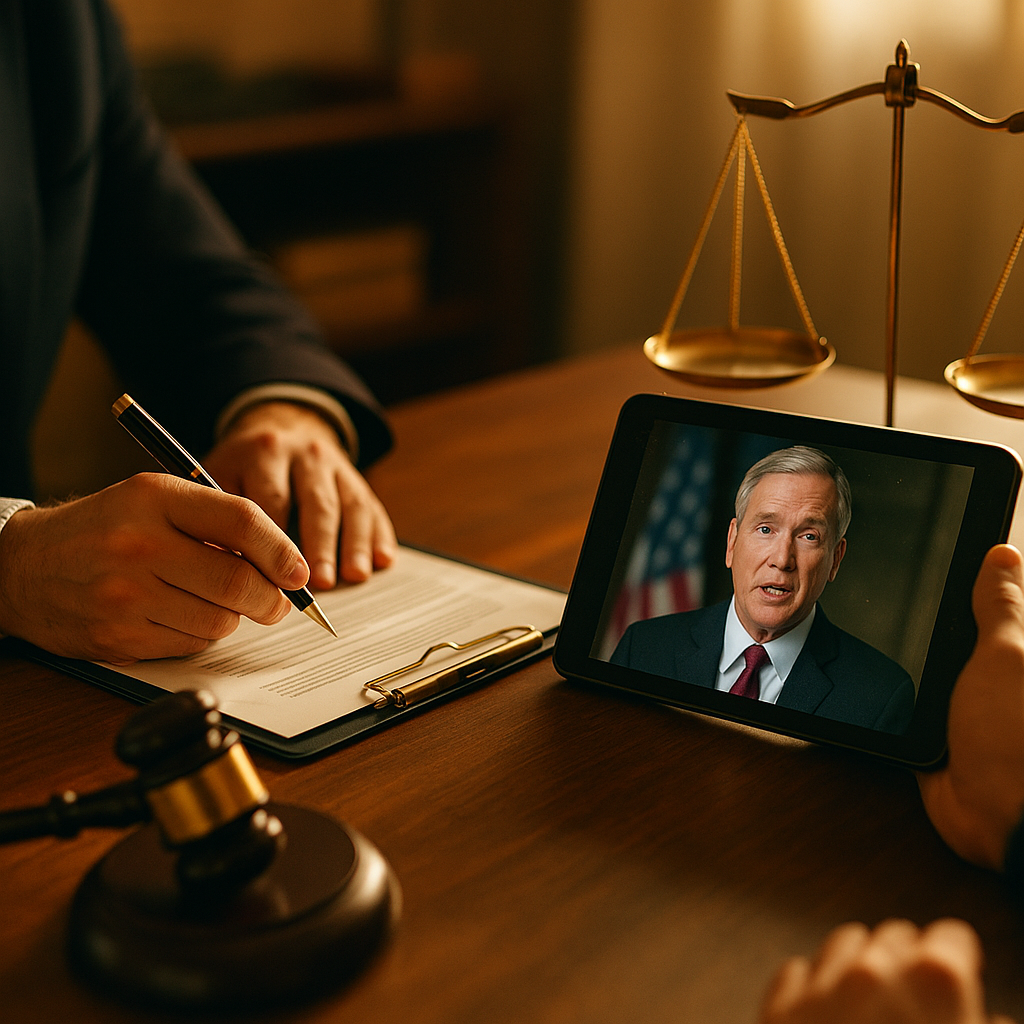
A synthetic version of a celebrity chef recently “recommended” a supplement brand never approved, in a voice so convincing that three retailers pulled the product before legal even saw the clip. Deepfake endorsements are no longer a theoretical risk sitting in a slide deck somewhere. They are a live liability event waiting for a trigger, and most brand contracts still have no idea who pays when the clone misspeaks.
The Liability Question Nobody Has Fully Answered
Here is the uncomfortable part: when an AI clone of a creator says something the brand never scripted, approved, or even knew about, liability doesn’t sit in one tidy bucket. It splits across the brand, the platform that hosted the content, the vendor who built the model, and sometimes the creator whose likeness got cloned without fresh consent. Courts and regulators are still catching up, which means contracts, not case law, are doing most of the heavy lifting right now.
That’s a problem because a lot of influencer agreements were written before generative voice and video tools got good enough to fool a retailer’s legal team. If your master services agreement still treats “likeness use” as a single checkbox, you’re exposed.
Why This Risk Is Accelerating Faster Than Legal Teams Expect
Three forces are colliding. First, voice and video cloning tools have gotten cheap and fast, lowering the barrier for bad actors or careless vendors to generate unauthorized content. Second, brands are leaning harder into AI-assisted content production to cut costs, which means more synthetic assets moving through the pipeline with less human review. Third, enforcement is sharpening. The Federal Trade Commission has made clear that endorsement rules apply regardless of whether the “endorser” is human or synthetic, and state-level likeness statutes are expanding fast.
A deepfake doesn’t need to be malicious to create liability. An approved AI clone that improvises outside its script is enough to trigger a false endorsement claim.
Mapping Where Liability Actually Lands
Think of deepfake liability as a chain with four links: the brand that commissioned or benefited from the content, the agency or production vendor that built the synthetic asset, the platform that distributed it, and the creator whose likeness or voice was cloned. When a clone misspeaks, plaintiffs and regulators typically start at the brand, because that’s where the money and the public-facing campaign live. Brands are the deep pocket, and they’re usually named first regardless of who actually caused the error.
- Brand liability: Strict in the US under FTC endorsement guidance if the brand published or distributed the content, even if a vendor built it.
- Vendor liability: Depends entirely on contract language. Most AI production vendors try to cap their exposure to the fee paid, not the damages caused.
- Platform liability: Limited under current intermediary protections in most jurisdictions, though this is shifting as governments revisit safe harbor rules for synthetic media.
- Creator liability: Usually minimal unless the creator actively authorized an unapproved use of their own clone, which does happen in licensing deals gone sideways.
Notice what’s missing from most contracts: a clear allocation of who eats the cost when a clone deviates from approved script, tone, or claims. That gap is exactly where litigation and regulatory fines land.
What “Misspeaks” Actually Means in Practice
A clone can misspeak in a few distinct ways, and each carries different legal weight. It might make an unsubstantiated health or financial claim, the kind that pulls in FTC or SEC-adjacent scrutiny depending on category. It might drift off brand voice into something offensive or politically charged. Or it might simply say something the real creator never agreed to, triggering a right-of-publicity claim even if the content is technically accurate. Financial and investment content carries its own enforcement layer, which we’ve mapped in detail around finfluencer compliance rules.
The common thread: none of these require malicious intent. A model trained on a creator’s past videos can generate plausible-sounding claims that nobody at the brand ever typed into a brief. That’s the nature of generative output. It fills gaps, and sometimes it fills them with liability.
Consent Is Not a One-Time Signature
Most brands still treat likeness consent as a single clause buried in a broader influencer agreement. That worked fine when the deliverable was a scripted video shot once and published. It does not work for AI clones that can generate new content indefinitely, often without the creator reviewing each output. Consent needs to specify scope: what topics the clone can address, what claims it can make, whether it can be used in paid media versus organic, and for how long the license runs.
This is where voice clone consent language and voice cloning consent clauses earn their keep. A well-drafted clause names the permitted use cases explicitly and treats anything outside that scope as a contract breach, not a gray area. Brands that skip this step are relying on implied consent, which crumbles fast in front of a judge or a state attorney general.
Contract Clauses That Actually Transfer Risk
A handful of contract mechanisms do real work here, and most influencer agreements are still missing at least two of them.
- Indemnification language specific to AI output. Generic indemnification clauses often don’t contemplate synthetic content at all. You need language that addresses who covers damages when an AI clone generates unauthorized claims, not just when a human creator breaches contract.
- Review and approval checkpoints before publication. If the clone’s output never gets human review, the brand can’t credibly argue it exercised reasonable care, a factor that matters in both regulatory and tort analysis.
- Scope-limited licensing. Define exactly which topics, products, and claims the clone is licensed to discuss. Anything outside that scope should be a clear contractual breach.
- Insurance riders for AI-generated content. Standard media liability policies frequently exclude synthetic media claims. Virtual influencer liability insurance and broader influencer marketing insurance products are starting to close this gap, but brands have to ask for the rider specifically.
None of this is glamorous work. It’s the contractual equivalent of flossing. But skipping it is how a six-figure campaign turns into a seven-figure settlement.
State Laws Are Moving Faster Than Federal Guidance
While federal regulators focus on disclosure and endorsement truthfulness, a growing number of states have passed or proposed likeness and deepfake statutes that create independent causes of action separate from FTC enforcement. That means a brand could satisfy federal disclosure rules and still face a state-level lawsuit over unauthorized likeness use. We’ve tracked the patchwork in detail in our breakdown of state deepfake likeness laws, and the short version is this: a national campaign now has to clear the strictest state’s standard, not the most lenient one.
This is the same patchwork problem brands already navigate with pay transparency rules and cross-platform disclosure requirements. Building one compliance baseline that meets the toughest jurisdiction tends to be cheaper than managing fifty different standards campaign by campaign.
The Disclosure Gap Makes Everything Worse
Even when a clone’s statement is accurate, failing to disclose that it’s AI-generated creates a separate liability layer. Consumers have a right to know they’re watching a synthetic endorser, and regulators have started treating non-disclosure as deceptive in its own right. Our earlier coverage of synthetic endorser disclosure requirements goes deeper on labeling standards, but the short version for brand teams: if a clone speaks, the audience needs a clear, unavoidable signal that it’s not the real person live or unscripted.
Platforms are tightening their own policies here too. Meta’s advertising standards and TikTok’s ad policies increasingly require AI-content labeling independent of what regulators mandate, which means platform-level enforcement can hit before a government agency ever opens a file.
When Attribution Gets Murky, So Does Blame
A related wrinkle: when a clone’s content drives a purchase and that purchase leads to a complaint, figuring out which asset (human or synthetic) gets credited and which gets blamed is its own operational headache. This overlaps with the broader question of creator attribution liability when claims go wrong. Brands running mixed human and AI influencer programs need attribution systems that can distinguish synthetic touchpoints from organic ones, otherwise the post-incident investigation takes weeks instead of hours.
Data from eMarketer shows brand spend on AI-assisted creator content climbing steadily, which means this attribution problem is only going to get more tangled, not less.
A Practical Checklist Before You License a Clone
- Confirm the creator’s consent explicitly covers AI replication, not just original likeness use.
- Define topic and claim boundaries in writing, with examples of prohibited statements.
- Require human approval on every synthetic output before it goes live.
- Add AI-specific indemnification language to every vendor and creator contract.
- Confirm your insurance covers synthetic media claims, not just traditional media liability.
- Build a disclosure label that meets the strictest applicable state and platform standard.
Run this checklist like a pre-flight list, not a one-time legal review. Campaigns evolve, models get retrained, and consent scoped for one use case rarely covers the next one automatically.
Takeaway
Deepfake endorsement liability isn’t a future problem brands can plan for later. It’s a present operational gap that contract language, insurance riders, and disclosure protocols can close today. Audit your current creator and vendor agreements this quarter for AI-specific indemnification and consent scope. If those clauses aren’t there, your next campaign is carrying risk nobody has priced in.
Frequently Asked Questions
Who is legally responsible when an AI clone of an influencer makes a false claim?
In most cases, the brand that commissioned, published, or benefited from the content bears primary exposure under FTC endorsement guidance, even if a third-party vendor built the synthetic asset. Vendor and creator liability depend heavily on specific contract language around indemnification and consent scope.
Does a brand need separate insurance for AI-generated endorsement content?
Standard media liability policies often exclude synthetic media claims, so brands should request specific riders covering AI-generated content and virtual influencer liability rather than assuming existing coverage applies.
Is disclosure required even if the AI clone’s statement is accurate?
Yes. Regulators increasingly treat the failure to disclose that content is AI-generated as deceptive on its own, independent of whether the underlying claim is true.
Can a creator be held liable if their AI clone is misused by a brand?
Generally no, unless the creator actively authorized the unapproved use. Liability typically flows to whoever commissioned, approved, or distributed the content beyond the agreed consent scope.
How often should brands review AI clone consent agreements?
At minimum before every new campaign or use case, since consent scoped for one type of content (say, product reviews) rarely extends automatically to new topics, claims, or distribution channels.
Top Influencer Marketing Agencies
The leading agencies shaping influencer marketing in 2026
Agencies ranked by campaign performance, client diversity, platform expertise, proven ROI, industry recognition, and client satisfaction. Assessed through verified case studies, reviews, and industry consultations.
Moburst

-
2

The Shelf
Boutique Beauty & Lifestyle Influencer AgencyA data-driven boutique agency specializing exclusively in beauty, wellness, and lifestyle influencer campaigns on Instagram and TikTok. Best for brands already focused on the beauty/personal care space that need curated, aesthetic-driven content.Clients: Pepsi, The Honest Company, Hims, Elf Cosmetics, Pure LeafVisit The Shelf → -
3

Audiencly
Niche Gaming & Esports Influencer AgencyA specialized agency focused exclusively on gaming and esports creators on YouTube, Twitch, and TikTok. Ideal if your campaign is 100% gaming-focused — from game launches to hardware and esports events.Clients: Epic Games, NordVPN, Ubisoft, Wargaming, Tencent GamesVisit Audiencly → -
4

Viral Nation
Global Influencer Marketing & Talent AgencyA dual talent management and marketing agency with proprietary brand safety tools and a global creator network spanning nano-influencers to celebrities across all major platforms.Clients: Meta, Activision Blizzard, Energizer, Aston Martin, WalmartVisit Viral Nation → -
5

The Influencer Marketing Factory
TikTok, Instagram & YouTube CampaignsA full-service agency with strong TikTok expertise, offering end-to-end campaign management from influencer discovery through performance reporting with a focus on platform-native content.Clients: Google, Snapchat, Universal Music, Bumble, YelpVisit TIMF → -
6

NeoReach
Enterprise Analytics & Influencer CampaignsAn enterprise-focused agency combining managed campaigns with a powerful self-service data platform for influencer search, audience analytics, and attribution modeling.Clients: Amazon, Airbnb, Netflix, Honda, The New York TimesVisit NeoReach → -
7

Ubiquitous
Creator-First Marketing PlatformA tech-driven platform combining self-service tools with managed campaign options, emphasizing speed and scalability for brands managing multiple influencer relationships.Clients: Lyft, Disney, Target, American Eagle, NetflixVisit Ubiquitous → -
8

Obviously
Scalable Enterprise Influencer CampaignsA tech-enabled agency built for high-volume campaigns, coordinating hundreds of creators simultaneously with end-to-end logistics, content rights management, and product seeding.Clients: Google, Ulta Beauty, Converse, AmazonVisit Obviously →