


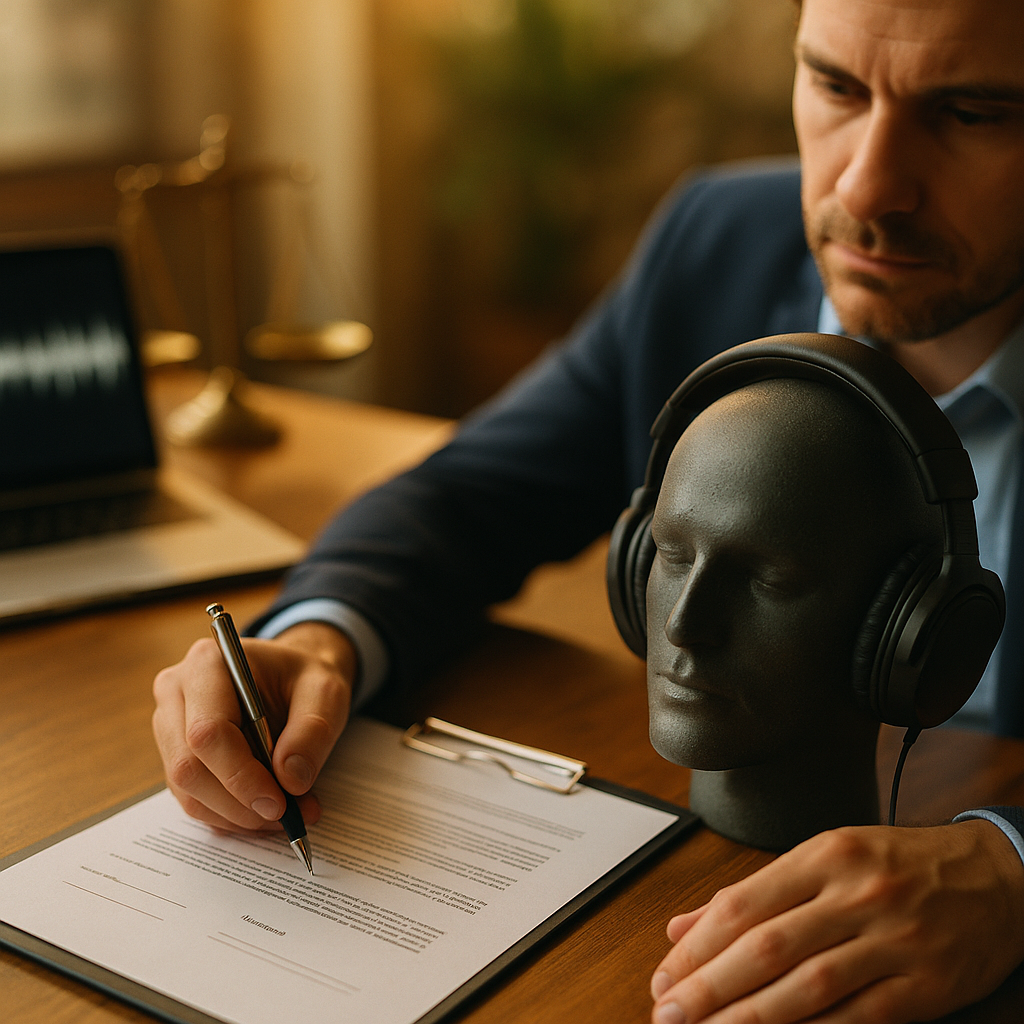
Eleven Labs can clone a voice from eleven seconds of audio. Eleven seconds. If your creator contracts still treat “likeness” as a photo and a name, you are sitting on a liability time bomb. AI voice cloning consent has quietly become one of the most contested clauses in creator partnership agreements, and most brands are still negotiating with templates built for a world where synthetic audio didn’t exist.
This isn’t a hypothetical risk for next year. Brands are already licensing creator voices for localized ad dubs, chatbot personas, and AI-generated video series. Without airtight consent language, that licensing turns into a lawsuit waiting for a trigger.
Why Voice Cloning Broke the Old Likeness Clause
Traditional influencer contracts bundle “likeness” rights into a single paragraph: name, image, and voice, usually lumped together with no granularity. That worked fine when “voice” meant a creator reading a script on camera. It does not work when a brand can generate infinite synthetic audio from a thirty second sample and reuse it across hundreds of ad variants without the creator ever stepping into a studio again.
Voice cloning changes the economics of a deal entirely. A creator who agrees to record one sponsored video is not agreeing to let a brand generate unlimited future content in their voice. Yet that’s exactly what happens when contracts are silent on AI replication. The gap between what was negotiated and what gets technically possible is where legal exposure lives.
A single ambiguous “grant of likeness” clause can expose a brand to claims under right of publicity law, state biometric statutes, and emerging deepfake disclosure rules simultaneously.
Several states have already moved to close this gap through dedicated legislation. Tennessee’s ELVIS Act explicitly protects voice as a property right, and California’s AB 1836 extends publicity protections to digital replicas of deceased performers. Brands operating nationally cannot assume a one-size clause covers them in every jurisdiction. For a deeper look at how state-level rules are reshaping consent requirements, see our breakdown of state deepfake likeness laws.
The Five Elements Every Voice Cloning Clause Needs
A compliant, enforceable clause isn’t one sentence bolted onto an existing contract. It needs structure. Here’s what legal teams at agencies handling AI-enabled campaigns are now building into every creator agreement:
- Explicit scope of use. Specify exactly what the cloned voice can be used for: dubbed ads, chatbot responses, social clips, internal training content. Vague terms like “marketing purposes” invite disputes.
- Duration and expiration. Voice licenses should not run in perpetuity by default. Tie the license to the campaign term with a defined renewal mechanism, not an evergreen grant.
- Territorial and platform limits. A voice clone approved for a US streaming ad should not automatically authorize use on TikTok in a different market. Name the platforms and regions explicitly.
- Revocation rights. Creators need a documented, practical path to withdraw consent, and brands need a corresponding data deletion obligation once that happens.
- Compensation tied to usage volume. Flat fees rarely account for the fact that one voice sample can generate unlimited output. Usage-based royalties or caps on generated assets protect both sides from exploitation.
Missing any one of these elements creates a clause that looks thorough but functions as a loophole. Agencies drafting these terms should also cross-reference indemnification language, since voice cloning disputes often trigger claims that fall outside standard IP indemnity. Our guide on creator indemnification clauses walks through how to close that overlap.
Consent Isn’t a One-Time Checkbox
Here’s where a lot of legal teams get it wrong: they treat consent as a single signature event at contract execution. Voice cloning consent needs to be renewable and auditable, not static.
Think about how a campaign actually evolves. A creator signs on for a three-month sponsorship. Midway through, the brand wants to generate a Spanish-language dub using the creator’s cloned voice for a market expansion that wasn’t part of the original scope. Does the original consent cover that? If the contract didn’t anticipate it, the answer is almost certainly no, and generating that audio without renegotiated consent is a direct path to a publicity rights claim.
Build in a consent renewal trigger whenever new use cases emerge. This doesn’t need to be a full contract renegotiation every time. A short-form addendum, digitally signed and timestamped, is usually sufficient. The key is documentation. If a dispute arises eighteen months later, “we assumed it was fine” is not a defense that holds up.
This is also where clawback provisions matter. If a creator terminates the relationship or revokes consent mid-campaign, the brand needs a clear mechanism to stop generation, pull existing synthetic assets, and confirm deletion of training data. For contract language that handles mid-campaign termination scenarios more broadly, review creator content clawback provisions.
Where This Intersects with Data Privacy Law
A voice sample is biometric data. That single fact pulls these clauses into regulatory territory most marketing teams aren’t used to navigating. Illinois’ Biometric Information Privacy Act (BIPA) treats voiceprints the same as fingerprints, requiring written consent before collection and a documented retention schedule. Get this wrong and the exposure isn’t just contractual, it’s statutory, with per-violation damages that add up fast across a large creator roster.
GDPR-adjacent frameworks in the EU and UK classify voice data as biometric information requiring explicit, specific consent, separate from general marketing consent. If your creator program includes EU-based talent or EU audiences, your voice cloning clause needs to stand on its own as a GDPR-compliant consent instrument, not ride on the back of a general data processing agreement. Our analysis of GDPR consent requirements for AI creator pools covers the mechanics of building that separation correctly.
There’s also a growing overlap with state biometric statutes beyond Illinois. Texas and Washington both have their own biometric privacy laws with different notice requirements. A brand running a national campaign needs its consent clause drafted to the strictest applicable standard, not the loosest one, because enforcement doesn’t care where your headquarters sits.
Treating a voice sample as “just audio” instead of biometric data is the single most common drafting mistake brands make, and it’s the one regulators are now actively targeting.
What Happens When a Clone Gets Misused
Consent clauses are only half the equation. The other half is what happens when something goes wrong, whether that’s a vendor overstepping the licensed scope, a third party scraping a creator’s cloned voice without authorization, or an internal team generating content outside the approved use case.
Attribution matters here. If a brand’s AI vendor generates unauthorized synthetic audio using a creator’s voice, who bears the liability? Without a clear indemnification chain, brands can find themselves on the hook for a vendor’s overreach. This is closely related to broader questions of accountability when AI-generated claims or content cause harm, which we cover in creator attribution liability.
Build a misuse response protocol directly into the contract: a defined notice window, a takedown obligation, and a financial penalty structure for unauthorized use that exceeds licensed scope. This mirrors how DMCA takedown protocols function for stolen content, except here the “theft” is of a biometric asset rather than a video file.
It’s also worth stress-testing your contract against a worst-case scenario: a competitor or bad actor clones a creator’s voice independently, using publicly available audio, and the creator assumes the brand is responsible because of the existing partnership. A clear public statement clause, where the brand commits to supporting the creator’s public denial and takedown efforts, protects the relationship and the brand’s reputation simultaneously.
Drafting Checklist for Legal and Brand Teams
Before any contract with voice cloning provisions goes to signature, run it against this checklist:
- Does the clause define voice cloning separately from general likeness rights?
- Is the scope of permitted use specific enough to exclude unanticipated applications?
- Is there a clear expiration date or renewal trigger tied to the license?
- Does the creator have a documented, functional revocation mechanism?
- Is compensation structured to scale with volume of generated content, not just a flat fee?
- Does the clause reference applicable biometric privacy statutes by name?
- Is there an indemnification provision covering third-party misuse?
- Does the contract specify data retention and deletion timelines for voice samples?
If you’re building these clauses alongside broader IP licensing terms, it’s worth reviewing them in tandem with creator IP ownership clauses, since voice rights and repurposing rights frequently overlap in multi-platform campaigns. For a direct comparison of how voice consent clauses are being structured across the industry right now, our companion piece on AI voice clone consent gaps offers additional drafting templates worth benchmarking against.
Industry data backs up the urgency here. According to eMarketer research on AI adoption in marketing, generative audio and video tools are now used in a majority of large-scale influencer campaigns, yet contract language in most agencies hasn’t caught up to the technology’s actual capabilities. The FTC has also signaled increased scrutiny of synthetic media disclosures, meaning poorly drafted consent clauses now carry regulatory risk on top of civil liability.
FAQs
Frequently Asked Questions
What is an AI voice cloning consent clause?
It’s a contract provision that specifically authorizes a brand or agency to create and use a synthetic replica of a creator’s voice, defining scope, duration, compensation, and revocation rights separately from general likeness or image rights.
Why can’t brands just use existing likeness clauses for voice cloning?
Traditional likeness clauses were written before AI voice replication existed and typically don’t address the unlimited, reusable nature of synthetic audio. Courts and regulators increasingly treat voice as distinct biometric data requiring its own explicit consent.
Does voice cloning consent need to be renewed for every new use case?
Yes, ideally. Best practice is to define the original scope narrowly and require a short-form addendum whenever the brand wants to apply the cloned voice to a use case not covered in the original agreement.
What happens if a creator revokes voice cloning consent mid-campaign?
The contract should specify an immediate stop on new content generation, a defined timeline for removing existing synthetic assets from active use, and confirmation of deletion of the underlying voice data used for training.
Are there laws specifically governing AI voice cloning?
Yes. Tennessee’s ELVIS Act and California’s publicity rights amendments directly address voice replication, and biometric privacy statutes in states like Illinois, Texas, and Washington treat voiceprints as protected biometric data requiring written consent.
Who is liable if a third party misuses a creator’s cloned voice outside the contracted scope?
Liability depends on the indemnification structure in the contract. Brands should negotiate clear indemnity provisions covering vendor misuse and unauthorized third-party generation to avoid absorbing liability for actions outside their direct control.
The brands winning with AI voice tools right now aren’t the ones avoiding the technology, they’re the ones whose legal teams rewrote consent language before the first clone was ever generated. Start with the checklist above, run it against your current roster of agreements, and fix the gaps before a regulator or a creator’s lawyer finds them first.
Top Influencer Marketing Agencies
The leading agencies shaping influencer marketing in 2026
Agencies ranked by campaign performance, client diversity, platform expertise, proven ROI, industry recognition, and client satisfaction. Assessed through verified case studies, reviews, and industry consultations.
Moburst

-
2

The Shelf
Boutique Beauty & Lifestyle Influencer AgencyA data-driven boutique agency specializing exclusively in beauty, wellness, and lifestyle influencer campaigns on Instagram and TikTok. Best for brands already focused on the beauty/personal care space that need curated, aesthetic-driven content.Clients: Pepsi, The Honest Company, Hims, Elf Cosmetics, Pure LeafVisit The Shelf → -
3

Audiencly
Niche Gaming & Esports Influencer AgencyA specialized agency focused exclusively on gaming and esports creators on YouTube, Twitch, and TikTok. Ideal if your campaign is 100% gaming-focused — from game launches to hardware and esports events.Clients: Epic Games, NordVPN, Ubisoft, Wargaming, Tencent GamesVisit Audiencly → -
4

Viral Nation
Global Influencer Marketing & Talent AgencyA dual talent management and marketing agency with proprietary brand safety tools and a global creator network spanning nano-influencers to celebrities across all major platforms.Clients: Meta, Activision Blizzard, Energizer, Aston Martin, WalmartVisit Viral Nation → -
5

The Influencer Marketing Factory
TikTok, Instagram & YouTube CampaignsA full-service agency with strong TikTok expertise, offering end-to-end campaign management from influencer discovery through performance reporting with a focus on platform-native content.Clients: Google, Snapchat, Universal Music, Bumble, YelpVisit TIMF → -
6

NeoReach
Enterprise Analytics & Influencer CampaignsAn enterprise-focused agency combining managed campaigns with a powerful self-service data platform for influencer search, audience analytics, and attribution modeling.Clients: Amazon, Airbnb, Netflix, Honda, The New York TimesVisit NeoReach → -
7

Ubiquitous
Creator-First Marketing PlatformA tech-driven platform combining self-service tools with managed campaign options, emphasizing speed and scalability for brands managing multiple influencer relationships.Clients: Lyft, Disney, Target, American Eagle, NetflixVisit Ubiquitous → -
8

Obviously
Scalable Enterprise Influencer CampaignsA tech-enabled agency built for high-volume campaigns, coordinating hundreds of creators simultaneously with end-to-end logistics, content rights management, and product seeding.Clients: Google, Ulta Beauty, Converse, AmazonVisit Obviously →