


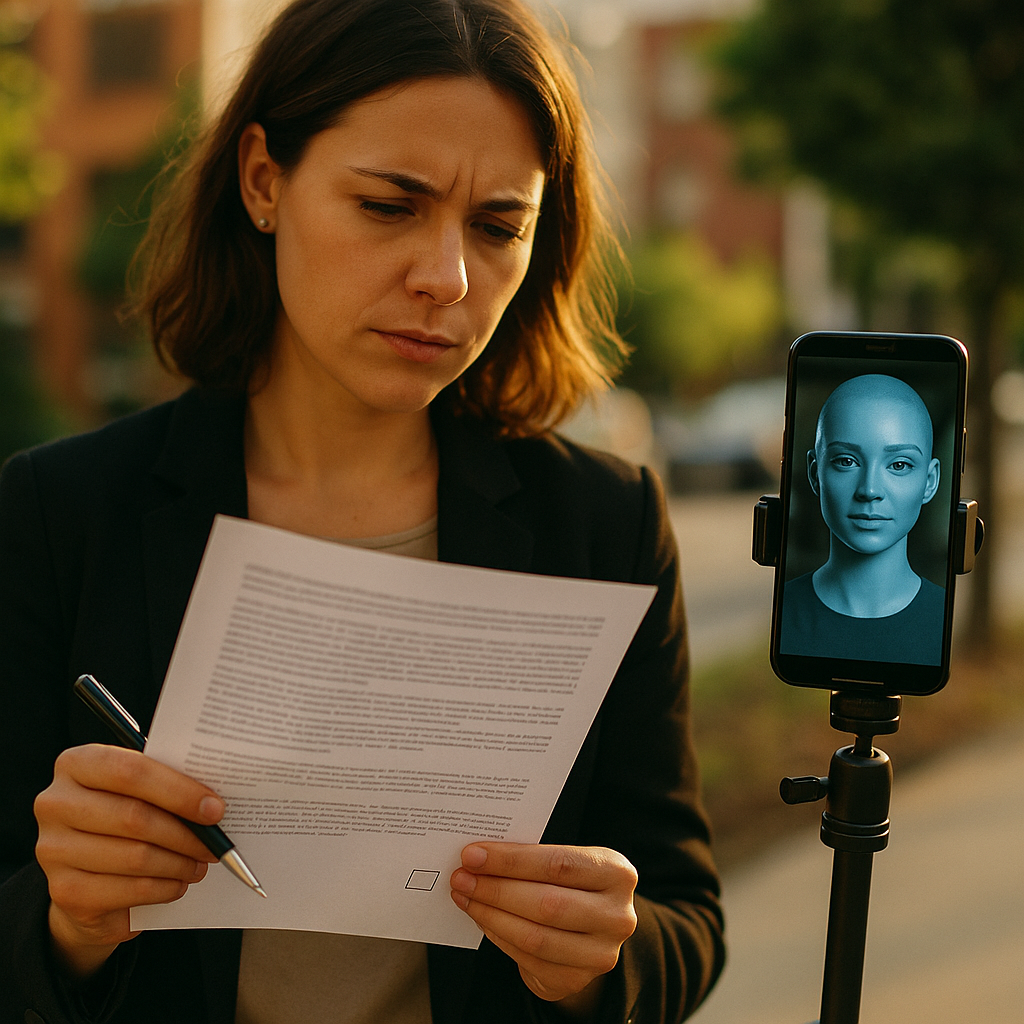
Seventy three percent of marketers say they’ve already tested an AI-generated spokesperson or synthetic avatar in a campaign, yet fewer than one in five have a disclosure protocol built for it. That gap is exactly where the FTC’s next move on AI endorsers is headed. Regulators have spent two years chasing fake reviews and undisclosed paid posts. Synthetic influencers are the next logical target, and the agency has already signaled it.
Why Synthetic Endorsers Are on the FTC’s Radar Now
The Federal Trade Commission’s Endorsement Guides were rewritten with human influencers in mind: real people, real opinions, real (or fake) enthusiasm for a product. AI generated personas break that model entirely. A virtual influencer has no genuine opinion to disclose or withhold. It has training data, a prompt, and a brand paying to put words in its mouth.
The agency’s existing guidance already requires “clear and conspicuous” disclosure when a connection between an endorser and a brand isn’t obvious. The open question is whether synthetic personas trigger an entirely new disclosure category, something closer to a “this is not a real person” label rather than a standard #ad tag. Commission staff have hinted at exactly that distinction in recent public remarks, and the agency’s ongoing scrutiny of dark patterns and deceptive design (see our coverage of platform design scrutiny) suggests synthetic media is next in line.
If the FTC treats AI endorsers the way it treats undisclosed material connections, brands could face liability not for the content itself, but for failing to tell audiences a human didn’t actually say it.
What “Synthetic Disclosure” Might Actually Require
Nobody has final rule text yet. But pattern matching against the FTC’s past rulemaking, and its parallel actions from the SEC on AI-washing and the EU’s AI Act labeling requirements, gives a reasonable preview. Expect requirements to cluster around three things:
- Persona disclosure: a visible, unavoidable label that the endorser is AI generated, not a watermark buried in a video description.
- Material connection disclosure: the existing #ad standard still applies on top of the synthetic label, not instead of it.
- Claim substantiation: if a synthetic persona makes a performance or efficacy claim, the brand still needs evidence behind it, same as with a human endorser.
That last point trips people up. Marketers sometimes assume an AI avatar is lower risk because “it’s obviously not real.” The FTC doesn’t care whether audiences believe the avatar is human. It cares whether the audience understands the relationship between the brand and whatever is doing the endorsing. Confusion about authenticity is the harm, not the avatar’s realism.
The Compliance Gap Brands Aren’t Talking About
Most influencer marketing platforms (AI matching tools included) still route synthetic creator content through the same workflow as human creator content. One tag, one approval chain, done. That’s a problem. Synthetic endorsers need a separate compliance layer because the legal exposure is different, the consent chain is different, and the disclosure trigger point is different.
Consider voice cloning. If your synthetic spokesperson’s voice is modeled on a real actor or past brand ambassador, you’re stacking two disclosure obligations on top of each other: the AI persona disclosure and whatever consent terms govern the underlying voice model. We’ve covered how brands are tightening consent language for exactly this scenario in our piece on voice cloning consent clauses, and it’s worth revisiting before you greenlight any AI spokesperson campaign.
There’s also a state law layer running parallel to whatever the FTC decides federally. Several states have already passed deepfake likeness statutes that require consent for digitally replicated personas in advertising, independent of federal disclosure rules. Our rundown of state deepfake likeness laws breaks down which jurisdictions are ahead of the FTC here, and the list is growing faster than most legal teams have tracked.
Where Liability Actually Lands
Here’s the uncomfortable part for brand teams: the FTC has consistently pursued advertisers, not just the creators or platforms, when disclosure fails. A synthetic influencer doesn’t have an agent, a reputation to protect, or skin in the game. The brand is the only party left holding liability when a synthetic endorsement gets flagged as deceptive.
This mirrors a pattern we’ve seen play out with human creators and claim attribution. When a creator makes an unsubstantiated claim, the brand often ends up footing the regulatory bill even if the creator wrote the script themselves. Our analysis of creator attribution liability covers the legal mechanics, and the same logic extends cleanly to AI personas, arguably with less room for the brand to claim it didn’t know what the endorser would say, since the brand wrote the AI’s script in the first place.
Indemnification clauses built for human creators generally don’t cover synthetic media scenarios either. If your contract templates were drafted before your AI avatar program existed, they likely have a gap. Worth checking against our guide on AI liability indemnification before your legal team gets surprised by a claim nobody structured a defense for.
Building a Disclosure Protocol Before the Rule Drops
Waiting for final FTC rule language is the comfortable choice and the wrong one. Enforcement actions in this space have historically preceded formal rulemaking by a wide margin; the agency uses existing Section 5 authority against deceptive practices while rules are still being drafted. Translation: you can get penalized under current law even before synthetic-specific rules exist.
A practical protocol looks like this:
- Audit every active campaign using AI avatars, voice clones, or generated personas, and flag which ones lack a visible synthetic disclosure.
- Separate your disclosure matrix for synthetic content from your human creator disclosure matrix. One size doesn’t fit both anymore. If you’re managing disclosures across multiple platforms already, extend the logic in our cross platform disclosure framework to cover AI generated content specifically.
- Update indemnification and consent clauses in any contract involving a synthetic likeness, voice model, or AI remix of a real creator’s content. Our breakdown of AI remix rights is a useful starting point for the IP side of this.
- Build a recurring audit cadence rather than a one-time check. Regulatory posture shifts fast in this category, and quarterly reviews catch drift before it becomes a complaint. The audit rhythm we outlined for platform compliance reviews translates directly to synthetic content governance.
- Loop in insurance. Standard influencer marketing policies weren’t written with AI personas in mind, and coverage gaps here are common. Worth a conversation with your broker informed by our piece on virtual influencer liability insurance.
The brands that build synthetic disclosure protocols now, ahead of a formal rule, will look compliant by default. Everyone else will be retrofitting contracts under deadline pressure.
What This Means for Platform Selection and Vendor Due Diligence
If you’re sourcing AI avatars or synthetic creator pools through a matching platform, ask vendors directly how they handle disclosure labeling and consent documentation. Not all platforms are equal here, and some still treat synthetic personas as a content format rather than a regulated category. Our look at AI creator matching platforms flags which data provenance questions actually matter when you’re vetting a vendor, and disclosure readiness should be on that checklist alongside data sourcing.
It also pays to watch international regulators for early signals. The FTC’s own guidance pages are a baseline, but the UK’s Information Commissioner’s Office has been active on AI transparency too, and global brands running synthetic campaigns across markets need to track both. Penalty structures are tightening outside the US as well; South Korea’s recent move to raise ad penalties, which we covered in our piece on global budget risk, is a preview of where enforcement economics are headed everywhere.
Industry data tracked by eMarketer shows AI generated influencer content spend climbing sharply year over year, which means regulatory attention is only going to compound. Platforms like Meta Business and TikTok Ads have both introduced AI content labeling features recently, a strong hint that platform-level compliance tools are already anticipating regulatory pressure, even if the FTC hasn’t finalized anything.
Next Step
Don’t wait for the FTC’s final rule text. Run a synthetic content audit this quarter, patch your indemnification clauses, and build a disclosure protocol that assumes stricter enforcement, not lighter, because that’s the direction every signal is pointing.
FAQs
Does the FTC currently require disclosure for AI generated influencers?
Existing Endorsement Guides require disclosure of material connections between brands and endorsers, and that standard already applies to AI personas. A synthetic-specific disclosure category hasn’t been finalized yet, but the agency can still pursue enforcement under current deceptive practices authority.
Who is liable if a synthetic influencer makes an unsubstantiated claim?
The brand, in nearly every case. A synthetic endorser has no independent liability, no reputation, and no agency relationship, so regulatory and legal exposure flows directly back to the advertiser that deployed it.
Is a visible AI label enough to satisfy disclosure requirements?
Likely not on its own. A synthetic persona label addresses authenticity confusion, but a separate material connection disclosure (like a standard paid partnership tag) is still expected if the brand compensated or directed the content.
Do state deepfake laws apply even if federal rules aren’t finalized?
Yes. Several states already have likeness and deepfake consent statutes in effect that operate independently of federal FTC rulemaking, and brands running synthetic campaigns need to check state level requirements regardless of federal timing.
How often should brands audit synthetic content for compliance?
A quarterly cadence is a reasonable baseline given how fast platform policies and state laws are shifting. Campaigns involving voice cloning or likeness replication warrant more frequent review given the layered consent requirements involved.
Top Influencer Marketing Agencies
The leading agencies shaping influencer marketing in 2026
Agencies ranked by campaign performance, client diversity, platform expertise, proven ROI, industry recognition, and client satisfaction. Assessed through verified case studies, reviews, and industry consultations.
Moburst

-
2

The Shelf
Boutique Beauty & Lifestyle Influencer AgencyA data-driven boutique agency specializing exclusively in beauty, wellness, and lifestyle influencer campaigns on Instagram and TikTok. Best for brands already focused on the beauty/personal care space that need curated, aesthetic-driven content.Clients: Pepsi, The Honest Company, Hims, Elf Cosmetics, Pure LeafVisit The Shelf → -
3

Audiencly
Niche Gaming & Esports Influencer AgencyA specialized agency focused exclusively on gaming and esports creators on YouTube, Twitch, and TikTok. Ideal if your campaign is 100% gaming-focused — from game launches to hardware and esports events.Clients: Epic Games, NordVPN, Ubisoft, Wargaming, Tencent GamesVisit Audiencly → -
4

Viral Nation
Global Influencer Marketing & Talent AgencyA dual talent management and marketing agency with proprietary brand safety tools and a global creator network spanning nano-influencers to celebrities across all major platforms.Clients: Meta, Activision Blizzard, Energizer, Aston Martin, WalmartVisit Viral Nation → -
5

The Influencer Marketing Factory
TikTok, Instagram & YouTube CampaignsA full-service agency with strong TikTok expertise, offering end-to-end campaign management from influencer discovery through performance reporting with a focus on platform-native content.Clients: Google, Snapchat, Universal Music, Bumble, YelpVisit TIMF → -
6

NeoReach
Enterprise Analytics & Influencer CampaignsAn enterprise-focused agency combining managed campaigns with a powerful self-service data platform for influencer search, audience analytics, and attribution modeling.Clients: Amazon, Airbnb, Netflix, Honda, The New York TimesVisit NeoReach → -
7

Ubiquitous
Creator-First Marketing PlatformA tech-driven platform combining self-service tools with managed campaign options, emphasizing speed and scalability for brands managing multiple influencer relationships.Clients: Lyft, Disney, Target, American Eagle, NetflixVisit Ubiquitous → -
8

Obviously
Scalable Enterprise Influencer CampaignsA tech-enabled agency built for high-volume campaigns, coordinating hundreds of creators simultaneously with end-to-end logistics, content rights management, and product seeding.Clients: Google, Ulta Beauty, Converse, AmazonVisit Obviously →