


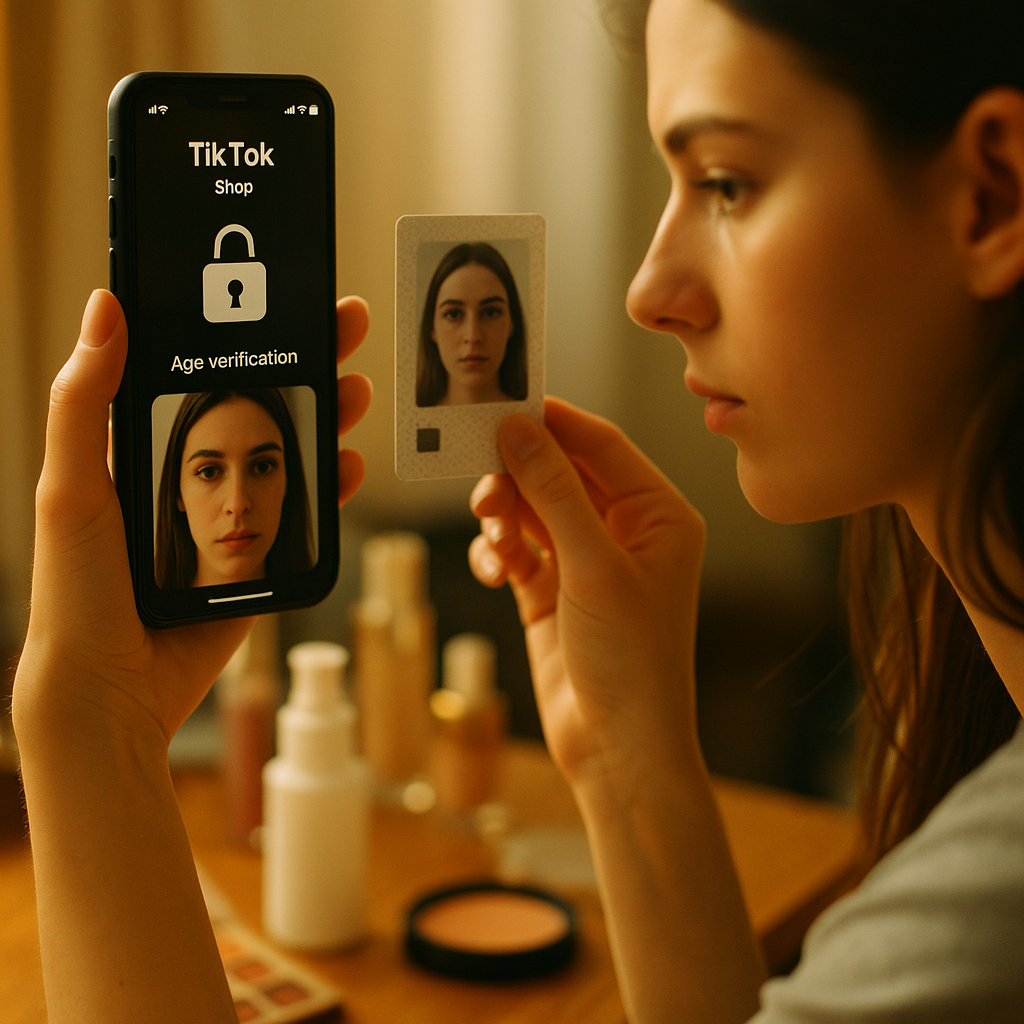
One skincare brand’s rum-extract serum triggered TikTok Shop’s alcohol-adjacent flagging system last quarter, freezing 40,000 SKUs mid-launch. The culprit wasn’t the product. It was a data processing agreement that never anticipated age-verification data flowing through three vendors nobody had vetted. If your legal team hasn’t touched your TikTok Shop DPA since the platform expanded age gates to bourbon-barrel-aged moisturizers and wine-extract serums, you’re exposed.
Why Beauty Brands Suddenly Look Like Alcohol Retailers
TikTok Shop’s trust and safety team quietly widened its alcohol-adjacent classification earlier this year. The category now sweeps in fragrance lines with alcohol-based tinctures, skincare using fermented alcohol derivatives, and haircare marketed with “boozy” branding language. Marketing copy matters here as much as ingredient lists. A body mist called “Whiskey Nights” gets flagged even if it contains zero ethanol.
The platform’s logic is defensive. Regulators in multiple states have been scrutinizing social commerce platforms over minors’ exposure to alcohol marketing, and TikTok would rather over-flag than face another enforcement action. That caution now trickles down to brands that never sold a drop of alcohol but suddenly need age-verification infrastructure they weren’t budgeting for.
If your product copy mentions alcohol, spirits, or fermentation in any consumer-facing context, assume TikTok Shop’s classifier will treat it as age-gated inventory, regardless of actual ABV content.
This isn’t a cosmetic labeling issue. It’s a data governance issue. Age verification means collecting, storing, and transmitting personal data, birthdates, sometimes government ID scans, through TikTok’s verification partners and back into your own systems for compliance recordkeeping. That data trail is exactly what a well-drafted DPA is supposed to govern, and exactly what most brands’ existing agreements ignore.
The DPA Gap Nobody Budgeted For
Most brand-side DPAs with TikTok Shop were negotiated (or, more honestly, accepted as-is via clickwrap) before age verification became a live requirement for beauty categories. They cover standard data flows: order data, customer service tickets, return logistics. They say almost nothing about biometric or age-assurance data, which carries different legal weight under state privacy statutes and, in some cases, triggers separate consent obligations entirely.
Here’s the uncomfortable question every brand marketing lead should be asking procurement right now: do we actually know where age-verification data goes after TikTok collects it? If the honest answer is “not really,” that’s your starting point.
- Sub-processor visibility. TikTok Shop routes age verification through third-party identity vendors. Your DPA needs a current, updated sub-processor list, not a static appendix from onboarding.
- Data retention terms. Verification records shouldn’t linger indefinitely. Ask for specific deletion timelines tied to transaction completion, not vague “as needed” language.
- Cross-border transfer clauses. If TikTok’s verification infrastructure touches servers outside your primary market, standard contractual clauses need to be explicit, not assumed.
- Breach notification specifics. Age and ID data is higher-sensitivity than order history. Your notification window should reflect that, not default to generic 30-day language.
This mirrors a pattern we’ve tracked across other platform-driven compliance shifts. The age-assurance rules squeezing ad targeting created a similar scramble when brands realized their targeting data pipelines weren’t contractually mapped to the new verification layer.
What to Actually Renegotiate
Don’t treat this as a one-line amendment. Age-verification data for alcohol-adjacent products deserves its own schedule within the DPA, separate from general commerce data terms. Here’s what that schedule should cover.
Purpose limitation, spelled out. Age-verification data collected for TikTok Shop compliance shouldn’t quietly feed into TikTok’s ad-targeting or lookalike audience systems. Brands need contractual language that walls off this data category from broader platform advertising use. This is a negotiable point, but only if you ask for it explicitly. Silence gets read as consent.
Audit rights that mean something. Standard DPAs often include audit language that’s functionally unusable, requiring 90-day notice and limiting scope to documentation review. Push for the right to request a compliance summary at least twice a year, particularly around how age-verification vendors handle data deletion.
Liability allocation for false negatives. If TikTok’s age gate fails and a minor completes a purchase, whose liability is that? Right now, most brand-side agreements are silent or vague. Given the regulatory attention on minor protection (the FTC has been increasingly active here, see its enforcement guidance on children’s privacy), silence is a liability, not neutrality.
A DPA that doesn’t allocate liability for age-verification failures isn’t protecting your brand. It’s leaving that question open for a regulator or plaintiff’s attorney to answer for you.
This isn’t hypothetical caution. TikTok’s own settlement history shows how expensive ambiguity gets. The platform’s $400M settlement reset parental consent rules for an entire category of brands almost overnight, and the same pattern of retroactive tightening is playing out now with alcohol-adjacent beauty.
Vendor Chains Make This Harder Than It Looks
Beauty brands rarely run TikTok Shop operations in-house. There’s usually an agency handling content, a livestream production partner, sometimes a third-party fulfillment operation, and increasingly, AI tools scoring product descriptions for compliance risk before they go live. Every one of those parties may touch age-verification data indirectly, and your DPA with TikTok doesn’t automatically extend protections down that chain.
You need parallel data processing terms in your agency and vendor contracts that mirror the obligations in your TikTok Shop DPA. Otherwise you’ve built a compliant relationship with TikTok and a completely uncontrolled one with the three vendors touching the same data downstream. This is the exact failure mode we detailed in data processing addendums for AI decision engines: the primary platform contract looks airtight while the vendor layer underneath leaks.
Practical fix: build a data flow map before you touch contract language. List every party that receives, stores, or processes age-verification data related to your TikTok Shop listings. Then match each one against an existing or missing DPA. Gaps show up fast, usually at the livestream production agency or the third-party analytics tool nobody thought of as a “processor.”
Multi-State Complications Layer On Top
Age-verification data isn’t governed only by your TikTok Shop agreement. State privacy laws in California, Colorado, and a growing list of others treat sensitive personal information, which increasingly includes age and identity verification data, with heightened breach notification and consumer rights requirements. If TikTok’s verification vendor has an incident, your obligations under state law kick in independently of whatever TikTok’s own breach clause says.
Brands operating across state lines should cross-reference their TikTok Shop DPA against the notification timelines already mapped in our multi-state breach notification timeline guide. If TikTok’s contractual notification window is longer than your fastest state deadline, you have a compliance gap that exists on paper right now, waiting for an incident to expose it.
According to eMarketer’s social commerce research, TikTok Shop’s beauty and personal care category has grown fast enough that platform trust and safety policy is visibly playing catch-up. That growth curve is exactly why brands can’t wait for TikTok to hand them a perfect, fully-baked DPA template. The platform is iterating policy in real time; your contracts need to anticipate the next tightening, not just react to the last one.
Building an Internal Review Cadence
One-time DPA fixes age out fast on a platform that revises policy this frequently. Set a quarterly review trigger tied to any TikTok Shop policy update announcement, not an arbitrary calendar date. Assign ownership, legal or compliance, not just the social commerce marketing lead, since data processing terms sit outside typical marketing scope.
Three things worth tracking each cycle:
- Any change to TikTok’s published sub-processor list for identity and age verification
- New state privacy legislation that reclassifies age or biometric data categories
- Internal vendor onboarding that introduces new touchpoints for verification data
Brands that treat this as a recurring operational task, rather than a one-off legal cleanup, avoid the scramble that hits when TikTok changes classification rules with 30 days’ notice. That scramble is expensive: paused listings, delayed launches, and rushed contract amendments signed under deadline pressure rarely favor the brand.
For teams managing broader platform compliance alongside this, it’s worth benchmarking against the operational patterns in our data storage checklist for brands, which covers similar retention and access-control questions relevant to age-verification records.
Next step: Pull your current TikTok Shop DPA this week, map every vendor touching age-verification data, and flag any agreement missing purpose limitation or liability allocation language before your next beauty product launch goes live.
FAQs
Does every beauty brand on TikTok Shop need a revised data processing agreement?
Only brands selling products classified as alcohol-adjacent under TikTok’s expanded criteria need immediate revisions, but given how broadly the classifier now applies (including fragrance and haircare with alcohol-referencing branding), most beauty brands should audit their catalog rather than assume they’re exempt.
What counts as “alcohol-adjacent” under TikTok Shop’s new rules?
The category includes products with alcohol-based ingredients, alcohol-derived extracts, and, increasingly, products marketed with spirits-related branding language even absent actual alcohol content. Marketing copy and product naming can trigger the classification independently of the formula.
Who is liable if TikTok’s age verification fails and a minor completes a purchase?
This depends entirely on how your DPA allocates liability, and most existing agreements don’t address it clearly. Brands should negotiate explicit liability terms rather than rely on TikTok’s default platform terms, which tend to favor the platform.
How often should brands review their TikTok Shop DPA?
At minimum, quarterly, and immediately following any TikTok Shop policy announcement related to age verification or sub-processor changes. Treat it as an operational compliance task owned by legal, not a one-time contract signature.
Does age-verification data fall under stricter state privacy law protections?
In many states, yes. Age and identity verification data is increasingly treated as sensitive personal information, which can trigger faster breach notification timelines and additional consumer rights obligations independent of TikTok’s own contractual terms.
FAQs
Does every beauty brand on TikTok Shop need a revised data processing agreement?
Only brands selling products classified as alcohol-adjacent under TikTok’s expanded criteria need immediate revisions, but given how broadly the classifier now applies (including fragrance and haircare with alcohol-referencing branding), most beauty brands should audit their catalog rather than assume they’re exempt.
What counts as “alcohol-adjacent” under TikTok Shop’s new rules?
The category includes products with alcohol-based ingredients, alcohol-derived extracts, and, increasingly, products marketed with spirits-related branding language even absent actual alcohol content. Marketing copy and product naming can trigger the classification independently of the formula.
Who is liable if TikTok’s age verification fails and a minor completes a purchase?
This depends entirely on how your DPA allocates liability, and most existing agreements don’t address it clearly. Brands should negotiate explicit liability terms rather than rely on TikTok’s default platform terms, which tend to favor the platform.
How often should brands review their TikTok Shop DPA?
At minimum, quarterly, and immediately following any TikTok Shop policy announcement related to age verification or sub-processor changes. Treat it as an operational compliance task owned by legal, not a one-time contract signature.
Does age-verification data fall under stricter state privacy law protections?
In many states, yes. Age and identity verification data is increasingly treated as sensitive personal information, which can trigger faster breach notification timelines and additional consumer rights obligations independent of TikTok’s own contractual terms.
Top Influencer Marketing Agencies
The leading agencies shaping influencer marketing in 2026
Agencies ranked by campaign performance, client diversity, platform expertise, proven ROI, industry recognition, and client satisfaction. Assessed through verified case studies, reviews, and industry consultations.
Moburst

-
2

The Shelf
Boutique Beauty & Lifestyle Influencer AgencyA data-driven boutique agency specializing exclusively in beauty, wellness, and lifestyle influencer campaigns on Instagram and TikTok. Best for brands already focused on the beauty/personal care space that need curated, aesthetic-driven content.Clients: Pepsi, The Honest Company, Hims, Elf Cosmetics, Pure LeafVisit The Shelf → -
3

Audiencly
Niche Gaming & Esports Influencer AgencyA specialized agency focused exclusively on gaming and esports creators on YouTube, Twitch, and TikTok. Ideal if your campaign is 100% gaming-focused — from game launches to hardware and esports events.Clients: Epic Games, NordVPN, Ubisoft, Wargaming, Tencent GamesVisit Audiencly → -
4

Viral Nation
Global Influencer Marketing & Talent AgencyA dual talent management and marketing agency with proprietary brand safety tools and a global creator network spanning nano-influencers to celebrities across all major platforms.Clients: Meta, Activision Blizzard, Energizer, Aston Martin, WalmartVisit Viral Nation → -
5

The Influencer Marketing Factory
TikTok, Instagram & YouTube CampaignsA full-service agency with strong TikTok expertise, offering end-to-end campaign management from influencer discovery through performance reporting with a focus on platform-native content.Clients: Google, Snapchat, Universal Music, Bumble, YelpVisit TIMF → -
6

NeoReach
Enterprise Analytics & Influencer CampaignsAn enterprise-focused agency combining managed campaigns with a powerful self-service data platform for influencer search, audience analytics, and attribution modeling.Clients: Amazon, Airbnb, Netflix, Honda, The New York TimesVisit NeoReach → -
7

Ubiquitous
Creator-First Marketing PlatformA tech-driven platform combining self-service tools with managed campaign options, emphasizing speed and scalability for brands managing multiple influencer relationships.Clients: Lyft, Disney, Target, American Eagle, NetflixVisit Ubiquitous → -
8

Obviously
Scalable Enterprise Influencer CampaignsA tech-enabled agency built for high-volume campaigns, coordinating hundreds of creators simultaneously with end-to-end logistics, content rights management, and product seeding.Clients: Google, Ulta Beauty, Converse, AmazonVisit Obviously →