


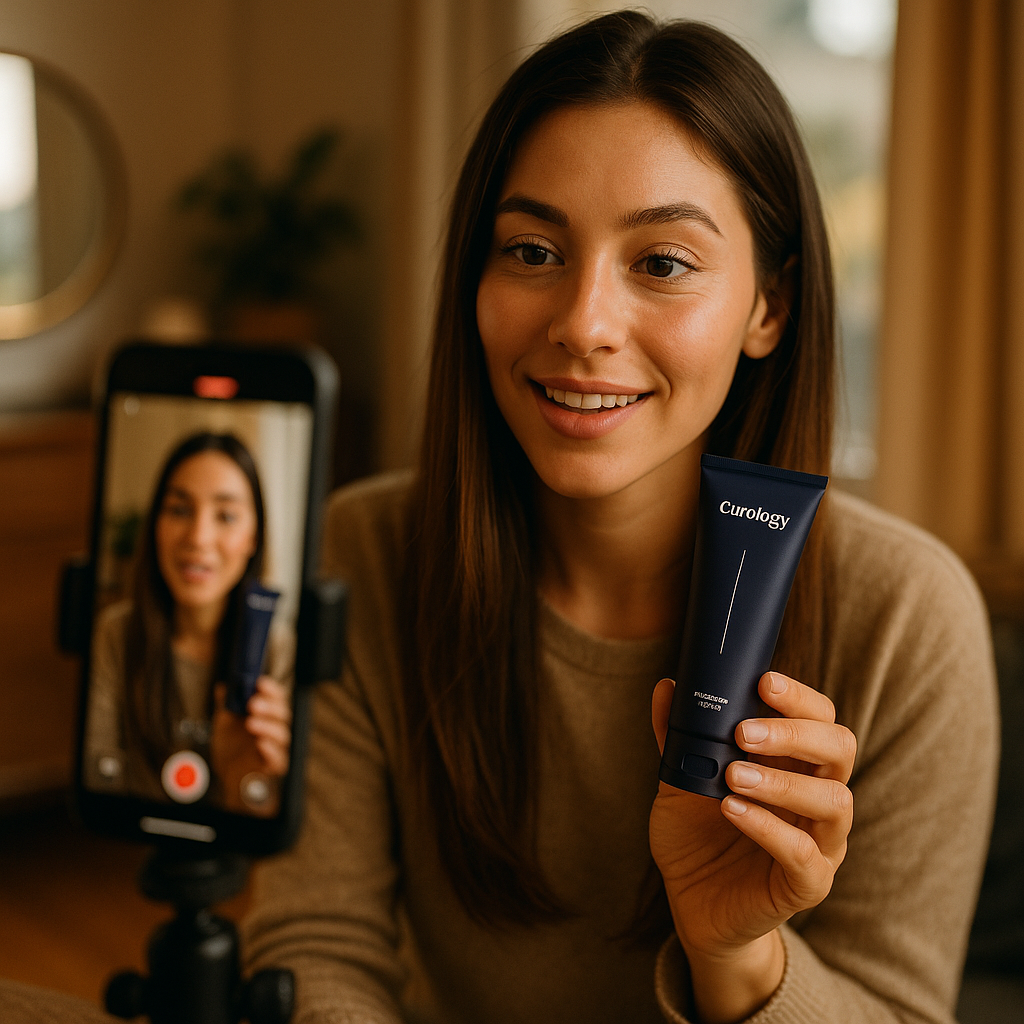
What if the biggest lever in your growth stack isn’t a bigger creator budget, but a smaller one? Curology’s six-month micro-influencer program produced a 9x lift in recurring sales, without a single celebrity endorsement. No macro-influencer flash, no seven-figure retainer. Just disciplined targeting, tight measurement, and a subscription model built to convert curiosity into recurring revenue.
That combination is rare. Most brands can get creators to drive a spike in first purchases. Turning that spike into recurring, compounding revenue is the harder problem, and it’s the one Curology actually solved.
The Setup: Why Curology Bet on Micro-Creators Over Celebrities
Curology sells personalized prescription skincare through a subscription model. That detail matters more than it might seem. Subscription businesses live and die on retention math, not just acquisition volume. A flashy campaign that drives one-time purchases looks great in a launch recap and terrible in a churn report three months later.
The brand’s marketing team made a deliberate call: instead of chasing reach through a handful of macro-influencers, they built a roster of several hundred micro-creators, generally in the 10K-to-100K follower range, across TikTok and Instagram. The logic was straightforward. Micro-creators carry higher perceived trust with niche audiences, cost a fraction of what celebrity talent commands, and produce content that reads as advice rather than advertising. Skincare is a category where authenticity isn’t a nice-to-have. It’s the entire purchase trigger.
Curology didn’t optimize for reach. It optimized for the specific moment a viewer trusts a recommendation enough to start a subscription — and then stays subscribed.
This mirrors a pattern documented in another skincare case, where nano-creator programs drove comparable sales lifts by prioritizing niche trust over broad reach. The category itself seems to reward this approach: skincare buyers research obsessively before they convert, and a recommendation from someone who looks like a real user outperforms polished brand messaging almost every time.
Breaking Down the Six-Month Timeline
Curology didn’t launch everything at once. The program moved through distinct phases, each with its own KPI focus, which is arguably the most replicable part of the whole case study.
- Months one and two: Creator vetting and content-market fit. The team tested messaging angles across dozens of micro-creators before scaling spend. They tracked engagement rate and comment sentiment, not follower count, as the primary filter.
- Months three and four: Scaling the winning formats. Once specific content types (skin-journey documentation, “what changed my skin” narratives, dermatologist-adjacent explainer videos) proved out, Curology expanded creator volume in those formats and cut spend on underperforming angles.
- Months five and six: Retention-focused optimization. This is where the program diverged from a typical influencer play. Instead of measuring only new subscriber starts, the team began attributing second- and third-month renewal rates back to specific creator cohorts.
That last phase is the differentiator. Most brands stop measuring influencer ROI at the first conversion. Curology kept the attribution window open long enough to see which creators brought in subscribers who actually stuck around.
What “9x Recurring Sales Lift” Actually Means
It’s worth being precise here, because “9x lift” gets thrown around loosely in case studies and often means something different depending on the denominator. In Curology’s case, the metric referred to recurring subscription revenue attributable to the micro-influencer cohort compared to the brand’s baseline organic and paid-search-driven subscription revenue over the same period.
In plain terms: subscribers acquired through the micro-influencer channel generated roughly nine times more recurring revenue, per dollar of program spend, than subscribers acquired through the brand’s prior standard channel mix. That’s not a vanity reach number. That’s a channel-efficiency number, and it’s the kind of metric that gets a program renewed budget instead of cut in the next planning cycle.
Why does this matter to a CFO or CMO deciding where next quarter’s budget goes? Because recurring revenue compounds. A single high-LTV subscriber acquired at low cost is worth more over 12 months than several one-time purchasers acquired at the same spend. Micro-influencer content, done right, appears to select for exactly that kind of durable customer, likely because the content format itself (real people documenting real routines over weeks) pre-qualifies viewers who are genuinely committed to a skincare regimen, not just curious impulse buyers.
The Operational Playbook Behind the Numbers
Case studies like this tend to get flattened into “use small creators, get big results.” That’s lazy analysis. The mechanics behind Curology’s lift are more specific, and more operational, than that.
Payment structure tied to performance, not just posting
Rather than flat-fee deals, Curology reportedly leaned on performance-linked compensation, paying creators based partly on trackable subscription starts via unique codes or links. This isn’t a new idea. It’s the same logic behind payout models tied to real-time performance data, which reduce wasted spend on creators whose audiences don’t convert, regardless of how good the content looks.
Segmenting creators by funnel stage, not just niche
Some creators were positioned for top-of-funnel awareness (broad skin-concern content), others for consideration (detailed ingredient breakdowns), and a smaller group for retention reinforcement (long-term “still using this” check-ins at the 60- and 90-day mark). Very few brands bother building this kind of stage-specific creator mapping. It requires more coordination, but it’s the reason Curology could optimize for renewal rather than just first purchase.
Content that mimics organic discovery
The best-performing formats didn’t look like ads. They looked like the kind of skincare content someone would post whether or not a brand paid for it. That’s consistent with what’s worked across other verticals, including nano-creator content rebuilding consumer trust on TikTok Shop, where unpolished, first-person narrative consistently outperforms studio-quality brand assets on conversion.
Where Brands Usually Get This Wrong
If the formula sounds simple, the failure modes are worth spelling out, because most brands attempting a similar program hit the same walls.
- Measuring first-purchase conversion only. If you stop tracking at the initial sale, you’ll never know whether your influencer spend is buying loyal subscribers or one-time bargain hunters.
- Treating micro-creators like a discount version of macro talent. The value isn’t cheaper reach. It’s a fundamentally different trust relationship with a narrower, more engaged audience.
- Skipping the vetting phase to save time. Curology spent two full months testing before scaling. Brands that skip straight to volume tend to scale the wrong content and burn budget before they realize it.
- Ignoring compliance basics. With hundreds of creators posting sponsored content, disclosure consistency becomes a real risk. The FTC’s endorsement guidelines apply regardless of creator size, and a program running at this scale needs disclosure audits built into the workflow, not bolted on afterward.
There’s also a payment-operations dimension that gets overlooked. Running a few hundred micro-creators, often across countries, means dealing with fragmented payout rails, currency conversion, and tax documentation at scale. This is the exact bottleneck covered in cross-border payout challenges, and it’s a quiet reason many micro-influencer programs stall out operationally before they stall out creatively.
Is This Model Repeatable Outside Skincare?
The honest answer: partially. Skincare has structural advantages that not every category shares. Purchase decisions are visual, results are demonstrable over time (making retention-stage content natural), and the category has an enormous, highly engaged creator base already producing this content organically. A B2B software brand or a durable-goods company doesn’t have the same built-in content ecosystem to tap into.
That said, the underlying discipline transfers cleanly. Funnel-stage creator segmentation, performance-linked payouts, and extended-window attribution aren’t skincare-specific tactics. They’re measurement discipline. Brands in adjacent consumer categories, from beverages to wellness to CPG, have applied similar logic with strong results, as seen in Chobani’s TikTok Shop engine and Graza’s comedy-driven retail sell-through. The category changes. The measurement infrastructure doesn’t have to.
For subscription brands specifically, the closest parallel worth studying is Duolingo’s renewal-focused creator strategy, which applied similar retention-stage thinking to a completely different product category and still landed a meaningful renewal lift.
What Marketing Leaders Should Take From This
If there’s one structural insight to steal from Curology’s program, it’s this: stop treating influencer attribution as a first-touch problem. Build measurement that extends through at least two renewal cycles before declaring a creator cohort successful. That single change, extending the attribution window, is what separated a 9x recurring lift from an unremarkable one-time sales bump. Everything else, the vetting process, the payout structure, the content formats, exists to feed that measurement system with cleaner data.
Frequently Asked Questions
What made Curology’s micro-influencer program different from typical influencer campaigns?
Curology measured recurring subscription revenue by creator cohort across multiple renewal cycles, not just first-purchase conversion. This let the team identify which creators brought in subscribers who actually stayed, rather than optimizing purely for initial sales volume.
How is a 9x recurring sales lift actually calculated?
It reflects the recurring revenue generated per dollar spent through the micro-influencer channel compared to the brand’s baseline channels over the same period, not a raw reach or follower multiplier.
Why do micro-influencers often outperform celebrity endorsements for subscription brands?
Micro-creators typically carry stronger trust with niche audiences and produce content that resembles genuine peer recommendation rather than polished advertising. For subscription products, that trust correlates with better retention, not just a higher initial conversion rate.
What metrics should brands track beyond first purchase when running a similar program?
Second- and third-cycle renewal rates by creator cohort, cost per retained subscriber (not just cost per acquisition), and engagement quality signals like comment sentiment during the vetting phase.
Can this micro-influencer model work outside the skincare category?
The measurement discipline transfers well, funnel-stage segmentation, performance-linked payouts, and extended attribution windows apply broadly. But categories without visual, demonstrable results or an existing organic creator ecosystem may see a smaller lift.
What compliance risks come with scaling to hundreds of micro-creators?
Disclosure consistency becomes harder to enforce at scale. Brands need built-in audit processes to ensure every creator follows FTC endorsement guidelines, since inconsistent disclosure across a large roster creates real regulatory exposure.
Next step for brand teams: before your next influencer budget cycle, audit whether your attribution model even captures second- and third-cycle renewals. If it doesn’t, you’re likely undervaluing the creators actually driving durable revenue, and overpaying the ones just driving a one-time spike.
Top Influencer Marketing Agencies
The leading agencies shaping influencer marketing in 2026
Agencies ranked by campaign performance, client diversity, platform expertise, proven ROI, industry recognition, and client satisfaction. Assessed through verified case studies, reviews, and industry consultations.
Moburst

-
2

The Shelf
Boutique Beauty & Lifestyle Influencer AgencyA data-driven boutique agency specializing exclusively in beauty, wellness, and lifestyle influencer campaigns on Instagram and TikTok. Best for brands already focused on the beauty/personal care space that need curated, aesthetic-driven content.Clients: Pepsi, The Honest Company, Hims, Elf Cosmetics, Pure LeafVisit The Shelf → -
3

Audiencly
Niche Gaming & Esports Influencer AgencyA specialized agency focused exclusively on gaming and esports creators on YouTube, Twitch, and TikTok. Ideal if your campaign is 100% gaming-focused — from game launches to hardware and esports events.Clients: Epic Games, NordVPN, Ubisoft, Wargaming, Tencent GamesVisit Audiencly → -
4

Viral Nation
Global Influencer Marketing & Talent AgencyA dual talent management and marketing agency with proprietary brand safety tools and a global creator network spanning nano-influencers to celebrities across all major platforms.Clients: Meta, Activision Blizzard, Energizer, Aston Martin, WalmartVisit Viral Nation → -
5

The Influencer Marketing Factory
TikTok, Instagram & YouTube CampaignsA full-service agency with strong TikTok expertise, offering end-to-end campaign management from influencer discovery through performance reporting with a focus on platform-native content.Clients: Google, Snapchat, Universal Music, Bumble, YelpVisit TIMF → -
6

NeoReach
Enterprise Analytics & Influencer CampaignsAn enterprise-focused agency combining managed campaigns with a powerful self-service data platform for influencer search, audience analytics, and attribution modeling.Clients: Amazon, Airbnb, Netflix, Honda, The New York TimesVisit NeoReach → -
7

Ubiquitous
Creator-First Marketing PlatformA tech-driven platform combining self-service tools with managed campaign options, emphasizing speed and scalability for brands managing multiple influencer relationships.Clients: Lyft, Disney, Target, American Eagle, NetflixVisit Ubiquitous → -
8

Obviously
Scalable Enterprise Influencer CampaignsA tech-enabled agency built for high-volume campaigns, coordinating hundreds of creators simultaneously with end-to-end logistics, content rights management, and product seeding.Clients: Google, Ulta Beauty, Converse, AmazonVisit Obviously →