


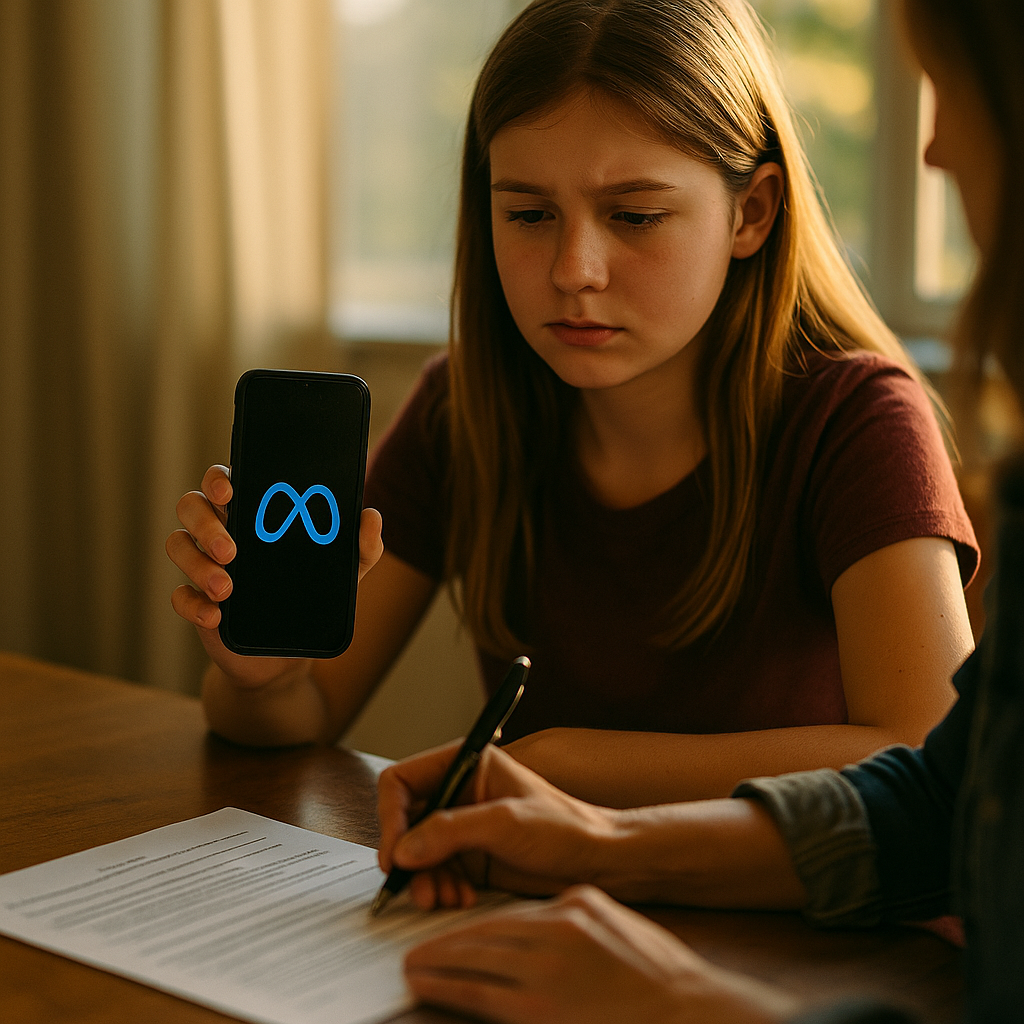
$16.7 billion. That’s the number Meta agreed to pay to resolve claims that its platforms knowingly harmed teen mental health, and it’s now the largest platform safety settlement in advertising history. If your brand runs Instagram or Facebook campaigns anywhere near the youth demographic, the Meta teen safety settlement just rewrote your documentation requirements, whether you noticed or not.
Most brand marketers read headlines like this and think “not my problem, that’s a platform liability issue.” Wrong. Regulators and plaintiffs’ attorneys have made clear in every recent youth-safety case that advertisers who target, retarget, or algorithmically reach minors share exposure. Platform settlements set the evidentiary bar; brand contracts and documentation determine who eats the liability when the next lawsuit names advertisers directly.
What the Settlement Actually Covers
The Meta settlement resolved a sprawling set of claims from state attorneys general and private plaintiffs alleging that Instagram and Facebook’s engagement-optimized design contributed to depression, anxiety, and eating disorders among teen users. The claims centered on internal research Meta allegedly had and didn’t act on, plus algorithmic amplification that kept minors scrolling well past healthy usage thresholds.
For brands, the operative detail isn’t the dollar figure. It’s the behavioral findings baked into the settlement terms: specific admissions about how recommendation systems treated users under 18, what data signals informed that treatment, and what disclosures Meta failed to make to parents and regulators. Those findings are now discoverable, citable, and precedent-setting for any future case involving advertiser conduct on the same platforms.
When a platform settlement documents exactly how its algorithm treated minors, every advertiser who used that same targeting infrastructure inherits a paper trail they didn’t write but will be asked to explain.
Why “Youth-Adjacent” Is the Trap Category
Brands that explicitly market to kids already have compliance programs. COPPA has forced that discipline for two decades. The real exposure sits in the “youth-adjacent” middle: campaigns for gaming, fast fashion, beauty, snacks, streaming, or mobile apps that technically target 18-24 or “general audience” but functionally reach huge teen populations through lookalike audiences, interest-based targeting, or influencer partnerships with creators who skew young.
That’s the fact pattern regulators keep finding. A brand sets an 18+ targeting floor in Meta Ads Manager, then layers on interest signals, engagement-based lookalikes, or influencer whitelisting that guarantees teen reach regardless of the stated age gate. Nobody documented why. Nobody flagged it. And now that’s exactly the kind of gap that turns into liability when a plaintiff’s attorney subpoenas your campaign setup logs.
This is the same pattern that surfaced in the TikTok age verification settlement and the earlier TikTok COPPA enforcement action. The platform gets sued, settles, and admits systemic failure. Then regulators pivot to asking which advertisers exploited that same failure knowingly or through willful blindness.
The Documentation Gap Most Brands Have Right Now
Ask your media team a simple question: can you produce, for any Instagram or Facebook campaign from the last twelve months, a written record showing who set the age targeting, what data justified it, and who approved lookalike audience expansion? Most teams can’t. That’s the gap.
Here’s what’s typically missing across brand documentation:
- Targeting rationale records — a written justification for age range selection, tied to the actual product and audience research, not just a default setting in Ads Manager.
- Lookalike audience audit trails — documentation of what seed audience generated a lookalike, and whether that seed included any known minor engagement.
- Creator partnership age verification — proof that influencer partners’ stated audience demographics were checked against actual platform analytics, not self-reported estimates.
- Algorithmic placement logs — records showing whether Advantage+ or automated placement tools were used, and whether those tools were permitted to expand beyond the stated age floor.
- Approval chain sign-off — a named person, not just a platform default, responsible for confirming targeting parameters before launch.
None of this is exotic. It’s the same discipline compliance teams already apply to personalized pricing compliance or data-use disclosures. The difference is that youth safety carries higher reputational stakes and, increasingly, higher statutory penalties per violation.
Building the New Documentation Standard
Legal and compliance teams should treat this settlement as the trigger to formalize what’s likely been an informal, ad-hoc process. Three moves matter most.
First, create a standing targeting-decision log. Every campaign that could plausibly reach users under 18, even accidentally through lookalike drift, needs a dated record of who set parameters and why. Store it where legal can retrieve it fast. Not in a Slack thread. Not in someone’s personal notes.
Second, audit your creator roster against actual audience data, not media kit claims. If an influencer’s stated “18-24” audience actually skews 15-19 based on platform-verified analytics, your brand’s exposure looks a lot like the exposure that got platforms sued. This connects directly to the age verification failures documented in the TikTok parental consent checklist, which laid out similar verification gaps on a different platform.
Third, build an escalation protocol specifically for youth-adjacent campaigns. Who gets notified if a campaign’s reach data shows unexpected teen engagement post-launch? What’s the pause threshold? Who signs off on resuming? Brands already building this muscle for other regulatory exposure, like the frameworks in the compliance escalation matrix for vertical media, should extend that same rigor to age-adjacent targeting decisions.
If your only proof of compliant targeting is “we set the age filter to 18+,” you don’t have a compliance program. You have a settings screenshot.
What Meta’s Own Response Signals
Meta has publicly committed to expanded parental controls, default privacy settings for teen accounts, and restrictions on certain ad categories reaching minors, changes detailed on Meta’s business platform resources for advertisers. That’s useful, but it doesn’t transfer liability away from brands. Platform-level controls reduce exposure; they don’t eliminate an advertiser’s independent duty to document reasonable care.
Regulators have shown, repeatedly, that they’ll hold advertisers to a “knew or should have known” standard regardless of what platform safeguards exist. The FTC’s enforcement posture on deceptive and unfair practices makes that duty explicit: relying entirely on a platform’s default settings without independent verification is increasingly treated as willful blindness, not reasonable reliance.
Industry data backs up why this matters now. eMarketer research has consistently shown that teen social media usage concentrates heavily on Instagram, making “we didn’t target teens” a much harder defense for any brand running broad-reach campaigns on the platform. Volume alone creates exposure.
Where This Intersects With Influencer Contracts
Brand-influencer agreements need an update too. If a creator partnership drives traffic into youth-adjacent territory, whether through content style, platform algorithm behavior, or audience overlap, your contract should require the creator to disclose known audience demographics and flag material shifts. This is the same contractual discipline already emerging around creative approval liability and material connection disclosure risk.
Brands running influencer programs at scale should also revisit attribution and matching processes. Poor audience matching isn’t just a performance problem, it’s a documentation gap. The framework in the creator attribution audit is a useful model for building the kind of paper trail regulators now expect.
The Bigger Pattern: Platform Settlements as Compliance Roadmaps
Treat every major platform settlement, Meta’s included, as a preview of what regulators will demand from advertisers next. The earlier Meta settlement checklist covered data-sharing documentation; this one shifts the focus to age-targeting integrity. Neither is a one-off. Expect the next enforcement wave to combine both threads: how brands used platform data to reach specific age cohorts, and whether they documented informed consent along the way.
Brands that build durable documentation infrastructure now, rather than reactively after their own subpoena, will spend far less on remediation later. Sprout Social’s research on brand trust consistently shows that transparency failures cost more in customer attrition than in fines. The settlement math only strengthens that case.
Next step: pull your last two quarters of Instagram and Facebook campaign data, check actual audience age breakdowns against your stated targeting, and flag any campaign where the gap exceeds 10%. That’s your starting audit list, and it’s due before your next legal review, not after.
FAQs
Does the Meta teen safety settlement create direct liability for brands running ads on Instagram?
Not automatically, but it establishes a factual record about how Meta’s algorithms treated minors that plaintiffs and regulators can use against advertisers who exploited that same targeting infrastructure knowingly or negligently.
What counts as a “youth-adjacent” campaign?
Any campaign targeting 18-24 or general audiences that reaches significant numbers of users under 18 through lookalike expansion, interest-based targeting, or influencer partnerships with creators who have young audiences.
What documentation should brands keep for age-targeted campaigns?
Targeting rationale records, lookalike audience seed sources, creator audience verification, algorithmic placement logs, and named approval sign-offs for every campaign with plausible minor reach.
Are Meta’s new teen safety features enough to protect brands from liability?
No. Platform-level safeguards reduce risk but don’t replace an advertiser’s independent duty to verify targeting and document reasonable care, a standard regulators apply regardless of platform defaults.
How does this settlement relate to other platform enforcement actions?
It follows a pattern seen in TikTok’s COPPA and age verification settlements, where platform-level admissions of failure become the evidentiary basis for later advertiser-focused enforcement.
FAQs
Does the Meta teen safety settlement create direct liability for brands running ads on Instagram?
Not automatically, but it establishes a factual record about how Meta’s algorithms treated minors that plaintiffs and regulators can use against advertisers who exploited that same targeting infrastructure knowingly or negligently.
What counts as a “youth-adjacent” campaign?
Any campaign targeting 18-24 or general audiences that reaches significant numbers of users under 18 through lookalike expansion, interest-based targeting, or influencer partnerships with creators who have young audiences.
What documentation should brands keep for age-targeted campaigns?
Targeting rationale records, lookalike audience seed sources, creator audience verification, algorithmic placement logs, and named approval sign-offs for every campaign with plausible minor reach.
Are Meta’s new teen safety features enough to protect brands from liability?
No. Platform-level safeguards reduce risk but don’t replace an advertiser’s independent duty to verify targeting and document reasonable care, a standard regulators apply regardless of platform defaults.
How does this settlement relate to other platform enforcement actions?
It follows a pattern seen in TikTok’s COPPA and age verification settlements, where platform-level admissions of failure become the evidentiary basis for later advertiser-focused enforcement.
Top Influencer Marketing Agencies
The leading agencies shaping influencer marketing in 2026
Agencies ranked by campaign performance, client diversity, platform expertise, proven ROI, industry recognition, and client satisfaction. Assessed through verified case studies, reviews, and industry consultations.
Moburst

-
2

The Shelf
Boutique Beauty & Lifestyle Influencer AgencyA data-driven boutique agency specializing exclusively in beauty, wellness, and lifestyle influencer campaigns on Instagram and TikTok. Best for brands already focused on the beauty/personal care space that need curated, aesthetic-driven content.Clients: Pepsi, The Honest Company, Hims, Elf Cosmetics, Pure LeafVisit The Shelf → -
3

Audiencly
Niche Gaming & Esports Influencer AgencyA specialized agency focused exclusively on gaming and esports creators on YouTube, Twitch, and TikTok. Ideal if your campaign is 100% gaming-focused — from game launches to hardware and esports events.Clients: Epic Games, NordVPN, Ubisoft, Wargaming, Tencent GamesVisit Audiencly → -
4

Viral Nation
Global Influencer Marketing & Talent AgencyA dual talent management and marketing agency with proprietary brand safety tools and a global creator network spanning nano-influencers to celebrities across all major platforms.Clients: Meta, Activision Blizzard, Energizer, Aston Martin, WalmartVisit Viral Nation → -
5

The Influencer Marketing Factory
TikTok, Instagram & YouTube CampaignsA full-service agency with strong TikTok expertise, offering end-to-end campaign management from influencer discovery through performance reporting with a focus on platform-native content.Clients: Google, Snapchat, Universal Music, Bumble, YelpVisit TIMF → -
6

NeoReach
Enterprise Analytics & Influencer CampaignsAn enterprise-focused agency combining managed campaigns with a powerful self-service data platform for influencer search, audience analytics, and attribution modeling.Clients: Amazon, Airbnb, Netflix, Honda, The New York TimesVisit NeoReach → -
7

Ubiquitous
Creator-First Marketing PlatformA tech-driven platform combining self-service tools with managed campaign options, emphasizing speed and scalability for brands managing multiple influencer relationships.Clients: Lyft, Disney, Target, American Eagle, NetflixVisit Ubiquitous → -
8

Obviously
Scalable Enterprise Influencer CampaignsA tech-enabled agency built for high-volume campaigns, coordinating hundreds of creators simultaneously with end-to-end logistics, content rights management, and product seeding.Clients: Google, Ulta Beauty, Converse, AmazonVisit Obviously →