


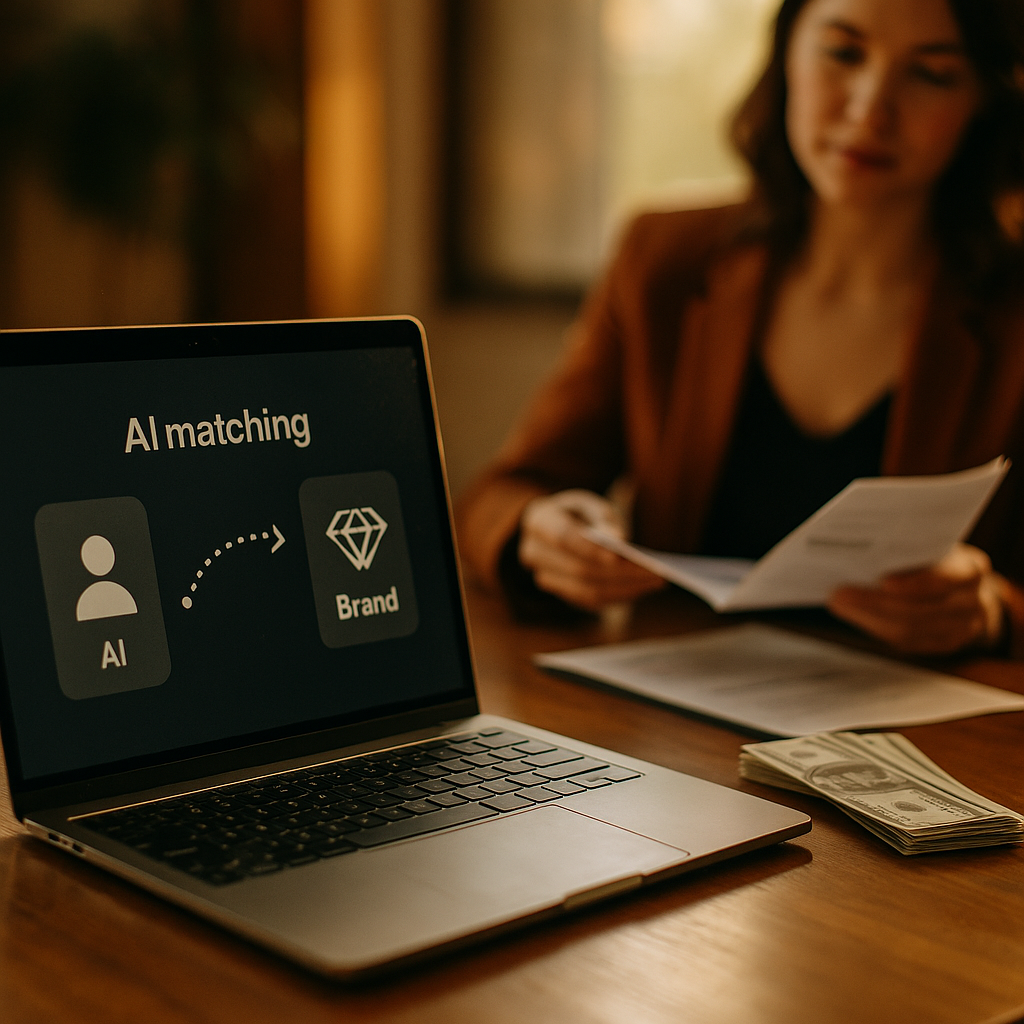
Agencies used to be the toll booth every brand had to pass through to reach creators. Not anymore. A new wave of AI matching platforms is letting brands search, vet, negotiate, and pay influencers without a single agency handoff. Roughly a third of mid-market brands now run at least part of their creator sourcing through software instead of a partner agency, according to recent buyer surveys. The agency-bypass trend isn’t a fad. It’s a structural shift in how creator budgets get spent.
Why Brands Are Cutting Out the Middleman
Agencies built their value proposition on relationships and reach. If you wanted access to a roster of vetted creators, you paid someone who already had that Rolodex. That model made sense when creator discovery was manual, opaque, and relationship-driven.
AI matching platforms broke that monopoly. Tools like Grin, CreatorIQ, Aspire, and newer entrants such as Modash and Upfluence use algorithms to scan audience demographics, engagement authenticity, brand affinity signals, and historical performance data across millions of creator profiles. A brand marketer can now filter for “female fitness creators, 25-34 audience, 4%+ engagement, no bot followers, prior beauty brand partnerships” and get a ranked list in seconds. That used to take an agency team two weeks and a stack of spreadsheets.
The economics are the real driver, though. Agency fees typically run 15-30% on top of creator fees. On a $500,000 annual influencer budget, that’s up to $150,000 walking out the door before a single piece of content gets made. Brands under margin pressure are asking an obvious question: what exactly are we paying for?
When AI can match, vet, and even negotiate rates at a fraction of agency markup, the agency’s remaining value proposition shrinks to strategy and relationship management, services many brands now believe they can build in-house.
What These Platforms Actually Do Well
It’s not just discovery. The more mature platforms now handle the full workflow: outreach automation, contract templates, deliverable tracking, payment processing, and post-campaign attribution. Some, like GRIN, integrate directly with Shopify to tie creator content to actual revenue, not just impressions or clicks. That’s a meaningful upgrade from the black-box reporting many agencies used to hand over in quarterly decks.
- Discovery at scale: searching tens of millions of profiles across Instagram, TikTok, and YouTube in minutes, not weeks.
- Fraud detection: flagging inflated follower counts and engagement pods before a brand wires a deposit.
- Automated compliance: built-in FTC disclosure prompts and contract clauses, reducing legal exposure.
- Direct payments: escrow and milestone-based payouts that remove the agency as a financial intermediary.
This shift mirrors what happened with programmatic ad buying a decade ago. Agencies that once managed media placements manually got squeezed by DSPs that could do it faster and cheaper. Influencer marketing is going through its own version of that disintermediation, just later and slower.
The Case Against Going Fully DIY
Here’s where it gets uncomfortable for brands eager to cut costs. Software can match you with a creator. It cannot tell you if that creator will show up for a live shoot, handle brand crisis moments gracefully, or negotiate usage rights without a lawyer on standby. Relationship management, the messy human part of influencer marketing, doesn’t disappear just because an algorithm found the profile.
Brands that go fully agency-free often underestimate the operational load. Someone still has to manage forty simultaneous creator relationships, chase late deliverables, review content for brand safety, and handle the inevitable creator who posts something off-brand at 11pm. That’s a full-time job, sometimes two.
There’s also a strategy gap. AI matching platforms are excellent at finding creators who fit a data profile. They’re far worse at telling you whether your creator strategy should shift from macro to micro-influencers, or whether your budget split between TikTok and YouTube needs rebalancing given watch-time algorithm changes. That kind of strategic judgment still requires a human who understands platform mechanics and category trends, whether that’s an in-house lead or a specialized consultant.
Who Should Actually Go Direct?
Not every brand is a good candidate for agency-bypass. The trend favors specific profiles:
- D2C brands with in-house marketing muscle. Companies already spending 45% of budgets on creators tend to have dedicated influencer managers who can absorb the operational work that agencies used to handle.
- Brands running high-volume micro-influencer programs. When you’re managing hundreds of small creator relationships instead of a handful of macro deals, software efficiency matters more than white-glove agency service. This is exactly the segment where vetted micro-influencer networks are proving their worth as a trust layer.
- Performance-driven categories. Beauty, supplements, and fashion brands that can tie creator content directly to conversion data benefit from platforms with built-in attribution, since the ROI case for cutting agency fees is easiest to prove there.
Brands that should think twice: complex B2B categories, regulated industries like finance or healthcare where compliance risk is high, and any brand entering a new market without existing creator relationships or category expertise. In those cases, an agency’s judgment is worth more than its Rolodex.
The Compliance Question Nobody’s Answering Loudly Enough
Agencies historically absorbed a lot of legal risk. Contract review, disclosure compliance, usage rights, morality clauses; agencies had legal teams and templates built from years of managing disputes. When brands go direct through a matching platform, that risk doesn’t vanish. It just moves in-house.
The FTC’s endorsement guidelines still apply regardless of who sourced the creator. If a brand skips proper disclosure review because “the platform handled it,” that’s not a defense regulators will accept. Some matching platforms now bake in disclosure prompts and templated contracts, which helps, but brands still need someone reviewing edge cases: international creators subject to different rules, like the UK’s ICO guidance on data and advertising standards, or complex usage rights for paid amplification.
This is a real gap in the agency-bypass pitch. Software vendors sell efficiency. They rarely sell legal accountability. Brands need to build that function internally or retain outside counsel on a lighter-touch basis, which eats into some of the savings from cutting agency fees.
How the Economics Actually Shake Out
Let’s run real numbers. A brand spending $1 million annually on influencer marketing through a traditional agency might pay $200,000-$300,000 in management fees on top of creator payments. Move that same budget through an AI matching platform with a SaaS subscription model, typically $2,000-$15,000 per month depending on scale, and you’re looking at total platform costs of $24,000-$180,000 annually. That’s a potential savings of $100,000-$250,000, even after accounting for the additional in-house headcount needed to manage relationships and compliance.
The catch: those savings only materialize if the in-house team is genuinely capable of doing agency-level relationship management and strategic planning. Otherwise you’re trading agency fees for wasted campaigns, mismatched creators, and content that doesn’t convert.
Data backs up the productivity claim. Recent industry surveys show that 95% of social media professionals now use AI tools daily, but most still rely on humans for strategic decisions rather than execution. That split, AI for operational efficiency, humans for judgment calls, is exactly the model successful agency-bypass programs are adopting.
What This Means for the Agency Business Model
Agencies aren’t dying. They’re repositioning. The ones surviving this shift are moving away from pure matchmaking and toward strategy, creative direction, and crisis management, the parts of the job software genuinely can’t replicate yet. Some agencies have even started white-labeling AI matching tools themselves, using platforms like CreatorIQ on the backend while still selling strategic oversight to clients.
This mirrors what’s happening in adjacent parts of the industry. As the creator economy scales past $500 billion, the winners on the agency side are the ones who’ve stopped competing with AI on discovery speed and started competing on strategic depth instead.
Brands considering the shift should treat it less as “agency versus platform” and more as a question of where human judgment adds the most value. Discovery, contracting, and payment processing? Software wins on speed and cost. Strategy, crisis response, and long-term creator relationships? That’s still a human job, whether it sits inside the brand or with a leaner, more strategic agency partner. For deeper context on how influencer budgets are shifting across the industry, Sprout Social’s ongoing research and eMarketer’s spend forecasts are worth tracking alongside your own platform data.
Next step: Before switching platforms or dropping your agency, run a 90-day pilot. Move 15-20% of your creator budget onto an AI matching platform, keep the rest with your current partner, and compare cost-per-acquisition, campaign turnaround time, and compliance incidents side by side. Let the data, not the sales pitch, decide how far you go.
Frequently Asked Questions
What exactly is an AI matching platform for influencer marketing?
It’s software that uses algorithms to search creator databases, analyze audience quality and engagement authenticity, and rank creators against a brand’s specific criteria. Platforms like GRIN, CreatorIQ, Aspire, and Modash also often include contracting, payment, and performance tracking features.
Does bypassing agencies actually save brands money?
Often yes, on direct fees. Agency management fees typically run 15-30% on top of creator costs, while AI platforms usually charge flat SaaS subscriptions. But brands need to account for the added in-house labor cost of managing relationships, compliance, and strategy that agencies used to handle.
Is agency-bypass right for every brand?
No. It works best for brands with existing in-house influencer marketing expertise, high-volume micro-influencer programs, and performance-driven categories where attribution data is clear. Brands in regulated industries or entering new markets often still benefit from agency guidance.
Who handles legal compliance when a brand goes direct?
The brand does. Some platforms include disclosure prompts and contract templates, but ultimate responsibility for FTC compliance and usage rights sits with the brand, not the software vendor. Brands should build internal review processes or retain legal counsel for edge cases.
Are agencies becoming obsolete?
Not obsolete, but repositioned. Agencies that survive this shift are focusing on strategy, creative direction, and crisis management rather than pure creator discovery, since AI platforms now handle matching faster and cheaper than manual agency processes.
Top Influencer Marketing Agencies
The leading agencies shaping influencer marketing in 2026
Agencies ranked by campaign performance, client diversity, platform expertise, proven ROI, industry recognition, and client satisfaction. Assessed through verified case studies, reviews, and industry consultations.
Moburst

-
2

The Shelf
Boutique Beauty & Lifestyle Influencer AgencyA data-driven boutique agency specializing exclusively in beauty, wellness, and lifestyle influencer campaigns on Instagram and TikTok. Best for brands already focused on the beauty/personal care space that need curated, aesthetic-driven content.Clients: Pepsi, The Honest Company, Hims, Elf Cosmetics, Pure LeafVisit The Shelf → -
3

Audiencly
Niche Gaming & Esports Influencer AgencyA specialized agency focused exclusively on gaming and esports creators on YouTube, Twitch, and TikTok. Ideal if your campaign is 100% gaming-focused — from game launches to hardware and esports events.Clients: Epic Games, NordVPN, Ubisoft, Wargaming, Tencent GamesVisit Audiencly → -
4

Viral Nation
Global Influencer Marketing & Talent AgencyA dual talent management and marketing agency with proprietary brand safety tools and a global creator network spanning nano-influencers to celebrities across all major platforms.Clients: Meta, Activision Blizzard, Energizer, Aston Martin, WalmartVisit Viral Nation → -
5

The Influencer Marketing Factory
TikTok, Instagram & YouTube CampaignsA full-service agency with strong TikTok expertise, offering end-to-end campaign management from influencer discovery through performance reporting with a focus on platform-native content.Clients: Google, Snapchat, Universal Music, Bumble, YelpVisit TIMF → -
6

NeoReach
Enterprise Analytics & Influencer CampaignsAn enterprise-focused agency combining managed campaigns with a powerful self-service data platform for influencer search, audience analytics, and attribution modeling.Clients: Amazon, Airbnb, Netflix, Honda, The New York TimesVisit NeoReach → -
7

Ubiquitous
Creator-First Marketing PlatformA tech-driven platform combining self-service tools with managed campaign options, emphasizing speed and scalability for brands managing multiple influencer relationships.Clients: Lyft, Disney, Target, American Eagle, NetflixVisit Ubiquitous → -
8

Obviously
Scalable Enterprise Influencer CampaignsA tech-enabled agency built for high-volume campaigns, coordinating hundreds of creators simultaneously with end-to-end logistics, content rights management, and product seeding.Clients: Google, Ulta Beauty, Converse, AmazonVisit Obviously →