


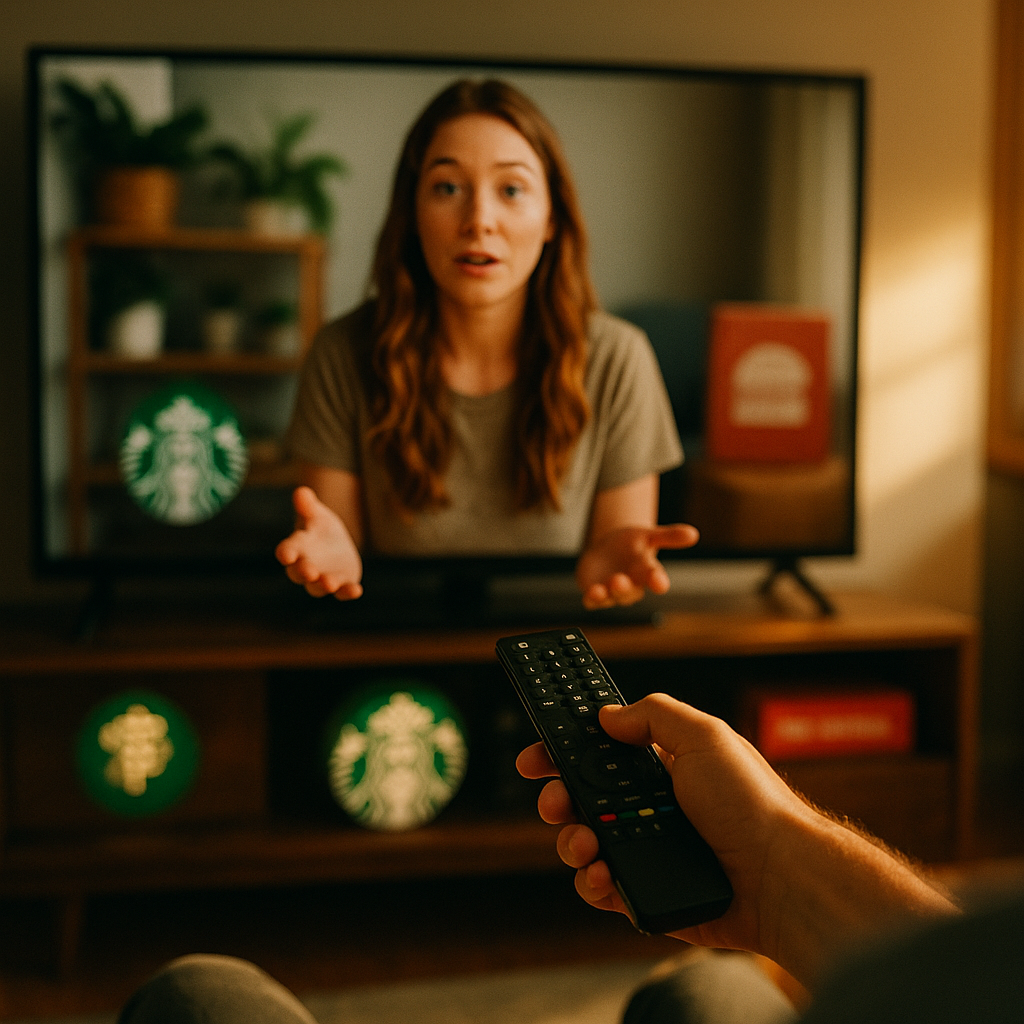
Nielsen says the average streaming viewer now switches content every 90 seconds before committing to a title. That restlessness didn’t come from nowhere: it’s the TikTok scroll reflex, trained by years of short form video, now showing up on the biggest screen in the house. New TV formats are borrowing short form creator storytelling structures because audiences simply won’t sit through a slow build anymore. For brands funding both creator content and television buys, that convergence changes how scripts get written, how budgets get allocated, and how success gets measured.
The Hook Economy Has Colonized Primetime
Short form creators live or die by the first three seconds. Miss the hook, lose the viewer, lose the algorithm’s favor. That brutal discipline, honed on TikTok and Reels, has quietly rewritten the opening act of scripted and unscripted television alike.
Watch any streaming drama greenlit in the last two years and you’ll notice fewer establishing shots, fewer slow pans across moody skylines. Shows now open mid conflict, mid joke, mid confession, the same cold open logic that governs a fifteen second product review. Reality formats have gone further, borrowing jump cuts, on screen text overlays, and direct to camera asides that used to signal “amateur creator content” and now signal “this show respects your attention span.”
Networks aren’t chasing creators out of admiration. They’re chasing retention curves, and creators happen to have already solved the retention problem at scale.
This isn’t aesthetic mimicry. It’s survival math. A streaming platform loses advertising leverage the moment a viewer bounces, and bounce rates on long cold opens have become impossible to ignore internally. For brands buying placements or sponsorships inside these formats, the hook economy matters because it changes where your message can realistically land without getting skipped.
Marketers who’ve already adapted their short form content strategy for cost efficiency are discovering the same hook logic now governs premium video placements too.
Episodic Structure Is Shrinking, Not Disappearing
Here’s a claim that would’ve sounded absurd five years ago: television episodes are being storyboarded like carousel posts. Writers’ rooms are increasingly building episodes around discrete, shareable beats rather than a single continuous arc, because streaming platforms know viewers clip, screenshot, and repost individual scenes far more than they discuss whole episodes.
Think about how a creator structures a multi part series on TikTok or YouTube Shorts: part one ends on a cliffhanger engineered for the “part two” comment. Part two recaps in five seconds, then escalates. Television writers are now openly describing this as “beat level portability,” designing scenes that function as standalone six to twelve second clips capable of going viral independent of the full episode.
- Shorter scene lengths, often under 90 seconds per beat
- Repeated visual motifs that work as thumbnail bait
- Dialogue written for quotability rather than naturalism
- Season arcs broken into “drops” rather than weekly reveals
For brand strategists, this matters enormously for sponsorship placement. A product placement buried in minute 34 of a 42 minute episode used to be reasonably safe. Now that same episode might get sliced into eighteen separate clips circulating on Instagram and TikTok, and your placement either survives the cut or it doesn’t. Negotiating for scene level visibility, not just episode level mentions, is quickly becoming standard practice for savvy media buyers.
Why Are Streamers Hiring Creators Instead of Just Studying Them?
It’s one thing to copy a format. It’s another to hire the person who built it. Streaming platforms and even legacy broadcasters have moved past format mimicry into direct talent acquisition, pulling creators into writers’ rooms, as on camera hosts, and as format consultants.
This mirrors a trend already reshaping journalism and brand content: outlets poaching creator talent not for their follower count but for their native understanding of pacing. The same logic that’s pushing newsrooms to poach creator talent is now pulling creators into television production rooms, where their instinct for retention is treated as a craft skill rather than a platform quirk.
Several unscripted formats launching on major streamers now credit “creator consultants” in the same breath as showrunners. These aren’t vanity hires. A creator who’s built an audience of 500,000 through sheer pacing discipline has already run thousands of micro experiments on what makes people stay versus scroll away. That’s data television executives used to pay research firms six figures to approximate through focus groups.
Vertical Framing Is Creeping Into Horizontal Production
This one sounds like a technical footnote but it’s actually a budget conversation. Some streaming originals are now shot with vertical crop versions planned from the start, not retrofitted after the fact. Directors are composing shots with enough headroom and center framing that a 9:16 crop still reads cleanly for mobile promotion.
Why does this matter to a brand strategist? Because it collapses a cost center that used to require a separate shoot or expensive reformatting. Hybrid shooting approaches that cut cost per asset in creator content production are now showing up in television pipelines for the exact same reason: one capture, multiple deliverables, lower marginal cost per platform.
If your brand is negotiating integrated placements across a show’s broadcast cut and its social promotional clips, ask the production team directly whether vertical framing was planned at the shoot stage. If it was, you’re likely getting cleaner, more usable assets for your own paid social amplification without paying for a second production pass.
The Measurement Problem Nobody Wants to Admit
Here’s the uncomfortable part. Television’s entire measurement infrastructure was built around linear viewing habits that this new format shift is actively undermining. Nielsen ratings, GRPs, and even most streaming completion metrics assume a viewer who watches in order, start to finish. A viewer who consumes a show through forty scattered clips across TikTok, then watches the full episode weeks later out of curiosity, breaks almost every attribution model currently in use.
This isn’t unique to television. Brands running creator and connected TV campaigns simultaneously are already hitting a similar wall, where budget cuts are exposing measurement gaps rather than real channel decline. The format convergence between TV and short form creator content is going to make this measurement gap worse before it gets better, because the two channels are increasingly feeding the same audience behavior with incompatible tracking systems.
If your attribution model can’t account for a viewer who discovers a show through a fifteen second clip and converts three weeks later during a binge, you’re not measuring reality anymore. You’re measuring a convenient fiction.
Industry data from eMarketer has repeatedly flagged cross device, cross format attribution as the single biggest unsolved problem in video advertising, and the TV and creator format collision is only going to intensify pressure on measurement vendors to solve it. Brands that have already rebuilt scorecards around behavioral signals rather than raw reach, following the shift where reach stopped predicting sales, are better positioned to adapt their TV measurement frameworks accordingly.
What This Means for Your Next Budget Cycle
If TV formats are adopting creator pacing, creator talent, and creator shaped distribution, the old wall between “television budget” and “creator budget” is getting harder to justify internally. A few practical shifts worth considering for the next planning cycle:
- Brief creative teams on scene level, not episode level, sponsorship opportunities
- Ask production partners about vertical capture plans before locking shoot budgets
- Build attribution models that can track a viewer across clip discovery and full episode conversion
- Treat creator consultants on TV productions as a credibility signal, not a gimmick, when evaluating sponsorship fit
Platforms themselves are nudging advertisers in this direction too. TikTok’s advertising resources and Meta’s business tools both now offer cross format measurement features explicitly built for brands running synchronized creator and video campaigns, a tacit admission that the formats have already merged even if the budgets haven’t caught up. Marketers managing rosters at scale are seeing similar consolidation logic play out, echoing how larger creator rosters cut CPM and risk by treating distribution as one connected system rather than separate silos.
None of this means television is becoming TikTok with better lighting. The budgets, the production values, and the cultural weight of a flagship series remain distinct. But the storytelling grammar, the hook discipline, the beat level portability, the vertical awareness, has migrated wholesale from short form platforms into premium video production. Brands that keep treating TV and creator content as separate strategic lanes are going to find themselves negotiating placements in a format they don’t fully understand.
Frequently Asked Questions
Why are TV shows adopting short form creator editing techniques?
Viewer attention spans have been reshaped by platforms like TikTok and Instagram Reels, and streaming services track bounce rates closely enough to know that slow cold opens cost them retention. Borrowing creator pacing, quick cuts, and hook driven openings directly addresses that drop off risk.
Does this format shift affect how brands should buy TV sponsorships?
Yes. Placements now need to survive both the full episode cut and the clipped, socially distributed version of a scene, so brands should negotiate for scene level visibility rather than relying on episode level mentions alone.
How is measurement affected when TV and creator formats converge?
Traditional TV metrics assume linear, start to finish viewing, which breaks down when audiences discover shows through scattered short clips before watching full episodes. Brands need attribution models that can connect clip level discovery to eventual full episode or purchase conversion.
Are streaming platforms actually hiring creators for production roles?
Several major streamers and broadcasters now credit creators as format consultants or on camera talent specifically for their pacing expertise, treating audience retention instinct as a professional skill rather than a platform specific quirk.
What is beat level portability in television writing?
It refers to structuring individual scenes so they function as standalone, shareable clips, usually under 90 seconds, capable of generating engagement independently of the full episode they belong to.
Next step: audit your next TV sponsorship contract for scene level clip rights, not just episode placement, because the clip is increasingly where the actual audience lives.
Top Influencer Marketing Agencies
The leading agencies shaping influencer marketing in 2026
Agencies ranked by campaign performance, client diversity, platform expertise, proven ROI, industry recognition, and client satisfaction. Assessed through verified case studies, reviews, and industry consultations.
Moburst

-
2

The Shelf
Boutique Beauty & Lifestyle Influencer AgencyA data-driven boutique agency specializing exclusively in beauty, wellness, and lifestyle influencer campaigns on Instagram and TikTok. Best for brands already focused on the beauty/personal care space that need curated, aesthetic-driven content.Clients: Pepsi, The Honest Company, Hims, Elf Cosmetics, Pure LeafVisit The Shelf → -
3

Audiencly
Niche Gaming & Esports Influencer AgencyA specialized agency focused exclusively on gaming and esports creators on YouTube, Twitch, and TikTok. Ideal if your campaign is 100% gaming-focused — from game launches to hardware and esports events.Clients: Epic Games, NordVPN, Ubisoft, Wargaming, Tencent GamesVisit Audiencly → -
4

Viral Nation
Global Influencer Marketing & Talent AgencyA dual talent management and marketing agency with proprietary brand safety tools and a global creator network spanning nano-influencers to celebrities across all major platforms.Clients: Meta, Activision Blizzard, Energizer, Aston Martin, WalmartVisit Viral Nation → -
5

The Influencer Marketing Factory
TikTok, Instagram & YouTube CampaignsA full-service agency with strong TikTok expertise, offering end-to-end campaign management from influencer discovery through performance reporting with a focus on platform-native content.Clients: Google, Snapchat, Universal Music, Bumble, YelpVisit TIMF → -
6

NeoReach
Enterprise Analytics & Influencer CampaignsAn enterprise-focused agency combining managed campaigns with a powerful self-service data platform for influencer search, audience analytics, and attribution modeling.Clients: Amazon, Airbnb, Netflix, Honda, The New York TimesVisit NeoReach → -
7

Ubiquitous
Creator-First Marketing PlatformA tech-driven platform combining self-service tools with managed campaign options, emphasizing speed and scalability for brands managing multiple influencer relationships.Clients: Lyft, Disney, Target, American Eagle, NetflixVisit Ubiquitous → -
8

Obviously
Scalable Enterprise Influencer CampaignsA tech-enabled agency built for high-volume campaigns, coordinating hundreds of creators simultaneously with end-to-end logistics, content rights management, and product seeding.Clients: Google, Ulta Beauty, Converse, AmazonVisit Obviously →